Facility overcame more than 210,000 complaints in 2019 alone and topped national grievance counts for three consecutive years; processing units buried underground, sports fields built above
Three northwestern Seoul districts share the hub, which also houses environmental education and hands-on experience spaces
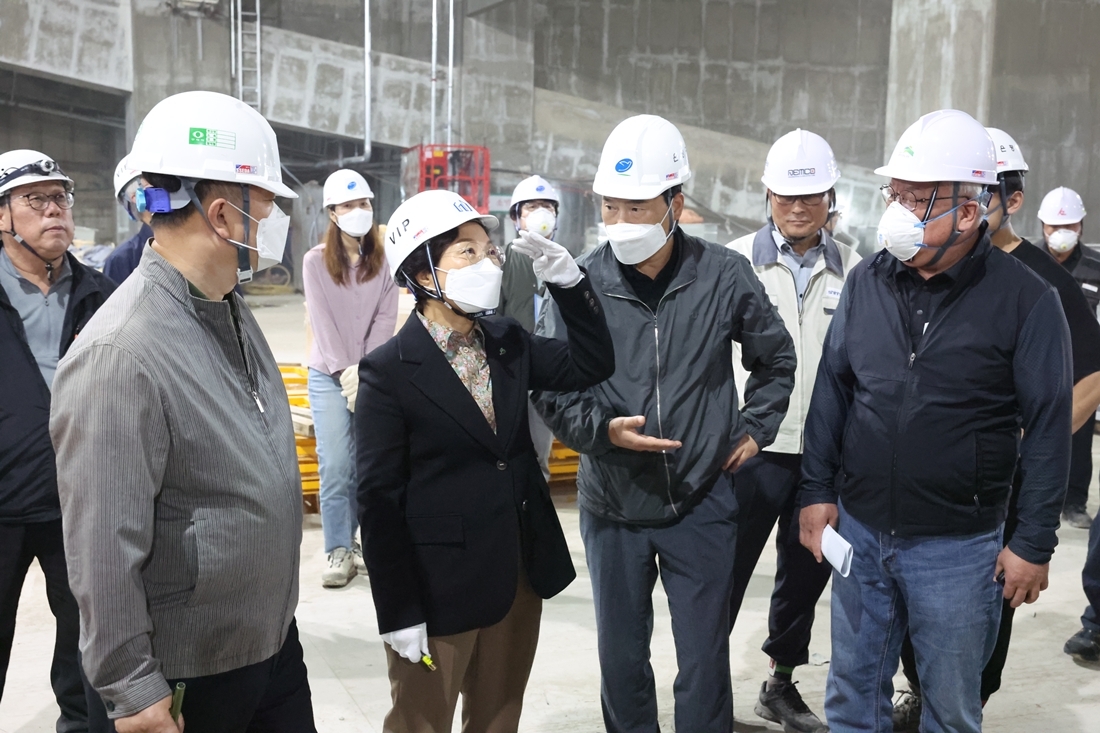
Eunpyeong-gu is set to open the Eunpyeong Metropolitan Resource Circulation Center on Monday, the culmination of a project that pushed through years of fierce resident opposition.
The opening is widely seen as a testament to District Mayor Kim Mi-kyung's persistence and her administration's efforts to bring residents along through sustained dialogue.
The district said it will hold an opening ceremony Monday and formally launch operations at the resource circulation experience center and public information hall.
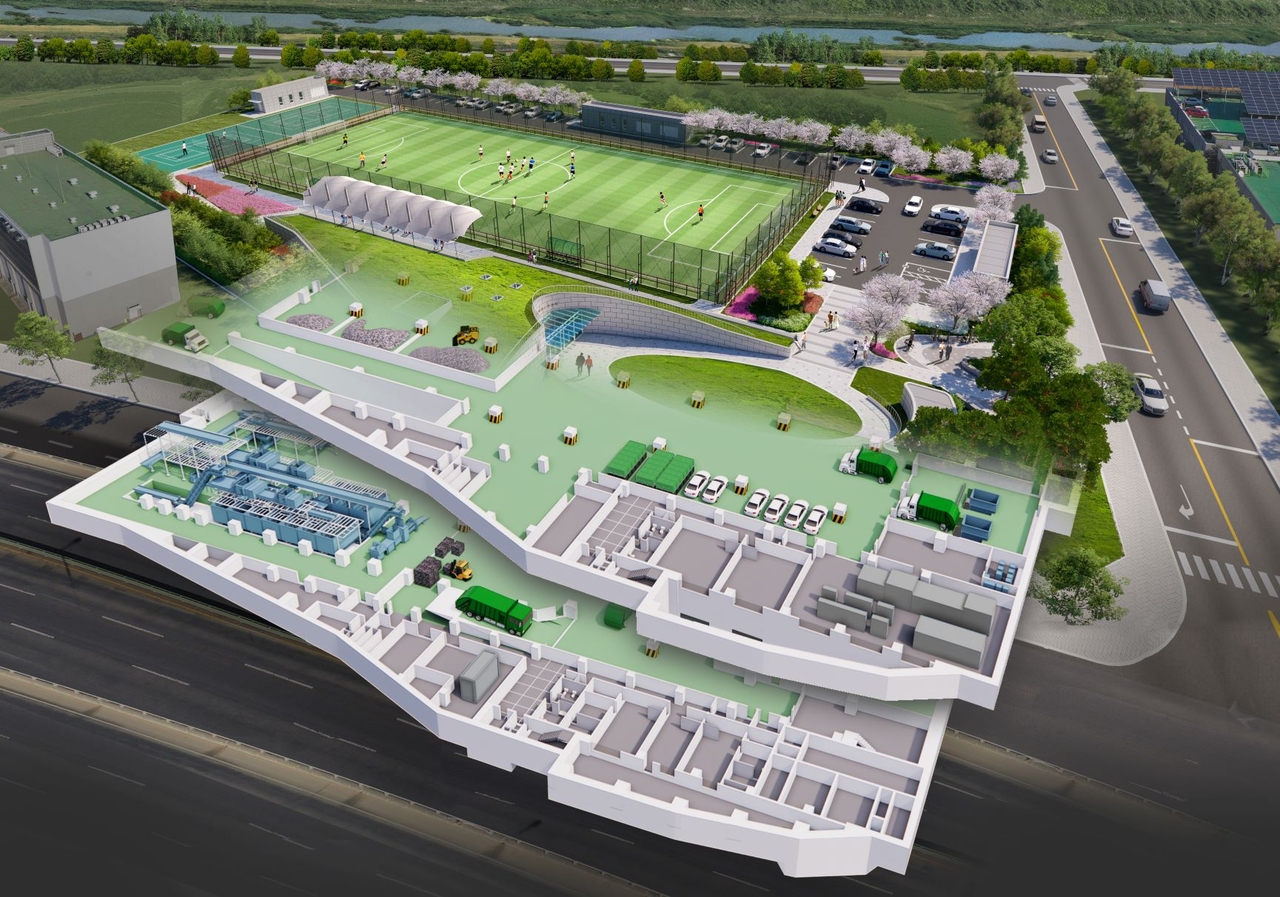
The facility is a joint recycling and waste-processing complex developed by Eunpyeong-gu, Seodaemun-gu and Mapo-gu — the three northwestern Seoul districts. All processing equipment was placed entirely underground, while soccer fields, jokgu courts and other community amenities were built on the surface above. The design was intended to ease residents' concerns about living near a waste facility while combining recreational and environmental education functions in a single complex.
The road to completion was anything but smooth. After a master plan was drawn up in 2017, the three districts signed a joint waste-processing agreement in 2019 and broke ground in 2021 — but opposition from residents over the site and its operations ran deep. More than 210,000 complaints were filed in 2019 alone, and the project topped the national count of resident grievances for three consecutive years.
Throughout that opposition, the district kept up regular communication with residents and pressed ahead with the project. It focused particularly on burying the processing facilities underground and building community amenities on the surface to address residents' concerns. The facility was completed in May 2025 and has since been running in a trial operation phase.
Located at 1200 Tongil-ro, Jingwan-dong, the center spans a total floor area of 18,746 square meters across four below-ground floors and the ground level. It is equipped with a sorting facility capable of processing 150 tons of recyclables per day, a compression and transfer facility handling 130 tons of household waste per day, and an odor-treatment system.
The opening will also strengthen environmental education offerings for residents.
The above-ground resource circulation experience center covers 514 square meters and draws attention with its distinctive exterior, shaped to resemble a bottle lying on its side. Inside, it houses a zero-waste café, a shop, and education and hands-on activity spaces designed to help residents incorporate eco-friendly habits — such as reducing waste and reusing materials — into their daily lives.
On the third below-ground floor, a 1,105-square-meter public information hall features an exhibition hall, a guided tour corridor and activity rooms. Visitors can follow the journey of recyclables from the point of separation through sorting and processing, and learn firsthand about the importance of resource circulation.
About 300 people, including officials from the three districts and local residents, are expected to attend Monday's opening ceremony. The program will include celebratory performances, commemorative events and tours of key facilities, as well as resident participation activities such as upcycling workshops and recycling and waste-sorting demonstrations.
Eunpyeong-gu plans to operate the sorting and processing facilities in a stable manner through continued cooperation among the three northwestern districts, while expanding environmental education and tour programs linked to the experience center and information hall.
"The Eunpyeong Metropolitan Resource Circulation Center is the fruit of what three autonomous districts achieved together, despite all the difficulties along the way," District Mayor Kim said. "We will operate the sorting and processing facilities for the northwestern Seoul area in a stable manner and build this into a hub where residents can learn about and practice resource circulation."
The center's opening carries significance beyond the completion of a waste-processing facility — it stands as an example of how prolonged community conflict can be managed and a contentious site transformed into shared local infrastructure. Going forward, however, key challenges remain: ensuring stable facility operations, managing quality-of-life concerns such as odors and noise, and encouraging residents to make active use of the community amenities above ground.
seouldream01@heraldcorp.com