Loans rebound within a month after 2.2 trillion won drop in September
Credit loans turn positive; group loans hit highest since April
Non-bank sector up 12.3 trillion won — more than double last year's full-year gain
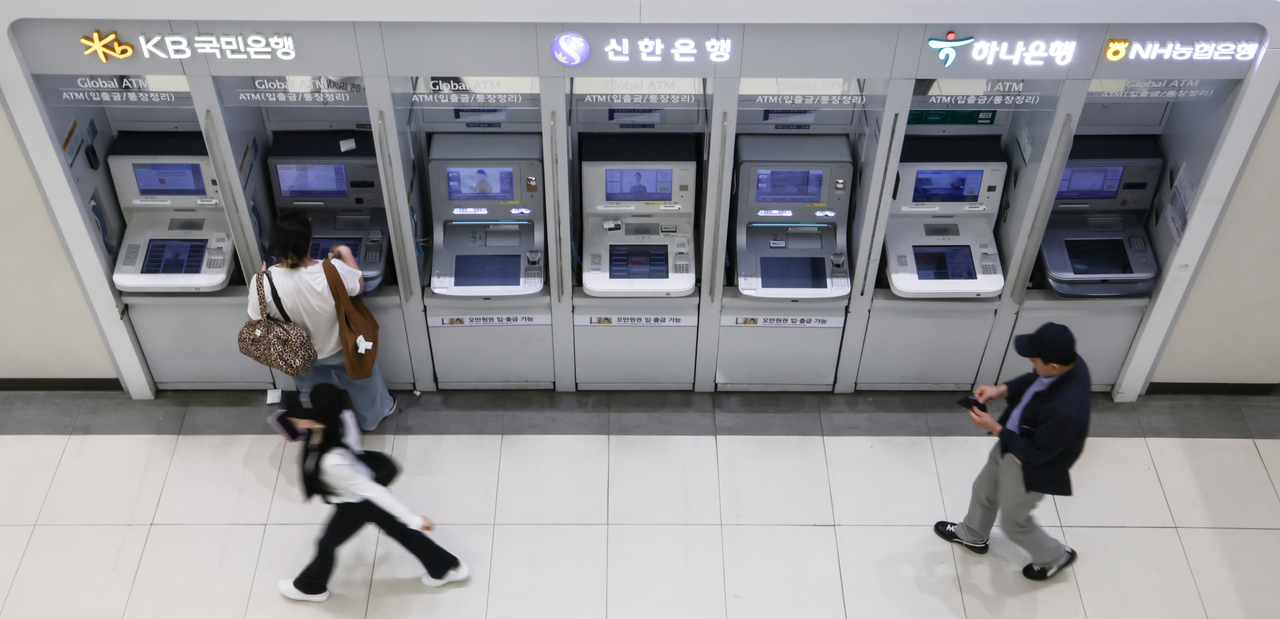
Household loans, which fell by more than 2 trillion won ($1.49 billion) in September, rebounded by 6.4 trillion won in October, driven largely by a pickup in credit loans and group mortgage loans. As a result, the cumulative increase in household loans through October this year has exceeded last year's full-year total.
Financial regulators said Wednesday that household loans across all financial sectors rose a combined 42.4 trillion won from January through October. That already surpasses the full-year increase of 38 trillion won recorded last year by 4.4 trillion won, and also exceeds the 41.6 trillion won increase posted in all of 2024.
Monthly household loan increases had been on a declining trend: 9.3 trillion won in May, 8.3 trillion won in June, 6.4 trillion won in July and 2.8 trillion won in August. The trend reversed in September, when loans fell by 2.2 trillion won, but October saw another swing back to a 6.4 trillion won increase. That is 1.5 trillion won more than the 4.9 trillion won increase recorded in October last year.
The October rebound was driven largely by a recovery in credit loans. Other loans excluding mortgage loans swung from a 5.4 trillion won decrease in September to a 2.4 trillion won increase in October. Credit loans alone turned from a 2.9 trillion won decline to a 1.2 trillion won gain over the same period.
The pace of mortgage loan growth also widened. The increase, which stood at 3.2 trillion won in September, expanded to 4 trillion won in October. In the banking sector, the gain grew from 2.9 trillion won to 3.3 trillion won, while in the non-bank sector it rose from 300 billion won to 700 billion won.
Group mortgage loans — bulk loans extended to buyers of newly built apartment complexes — showed particularly strong growth. The increase in group loans across all financial sectors rose from 1.7 trillion won in September to 2.4 trillion won in October, the largest monthly gain since April. Within the banking sector, the group loan increase expanded from 700 billion won to 1.2 trillion won. By contrast, the increase in general mortgage loans narrowed from 1.6 trillion won to 1.4 trillion won.

By sector, household loans at banks rose 5 trillion won in October after a gain of just 600 billion won in September. The non-bank sector also reversed course, swinging from a 2.7 trillion won decrease to a 1.4 trillion won increase over the same period. Credit unions, insurers, savings banks and specialized credit finance companies all returned to growth.
The non-bank sector's cumulative household loan growth has also been notable. Non-bank household loans rose 12.3 trillion won from January through October, more than double the sector's full-year increase of 5.1 trillion won last year. Credit unions accounted for 9.7 trillion won of that gain. Over the same period, bank household loans rose 30.2 trillion won.
Financial regulators attributed the continued rise in mortgage loans to an increase in the disbursement of previously approved group loans, even as housing transaction volumes in the Greater Seoul area declined. They also noted that wider monthly swings in credit loans had contributed to overall volatility in household loan growth.
Regulators urged financial institutions to "do their utmost to prevent a uniform loan cliff caused by a concentration of lending at specific times, even as household loans across the financial sector are being managed within the overall target range." They added that they plan to "carefully ensure that the supply of funds to ordinary people and those with genuine housing needs — including youth — as well as to regional areas outside the capital, does not contract excessively."
Meanwhile, the Bank of Korea said the average interest rate on new household loans extended by deposit-taking banks stood at 4.96 percent per annum in September, up 0.20 percentage points from the previous month. That is the highest level since November 2023, when the rate was 5.04 percent, and represents a 0.53 percentage point increase from April's 4.43 percent over five months.

rim@heraldcorp.com