Ministry of Interior and Safety unveils comprehensive heavy snow and cold wave plan
Over 5,100 priority evacuees identified; 'winter hazard reporting period' to run alongside measures
South Korea is significantly strengthening its pan-government safety net ahead of the winter heavy snow and cold wave season. The government has issued a disaster crisis alert at the "Attention" level to establish a standing response system and, for the first time this winter, will operate resident evacuation support teams to reduce casualties when disasters strike.
The Ministry of Interior and Safety on Wednesday announced a comprehensive winter heavy snow and cold wave plan to minimize casualties and property damage from natural disasters this winter.
The ministry said the plan focuses on building a proactive and thorough response system to intensively manage vulnerable groups and high-risk areas.
The most notable heavy snow measure is the resident evacuation support teams, which will be activated for the first time this winter.
The ministry has pre-identified more than 5,100 priority evacuees — residents of aging homes at risk of collapse or in areas prone to isolation. To help them evacuate safely, a standing assistance system will be maintained through the resident evacuation support teams, comprising 18,491 local government civil servants, neighborhood association heads and block leaders.
The foundation for proactive road snow removal has also been expanded.
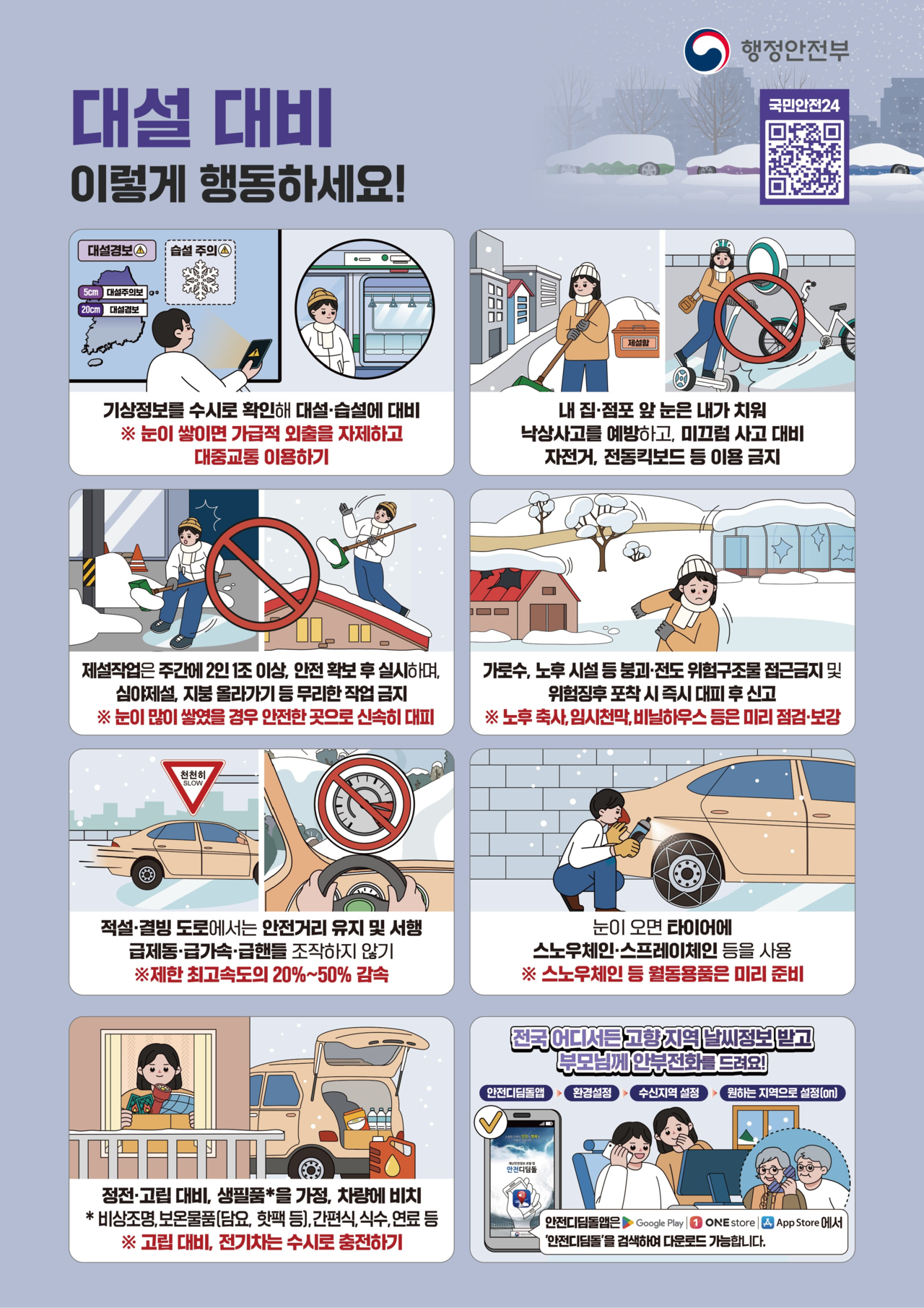
A total of 9,240 sites have been designated as the five major winter disaster-risk zones — including structures vulnerable to snow loads, sections prone to icing or difficult to clear, areas at risk of isolation, and coastal zones where casualties are a concern — and will be closely monitored. Based on an analysis of demand over the past three years, the government has secured 1.19 million tons of snow-removal agents and more than 37,000 pieces of snow-clearing equipment.
To prepare for sudden heavy snowfall, more than 4,500 automatic snow-removal devices will be deployed in advance along sections prone to chronic icing, while compact, purpose-built snow-clearing equipment will be dispatched to steep back roads. A "winter hazard intensive reporting period" will also run on the Safety Sinmungo public reporting platform to encourage public participation.
Cold wave measures place emphasis on proactive response based on weather forecasting and protection of vulnerable groups.
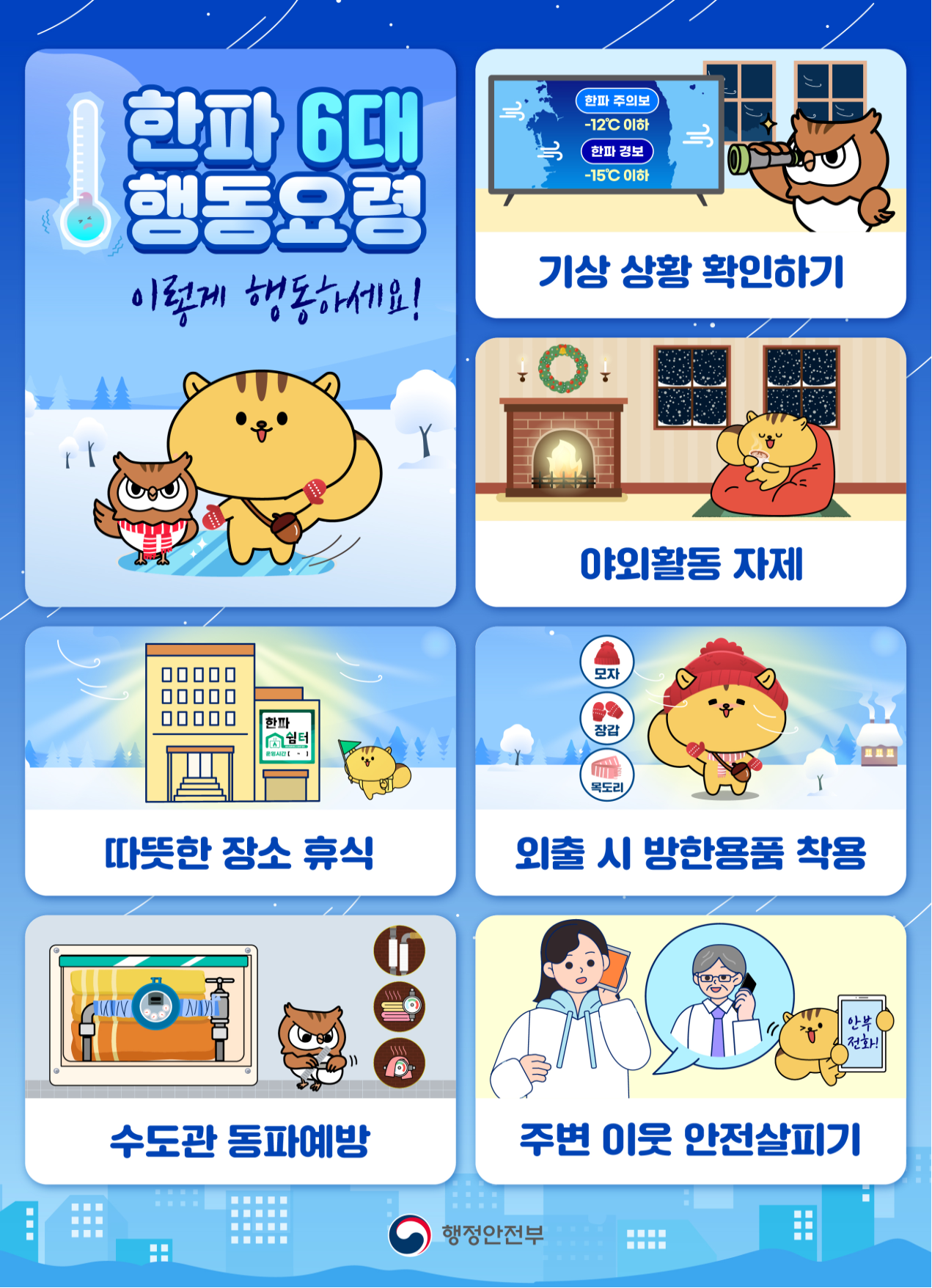
Cold wave impact forecasts, previously issued one day in advance, will now be provided two days ahead to give local governments more time to prepare their on-the-ground response. The number of cold wave shelters for vulnerable populations has also been sharply expanded, from roughly 53,000 to about 66,000 this year.
Alert dissemination methods will also be diversified.
When a cold wave advisory is issued, the government plans to send emergency text alerts and broadcast real-time weather information and safety guidelines through TV subtitles, village public address systems and large electronic billboards to improve information access for older residents.
"This winter, vulnerable groups may find it harder than usual to get through the cold season, so the government will work with relevant agencies to build a seamless heavy snow and cold wave response system and will proactively reach out to check on elderly residents and those living in low-income lodging houses," Interior and Safety Minister Yun Ho-jung said. "We ask the public to check weather conditions frequently, use public transportation and help clear snow in front of their homes and shops during heavy snowfall, and during cold waves, call their parents to check in and look out for those around them."
thlee@heraldcorp.com