- KRISS leads first invited paper for British physics society's Nobel Collection
- 15 years of graphene quantum resistance research compiled; international measurement guidelines established
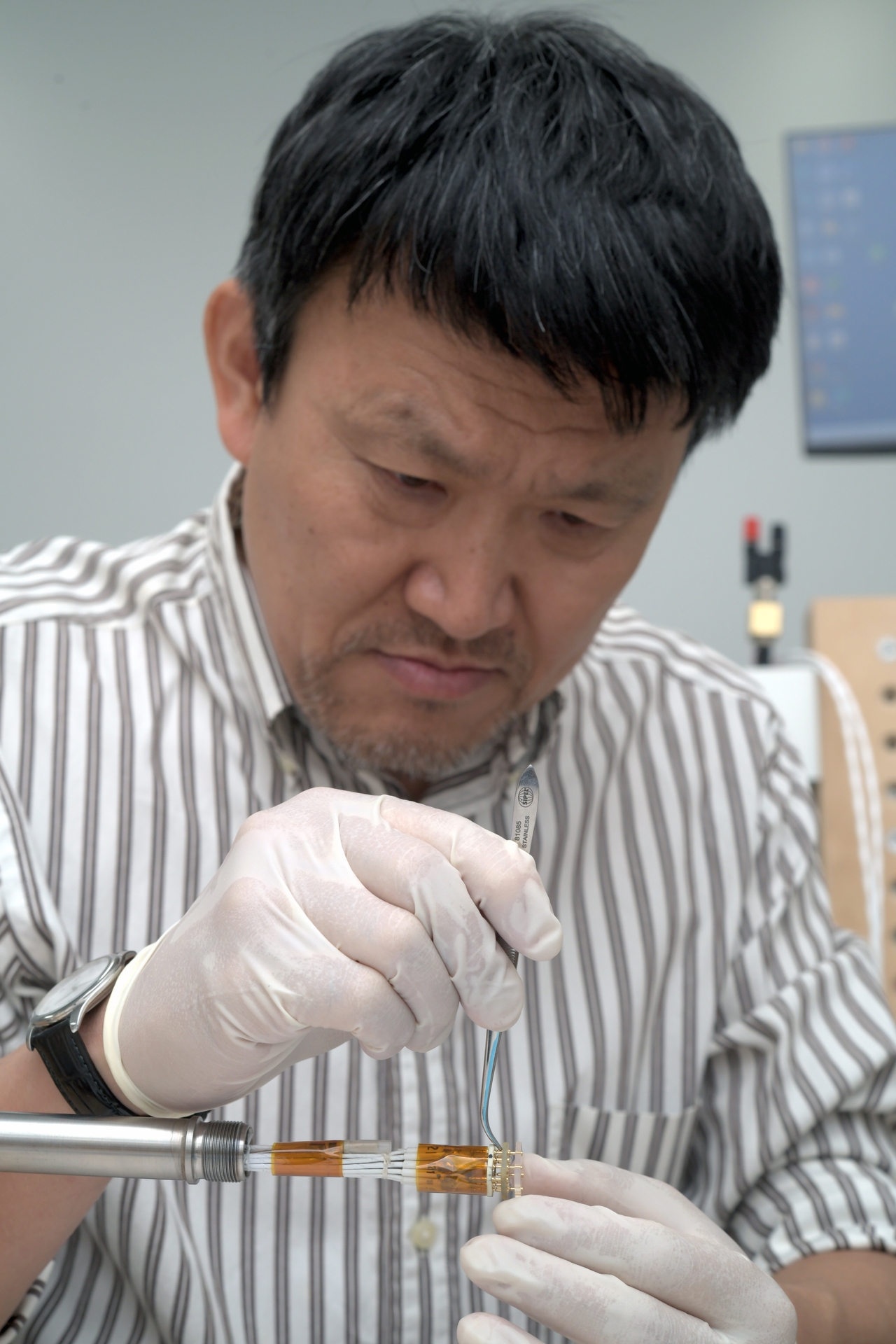
Graphene, long hailed as a "dream material," has moved beyond the laboratory to become a practical national standard for electrical resistance. South Korean researchers have compiled 15 years of work on ultra-precise graphene-based resistance measurement and played a central role in establishing international measurement guidelines for use by countries worldwide.
The Korea Research Institute of Standards and Science (KRISS) announced Wednesday that it led the writing of the first invited paper for the "Nobel Collection," a series planned by IOP Publishing, the publishing arm of the Institute of Physics in the United Kingdom.
The paper was written at the official invitation of Measurement Science and Technology, a century-old peer-reviewed journal specializing in metrology. KRISS Senior Researcher Chae Dong-hun served as both first author and corresponding author, with researchers from Germany's Physikalisch-Technische Bundesanstalt (PTB) and Sweden's Research Institutes of Sweden (RISE) contributing as co-authors.
Graphene is a single-atom-thick material in which carbon atoms are arranged in a honeycomb lattice. First isolated in 2004, it drew widespread attention when it earned the Nobel Prize in Physics in 2010, and its potential applications have since been explored across fields ranging from next-generation semiconductors to sensors.
Even so, more than two decades on, most of those applications have yet to advance beyond the laboratory stage. The field of national electrical resistance standards is a notable exception: graphene's unique properties are already being used in actual precision measurement. Researchers describe this as a prime example of graphene technology reaching Technology Readiness Level 9 — the highest level of maturity.
The underlying principle is the quantum Hall effect, the research behind the 1985 Nobel Prize in Physics. The phenomenon — in which electrical resistance takes on a fixed value under extremely low temperatures and strong magnetic fields — enables the realization of ultra-precise resistance references grounded in fundamental constants of nature.
Conventional gallium arsenide-based quantum resistance standards require temperatures below 2 kelvins and magnetic fields of around 10 tesla, necessitating large cryogenic systems that consume expensive liquid helium.
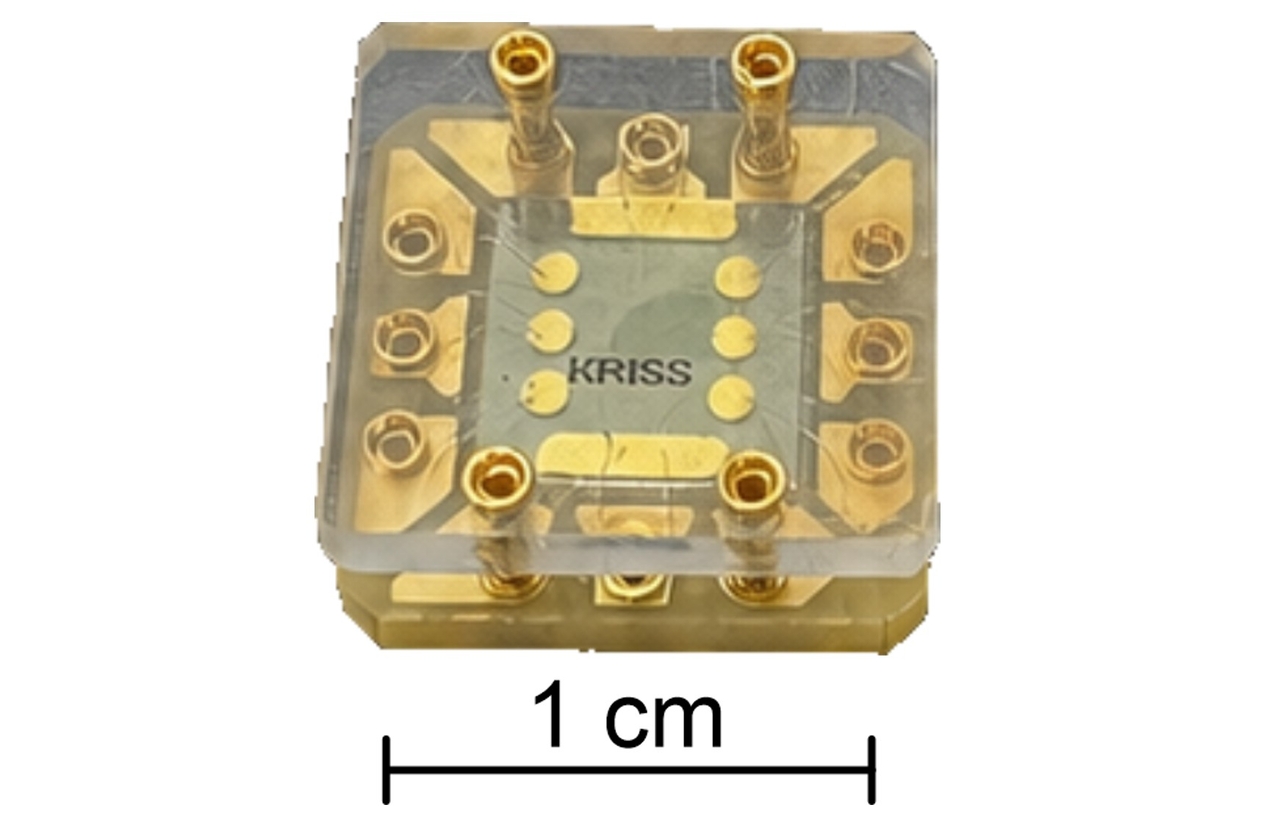
Graphene devices, by contrast, operate stably at around 4 kelvins and 5 tesla. They can run year-round on compact refrigeration units that do not require a continuous liquid helium supply, significantly reducing the burden of equipment operation.
Accuracy has also been verified. In international comparisons, measurements from graphene devices and conventional gallium arsenide devices agreed to within a relative uncertainty of less than 1 part per billion.
The paper covers the technological development of graphene quantum resistance standards, international verification results, and prospects for future applications. The researchers also outlined the potential for a next-generation quantum electrical standard that extends beyond electrical resistance to impedance and current measurement — and ultimately integrates voltage, resistance and current standards into a single device.
KRISS further cemented its standing by participating in the drafting of international measurement guidelines for graphene quantum resistance standards.
The Consultative Committee for Electricity and Magnetism (CCEM) under the International Committee for Weights and Measures published a quantum resistance measurement guideline reflecting the characteristics of graphene devices in June. KRISS contributed to the document alongside researchers from 11 national metrology institutes, including the US National Institute of Standards and Technology (NIST) and Germany's PTB.
Notably, measurement results from a graphene device fabricated independently by KRISS were featured as a representative case study in the international guideline. KRISS research on reducing vibration from refrigeration equipment was also cited as the basis for equipment operation recommendations.
"The global research collaboration network we built over 15 years of dedicated work on graphene quantum resistance standards has borne fruit in the form of this invited paper and the international guideline," Chae said. "It is deeply meaningful that South Korea, once a latecomer in metrology, now stands shoulder to shoulder with the world's leading measurement nations."
nbgkoo@heraldcorp.com