Civil servants develop automated address-matching program using generative AI and Python, flagging 153 unreported acquisition tax cases worth 204.12 million won
Tax officials in Seoul's Gangnam-gu have uncovered 153 unreported acquisition tax cases worth 204.12 million won ($152,000) using a homegrown program built with generative AI and Python, earning recognition at a national local tax research competition.
The achievement drew particular attention because the officials developed the tool themselves — without outside contractors — managing to both expand tax revenue and improve administrative efficiency in one effort.
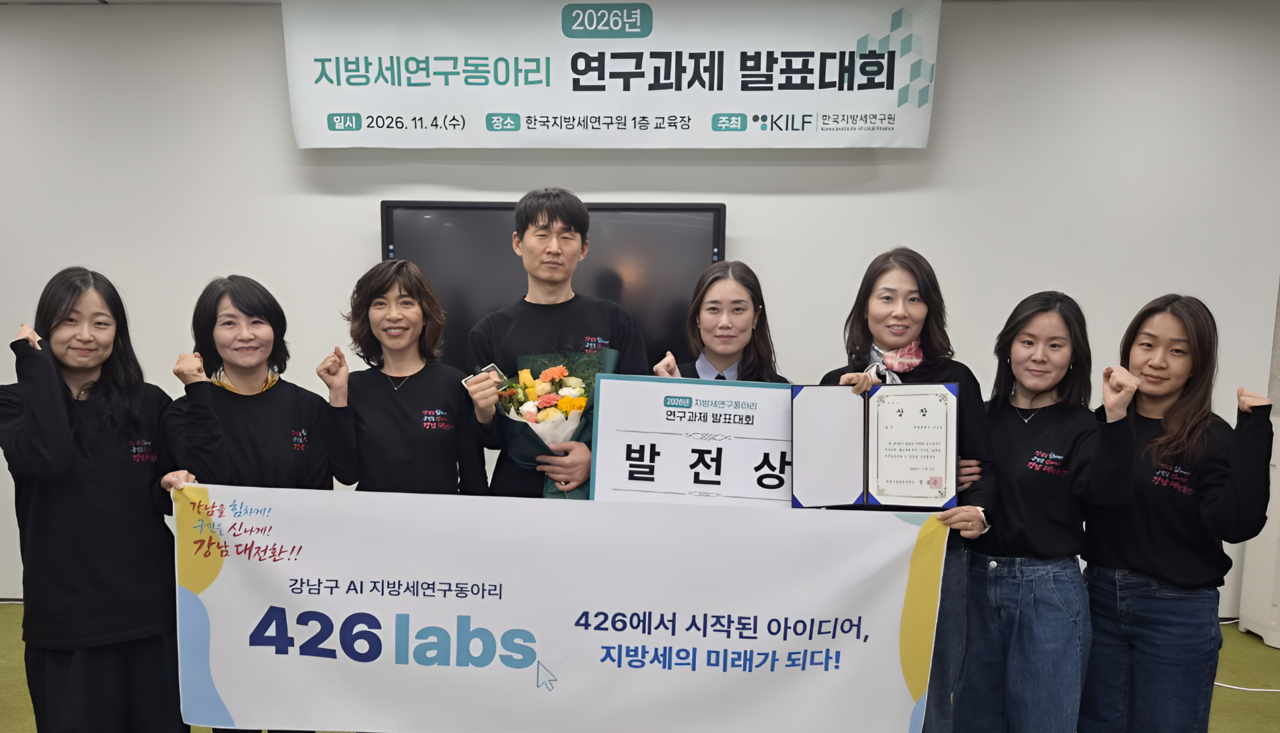
Gangnam-gu announced that 426Labs, a local tax research club made up of six tax civil servants, won the development award at the 2026 Local Tax Research Club Competition held Nov. 4 at the Korea Institute of Local Finance.
426Labs developed a program that automatically cross-references tax data with mismatched address formats using generative AI and Python. Previously, staff had to manually verify records one by one because different datasets used different address conventions. The automated matching technology streamlined the comparison and verification process.
The district applied the program to data on elevator installations and replacements and on sports facility membership acquisitions, then compared the results against acquisition tax filings. The exercise turned up 153 unreported cases and identified 204.12 million won in uncollected revenue.
The result is particularly significant because frontline civil servants — not outside consultants — identified the problem and built the solution themselves. It stands as a case of administrative innovation in which a practical inconvenience discovered on the job was resolved through technology and translated directly into new tax revenue.
The team's presentation style also drew notice. Playing on the elevator acquisition tax theme, 426Labs structured its presentation as a ride in "Elevator No. 426," traveling floor by floor from the ground level to the rooftop. At each floor, the team used storytelling to walk judges through the shortcomings of the existing workflow, the program development process and the revenue results — helping the panel follow along with ease.
A total of 42 research clubs from across the country submitted 44 research projects for the competition. 426Labs first cleared a written review to be named among the top 11 projects, then earned further recognition at the live presentation for delivering practical, field-driven research results.
Beyond its research work, 426Labs runs a YouTube channel called "Saegeum Ssok — Easy Local Tax" to provide residents with accessible information on local taxes. Twenty-four short-form videos produced by the team were also selected for the AI Short-Form Educational Content Competition organized by the Seoul Metropolitan Government Human Resources Development Institute.
Gangnam-gu said it is reviewing plans to expand the automated matching technology to the verification of tax data for other levies, including property tax and registration and license tax. The district also aims to develop the tool into a model other local governments can adopt, raising overall efficiency in local tax administration.
Gangnam-gu District Mayor Kim Hyun-ki said it was meaningful to see staff-led research — born from inconveniences officials encountered on the job — recognized on a national stage. "Accurately identifying hidden tax revenue is a matter of fairness to diligent taxpayers," Kim said, adding that the district would continue to actively support employees so their field ideas translate into improved operations and administrative innovation.
seouldream01@heraldcorp.com