In the summer of 1998, as the Asian financial crisis stripped Koreans of their jobs and their hope, a single golfer gave the nation the courage to stand back up. Park Se-ri won back-to-back majors — the McDonald's LPGA Championship and the US Women's Open — and her barefoot charge into a pond to play an impossible shot became an emblem of the era. The four LPGA Tour victories she collected that year also marked the starting point of a vast expansion in Korean women's golf.
The domestic stage at the time was small and threadbare. The 1998 KLPGA Tour ran just seven events with a total purse of 780 million won ($581,000), and the season's leading money winner, Kim Mi-hyun, took home only 68.06 million won. The reality was even harsher than the oft-repeated memory of "a time when 100 million won was enough to top the money list." A vast gulf separated the world-class player Park had become and the tour that had produced her.
The door Park opened to overseas competition was widened by Kim Mi-hyun, Park Ji-eun, Han Hee-won, Park In-bee, Shin Ji-yai, Kim In-kyung, Ko Jin-young, Kim Sei-young and Park Sung-hyun. Korean players combined for six LPGA Tour wins in 1999 and accumulated 71 victories over the following decade. One player's leap of faith had multiplied into a generation of world-class competitors.
Back home, the landscape was already shifting. By 2000, the KLPGA schedule had grown to 15 events with a total purse of 3 billion won — more than double the number of tournaments and nearly four times the prize money of just two years earlier.
As Korean players kept winning on the world's biggest stage, women's golf became a major sport that the public followed closely. Companies gained a compelling reason to sponsor players and tournaments, and young players and their families gained a concrete reason to choose golf as a profession. The prestige earned abroad had expanded the appetite for investment at home.
The success that began with Park Se-ri and continued through the "Seri Kids" and "Inbee Kids" generations only deepened that trust. Their paths to the top differed, but each proved Korean women's golf could compete at the highest level. Korean players' LPGA wins grew to 103 in the 2010s, reaching 15 in each of 2015, 2017 and 2019. In 2021, Ko Jin-young became the player to claim the 200th career LPGA victory for a Korean.
The domestic tour grew in step. According to the KLPGA's official records, the 2015 regular tour comprised 29 events with a total purse of about 18.5 billion won — more than four times as many events and roughly 24 times the prize money as in 1998, when Park Se-ri was winning four times on her own in the United States. As Korean victories abroad became almost routine, the stage and the professional infrastructure at home expanded to match.
The 2026 money leader, Kim Min-sol, illustrates just how far the tour has come. This season the KLPGA Tour ran 29 events with a total purse of 33.5 billion won, and Kim set an all-time earnings record of 1.63 billion won in a single season — nominally about 24 times what Kim Mi-hyun earned as the 1998 money leader. One player's season prize money now exceeds twice the entire tour purse of 28 years ago. While the number of events quadrupled, total prize money grew 43-fold.
None of this is to suggest a simple one-to-one equation between overseas wins and new domestic events. Economic growth, a broader golfing public, television coverage, corporate sponsorship, association management and the drawing power of domestic players all played a part. Inflation must also be factored into any prize-money comparison.
Even so, it is impossible to deny that a virtuous cycle — overseas success generating public interest, that interest growing the domestic tour, and a bigger tour producing more world-class players — has been one of the central engines of Korean women's golf's rise. The prosperity the KLPGA enjoys today carries within it the accumulated contributions of players who fought beyond Korea's borders.
Last year the KLPGA introduced a system to award special seeds for the following season to up to four players selected from among K-10 Club members and those with career earnings of at least 2.5 billion won, evaluated on results, contributions to the association and public profile. This year, Kim Bo-kyung, Ahn Song-yi, Jang Ha-na and Park Kyul received special seeds for the 2027 season.
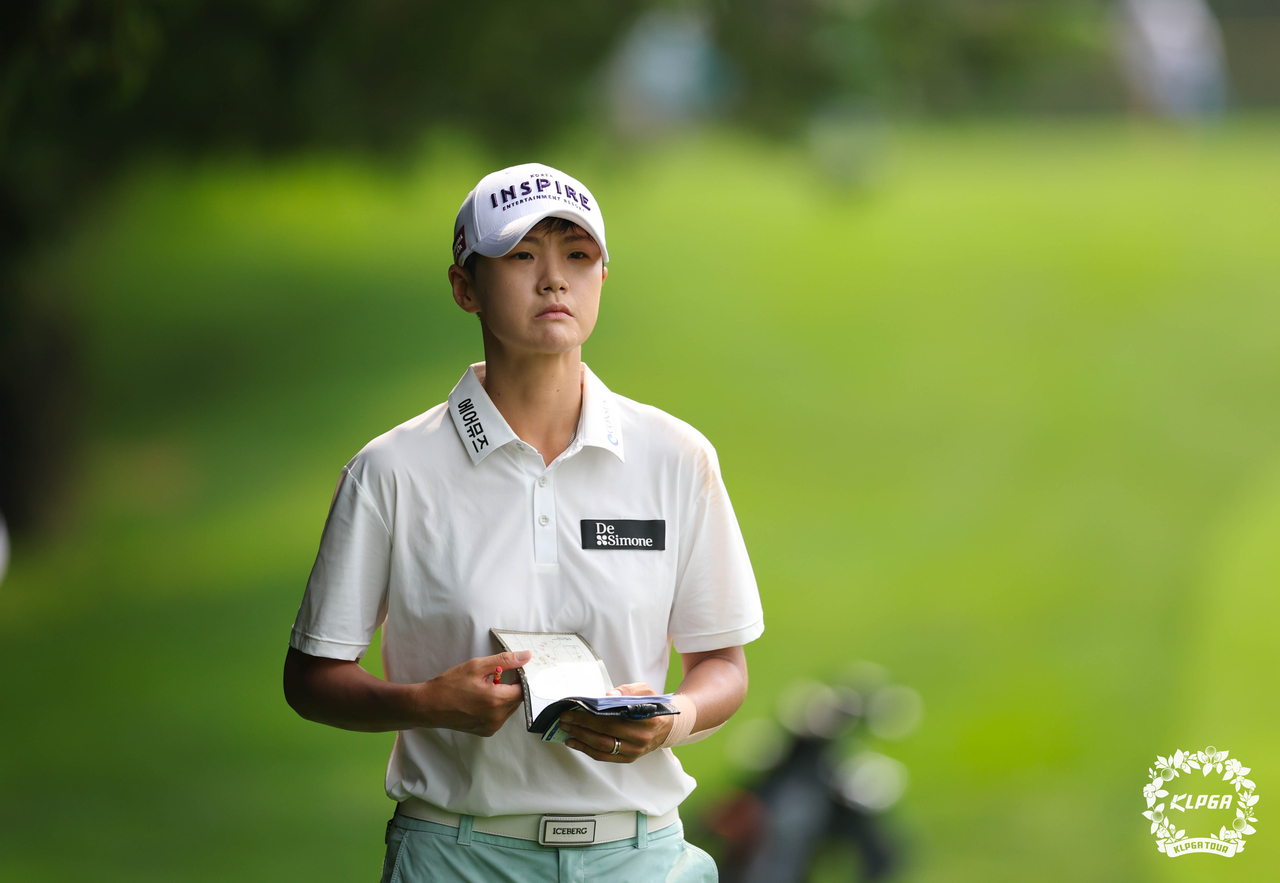
The intent to recognize players who have sustained the domestic tour deserves respect. But the scope of that recognition should not stop at the country's borders. Park Sung-hyun won seven LPGA Tour titles, including two majors, and reached world No. 1 — one of the central figures who showed the world what Korean women's golf could do. Yet Park is now fighting a nerve-shredding battle in the seed-ranking tournament, the so-called "race from hell," just to earn a place back on the domestic tour.
A player's contribution to the tour's growth cannot be measured solely by years spent on the domestic circuit or domestic prize money. Victories abroad also helped build the public interest and sponsorship base that the domestic tour depends on. Park's enduring fandom is evidence that the contribution continues to this day. A return to the tour would give fans a reason to come back to the course and give the tour itself a boost at the gate.
If the special seed system exists to recognize contributions to the tour's development, its criteria should be broad enough to include LPGA major titles and a world No. 1 ranking. The contributions of players who kept the domestic tour alive and those who raised Korean women's golf's name on the world stage deserve equal recognition. Under such a standard, Park Sung-hyun should be given the opportunity for a special seed. That is what a tour that has truly grown should look like.
sports@heraldcorp.com