Incheon animal clinic head self-administered animal anesthetic 92 times over three months
UK requires weekly stock checks; US mandates reporting theft within a day
A look at what can happen to our dogs and cats — the systems, research and global cases behind the headlines.
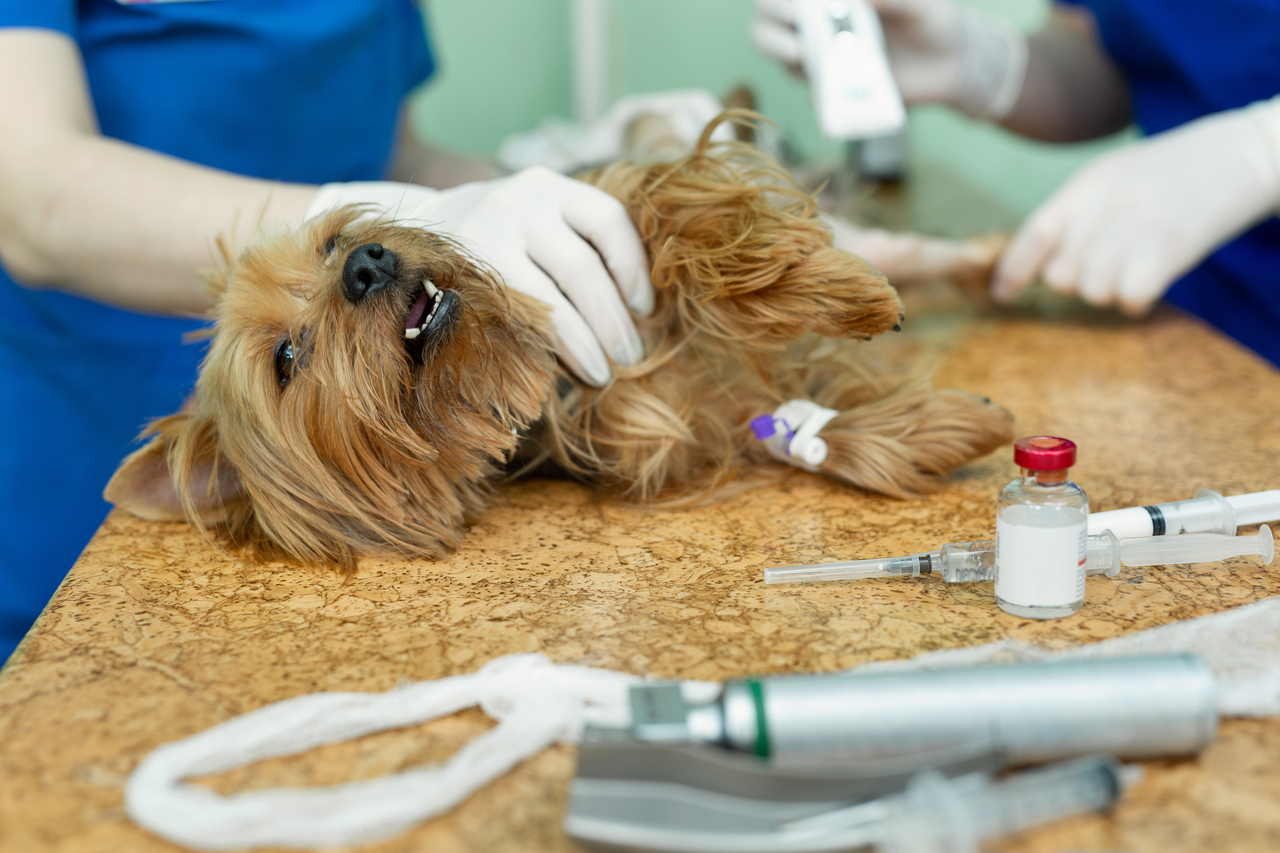
A veterinarian who diverted an animal anesthetic for personal use, injecting it 92 times and then treating patients while under its influence, has been caught — drawing fresh scrutiny to how animal clinics manage controlled substances.
Ketamine is used in veterinary clinics to anesthetize animals before surgery or procedures. Because it can produce hallucinogenic effects in humans, it is classified as a controlled medical narcotic under South Korea's Act on the Management of Narcotic Drugs. Animal clinics are required to report every use of controlled substances to the government.
According to Yonhap and the Ministry of Food and Drug Safety, the suspect — identified only as A, the head of an animal clinic in Incheon — self-administered ketamine purchased for animal treatment inside the clinic's examination room and drug storage room from July to September this year.
Closed-circuit television footage confirmed 92 injections over those three months, with more than six on some days. The suspect administered roughly 1 milliliter at a time, totaling 254 milliliters — the equivalent of 25 vials of 10-milliliter ketamine.
Evidence also emerged that the suspect treated animals while under the influence of ketamine.
A tip reached the Ministry of Food and Drug Safety's special narcotics surveillance unit in August, prompting its special judicial police to conduct an on-site inspection and search and seizure.

Investigators found 76 empty ketamine vials and about 100 insulin syringes in the clinic's pharmacy, operating room, examination room and director's lounge. Hair and urine tests conducted by the National Forensic Service confirmed the drug use.
The suspect had falsely recorded the ketamine used on himself as having been administered to animals. From November last year through July this year, the suspect also failed to report handling records for fentanyl patches, ketamine, butorphanol, phenobarbital and phentermine.
The Ministry of Food and Drug Safety referred the case to the Seoul Central District Prosecutors Office on charges of violating the Act on the Management of Narcotic Drugs, and notified the Ministry of Agriculture, Food and Rural Affairs so it could consider revoking the suspect's veterinary license.
The ministry said it would continuously monitor the prescription and use of controlled medical narcotics — including ADHD medications, anesthetics, sedatives and sleeping pills — for non-therapeutic purposes, and pledged to investigate illegal handling swiftly and strictly.
The ministry plans to conduct intensive inspections of animal clinics that use large quantities of controlled substances such as ketamine, working with local governments through the end of the year.
Drug incidents at animal clinics mount
This is not the first drug-related incident at a South Korean animal clinic.
In April this year, the head of an animal clinic in their 50s was detained on charges of illegally distributing propofol. The clinic had prescribed an average of more than 100 vials of propofol per month despite having a relatively low patient volume.
The volume of controlled medical narcotics administered at animal clinics rose about 9 percent last year compared with the year before. Yet current rules do not require clinics to record the personal details of pet owners when administering controlled substances on the premises.
The Ministry of Agriculture, Food and Rural Affairs said it is pushing to amend the Veterinary Service Act to establish a legal basis for collecting treatment information — including pet owners' resident registration numbers — when controlled substances are administered at animal clinics. The Ministry of Food and Drug Safety is also pursuing a legal amendment that would require in-clinic administration records to be reported to the integrated narcotics management system.
1 in 8 US vets aware of staff diverting drugs, study found
Research in the United States has also documented the problem of controlled substances leaking from animal clinics to humans.
A research team at the University of Colorado School of Public Health published findings in 2018 in the American Journal of Public Health based on a survey of 189 veterinarians in Colorado.
About 45 percent of respondents said they were aware of cases in which pet owners or clinic staff had misused or abused opioid painkillers. Twelve percent said they knew of clinic staff diverting or misusing opioids.
Thirteen percent said they had suspected a pet owner of deliberately injuring or feigning illness in their animal to obtain a painkiller prescription.
Lily Tenney, the researcher who led the study, said the findings pointed to a need for greater attention to the channels through which opioid abusers obtain drugs.
A larger survey published the following year raised similar concerns.
Research teams from Colorado State University, North Carolina State University and other institutions anonymously surveyed 697 general-practice veterinarians who were members of the online community Veterinary Information Network (VIN) in October and November 2018, publishing the results in 2019 in the international journal Frontiers in Veterinary Science.
Some 63.5 percent of respondents (441 of 694) said they worried that opioid painkillers prescribed for pets could end up in the hands of owners. Concern about diversion by people inside the clinic — such as staff — was lower, at 24.7 percent (171 of 691).
The research team noted that people working inside clinics are just as vulnerable to opioid addiction as anyone else.
The team also reported that veterinarians had expressed concern about fentanyl patches being diverted to humans. Fentanyl patches are also seeing declining use in animal clinics due to concerns about uneven absorption.
Fentanyl patches were among the drugs the Incheon suspect failed to report handling.
UK checks stock weekly; US requires reporting within a day
The United Kingdom classifies ketamine as a Schedule 2 controlled drug — one of its strictest categories.
Under guidelines from the Royal College of Veterinary Surgeons, animal clinics must store ketamine in a locked cabinet fixed to a wall or floor, with keys or access codes restricted to authorized staff only.
Clinics must reconcile the register balance against the actual cabinet stock at least once a week; any discrepancy must be investigated and reported to the responsible veterinarian. Disposal of remaining drugs must be witnessed by a government inspector or an independent veterinarian.
The United States has classified ketamine as a Schedule III controlled substance under the federal Controlled Substances Act since 1999. Veterinarians must register with the Drug Enforcement Administration (DEA) to handle ketamine at an animal clinic. Anyone whose DEA registration has been denied or revoked, or who has a felony conviction related to controlled substances, is barred from handling the drugs even as a staff member.
Drugs must be stored in a securely locked cabinet, and a full inventory must be conducted and recorded every two years. Any theft or significant loss must be reported to the local DEA office within one day. Violations can result in suspension or revocation of a controlled-substance handling registration.
dbsdn1110@heraldcorp.com