Gangnam-gu District Mayor Kim Hyun-ki emphasizes safety alongside reconstruction pace; six nearby schools heighten scrutiny of asbestos removal and demolition work
Gangnam-gu in Seoul has stepped up on-site safety management ahead of full-scale demolition at the Gaepo Jugong 5 apartment complex reconstruction project.
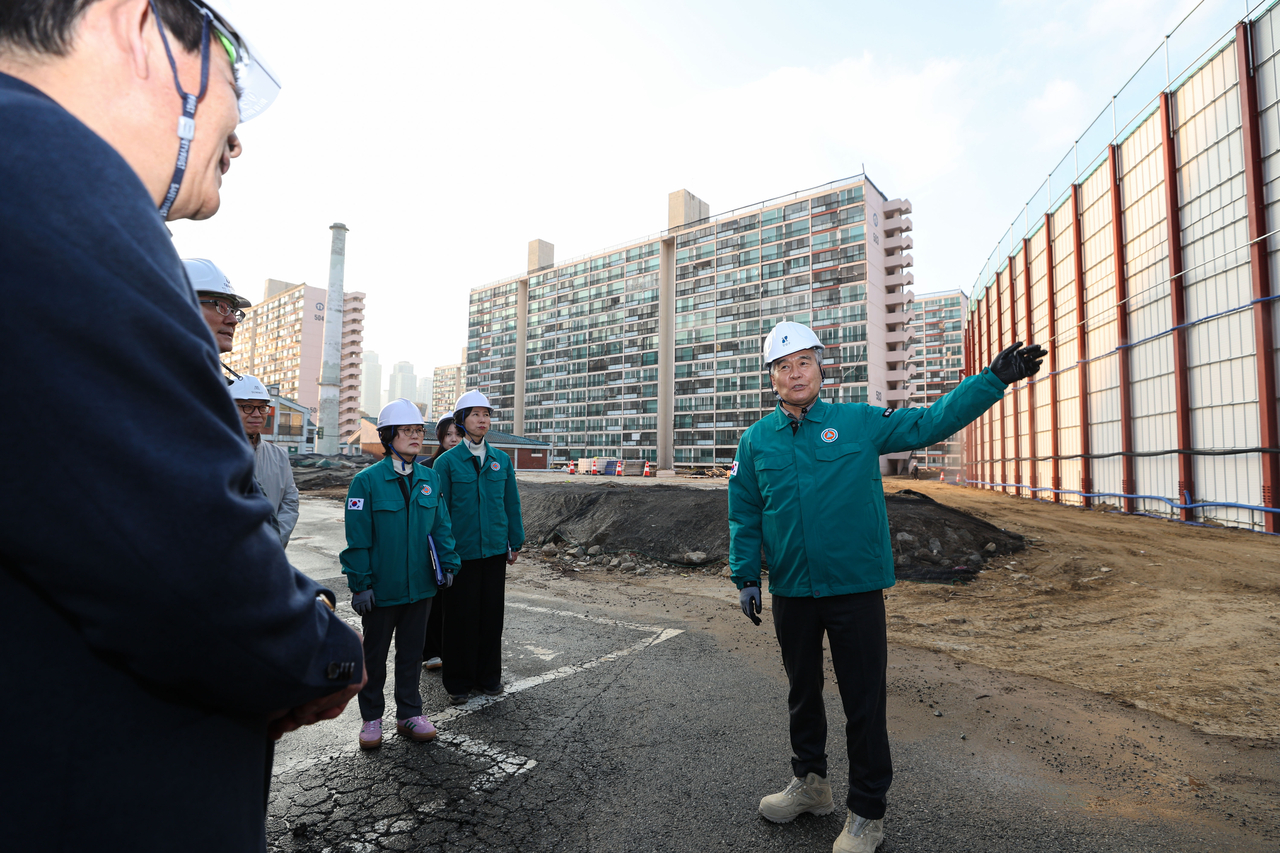
Gangnam-gu District Mayor Kim Hyun-ki visited the Gaepo Jugong 5 reconstruction site Wednesday to inspect the progress of asbestos removal work and the state of safety measures in place.
The inspection was arranged not only to keep the reconstruction project on track but also to prevent safety accidents and harm to residents during construction. Kim focused particularly on protective measures and safety conditions surrounding the ongoing asbestos removal work, which is being carried out before the main demolition begins.
After receiving a briefing from the reconstruction association and project officials on the current status and future construction plans, Kim toured the work zones. He then urged project officials to strictly comply with all relevant regulations and safety rules and to ensure no gaps in safety management throughout the entire demolition process.
Completed in 1983, the Gaepo Jugong 5 complex is an aging residential development of 940 units. Through reconstruction, it will be transformed into a residential complex of up to 35 stories, 14 buildings and 1,279 units. The project received management and disposal plan approval in September last year, and residents completed their relocation in May this year.
The district plans to carry out asbestos removal through February 2027, followed by demolition of the existing structures from March through September. Main construction is then targeted to begin in the second half of that year.
The site's proximity to Gyeonggi Girls' High School, Sudo Electric and Technical High School, Seoul Gaepo Elementary School and a neighborhood park makes ensuring the safety of students and residents a particularly pressing concern.
To minimize the spread of noise and airborne dust during asbestos removal, the district will install temporary soundproof barriers at site entrances and operate a double-entry structure at access points.
A monitoring committee comprising officials from six nearby schools, external environmental experts, project officials and local residents will also be formed to jointly oversee work conditions and the surrounding environment.
Once full-scale demolition begins, the district will focus on minimizing the impact on schools and residential areas. Construction vehicle routes will be separated as much as possible from school zones, and dedicated traffic management personnel will be deployed. Soundproof panels will be installed on building exteriors to reduce noise and dust.
In addition, the district plans to establish a demolition coordination body that includes project officials, schools, local businesses and nearby residents to continuously address inconveniences and safety concerns that arise during construction.
"Reconstruction speed matters, but protecting the safety of residents and workers throughout the process is what matters most," Kim said. "From demolition to the main construction, we will make safety the top priority at every stage and create a reconstruction environment where residents can feel at ease."
seouldream01@heraldcorp.com