"Welfare must translate into real, tangible change in people's lives. I will build an agency that provides tailored social services citizens can feel in their everyday lives — and one where voices from the field are reflected in policy and administration."
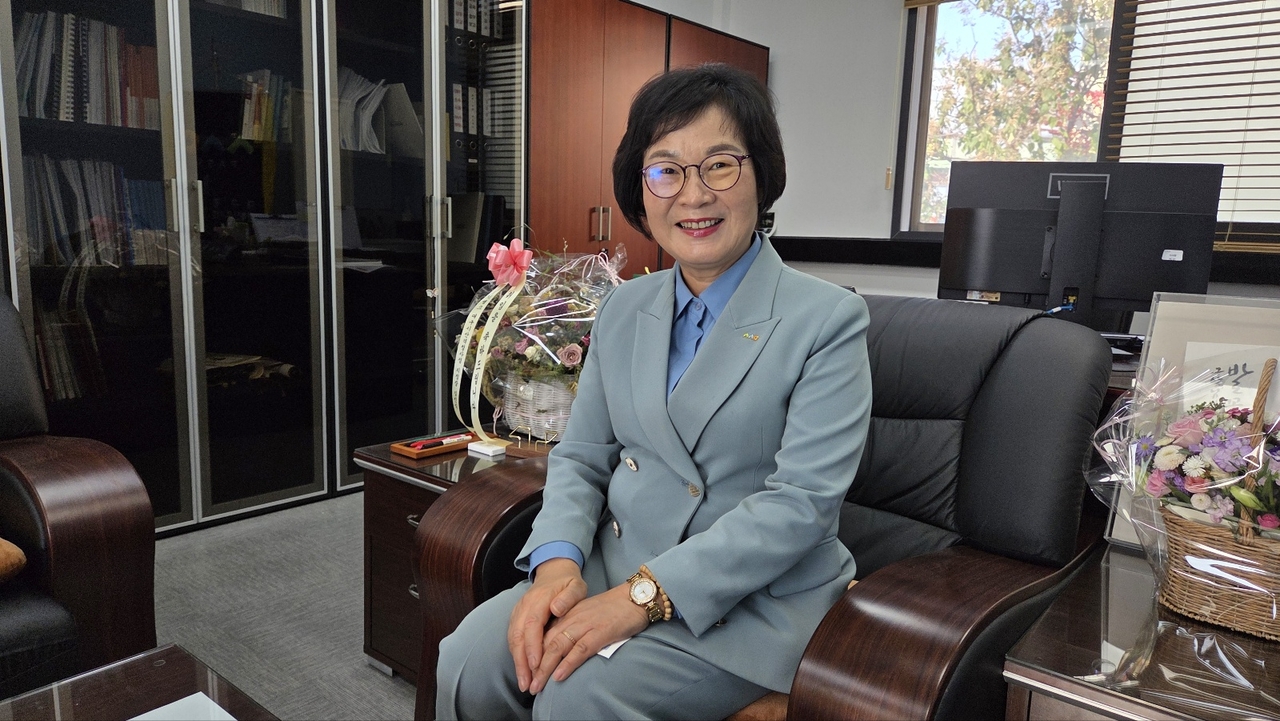
Yun Yeong-ae, the newly appointed head of the Daegu Metropolitan City Haengbok Jinheung Social Service Agency (Daegu Haengbok Jinheung Agency), made the pledge during an interview at her office Wednesday afternoon, adding that she would "carefully attend to what citizens need and lay the organizational groundwork for frontline welfare workers to fully exercise their capabilities."
Yun holds a doctorate in social welfare and previously served as director of the residents' welfare bureau in Daegu's Nam-gu district office before serving two terms as a Daegu City Assembly member. She brings together expertise in social welfare, local government experience and legislative work, and hit the ground running immediately after taking office by reviewing key issues across each department.
The two core keywords she put forward upon taking office on Oct. 28 were "field communication" and "welfare citizens can feel," and she has been moving at a relentless pace to put both into practice.
The following is an edited transcript of the interview with Yun.
— Congratulations on your appointment. What are your thoughts on taking office, and what is the basic direction in which you plan to lead the agency?
— The responsibility weighs heavily on me. The first commitment I made after taking office was not to get caught up in flashy slogans or short-term achievements. The greatest lesson I have drawn from years of working in social welfare is the power of sincerity. Rather than chasing dramatic, visible change, I want to build an agency that walks steadily, in the same direction, always beside citizens and frontline workers — slowly, but consistently. I believe that if we keep taking those quiet, deliberate steps, our sincerity will seep into the daily lives of citizens, and they will ultimately recognize it. On that belief, I will pour all my energy into field-centered management and building a stable, substantive organization.
— You began reviewing departmental issues immediately after taking office. Why do you place such emphasis on field-centered administration?
— Because the answers to welfare are always found at the frontline, not in documents on a desk. Since taking office, I have been visiting our 21 affiliated facilities and two project units day after day — starting with the Daegu Comprehensive Childcare Support Center, followed by the Disability Hope Dream Center, the Youth Activity Promotion Center and Huimangwon, among others. I have dispensed entirely with cumbersome protocol and formalities during these visits. Instead, I have been showing up with rice donated in lieu of congratulatory flower arrangements, tying on an apron alongside staff to help serve meals, and personally checking heating systems ahead of the coming winter — joining frontline workers in their everyday routines. Only by seeing and hearing the hardships of the field firsthand can I set an accurate course for where budgets and administration need to go.
— What do you see as most important for delivering social services that citizens can actually feel?
— I believe securing the depth and continuity of existing services matters far more than rolling out a list of new programs. The welfare citizens feel does not come from grand discourse — it comes from a firm, outstretched hand that reaches them without delay when they are struggling and in need of help. To that end, I will refine the service delivery system so that support programs spanning the full life cycle — from infants and toddlers to seniors and people with disabilities — connect seamlessly and in detail throughout citizens' lives, rather than operating in silos. I will also work to identify vulnerable people who fall through the cracks of institutional support by going out to the field first, and I will implement tailored social services that accompany them consistently — not stopping at a one-time handout, but staying with them until they achieve independence and restore their daily lives.
— You served as director of the residents' welfare bureau in Daegu's Nam-gu district office and as a Daegu City Assembly member for two terms. How do you expect those experiences to help you in this role?
— My hands-on experience directly administering frontline welfare services at the district office, combined with my legislative experience reviewing and coordinating Daegu's overall budget and policy at the City Assembly, gives me a strong foundation for translating the language of the field into the language of policy. I understand better than most why the urgent needs of welfare workers get blocked in administrative procedures — and, conversely, what gaps emerge when the city's policy intentions reach the field. I will draw on both my theoretical expertise and my practical sense of administration and legislation to serve as a reliable bridge working in close step with the city government and the City Assembly. I will make a persuasive case for the budgets the field truly needs, push to reform unreasonable systems, and create an environment where frontline workers can focus entirely on caring for citizens.
— You have emphasized communication within the organization and a healthy organizational culture. What are your specific plans for internal restructuring and operations?
— You cannot ask workers who are worn out to deliver genuine warmth to citizens. I believe that when the people holding the line at the frontline are respected first and feel pride in their work, that energy flows directly to citizens. That is the same reason I sat down with the labor union first — on Nov. 5 — to listen to longstanding grievances from the field. Instead of a rigid culture driven by directives and manuals, I will establish ongoing, horizontal channels of communication — such as a "dosirak talk" initiative where I visit teams and share a meal with young frontline staff for candid conversation. In addition, just as I recently expanded employee welfare benefits through agreements with local businesses, I plan to steadily add practical support measures to improve working conditions and boost morale among frontline workers.
— On the subject of internal restructuring specifically — the agency has seen considerable turmoil over the years. What is your approach?
— I deeply empathize with the fatigue and hurt that staff and executives must have felt through the various internal conflicts — reorganizations, personnel disputes and the like. I believe the path to healing those rifts and restoring trust also lies in consistent sincerity and principle. Rather than pushing through artificial changes in haste, I will focus on establishing a fair and transparent personnel system that everyone can accept. I will build a predictable organization where effort on the ground and professional capability are evaluated on their merits — not background or personal connections. I am convinced that when a leader walks steadily and fairly without wavering, the anxiety among staff will naturally ease, and genuine cohesion through voluntary cross-departmental collaboration will take root.
— Finally, what would you like to say to Daegu citizens and to the agency's staff?
— First, I want to offer my sincere gratitude to every staff member who has held the line at the frontline without faltering, even under difficult circumstances. As head of this agency, I will stand at the front as a steadfast shield so that your hard work is never in vain. I also make this promise to the citizens of Daegu: the Daegu Haengbok Jinheung Agency will choose the right path over the fast one, always looking in the same direction as you and walking forward quietly. We will do our utmost to ensure that our sincerity — filling in every gap, slowly but without fail — reaches you as a source of reassurance and joy in your daily lives.
kbj7653@heraldcorp.com