Mayor's office relocated from second floor to first, narrowing physical and psychological distance between city hall and citizens
Mayor Min Kyung-sun calls the move 'a declaration' to meet any resident, anytime, anywhere
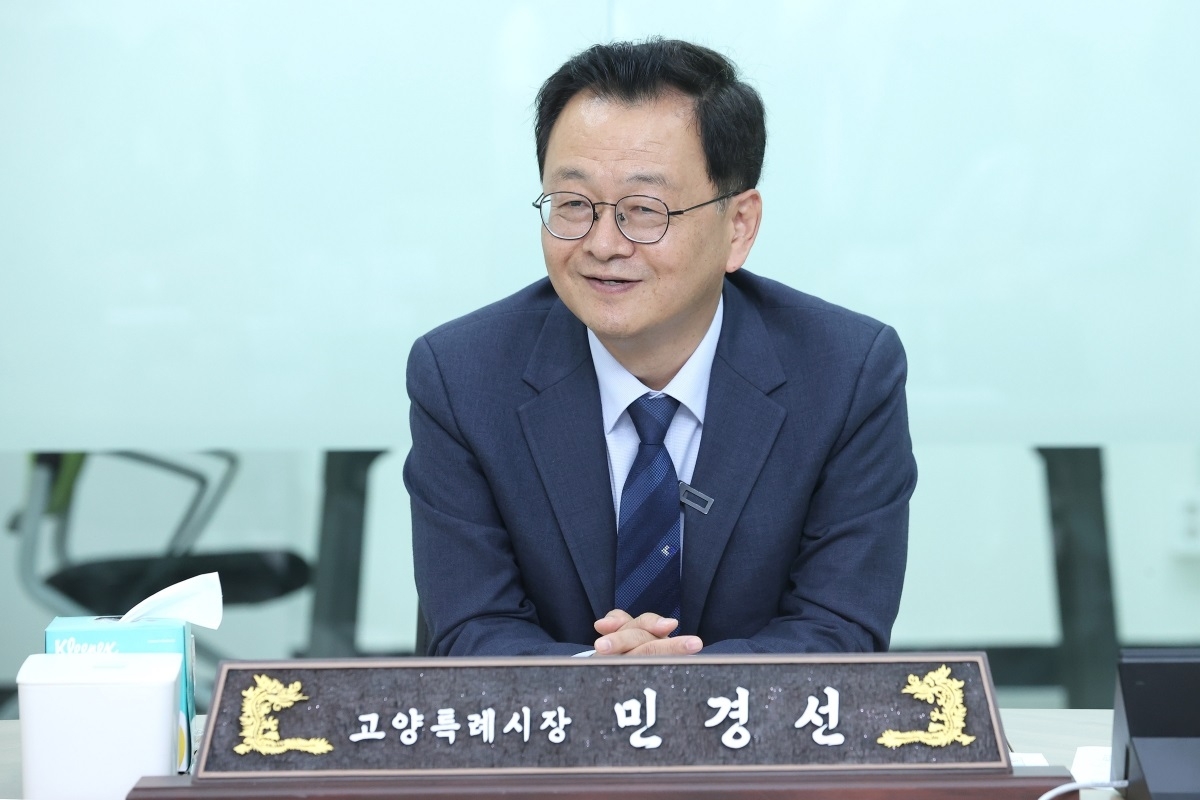
"I will spread a culture of proactive administration throughout the public sector by listening to residents' voices without filter and leading by example to resolve pressing issues."
It is a pledge that Goyang Special City Mayor Min Kyung-sun has repeated constantly since before taking office.
One concrete step to back up those words: relocating the mayor's office from the second floor to the first.
Reflecting Min's governing philosophy of "broad communication, low barriers," Goyang Special City removed the threshold from the mayor's office and created what it calls an open mayor's office — a transparent, accessible space that consolidates citizen-communication functions under one roof and narrows both the physical and psychological distance between the mayor and residents.
The city said Nov. 12 that the relocation was pursued as part of its "barrier-free mayor's office" initiative, aimed at realizing field-centered administration and open communication — the two pillars of the ninth elected-term city government's operating vision.
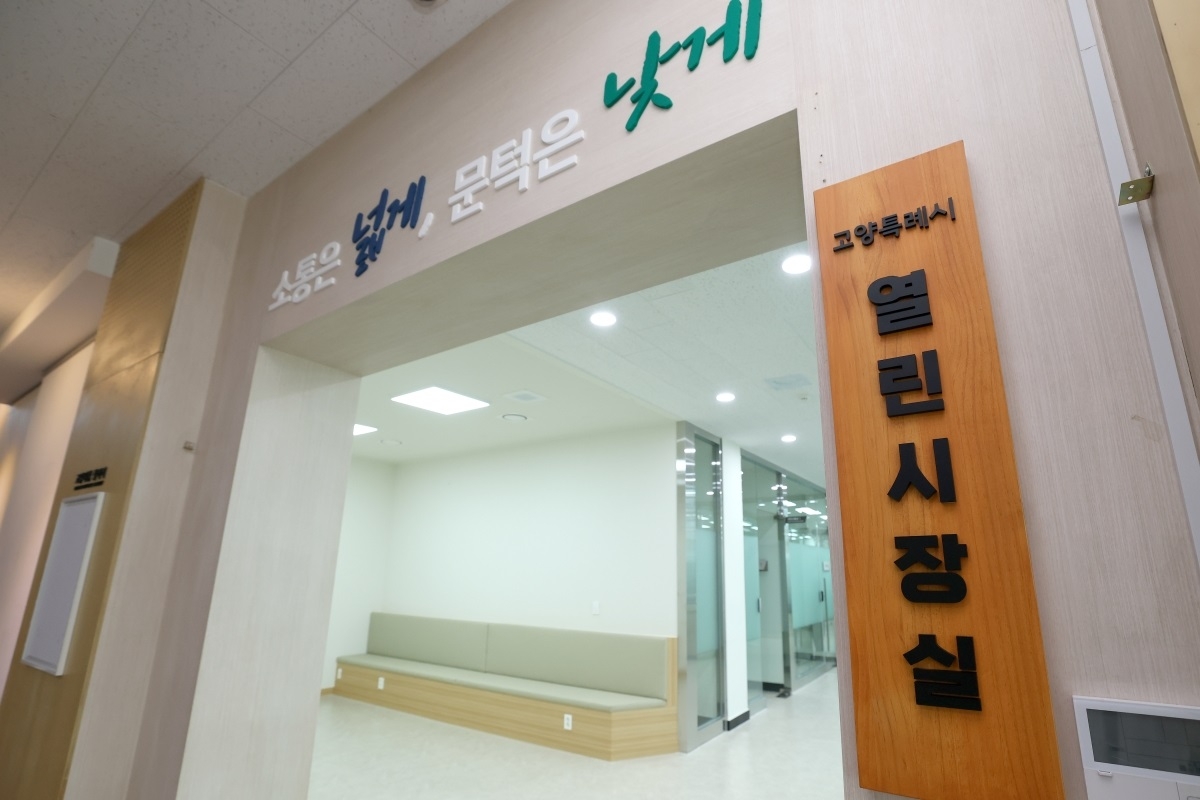
The move is intended to maximize convenience for vulnerable groups — including the elderly and people with disabilities — by shifting the mayor's office from the less accessible second floor to the ground floor, where any resident can walk in without difficulty. The city said the change would speed up the resolution of civil complaints through field-centered communication and boost public trust in city administration.
To keep costs down, the relocation relied on minimal work such as wallpapering and installing partition walls. The project drew about 220 million won ($164,000) from the city's contingency reserve and ran for roughly three months from July to September 2026. The existing first-floor workspace was reconfigured to create the mayor's office and a citizen-communication area, with dedicated spaces for the mayor's office, the secretariat, the communication and governance officer, and meeting rooms.
The design of the first-floor mayor's office followed four guiding principles: an open layout linking the corridor and reception area so visitors can approach easily; an open structure giving external visitors a comfortable waiting and communication space while keeping the mayor's work area secure; optimized workflow connecting the communication and governance officer and the secretariat for civil-complaint handling and political support within the first-floor space; and improved accessibility for elderly residents and others with mobility constraints, with the aim of delivering barrier-free administrative service and raising satisfaction with city government.
The departments that previously occupied the first floor — the Accounting Division, the Information Disclosure Office, and the Property Management Division's building management team — were relocated to leased external spaces or other floors. To minimize any disruption to their operations, the transition followed a step-by-step process: advance coordination, office-space preparation, a weekend move, and resumption of work.
There were concerns about whether a first-floor mayor's office could handle the expected surge in walk-in complaints, but Min held firm. "I plan to listen to residents' voices without reservation and work tirelessly to find solutions," Min said.
"The barrier-free first-floor mayor's office is not simply a change of location," Min said. "It is a kind of declaration — a statement that the mayor will meet any Goyang resident, anytime, anywhere."
pjh@heraldcorp.com