Number of delivery facilities down 30% in a decade, forcing mothers to travel dozens of kilometers
Reliance on regional decline fund seen as insufficient; experts urge hub model tied to public hospitals
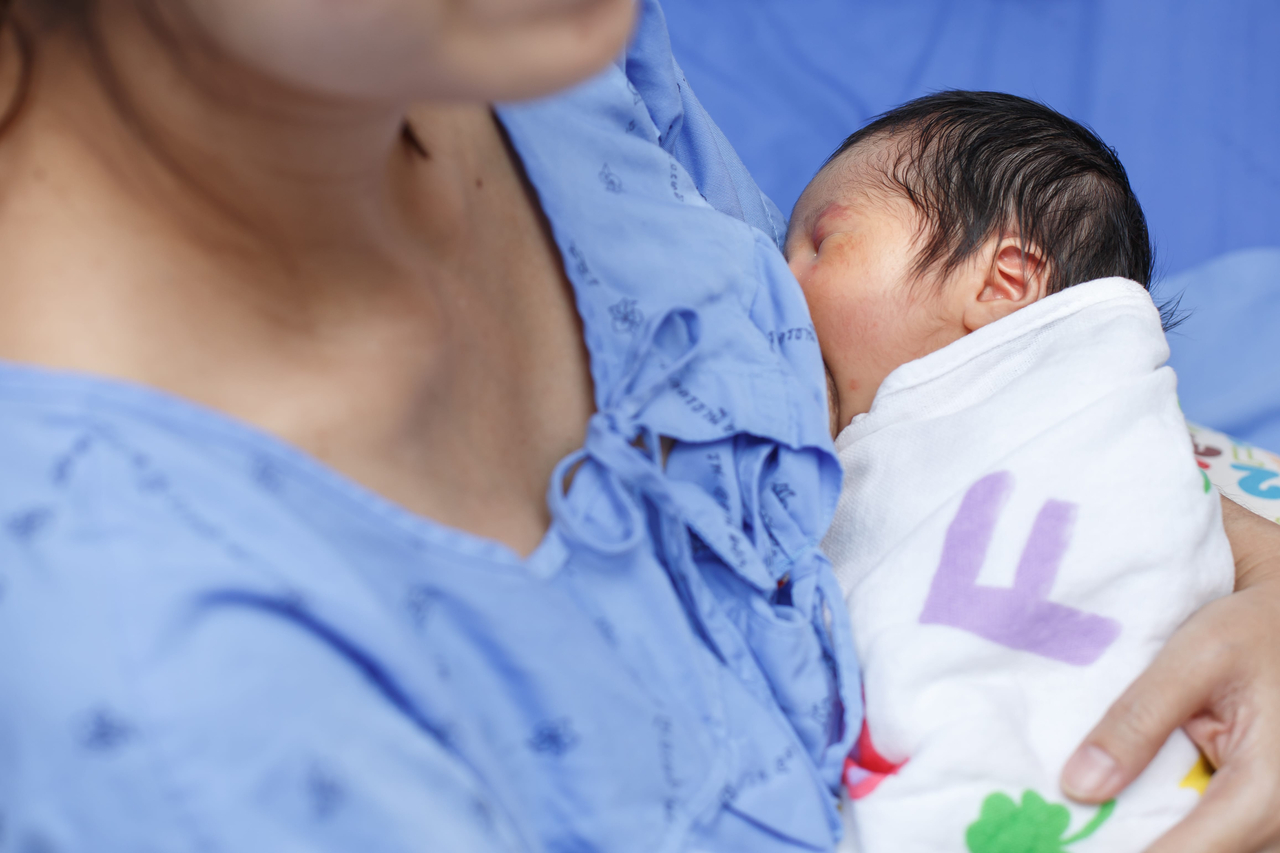
More than 85 percent of new mothers in South Korea use postpartum care centers, yet affordable public facilities number only 29 nationwide — and some regions have none at all, highlighting a deepening geographic divide.
A Ministry of Health and Welfare survey released Thursday found that 85.5 percent of all mothers use postpartum care centers. While their use has become standard practice, the underlying infrastructure for childbirth and postnatal care has been shrinking. The number of delivery facilities fell 29.7 percent, from 620 in 2015 to 436 in 2025, and 32 areas are now classified as delivery-underserved zones. Mothers in regions lacking both hospitals and care centers must travel dozens of kilometers to give birth and receive postnatal care.
Public postpartum care centers affiliated with regional medical institutions and public hospitals are considered the most viable alternative for closing the infrastructure gap between regions and easing the financial burden imposed by private facilities.
As of June this year, the average two-week fee at a public postpartum care center was 1.79 million won ($1,340) — roughly half the 3.4 million won charged at private centers. In Seoul, the gap is even wider: private centers average 5.43 million won against 2.29 million won at public ones, a difference of 3.14 million won. Despite the lower cost, amenities and care services at public centers are considered comparable to those at private facilities.
Demand for public centers has grown further after respiratory syncytial virus infections at care centers rose 45 percent over the past two years, boosting the appeal of public facilities equipped with air-shower systems and pre-admission observation rooms. Supply, however, has not kept pace — admission competition ratios exceed 10 to 1 at some centers. In certain areas, third-party booking agents have emerged, prompting some facilities to introduce identity-verification systems.
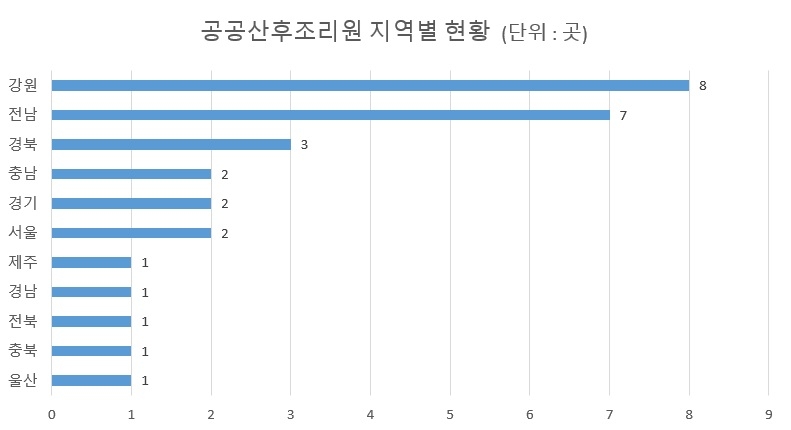
The more serious problem is the severe regional concentration of public facilities. Of the 480 postpartum care centers across the country, only 29 — 6 percent — are public, and 15 of those are clustered in Gangwon Province (8) and South Jeolla Province (7). Six major metropolitan cities and provinces — Busan, Daegu, Incheon, Gwangju, Daejeon and Sejong — have no public postpartum care center at all. Ninety-four cities, counties and districts lack any postpartum care center, public or private.
Legal and fiscal constraints lie behind the persistent gap between local governments.
Under the current Mother and Child Health Act, establishing a public postpartum care center is left entirely to the discretion of local government heads. There is no separate provision for national funding. The Ministry of Interior and Safety's regional population-decline response fund is in effect the only central government resource local governments can draw on.
That fund, however, is distributed only to areas designated as population-declining or at-risk, excluding major cities from eligibility. Because the amount allocated changes with annual evaluations, it cannot reliably cover fixed operating costs. Local governments must absorb the full operating deficit that arises from keeping fees low and maintaining infection-control staff, meaning only those with sufficient fiscal capacity or fund eligibility can expand their facilities.
Experts and local government officials have called for national subsidies to cover not only construction costs but also ongoing operating expenses.
Proposals include applying differentiated national subsidy rates based on each local government's fiscal self-reliance ratio and delivery-underserved status, while linking public centers to regional medical institutions to establish them as hub facilities for each area. In that role, they could set a regional price benchmark and act as a buffer against irregular fee increases at private centers. As advocates note, if areas that offer enhanced cash support to residents have no postpartum care center, mothers will ultimately take that money and travel to the city anyway.
thlee@heraldcorp.com