Costs from 2029 onward total 16.49 trillion won, or 89.5% of the total
Total project cost up 4.2 trillion won; lawmakers demand justification
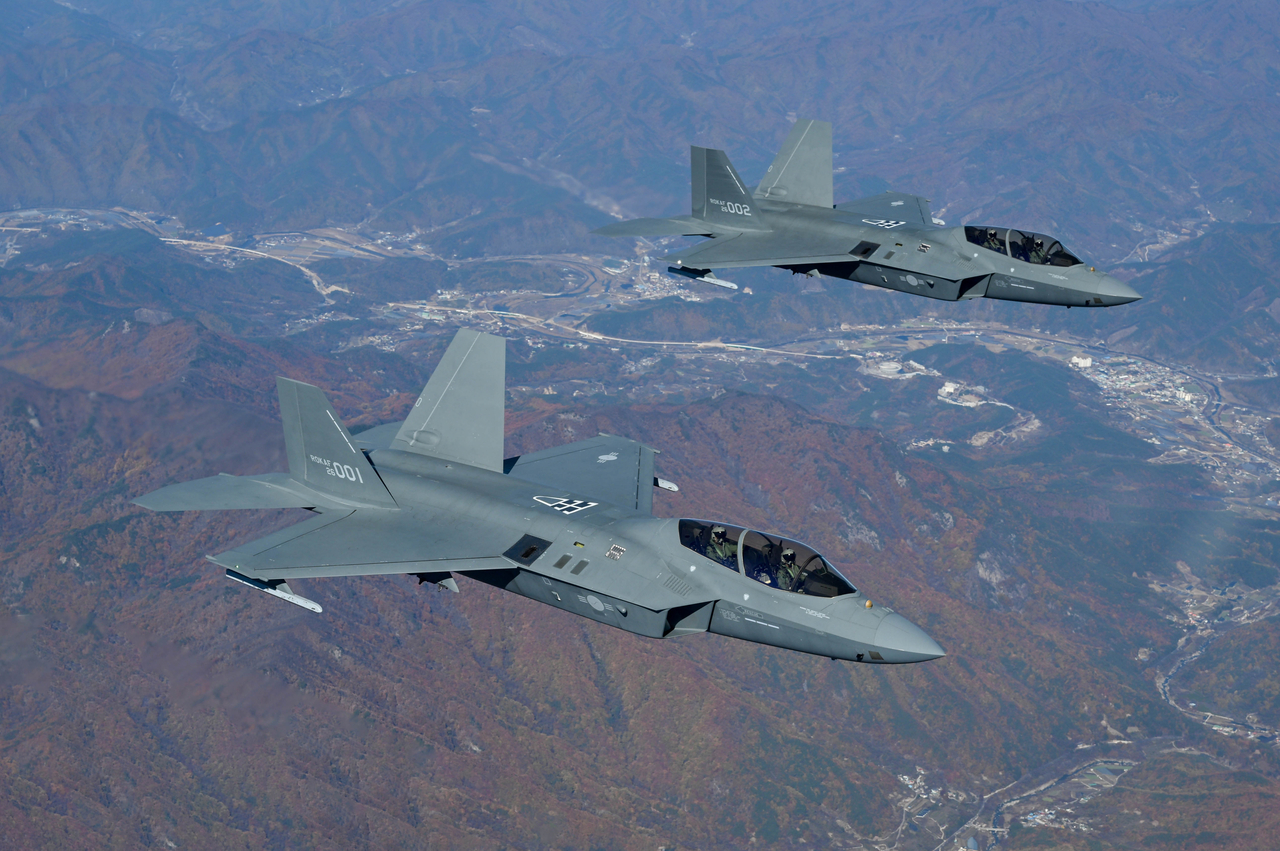
The KF-21 Boramae Block-II follow-on production program is heading into National Assembly budget scrutiny with an 18 trillion won price tag, starting with an initial appropriation of about 150 billion won ($112 million) next year. The Assembly's review report called on the government to secure a funding plan, noting that the bulk of the costs are concentrated after 2029.
The National Assembly's National Defense Committee will convene its budget and settlement review subcommittee Thursday to examine the Defense Acquisition Program Administration's 2027 budget proposal. The full committee is scheduled to vote on the bill Monday.
According to the defense committee's review report on DAPA's budget, the government has newly allocated 147.9 billion won in next year's budget to cover down payments and other costs needed to launch the Boramae follow-on production program.
DAPA's annual investment plan shows spending rising to 1.8 trillion won in 2028, then reaching 4.3 trillion won per year from 2029 through 2031. Adding 3.59 trillion won in 2032 brings the total to 18.44 trillion won. Of that, 16.49 trillion won — 89.5% of the total — falls in the 2029–2032 period.
The review report noted that the program is structured so that the fiscal burden grows sharply during the full-scale production and delivery phase. It warned that if the investment timeline overlaps with other major defense capability improvement programs, annual funding could fall short.
The total project cost has also grown. The estimated cost of about 14.2 trillion won under the 2025–2029 mid-term defense plan rose by roughly 4.2 trillion won — about 30 percent — after a KIDA in-depth review.
DAPA said the increase reflects exchange rate and inflation adjustments, on top of Air Force requirements finalized during planning, including externally mounted mission equipment, maintenance and education support elements, and related facilities.
The review report noted that the unit price from the initial production run may include one-time costs — such as setting up production facilities and stabilizing early output — that would not recur in follow-on production. If such costs were carried over into the follow-on pricing, the report said their necessity and the basis for calculating them should be verified separately.
DAPA plans to finalize the total project cost in March next year and sign contracts for aircraft, engines and AESA radar in June. The agency said there are no plans to adjust the production schedule and no gaps in operational capability are expected.
The review report warned, however, that slowing production due to funding shortfalls could generate additional costs from inflation and the extended operation of aging fighter jets.
rimsclub@heraldcorp.com