Seven prizes at Geneva International Music Competition
First place with orchestral work 'Stuff #1'
Audience award, student prize among special honors claimed
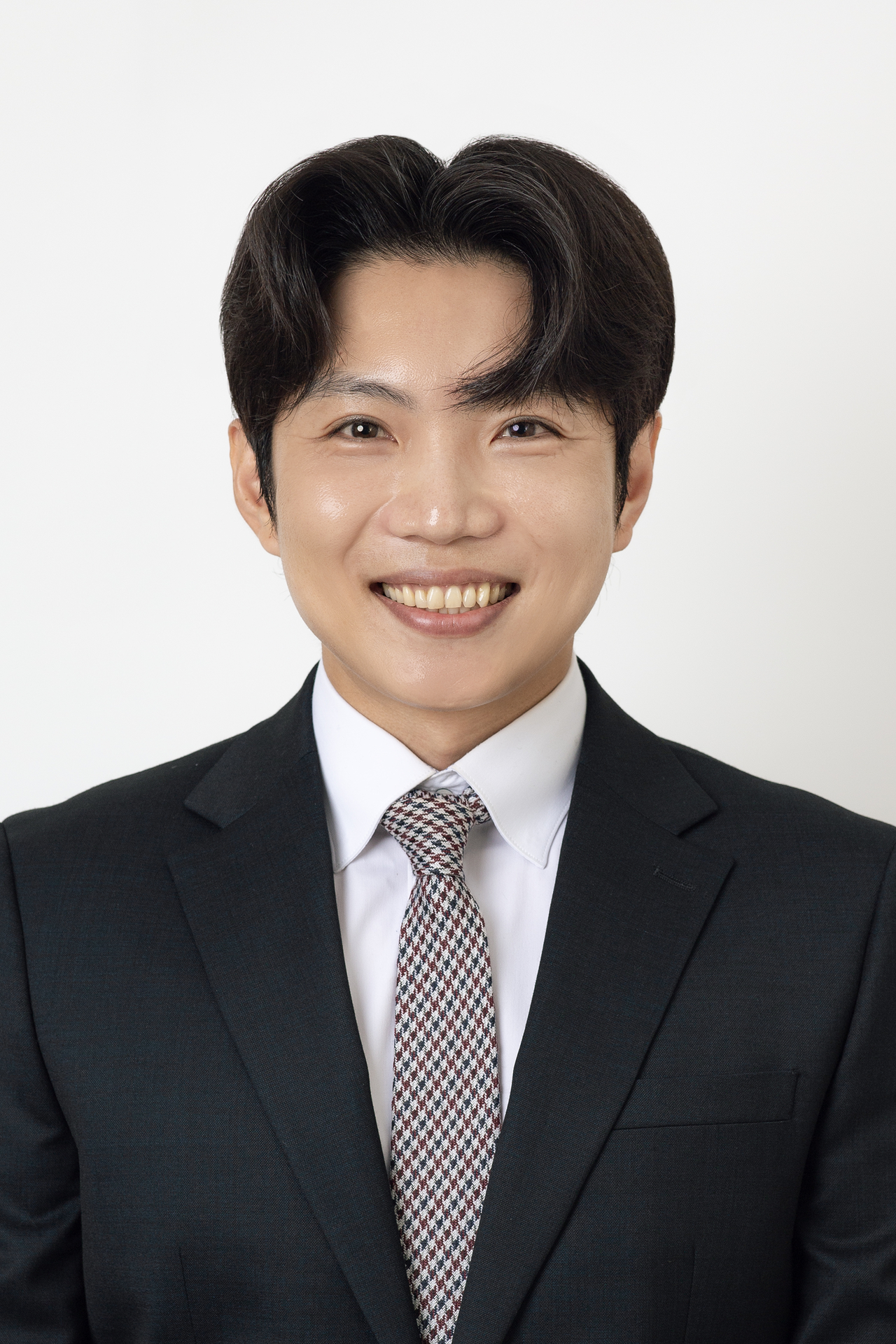
Composer Lee Ha-nuri, 20, has won first place in the composition category of the 80th Geneva International Music Competition, sweeping all six special prizes on offer in the category, including the audience award. The jury's verdict and the audience's choice converged on a single work.
According to the competition organizers, Lee claimed first place Wednesday (local time) at the composition final held at Victoria Hall in Geneva, Switzerland, with the orchestral work "Stuff #1," taking home prize money of 15,000 Swiss francs ($17,100). Second place went to Rafael Marino Arcaro of Brazil, and third place to Sing-Yat Chey of Hong Kong. The six special prizes Lee received were the audience award, the young audience award, the student award, the Nicati-de Luze Prize, the Basel Sinfonietta Prize and the Primor Musical Prize.
This year's task required competitors to compose an orchestral work of 12 to 16 minutes for orchestra alone — no soloists, no electroacoustic elements. Only works written after March 2024 were eligible, and just three composers advanced to the final from 188 who submitted scores. Marking its 80th anniversary, this year's competition revived the conducting category for the first time since 1994 and, for the first time, combined the finals of both categories on a single stage. The three conducting finalists each drew a composition final work by lot and led the Orchestre de la Suisse Romande. The world premiere of "Stuff #1" was conducted by Mats Tiirsi, 23, a young German conductor.
Lee's music does not aim to convey a clear-cut concept; instead, it probes the sonic relationships that emerge between instruments. The competition described the exploration of those relationships — through the instruments' innate possibilities and deliberately constrained gestures — as the core of Lee's work: a method of magnifying textural richness by scrutinizing small materials to their limit.
"One of the reasons the Geneva Competition is special is that it gives composers the opportunity to develop their work in a collaborative environment," Lee said through the competition. "I am deeply honored to have won first prize, and I am profoundly grateful to jury president Unsuk Chin and the jury for recognizing my work."
Lee began piano at age four and, around age ten, became captivated by the music of Scriabin and started writing music of their own. After attending Yewon School, Lee is currently studying composition under Professor Bae Dong-jin at the Korea National University of Arts. Lee first gained recognition as the youngest first-place winner in the composition category of the JoongAng Music Concours, then stepped onto the international stage by winning the 2024 Bartók International Composition Competition in Hungary. Lee's works have been performed at the Wittener Tage für neue Kammermusik in Germany, the Verbier Festival in Switzerland and the Daegu International Contemporary Music Festival, and pianist Lim Yun-chan has also performed Lee's compositions. In August this year, Lee wrote and directed the music theater piece "Geureoke Barami Bulleotgo Naneun Du Hyeongeul Meogeotda" for the Sejong Center for the Performing Arts' contemporary season "Think Next 26," marking Lee's debut as a music theater creator.
Founded in 1939, the Geneva Competition is a storied contest that has launched the careers of Martha Argerich and Arturo Benedetti Michelangeli. Lee is the fourth Korean to top the composition category, following Jo Gwang-ho in 2013, Choi Jae-hyuk in 2017 and Kim Shin in 2022. Son Hyun-jun in 2019 and Yoo Sang-min in 2024 each placed third. In the performance categories, cellist Chung Myung-wha (1971), pianist Moon Ji-young (2014) and percussionist Park Hye-ji (2019) have all taken first place.
This year's composition jury was chaired by Unsuk Chin, joined by Toshio Hosokawa, Magnus Lindberg, Augusta Read Thomas and Katharina Rosenberger. "I felt that 'Stuff #1' represents the music of the future," Chin said. "It is technically outstanding, very beautiful and a work that can add color to any concert program. The composer is still very young but already shows remarkable talent and strong potential."
shee@heraldcorp.com