A record 14 years in the making since the 10 million milestone
Tourism rebounds past pre-pandemic highs
Regional airports and seaports drawing more arrivals
Hallyu expands beyond K-pop into food and beauty
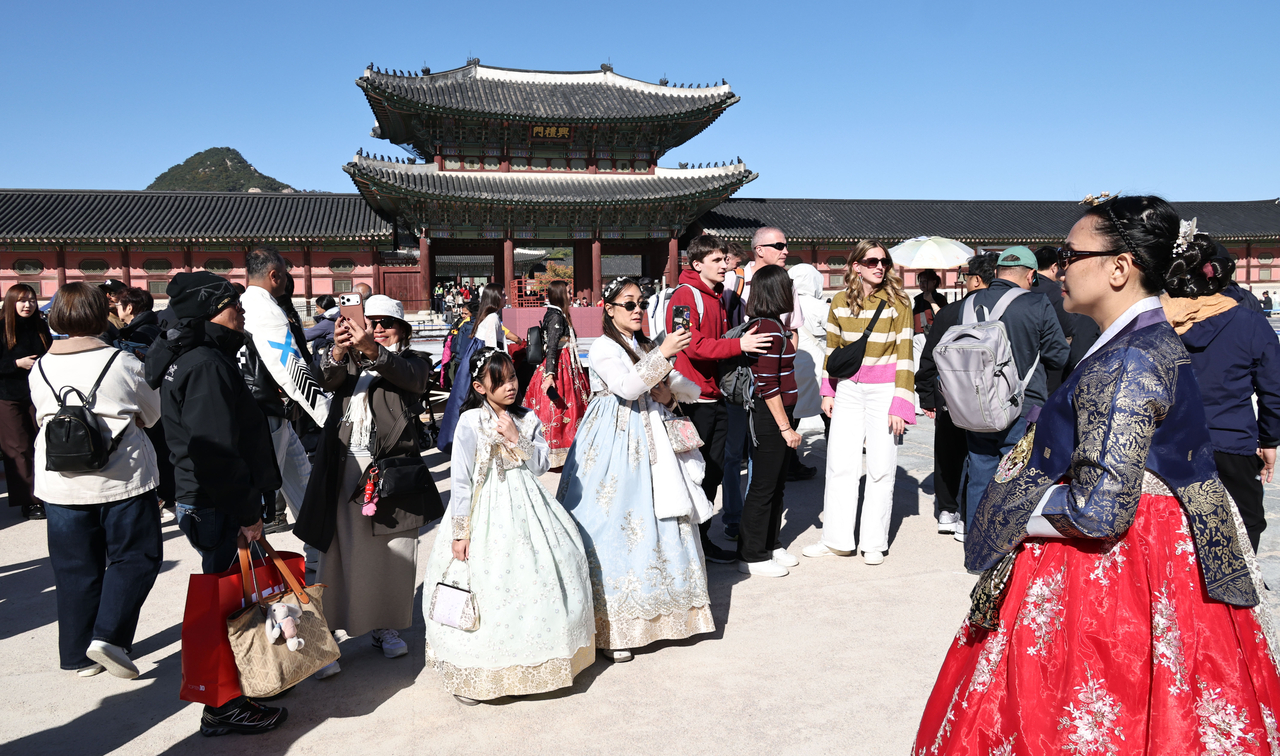
South Korea has surpassed 20 million foreign tourist arrivals in a single year for the first time in history — a milestone reached 14 years after the country first hit 10 million in 2012, and one that sets a new benchmark for Korean tourism regardless of how the final year-end tally reads.
The Ministry of Culture, Sports and Tourism calculated that the 20 million threshold was crossed based on a provisional count of about 19.97 million visitors through Wednesday and a daily average of about 64,000 arrivals so far this year.
The record signals that South Korea's tourism industry, battered by the COVID-19 pandemic, has not only fully recovered but entered a new growth trajectory. Annual foreign arrivals had climbed to about 17.5 million in 2019 before collapsing to about 970,000 in 2021. The numbers then recovered to about 11.03 million in 2023 and about 16.37 million in 2024, before reaching an all-time high of about 18.94 million last year. This year, arrivals surpassed the full-year 2025 record as of Oct. 27, and the 20 million mark fell less than a month later.
The surge in visitors has produced a measurable economic impact. Foreign tourist spending in South Korea reached 15.94 trillion won ($11.9 billion) through September this year, up 47.7 percent from 10.79 trillion won in the same period last year.
As overall arrivals have grown, entry points have spread beyond the greater Seoul area, broadening the foundation for regional tourism. Through September, about 3.24 million visitors entered through non-metropolitan airports — including those in Gimhae, Jeju, Cheongju and Daegu — accounting for 19.0 percent of all arrivals and rising 37.4 percent from the same period a year earlier. Seaport arrivals at Busan, Jeju, Seogwipo, Yeosu and Gunsan totaled about 1.58 million, or 9.2 percent of all entries, up 14.5 percent.

Behind the milestone lies a convergence of cultural reach, policy support and on-the-ground hospitality. The Ministry of Culture, Sports and Tourism credited the growth — achieved despite external headwinds including instability in the Middle East and high oil prices — to the spread of hallyu, cross-ministry cooperation and the welcoming attitude of Korean citizens.
Global interest in Korean culture has expanded well beyond any single genre into everyday life, driving demand for visits to the country. A 2026 survey of 27,000 hallyu content consumers across 30 countries found that, as of late 2025, respondents rated Korean food (55 percent) and beauty (53 percent) as popular in their home countries — on par with the traditionally dominant categories of music (54 percent), drama series (51 percent) and film (49 percent). The share of respondents saying hallyu positively influences their purchases of Korean products and services has risen consistently over the past three years, from 58 percent to 64 percent to 65 percent. The ministry said the spread of K-culture is translating into latent demand for tourism to Korea.
The government also undertook a round of policy reforms. Following the 11th National Tourism Strategy Meeting, chaired by the president on Feb. 25, a cross-ministry cooperation framework was activated, leading to measures including streamlined immigration procedures, expanded international flight capacity at regional airports and tougher penalties for price gouging.

The ministry plans to roll out a series of commemorative events through the end of the year, involving the public and the tourism industry and focusing on regional promotion. To mark the 20 million milestone, it will hold an official ceremony, industry roundtables and media contributions, and place advertisements on government-owned platforms including K-Gongam. Welcome events will be held at regional international airports for arriving visitors, alongside promotions tied to the Korea Grand Sale and a social media relay campaign.
Culture Minister Choi Hwi-young said the 20 million milestone is "the starting point for South Korea's leap to becoming an irreplaceable tourism powerhouse," adding that the government would "actively share this unprecedented achievement with the public from today through December to build national pride, and thoroughly prepare to reach 30 million visitors and lay the groundwork for an era of 40 million."
terry@heraldcorp.com