Korea Zinc loses first-round suit brought by Young Poong, MBK over AGM resolution
Company says cross-shareholding rules must be applied on objective criteria alone
Ruling seen as conflicting with Supreme Court decision on related injunction case
Firm says measures were taken to protect management stability and all shareholders
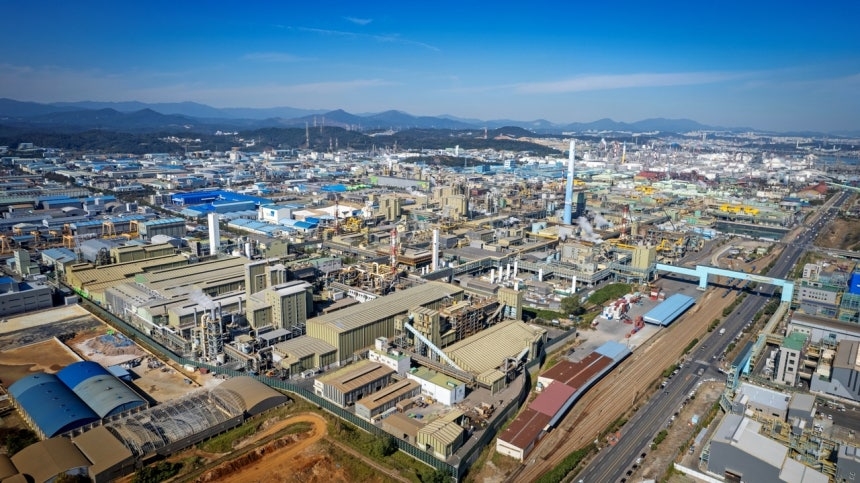
Korea Zinc said Thursday it will immediately appeal a first-instance court ruling that ordered the annulment of a resolution passed at last year's annual general meeting restricting Young Poong's voting rights. The company said the ruling — which found that voting rights cannot be curtailed solely on grounds of defending management control — contradicts established Supreme Court precedent and a Supreme Court decision finalized in April on a related injunction case.
Korea Zinc issued a statement Thursday saying it "plans to immediately appeal the first-instance ruling in the lawsuit seeking cancellation of the AGM resolution."
Earlier Thursday, the 29th Civil Division of the Seoul Central District Court ruled in favor of the plaintiffs in a suit filed by the Young Poong-MBK Partners alliance against Korea Zinc seeking to cancel the AGM resolution.
The court said it had determined that "voting rights of existing shareholders cannot be restricted by applying cross-shareholding provisions for the purpose of defending management control."
Korea Zinc rebuffed the ruling, saying it was inconsistent with the principles governing the application of cross-shareholding law. The company said restrictions on voting rights arising from a cross-shareholding relationship must be assessed based on statutory requirements and objective facts, and cannot vary depending on the subjective purpose of defending management control.
"Whether the cross-shareholding provisions apply is a matter that must be determined objectively and uniformly, taking into account the relevant laws, existing Supreme Court precedent and the specific facts of the case — it is not something to be decided by weighing subjective intent," Korea Zinc said.
Korea Zinc cited as grounds for its appeal the fact that the Supreme Court had dismissed a re-appeal by the Young Poong-MBK side in an injunction case contesting the same voting restrictions at the same AGM.
On April 2, the Supreme Court's First Division dismissed the re-appeal filed by the Young Poong-MBK alliance in an injunction case in which the alliance had sought to be allowed to exercise voting rights against Korea Zinc. Both the first-instance court and the appellate court had previously rejected the alliance's application, and the Supreme Court's decision brought the injunction proceedings to a close.
In that case, the court held that cross-shareholding provisions "must be applied objectively and uniformly, and the question of whether voting rights should be restricted cannot be decided differently depending on the subjective intent behind the formation of the cross-shareholding relationship."
Korea Zinc said that because this legal interpretation was finalized by the Supreme Court, the first-instance ruling in the current main lawsuit also warrants legal reexamination.
Korea Zinc said it plans to present the legal reasoning accepted in the earlier injunction case as a key argument in the appeal.
The legal dispute stems from a management control battle that began in September 2024. Young Poong, Korea Zinc's largest shareholder, joined forces with private equity fund manager MBK Partners in a bid to take control of the company, while Korea Zinc Chairman Choi Yun-beom's camp has worked to retain control of the board.
Ahead of an extraordinary general meeting in January last year, Choi's side arranged for Sun Metals Corporation, an Australian sub-subsidiary, to acquire more than 10 percent of Young Poong's shares. The move was designed to create a cross-shareholding relationship that would restrict the voting rights attached to Young Poong's stake in Korea Zinc.
At the time, however, a court ruled in an injunction case related to the extraordinary general meeting that restricting Young Poong's voting rights was improper. Korea Zinc subsequently restructured the arrangement by distributing Sun Metals Corporation's Young Poong shares to its Australian subsidiary Sun Metals Holdings as an in-kind dividend, establishing a new cross-shareholding relationship.
When Young Poong's voting rights were restricted at the regular AGM in March last year on that basis, the Young Poong-MBK alliance responded with legal action — first filing an injunction application to be allowed to exercise voting rights, then in May of the same year filing the main lawsuit seeking cancellation of the AGM resolution.
Korea Zinc said the measures taken at the time were intended to protect the company's management stability, corporate value and the interests of all shareholders amid the management control dispute. The company maintained that the AGM was conducted in compliance with relevant laws and procedures, leaving no issue with the application of the cross-shareholding provisions.
Korea Zinc also criticized the litigation campaign waged by the Young Poong-MBK side, saying the repeated allegations and lawsuits filed since the hostile takeover attempt have had a negative impact on the company's management stability and corporate value.
Korea Zinc also raised the environmental pollution problems at Young Poong's Seokpo smelter and the collapse of Homeplus following MBK's acquisition, saying it would ensure similar problems do not occur at Korea Zinc.
Korea Zinc said it plans to actively present the legal flaws in the ruling at the appellate stage, drawing on existing Supreme Court precedent, the reasoning from the injunction case and the intent behind the cross-shareholding legislation.
"Separately from the appeal of this ruling, we will continue without wavering in our efforts to fulfill our responsibilities as a national key industry, contribute to economic security and supply chain stability, and enhance corporate and shareholder value through sustainable growth," Korea Zinc said.
kwater@heraldcorp.com