Foundation chief calls for dedicated SME dispute mediation body
Integrated support system for subcontracting, technology disputes expected; dispute prevention and relief functions to be strengthened
Dispute mediation applications top 100 for first time this year; cumulative relief payments reach 30.9 billion won
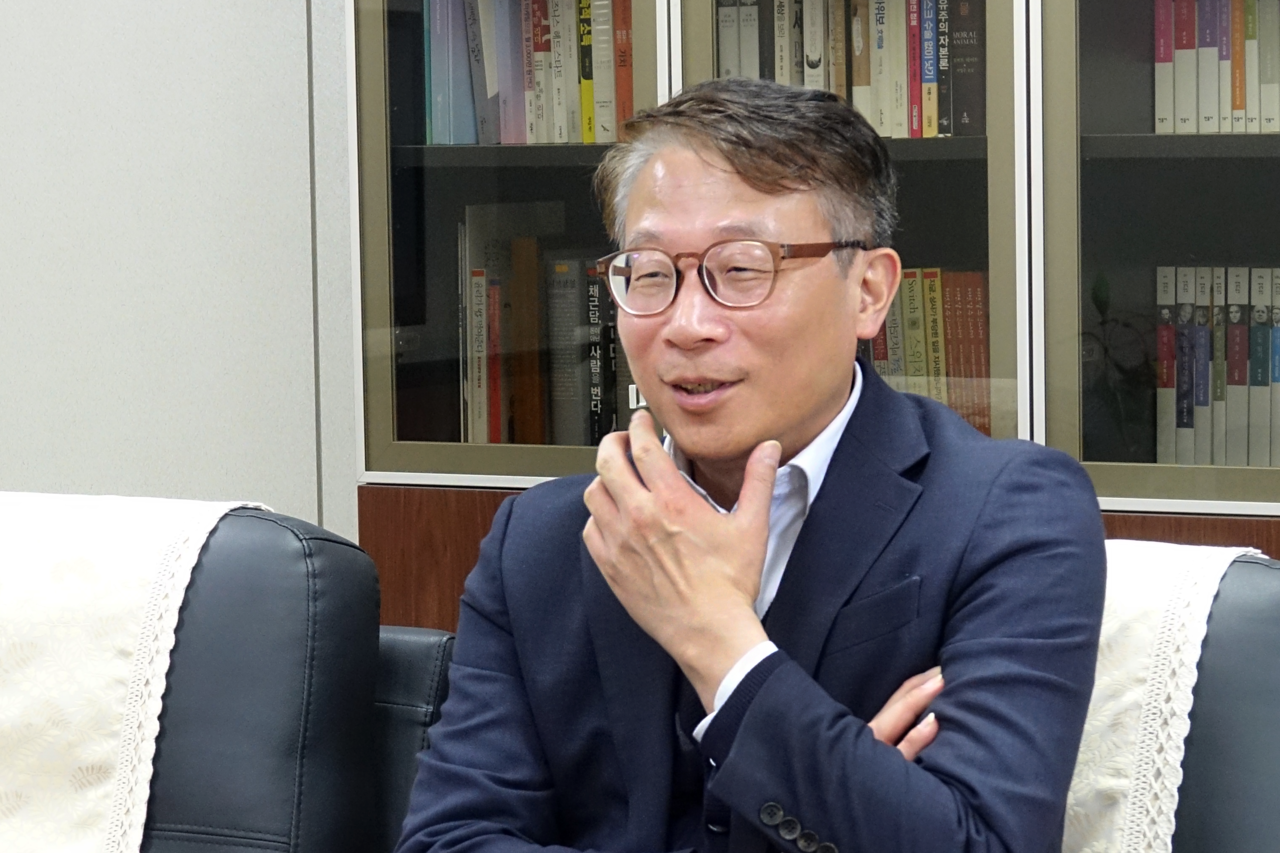
Byeon Tae-seop, secretary general of the Foundation for Cooperation of Large and Small Business, Agriculture and Fisheries, has called for the establishment of a dedicated Large and SME Dispute Mediation Institute to provide integrated support for disputes involving subcontracting transactions and technology matters among small and medium-sized enterprises. He said a dedicated mediation body would help prevent business disputes and improve the effectiveness of relief for affected companies.
In a written interview, Byeon said that if the institute were established, various types of disputes could be handled in a coordinated way, and the experience and expertise accumulated in dispute mediation could be shared, making a practical contribution to resolving conflicts between companies.
Currently, subcontracting disputes involving small and medium-sized enterprises are handled through a mediation regime under the Mutually Beneficial Cooperation Act, while technology-related disputes are addressed through a separate mediation system based on the SME Technology Protection Act. Critics have long pointed out that dividing support systems by dispute type limits the ability to respond systematically.
To address these shortcomings, a bill was introduced in the National Assembly in July to establish a dedicated dispute mediation body. The legislation would consolidate mediation systems operating under separate laws and create an institution dedicated to dispute prevention and victim relief.
Byeon said the proposed bill would place the existing subcontracting dispute mediation council — which resolves disputes through voluntary means between companies — within the new institute, without changing the council's functions or role. "The existing dispute mediation system would be maintained, while the institute would take dedicated charge of pre- and post-dispute support, including dispute prevention and relief assistance," he said. "This is expected to enhance the effectiveness of the subcontracting dispute mediation council."
The number of dispute mediation applications from small and medium-sized enterprises has exceeded 100 in a single year for the first time this year. According to the foundation, a total of 1,148 subcontracting dispute mediation applications were received from the system's launch in 2005 through the end of October this year. Of those, 1,118 cases have been resolved, with 30 still under mediation. Annual application figures were 84 in 2021, 87 in 2022, 87 in 2023, 94 in 2024 and 93 last year. As of the end of October this year, 114 applications had been filed, already surpassing last year's full-year total.
Non-payment of delivery fees accounts for the largest share of dispute causes, at 864 of the 1,148 total cases, or 75.3 percent. Order avoidance or cancellation accounted for 104 cases (9.1 percent), price reductions or deductions for 62 cases (5.4 percent), and refusal to accept goods for 18 cases (1.6 percent). By industry, manufacturing led with 410 cases (35.7 percent), followed by the service sector with 402 cases (35.0 percent) and construction with 336 cases (29.3 percent).
Byeon identified the imbalance in bargaining power between companies as the primary driver of disputes in subcontracting transactions. "A defining characteristic of subcontracting relationships is the disparity in negotiating power," he said. "When a dispute arises in such transactions, the subcontractor has no choice but to resolve the problem through litigation, which requires significant time and expense."
Byeon added that for subcontractors who have suffered losses — such as not receiving payment — the most important thing is obtaining appropriate relief as quickly as possible.
Cumulative relief payments through the subcontracting dispute mediation system reached 30.9 billion won ($23.1 million) as of the end of October this year. The average time to resolve a case since the system's launch has been 53.7 days. Byeon said the system's greatest achievement has been its contribution to resolving disputes early through voluntary means between companies. "Disputes are being resolved with significantly less time and cost compared to civil litigation," he said.
Another advantage is that companies can receive free legal assistance from experts during the mediation process. When mediation fails and a case proceeds to civil litigation, a separate program covers attorney fees and appraisal costs of up to 10 million won. Since the program launched in 2022 through the end of October this year, about 140 million won has been provided to 38 companies.
The foundation is also stepping up on-site support in line with the expansion of the delivery price indexing system. Starting Dec. 3, energy costs such as electricity and gas will be added to the list of items eligible for delivery price indexing, alongside existing raw materials. However, energy costs present a challenge because usage is difficult to separate by individual product. To address this, the foundation produced and distributed a practical guidebook on energy cost indexing in June.
Byeon said some companies may not be aware that energy costs are now included in the indexing system, and that the foundation plans to step up outreach on the matter going forward.
hong@heraldcorp.com