'Tens of millions of won if you impregnate me' — the bait
Scammers impersonate specific lawyers to lure victims to malicious links
"I'm here to sign a pregnancy contract — is attorney Kwak Seon-mi available?"
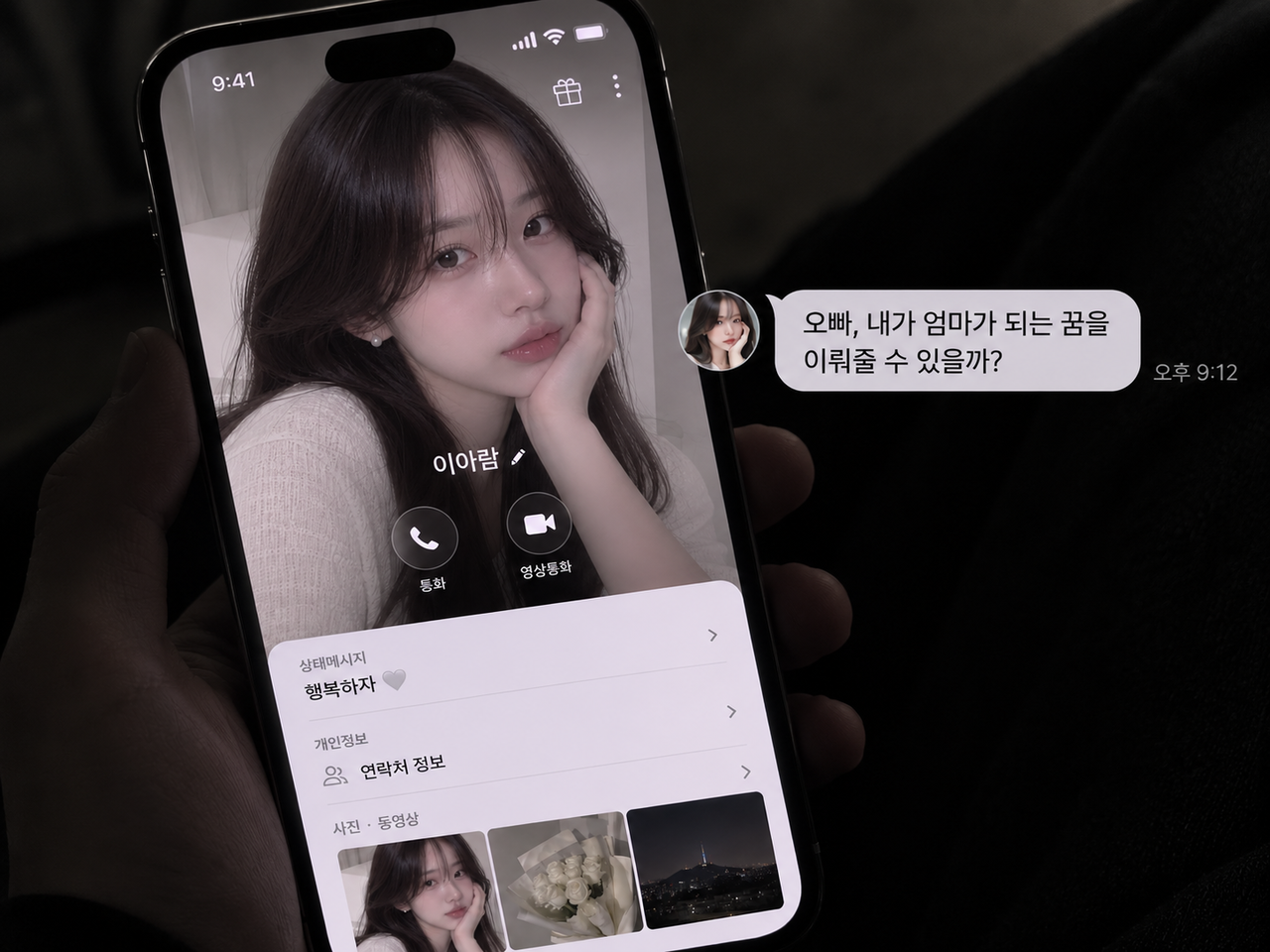
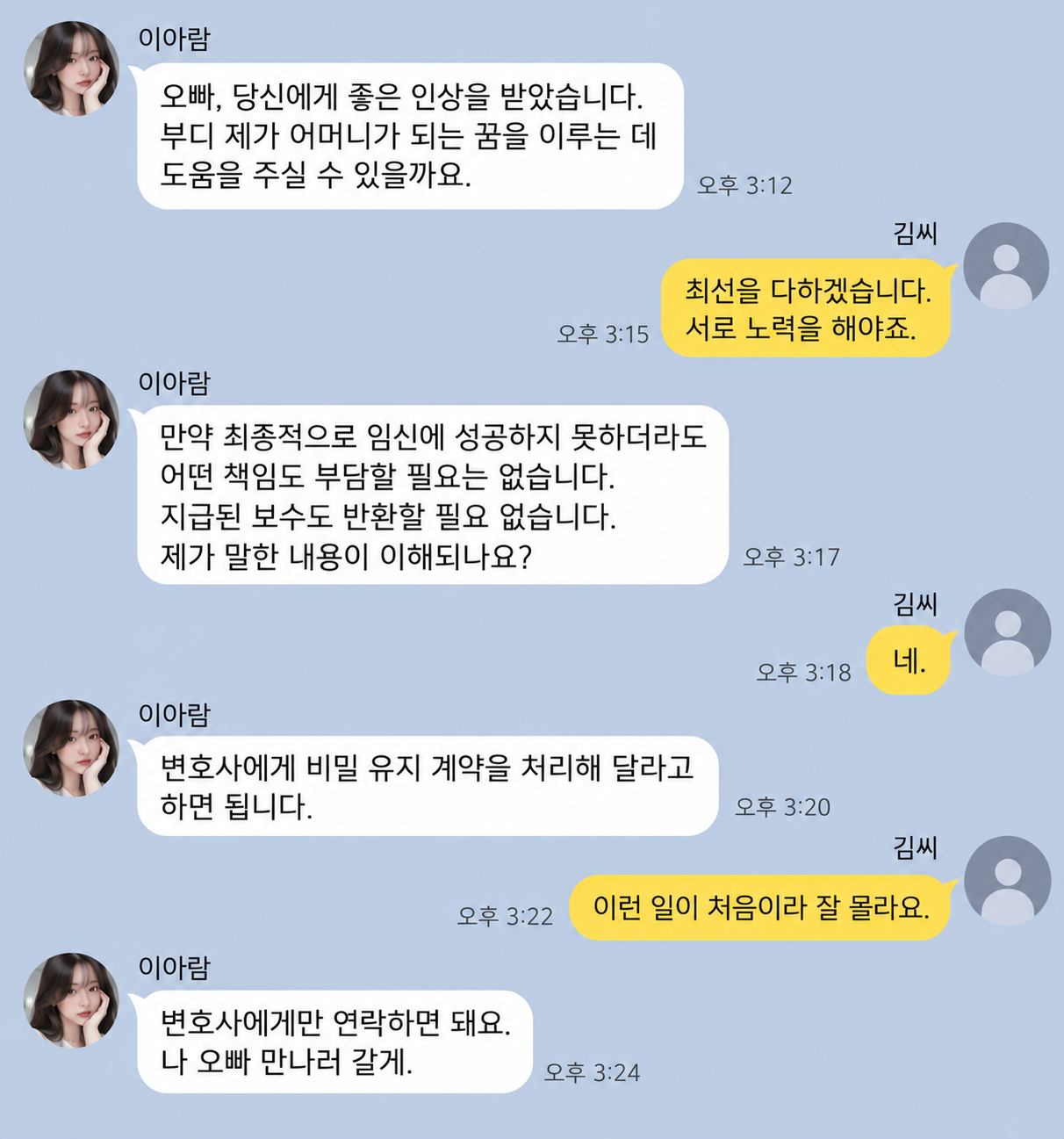
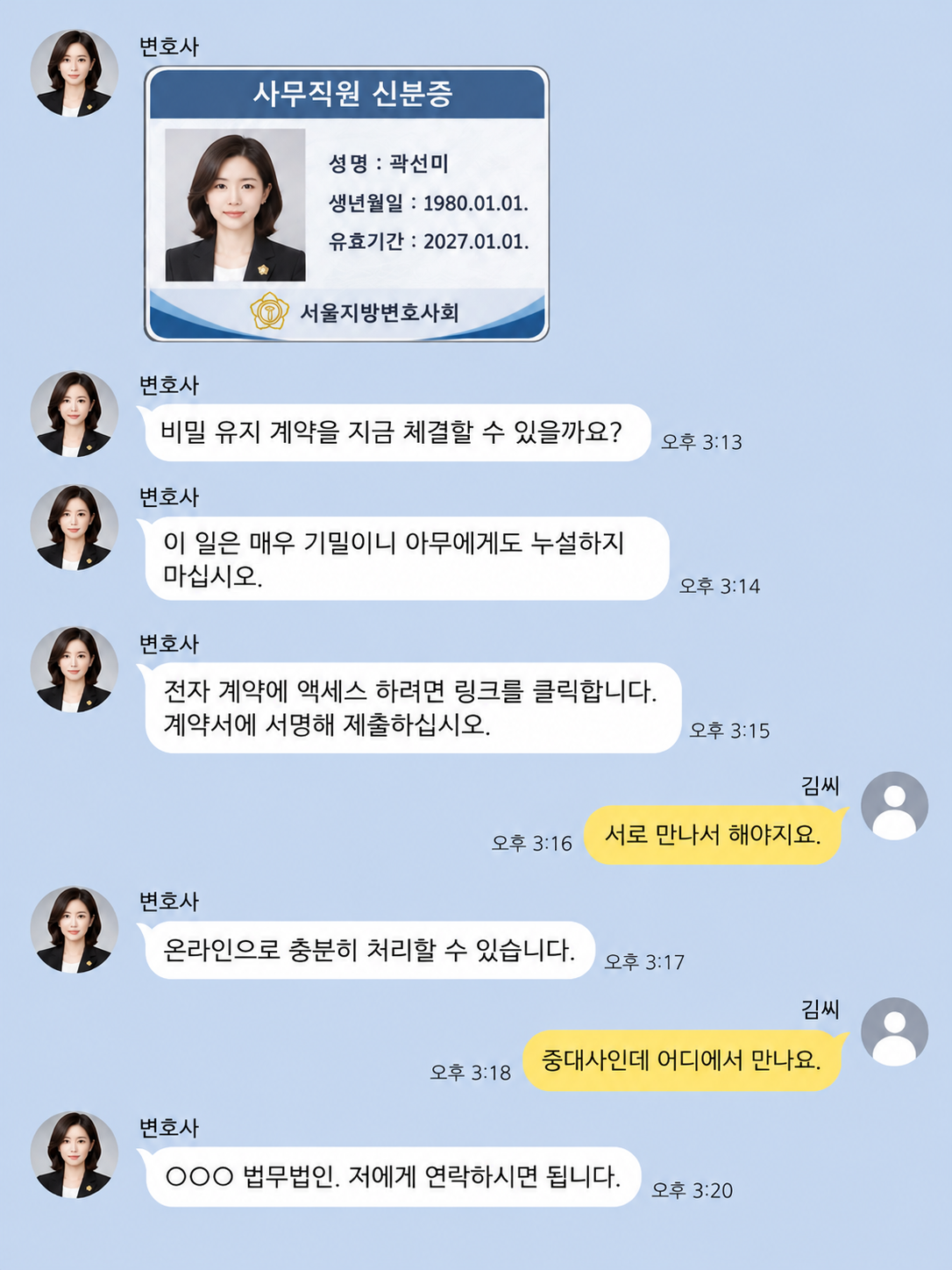
On Monday, a 69-year-old surnamed Kim walked unannounced into a law firm in Jongno-gu, Seoul, saying he had arranged to meet attorney Kwak through someone named "Lee A-ram." Kim said he had been contacted on the LINE messenger app by an account using the name Lee A-ram, which asked him to have sexual intercourse to help the account holder become pregnant. The account promised to pay 90 million won ($67,300) if the pregnancy was successful. It then told Kim he would first need to sign a nondisclosure agreement and passed along the LINE account ID of a lawyer at a well-known major firm — in fact, a fake account impersonating the real attorney Kwak, who works there.
Kwak told The Herald Business on Friday that phishing schemes impersonating prosecutors or Financial Supervisory Service employees had existed before, but this was the first time a scam had exploited a real individual lawyer's personal information so specifically. "I was shocked to find that my name was being used in a low-level fraud operation without my knowledge," Kwak said.
The chat logs Kwak reviewed showed that the impersonating account had even attached a forged bar association ID card, apparently assembled from information publicly available on the firm's website. The fake account directed victims to malicious links under the pretexts of signing an "electronic contract" or opening a trust account.
Until meeting Kwak that day, Kim had believed the account belonged to a real woman and had been building a relationship with her online. When told the account was operated by a romance scammer, Kim looked crestfallen. Fortunately, Kim had not clicked on any malicious links and suffered no financial loss. With Kwak's help, Kim filed a complaint with the Seoul Metropolitan Police Agency on charges including attempted fraud.
Kwak was later contacted by another man who said he had been referred to her by "Lee A-ram." In total, seven men have reached out by email or phone, each describing the same scheme. Concluding that the impersonation was spreading, Kwak filed a complaint against the unidentified phishing perpetrator on charges of obstruction of business and defamation through false statements.
"I feel immense fear knowing that unidentified men are showing up at my workplace and contacting me using my name," Kwak said. Kwak also expressed concern that criminal organizations were brazenly using a practicing lawyer's real name, photo and firm affiliation in their operations. "It makes me wonder whether they are underestimating our investigative authorities' capacity to respond to intelligent crimes like voice phishing," Kwak said.
Police: 'Romance scam tactics have evolved to exploit lawyer identities'
Police are treating this case of lawyer identity theft as a new variant of romance scam. A Seoul Metropolitan Police Agency official said the tactics had evolved to incorporate lawyers' personal information, adding that this was the first known case in which a specific lawyer's identity had been stolen and impersonated so meticulously.
"It appears to be a kind of lure — using a publicly searchable figure like a lawyer to put victims at ease before getting them to click a link concealing malicious code," the official added.
Yang Jeong-hun, a criminal law attorney at law firm Veteran, also said deploying a fake lawyer as part of a romance scam was a tactic he had not seen before. "Scammers typically demand money directly, and it is also uncommon for them to use sexual contact as the means of approach," Yang said.
Photos and accounts stolen — police say tracking the real perpetrators is difficult
Police say that because the accounts used in romance scams are created by stealing other people's personal information and photos, identifying and apprehending the actual perpetrators is difficult.
A police official with extensive experience investigating phishing crimes said that even when the registered holder of a messenger account is identified, that person is very unlikely to be the actual offender. "Most scammers use burner accounts registered under someone else's name, so tracing the account alone is rarely enough to identify the real criminal," the official said.
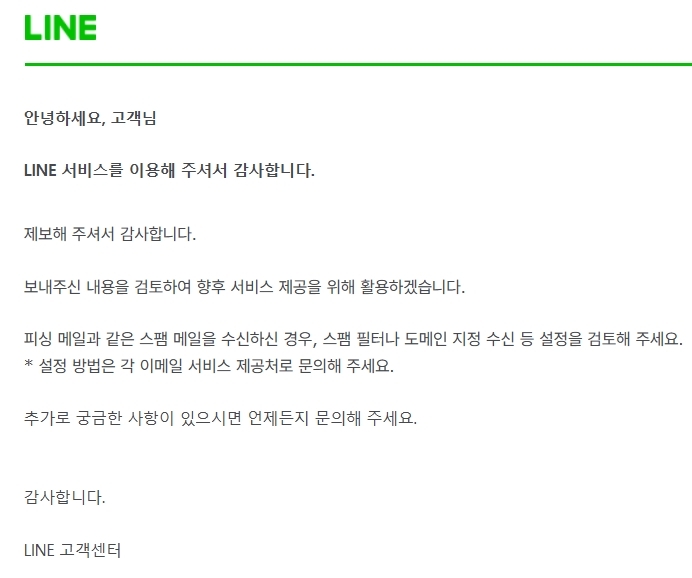
Calls are also growing for platforms to take more proactive action. Kwak made multiple requests to LINE to suspend the impersonating account in order to limit further harm, but the response was slow. According to complaint records Kwak provided, LINE repeatedly replied only with a formulaic message saying it would review the report.
As seen in this case, scammers have recently been making initial contact through messenger apps other than Telegram, which is widely known as a platform frequently exploited for fraud. Yang said scammers build trust on platforms like LINE, where users' identities are more visible, before steering victims toward encrypted messengers such as Telegram.
Annual romance scam losses top 100 billion won
Victims silenced by shame over being deceived by romantic feelings
While Kim's case was foiled before any financial loss occurred, annual damages from romance scams exceed 100 billion won. According to the Korean National Police Agency, 2,192 romance scam cases were reported last year, with total losses reaching 136 billion won. The agency has classified romance scams as a type of financial crime affecting ordinary citizens since 2024 and has tracked them in its statistics since then.
Experts believe the actual scale of losses exceeds official figures, as victims tend to avoid reporting cases out of shame at having been deceived by romantic feelings.
A paper published in the academic journal Police Science Research in March, titled "Analysis of domestic research trends on romance scams and policy recommendations," noted that romance scam victims suffer severe psychological aftereffects including intense shame, in addition to significant financial losses. "Given victims' tendency to avoid reporting, research is needed to scientifically estimate the scale of unreported crimes not captured in official statistics," it said.
arin@heraldcorp.com
newday@heraldcorp.com