Innovative products balance borrower convenience and lending capacity
1.63 million self-employed multiple debtors fuel refinancing demand
B2B payment-linked corporate loans enter the market
Internet banks push into small-corporation lending
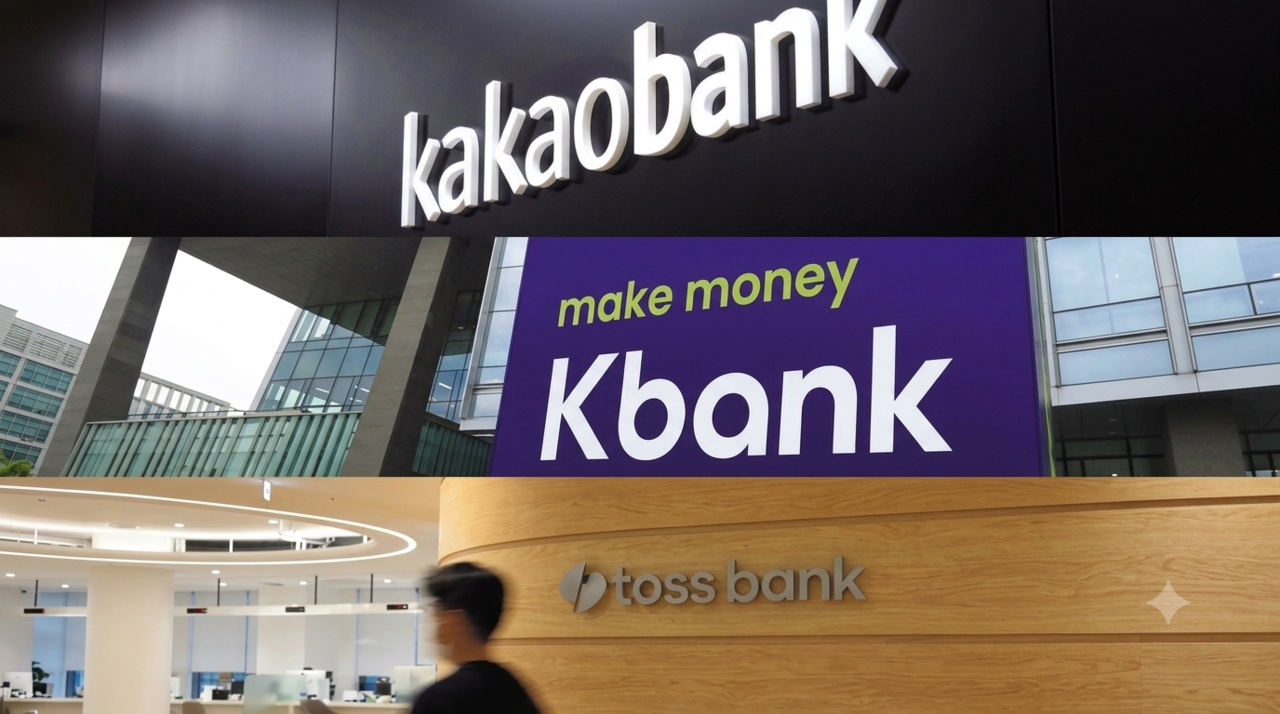
Competition among banks for small-business loans is evolving beyond interest rates and credit limits into a battle of ideas aimed at improving convenience for borrowers. Products that consolidate scattered loans into one and automatically extend credit at the moment of a purchase payment are rolling out in quick succession, easing the burden of loan management and financing for business owners. Internet-only banks are also preparing to expand beyond sole proprietors into small corporations, and the corporate lending market is expected to grow significantly more competitive next year.
Kakao Bank launched its sole proprietor real estate mortgage refinancing service Wednesday. The service allows sole proprietors to consolidate up to five existing loans — including unsecured credit loans, guarantee-backed loans and real estate mortgage loans from other financial institutions — into a single mortgage.
The minimum interest rate stands at 3.04 percent per annum as of Wednesday, with loans of up to 1 billion won ($751,000) available for up to 20 years. Eligible collateral includes apartment complexes, officetels and commercial buildings. While refinancing typically allows only like-for-like loan swaps, the service also permits unsecured and guarantee-backed loans to be converted into a real estate mortgage, broadening options for adjusting rates and repayment terms based on available collateral. Repayment procedures have also been automated.
The consolidated refinancing option is expected to see strong uptake, given the large number of sole proprietors carrying multiple loans. According to data the Bank of Korea submitted to People Power Party lawmaker Park Sung-hoon, the number of self-employed multiple debtors stood at about 1.636 million at the end of the first quarter this year, with their combined outstanding loan balance reaching 645 trillion won. The figure counts borrowers whose total number of household loan institutions and sole-proprietor loan products combined is three or more.
Some in the industry say the product cleverly serves both borrower convenience and the bank's own lending capacity. Unlike guarantee-backed loans, which are constrained by the guarantee limits of guarantee institutions, the bank can extend credit by drawing on the collateral value of real estate. "The bank will be able to secure collateral and improve the likelihood of recovery in the event of a default," an industry official said.
Commercial banks are broadening their touchpoints with corporate customers through transaction-linked products and non-face-to-face services. Shinhan Bank's recently launched corporate loan "Bank+" automatically executes a dedicated loan when a company uses a Shinhan corporate check card to pay for purchases on a business-to-business platform.
Companies can reduce the burden of having to secure purchase funds in advance and cut down on the paperwork of applying for a separate loan with each payment. The structure also lets the bank supply funds tied directly to actual purchases, preventing loan proceeds from being used for unintended purposes.
NH NongHyup Bank is moving to shift guarantee-backed loans to a non-face-to-face channel. The bank signed an MOU with the Korea Credit Guarantee Fund on Oct. 30 and plans to launch its "Easy-One guarantee loan" in the first half of next year. Sole proprietors and small corporations will be able to handle the entire process — from applying for a guarantee and loan to submitting documents, signing electronically and receiving funds — in one go through the NH All One Bank app or NH Business Internet Banking.
These moves reflect a shift in lending strategy at banks that have found it increasingly difficult to grow household loans. Internet-only banks in particular have come to rely on sole-proprietor lending as a key driver of loan growth. Kakao Bank filled 58 percent of its net loan balance increase through the first three quarters of this year with sole-proprietor loans. The outstanding balance at the end of the third quarter reached 4.04 trillion won, up 981 billion won from the end of last year.
More than half of K bank's loan balance growth this year has also come from corporate lending. Its sole-proprietor loan balance at the end of the third quarter stood at 3.6 trillion won, up 89 percent from a year earlier. The increase so far this year amounts to about 1.3 trillion won — and combined with Kakao Bank's figure, the two internet banks together have outpaced the 1.44 trillion won increase in sole-proprietor loans posted by the five major commercial banks over the same period.
Internet-only banks plan to extend their corporate finance push beyond sole proprietors to small corporations. K bank is targeting the launch of a fully digital loan for corporate customers in June next year, starting with guarantee-backed and collateral loans, where risk management is relatively straightforward. The bank has already expanded the eligible collateral for its "CEO real estate mortgage loan" from apartments to a broader range of housing and commercial real estate, and widened the permitted use of funds from working capital to facility investment.

forest@heraldcorp.com