Kosdaq tumbles 11.63% this month; foreigners net sell 1.24 trillion won
Index down 28%, margin balance down 42% since end of last year
Bookook Securities advises picking overlooked stocks with earnings recovery potential

Investor sentiment in the Kosdaq market is deteriorating sharply. The index has shed more than 11% this month, and the margin balance — a gauge of leveraged investing — has contracted by more than 500 billion won ($375 million) in just five trading sessions. A brief rebound driven by institutional buying last week quickly gave way to another steep decline, prompting brokerages to recommend a stock-picking strategy focused on overlooked names with earnings recovery potential rather than chasing index moves.
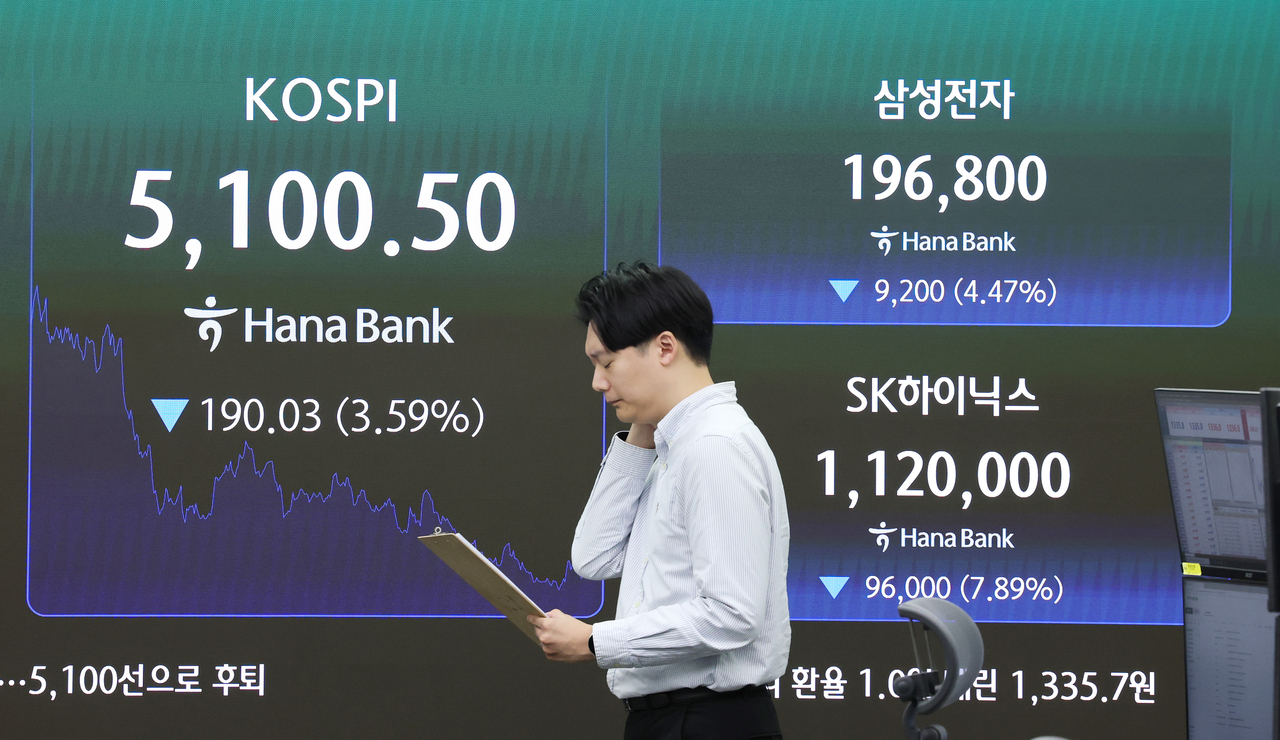
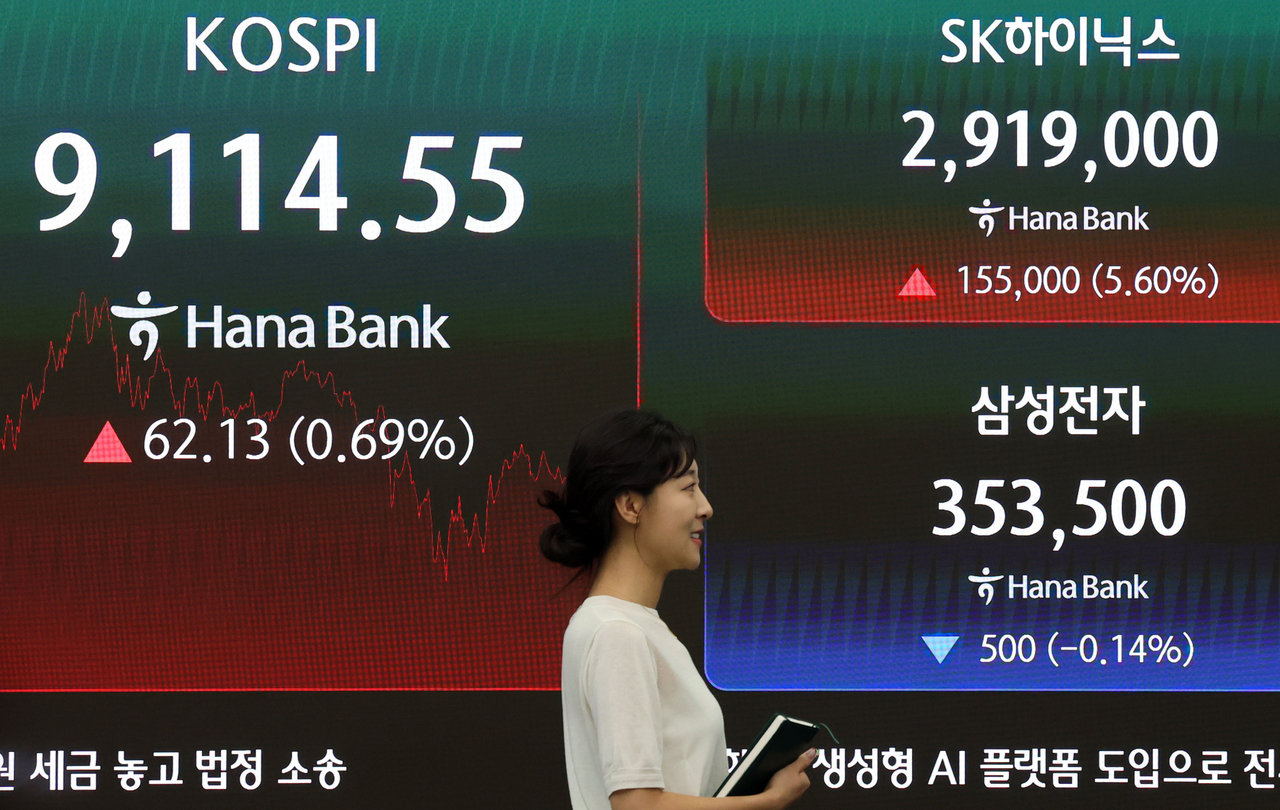
According to Korea Exchange, Kosdaq tumbled 11.63% from the start of this month through Monday.
Widening the lens to the full year reveals an even steeper drop. Kosdaq closed at 925.47 on Dec. 30 last year, the final trading day of 2025, and fell to 665.65 on Monday — a decline of 259.82 points, or 28.07%. More than a quarter of the index's value has been wiped out since the start of this year.
Foreign investors have been the primary driver of the selloff. They net sold 1.24 trillion won worth of Kosdaq shares this month, offloading a heavy volume of stock. Institutions and retail investors absorbed the selling, posting net purchases of 670 billion won and 553 billion won, respectively.
The deterioration in sentiment has also shown up in the margin balance. A shrinking margin balance indicates that investors are reducing their leveraged stock holdings, and is widely watched as a barometer of market confidence.
According to the Korea Financial Investment Association, the Kosdaq margin loan balance fell from 6.32 trillion won on Nov. 6 to 5.81 trillion won on Friday — a drop of 507 billion won, or 8.0%.
Since the start of the year, the decline in the margin balance has far outpaced the index's own losses. The Kosdaq margin balance stood at 10.16 trillion won at the end of last year and has since fallen to 5.81 trillion won as of Friday, a drop of 4.35 trillion won, or 42.80%. Leveraged investment in Kosdaq stocks has shrunk by more than 40% compared with the beginning of this year.
Notably, the 507 billion won reduction in the margin balance over the past five trading sessions alone accounts for roughly 11.7% of the total decline since the end of last year. The year-long contraction in margin trading has accelerated in tandem with the recent sharp drop in the index.
Kosdaq staged a brief recovery last week on the back of institutional buying, but the gains did not hold. The index closed at 699.66 on Friday, up 8.60% from the previous week's close. During that period, institutions net bought 812 billion won while foreigners net sold 779 billion won. The index then tumbled 4.86% on Monday, with institutions also turning net sellers at 152 billion won.
Na Seung-du, a researcher at SK Securities, said last week's institutional net buying had been sufficient to lift the market given that foreigners had already sold enough domestic shares and margin positions had been largely unwound. Na cautioned, however, that it was too early to call it a full demand recovery for Kosdaq, and went on to say that while Kospi was weighed down by the shock from Nvidia, Kosdaq likely served as a short-term diversification destination for investors seeking to reduce risk.
Brokerages are advising investors to focus on individual stock selection rather than betting on an index rebound. Bookook Securities put forward a "vacant supply" strategy targeting small- and mid-cap stocks that have been overlooked by the market or have suffered outsized price declines despite expectations of earnings improvement.
Lee Won, a researcher at Bookook Securities, said that given the current Kosdaq environment — where stock-specific moves dominate over index-tracking plays — individual stock selection is the more prudent approach. A short-term swing strategy of buying in tranches, centered on sectors with high potential for a supply-demand rebound — such as earnings turnaround candidates and undervalued stocks that have fallen sharply relative to book value — remains effective, Lee said.

hajun825@heraldcorp.com