Trilateral meeting seen as reshaping global order; Takaichi reaffirms Indo-Pacific cooperation with Trump on eve of talks
Anxiety is mounting in Japan over what some are calling a "new Yalta" — the prospect of being sidelined as the United States, China and Russia hold a trilateral summit Thursday in Shenzhen, China.
Japanese officials and analysts fear that President Donald Trump, pursuing a transactional approach, could strike independent deals with Beijing and Moscow that leave Japan's core interests unaddressed — among them security in the Taiwan Strait and the East China Sea, and the disputed Kuril Islands, four islets claimed by both Japan and Russia that Tokyo calls the Northern Territories.
Some observers have drawn comparisons to the 1945 Yalta Conference, where the leaders of the United States, Britain and the Soviet Union carved up the postwar international order without consulting the countries most directly affected. The Shenzhen meeting is already being described in some quarters as a "new Yalta summit" or a "second Yalta Conference."
Analysts note that Trump, whose Republican Party suffered a stinging defeat in the midterm elections earlier this month — losing its majority in both chambers of Congress — will be eager to claim a visible diplomatic win to break the political deadlock at home.
He referred to China as "a wartime ally from World War II" at a US-China summit held in the United States in September.
For China, hosting the first-ever US-China-Russia trilateral summit on its own soil offers a chance to project itself as a co-equal power alongside the United States and a central architect of a new global order.
Beijing is also expected to use negotiations with Trump to seek a relaxation of advanced semiconductor export controls and to extract concessions — or at least restraint — on Taiwan, moves that would simultaneously pressure both Japan and Taiwan.
Chinese Foreign Ministry spokesperson Mao Ning, speaking at a regular briefing Monday, said the three countries are "all founding members of the UN and permanent members of the Security Council" and that they "once together won the anti-fascist war."
Mao added that "in the current international situation, the three countries bear an important responsibility to jointly respond to global challenges and promote world peace and stability."
For Russia, the summit represents an opportunity to break out of the diplomatic isolation imposed by the West since its invasion of Ukraine, and to engage as an equal with major powers in shaping the international order.
Moscow is expected to seek favorable outcomes on ending the war in Ukraine and on nuclear disarmament talks — bypassing the EU and Japan to negotiate directly with Washington and Beijing.
Kremlin aide Yuri Ushakov said Monday that the summit "was agreed to proceed in the spirit of mutual understanding and alliance among the three countries during World War II," and that the meeting would particularly highlight the three nations' cooperation in founding the UN.
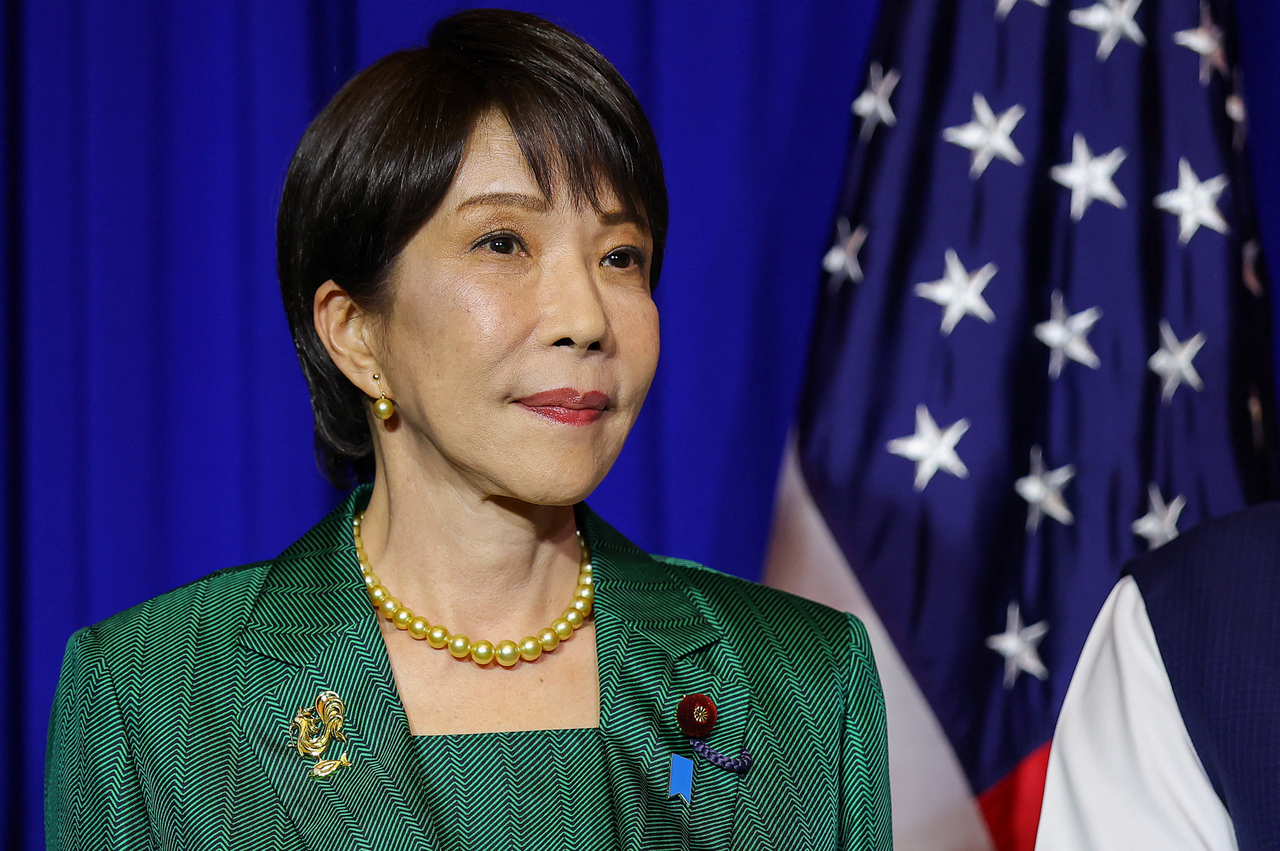
Against this backdrop, Japan finds itself with little room to maneuver in its diplomacy toward either China or Russia. Relations with Beijing have been strained since last November, when Prime Minister Takaichi Sanae suggested Japan could intervene in a Taiwan contingency.
According to Kyodo News and other outlets, a formal bilateral meeting between Takaichi and Chinese President Xi Jinping on the sidelines of the Asia-Pacific Economic Cooperation summit also fell through.
Chinese Premier Li Qiang arrived in Manila Sunday and attended the China-ASEAN summit the following day before returning home. Zhang Zhu, China's minister of agriculture and rural affairs, attended the ASEAN Plus Three — a summit of ASEAN nations with China, Japan and South Korea — in Li's place Tuesday.
Japanese media raised the possibility that Li deliberately skipped the ASEAN Plus Three meeting to avoid contact with Takaichi.
Tensions with Russia have also persisted since the invasion of Ukraine, compounded by Japan's sanctions on Moscow, Vladimir Putin's visit to the Kuril Islands in August, and the detention of a Japanese journalist by Russian authorities.
Nevertheless, the possibility of a meeting between Takaichi and Putin has emerged.
Kyodo News reported Tuesday, citing a senior official in the Takaichi administration, that the two leaders are expected to meet on the sidelines of APEC. Kremlin spokesperson Dmitry Peskov had also said he did not rule out the possibility of Putin holding talks with Takaichi at the summit.
Analysts warn that if US-China-Russia cooperation advances, Japan risks being shut out of discussions over the international order — and could face a more severe security environment, including heightened military pressure in the Taiwan Strait and the East China Sea, as well as expanded military activity by North Korea.
There are also concerns that if China and Russia use the trilateral summit to emphasize the World War II victors' framework, Japan could find itself on the defensive over postwar international order, historical issues and territorial disputes.
In response, Japan appears to have sought to establish some common ground with its sole treaty ally, the United States, before the trilateral meeting convened — in order to convey its position directly to Washington.
According to the Japanese government, Takaichi and Trump held a brief informal exchange over dinner in Manila, Philippines, on the sidelines of the ASEAN summit Tuesday, reaffirming their commitment to close cooperation on key issues including the Indo-Pacific situation.
The Japanese government declined to disclose the specifics of the conversation. Chief Cabinet Secretary Kihara Minoru, the government's spokesperson, told a morning news conference Wednesday that he would "refrain from commenting on further details, as these are diplomatic exchanges."
mokiya@heraldcorp.com