Jungnang-gu chose dialogue over enforcement at Sangbong Meokja Alley, turning a conflict zone into a model of coexistence. A 26-member cooperative council of residents and merchants held dozens of meetings before signing a mutual-benefit agreement, resolving long-running disputes and boosting sales by 25.7%.
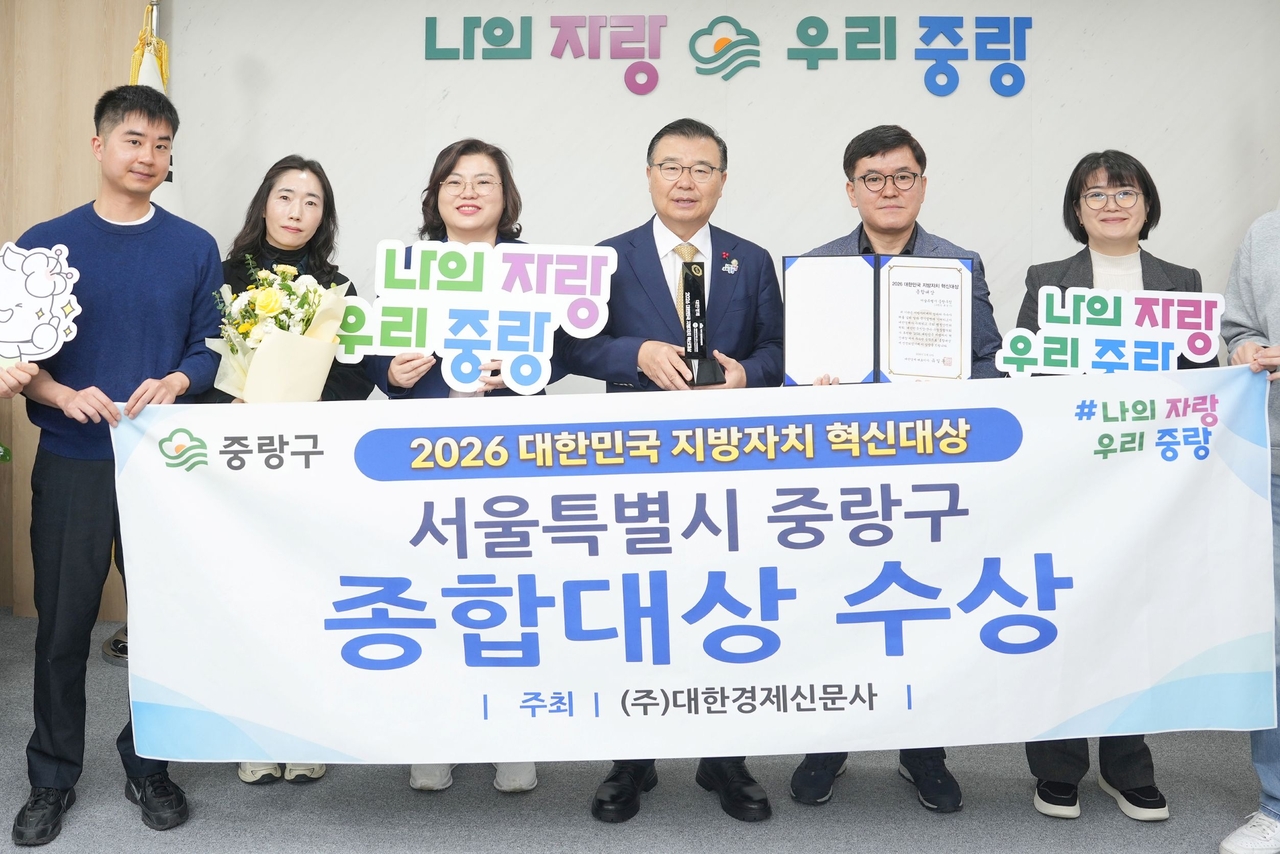
Seoul's Jungnang-gu has won the grand prize at the 2026 Local Government Innovation Awards, recognized for resolving a long-running conflict between residents and merchants and revitalizing a local alley commercial district. The win marks the third consecutive year the district has taken home a top honor — following a top prize in the cultural innovation category in 2024 for Mangwoo History and Culture Park, and a grand prize in the welfare innovation category in 2025 for the Jungnang Donghang Sarangnet program.
This year's award recognized the district's cooperative approach at Sangbong Meokja Alley, where Jungnang-gu simultaneously improved residents' living environment and boosted commercial activity.
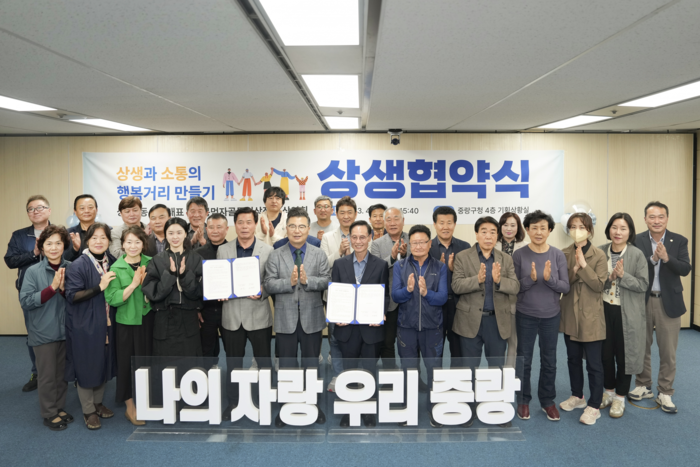
Sangbong Meokja Alley had long been a flashpoint, with residents and merchants at odds over noise and pedestrian inconvenience. Rather than relying on enforcement alone, Jungnang-gu pursued a solution through dialogue and cooperation among the parties involved. The district formed a cooperative council of 13 resident representatives and 13 merchants, and after three formal meetings and dozens of smaller consultations, the two sides signed a mutual-benefit agreement in April 2023.
The agreement set out specific operating standards — including restrictions on business zones and hours, the operation of a dedicated complaint desk, public restroom access, noise minimization, alley cleaning and charitable donations. Merchants were given direct responsibility for maintaining business order and managing the local environment. The district widened sidewalks to separate pedestrian and outdoor dining areas, and revised road-use ordinances and district-unit planning guidelines to provide a regulatory foundation.
Licensed outdoor dining began in May 2023 following the required permit and notification procedures. The merchants' association took on night patrols, cleaning and complaint handling, while the district continued to provide administrative support to ensure the agreement was upheld and the site was properly managed.
The initiative produced two concrete results: a better living environment for residents and higher sales for merchants. Second-quarter sales in the commercial zone around Exit 3 of Sangbong Station rose 25.7%, from 10.62 billion won ($7.98 million) in 2022 to 13.35 billion won in 2026. The coexistence model — reducing resident inconvenience while improving the business environment for merchants — translated into tangible economic gains.
Sangbong Meokja Alley was also selected this year for the Seoul Metropolitan Government's Seoul Dalbit Yajang development project, securing eligibility for up to 2 billion won in support through 2028. The district plans to improve nighttime lighting, safety and convenience facilities, and expand locally distinctive cultural content to develop the alley into a nighttime commercial destination that reflects the character of the neighborhood.
"Sangbong Meokja Alley is a case where residents and merchants resolved their conflict through dialogue and cooperation, and achieved both commercial revitalization and improvements to the living environment together," Jungnang-gu District Mayor Ryu Gyeong-gi said. "Going forward, we will continue to listen to voices on the ground and work toward sustainable local development where residents and merchants can thrive side by side."
The 25.7% sales increase at Sangbong Meokja Alley draws attention as a model for revitalizing local commercial districts.
Conflicts between residents and merchants are a persistent challenge for local governments. Residents complain of noise and pedestrian inconvenience; merchants want more space to operate and keep their livelihoods afloat. Neither side is easy to favor. Enforcement alone can suppress conflict but rarely resolves it for good, while deregulation alone does little to address residents' grievances.
Jungnang-gu tackled this familiar standoff by combining three approaches: dialogue, regulatory reform and merchant self-governance. The result at Sangbong Meokja Alley — improved living conditions for residents alongside a more active commercial district — earned the district the grand prize at the 2026 Local Government Innovation Awards.
The win extends a three-year streak: a top prize in the cultural innovation category for Mangwoo History and Culture Park in 2024, a grand prize in the welfare innovation category for the Jungnang Donghang Sarangnet program in 2025, and now this year's top honor. The district has broadened its record of innovation from culture and welfare to a model that links local commerce with residents' daily lives.
A cooperative approach born from conflict
Sangbong Meokja Alley was once a persistent source of friction between residents and merchants over noise and pedestrian access. The district concluded that unilateral enforcement and regulation could not solve the problem at its root, and focused its administrative efforts on finding a shared solution that would ease residents' discomfort without threatening merchants' livelihoods.
A cooperative council of 13 resident representatives and 13 merchants was formed, and the two sides met through three formal sessions and dozens of smaller consultations. After directly confronting their differing interests and working through the issues together, they signed a mutual-benefit agreement in April 2023.
The agreement laid out concrete commitments: restrictions on business zones and hours, a dedicated complaint desk, public restroom access, noise minimization, alley cleaning and charitable contributions. Merchants were made directly responsible for maintaining business order and managing the alley environment, establishing an operating framework designed to minimize inconvenience for residents.
Protecting pedestrians while securing business space — the regulatory backbone
The district ensured the agreement would not remain merely symbolic. Jungnang-gu widened sidewalks to separate pedestrian and outdoor dining areas, and revised road-use ordinances and district-unit planning guidelines to give the arrangement a firm legal footing.
Licensed outdoor dining launched in May 2023 under the required permit and notification procedures. The merchants' association took responsibility for night patrols, alley cleaning and complaint handling, while the district continued to provide administrative backing.
Residents gained a more comfortable pedestrian and living environment; merchants gained a stable, legally sanctioned basis for their operations. The district moved beyond its traditional role as enforcer and regulator to serve as a coordinator — ensuring that the rules residents and merchants had agreed on actually worked in practice.
Coexistence pays off — and the alley lands a city grant
The results showed up in commercial data. Second-quarter sales in the zone around Exit 3 of Sangbong Station climbed 25.7%, from 10.62 billion won in 2022 to 13.35 billion won in 2026.
The district says the case demonstrates that improving residents' living environment and boosting commercial activity need not be competing goals. A well-managed alley that reduces resident inconvenience and provides a legitimate outdoor dining environment, it argues, can itself become a foundation for commercial competitiveness.
Sangbong Meokja Alley was also selected this year for the Seoul Metropolitan Government's Seoul Dalbit Yajang development project, securing eligibility for up to 2 billion won in support through 2028. The district plans to upgrade nighttime lighting, safety and convenience facilities, and expand locally distinctive cultural programming, developing the alley into a commercial destination where food, culture and everyday neighborhood life come together.
"Sangbong Meokja Alley is a case where residents and merchants resolved their conflict through dialogue and cooperation, and achieved both commercial revitalization and improvements to the living environment together," District Mayor Ryu said. "Going forward, we will continue to listen to voices on the ground and work toward sustainable local development where residents and merchants can thrive side by side."
Rather than suppressing conflict through enforcement, Jungnang-gu resolved it through dialogue, backed the resulting consensus with regulatory reform, and built a management system in which merchants themselves take responsibility. The district's award win shows that a single alley's transformation can scale into an innovation model for local government.
seouldream01@heraldcorp.com