479.6 million won across 10 departments — from lawmakers' field research to executive review
24 of 27 proposals accepted in what Gwangjin-gu calls a first among Seoul's 25 autonomous districts
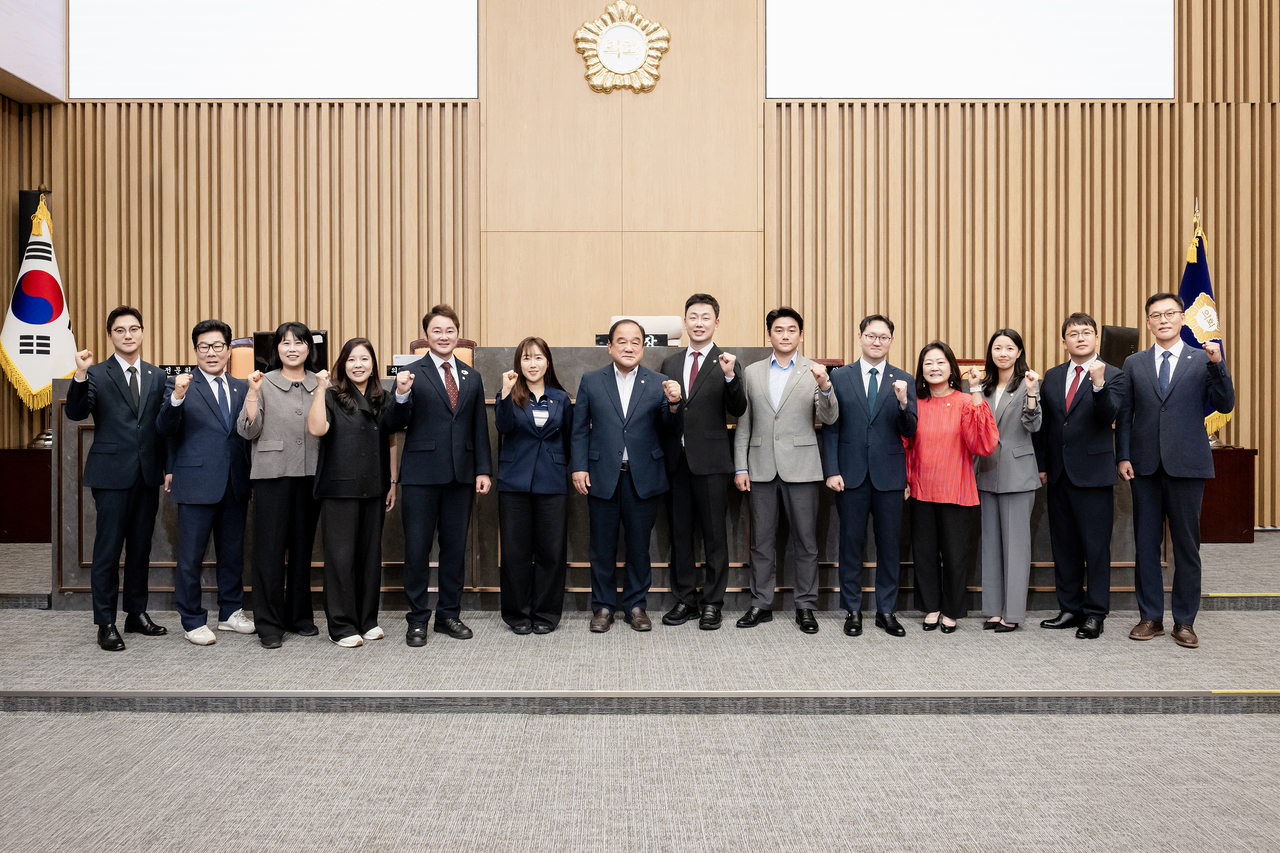
The Gwangjin-gu Council and Gwangjin-gu district office have established a cooperative governance model that incorporates lawmakers' field policy proposals directly into the district's annual budget.
The council said 24 of 27 proposals submitted under its "lawmaker policy proposal project" — gathered by members across four electoral districts and all party lines — cleared the district office's review and were included in the 2027 budget draft. The accepted proposals span 10 departments and total 479.6 million won ($360,000).
The initiative, the first of its kind since the 10th Gwangjin-gu Council took office, was designed to bring residents' practical needs into district administration by opening communication between the council and the executive branch from the earliest stage of budget planning.
Under the model, council members gather resident opinions in the field, identify needed projects and submit proposals to the district office, which then evaluates each proposal's feasibility and urgency before deciding whether to include it in the budget. The process is significant because it respects both the council's representative function and the executive branch's budget authority while channeling the two toward improving residents' welfare.
Projects approved for the budget include everyday quality-of-life improvements such as installing automated external defibrillators and their storage units, upgrading the arcade environment at Jayang Traditional Market, and placing unmanned PET bottle collection machines in Jayang 3-dong.
Three of the 27 proposals were not accepted due to on-site conditions and safety concerns. Two proposals for smart rest shelters were rejected because the sidewalks in question were too narrow for installation, while a plan to add amenities to a pavilion at Haeoreum Park was excluded over the risk of fire and electrical short circuits from installing heating cables in a wooden floor. The rejected proposals totaled 175.3 million won.
The initiative has been recognized as a model of policy cooperation between the council and the district office, as resident needs identified in the field by lawmakers were translated into actual budget projects through executive review and consultation. Gwangjin-gu said the collaboration is the first of its kind among Seoul's 25 autonomous districts.
The related budget draft is set to be finalized after review by the budget and accounts special committee at the Gwangjin-gu Council's second regular session.
"I am grateful to the executive branch for incorporating the lawmaker proposal projects that the 10th Gwangjin-gu Council attempted for the first time into the budget," Gwangjin-gu Council Speaker Ko Yang-seok said. "We will make this lawmaker policy proposal project a starting point for building a better Gwangjin-gu through productive cooperation with the district office."
seouldream01@heraldcorp.com