The district completed larval surveys and control measures at 268 sites by March this year; starting in June, it will deploy attractant traps and eco-friendly spraying to manage lovebugs
Mapo-gu has activated a preemptive pest control system to prepare for a summer surge in nuisance insects, including mosquitoes and lovebugs, aiming to minimize inconvenience for residents.
As climate change and shifting urban environments extend the emergence and active seasons of nuisance insects, resident complaints have been rising consistently.
In response, the district has built a phased pest control framework spanning winter through summer to prevent infestations before they take hold.
From last December through March this year, the district carried out winter larval surveys and control measures at 268 sites — including residential complexes with fewer than 300 units, offices and mixed-use buildings under 2,000 square meters, and areas prone to frequent complaints — that fall outside mandatory disinfection requirements.
Mosquito larvae often overwinter in below-ground spaces such as septic tanks and drainage sumps. Controlling them at the larval stage effectively reduces adult populations; eliminating a single larva is said to prevent the emergence of roughly 500 adult mosquitoes.
Health center pest control teams visited each site directly to assess larval density, immediately applying eco-friendly biological larvicides wherever larvae were found. In areas where adult mosquitoes were detected in underground drainage systems, teams also combined residual spraying with thermal fogging.
The district is also stepping up its response to lovebugs this summer.
Lovebugs are considered beneficial insects that neither bite nor transmit disease. Accordingly, the district plans to minimize insecticide use and prioritize eco-friendly control methods to reduce the impact on local ecosystems.
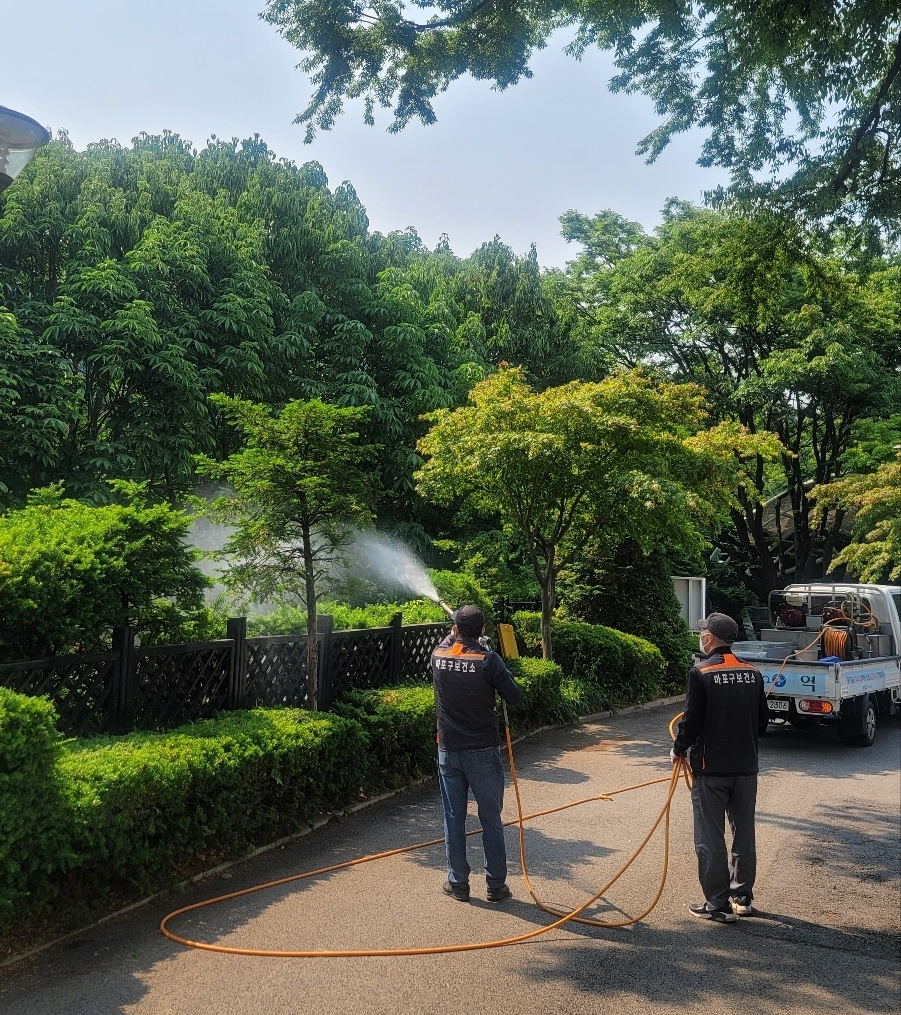
Eco-friendly control operations began Monday in areas where lovebug activity is expected.
In mid-June, the district plans to install attractant traps around trees in the main affected areas to reduce lovebug populations.
During peak lovebug season, professional pest control contractors will be deployed to carry out control operations roughly three times a week, focusing on parks, walking paths, high-density residential areas and locations with frequent complaints.
The health center's mobile pest control unit will remain on standby at all times, with plans to strengthen on-site response by dispatching teams quickly whenever resident reports or complaints come in.
The district also plans to share tips on dealing with nuisance insects through its official website, blog and various social media channels.
Residents can submit related complaints or reports through the Health Administration Division of the Mapo-gu Public Health Center.
seouldream01@heraldcorp.com