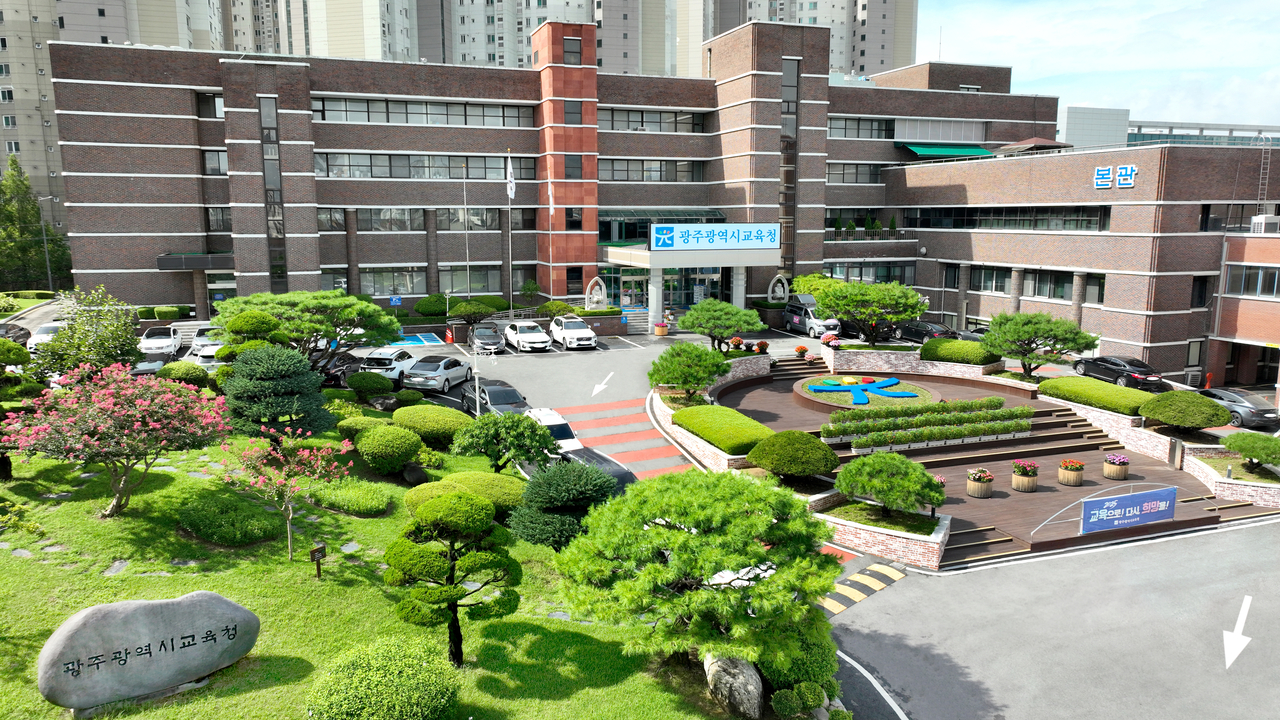
The Gwangju Metropolitan Office of Education announced Monday it has drawn up its first supplementary budget of the year, increasing spending by 342.8 billion won ($227 million). The office plans to submit the supplementary budget to the Gwangju City Council on Thursday, with final approval expected at a plenary session on June 17.
The main funding sources are 218.6 billion won in central government transfers, 100 billion won in local government contributions not included in the original budget, and 24.2 billion won in other revenue.
If the supplementary budget clears the city council, the office's total budget will reach 3.1685 trillion won — a 12.1 percent increase over the original budget of 2.8256 trillion won.
The office said it focused the additional spending on supporting schools struggling with high energy costs and rising prices, strengthening future learning capabilities, building safer educational infrastructure, and laying the fiscal groundwork for the administrative integration of Gwangju and South Jeolla Province's education systems.
Some 27.8 billion won was earmarked for school support, including an 18 billion won increase in school operating funds — roughly 15 percent — providing an average of 2.3 million won in additional support per class.
The supplementary budget also includes 5.1 billion won for cafeteria modernization and 4.7 billion won to supply teachers with updated digital devices reflecting higher prices. Both items had been left out of the original budget due to a shortfall in tax revenue.
A total of 61.3 billion won was allocated to programs aimed at strengthening learning capabilities. The breakdown includes 22.1 billion won to build a future education foundation through smart device distribution and information and communications technology use, 6.8 billion won to expand Gwangju-style after-school care programs and extracurricular activities, 3.1 billion won to establish advanced science classrooms, and 7.8 billion won to support diverse curriculum programs including autonomous public high schools.
In preparation for the administrative integration of Gwangju and South Jeolla Province's education systems, set to take effect July 1, the office allocated 2.1 billion won for system development and the creation of a unified education office identity. The contingency reserve was also raised to 10.4 billion won, up from the usual 6 billion won.
An additional 9.5 billion won was set aside for early retirement allowances, and 130.2 billion won in personnel costs was budgeted using 100 billion won in legally mandated transfers from Gwangju city as a funding source.
sij@heraldcorp.com