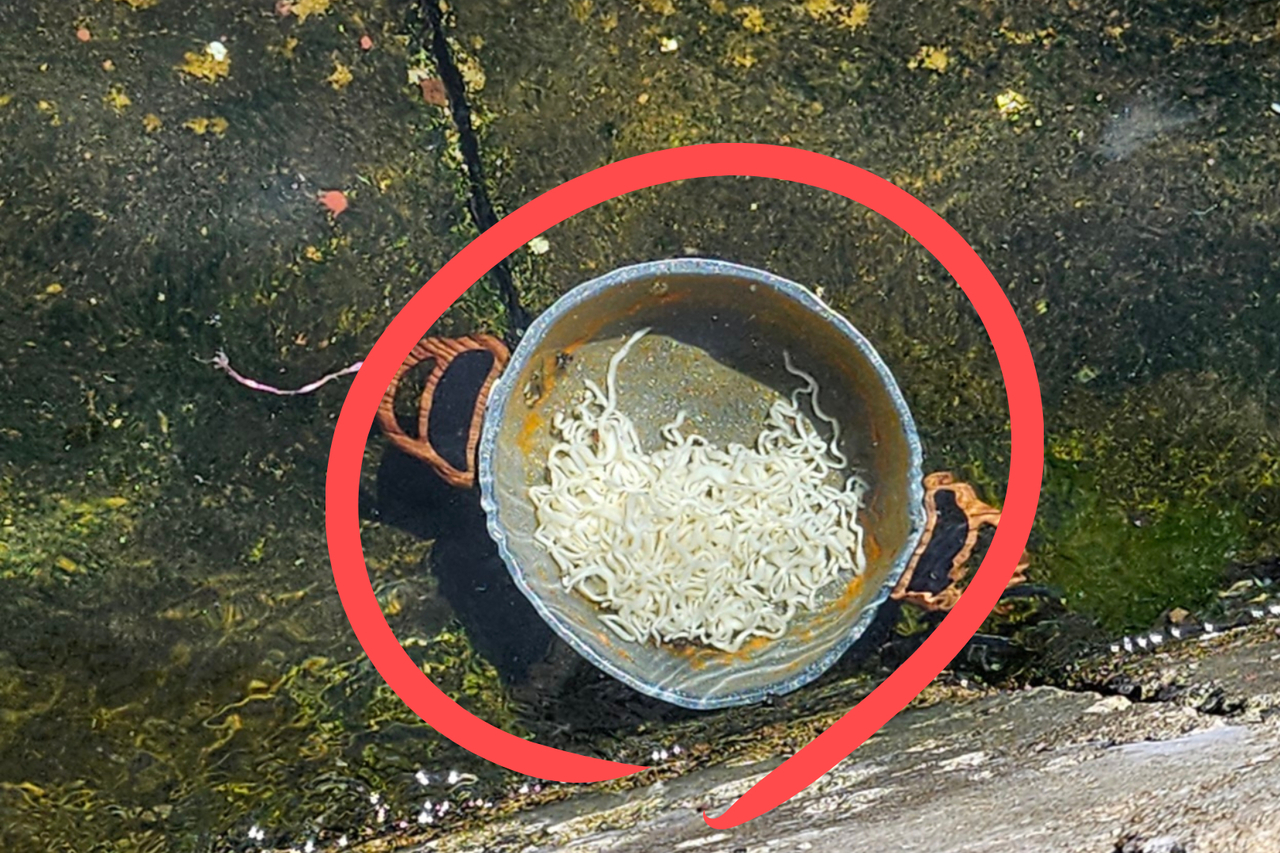
"There's even a ramyun pot down here — still full."
A ramyun pot, food apparently intact, discovered on the floor of a sea off Jeju Island. At first glance it seems almost absurd.
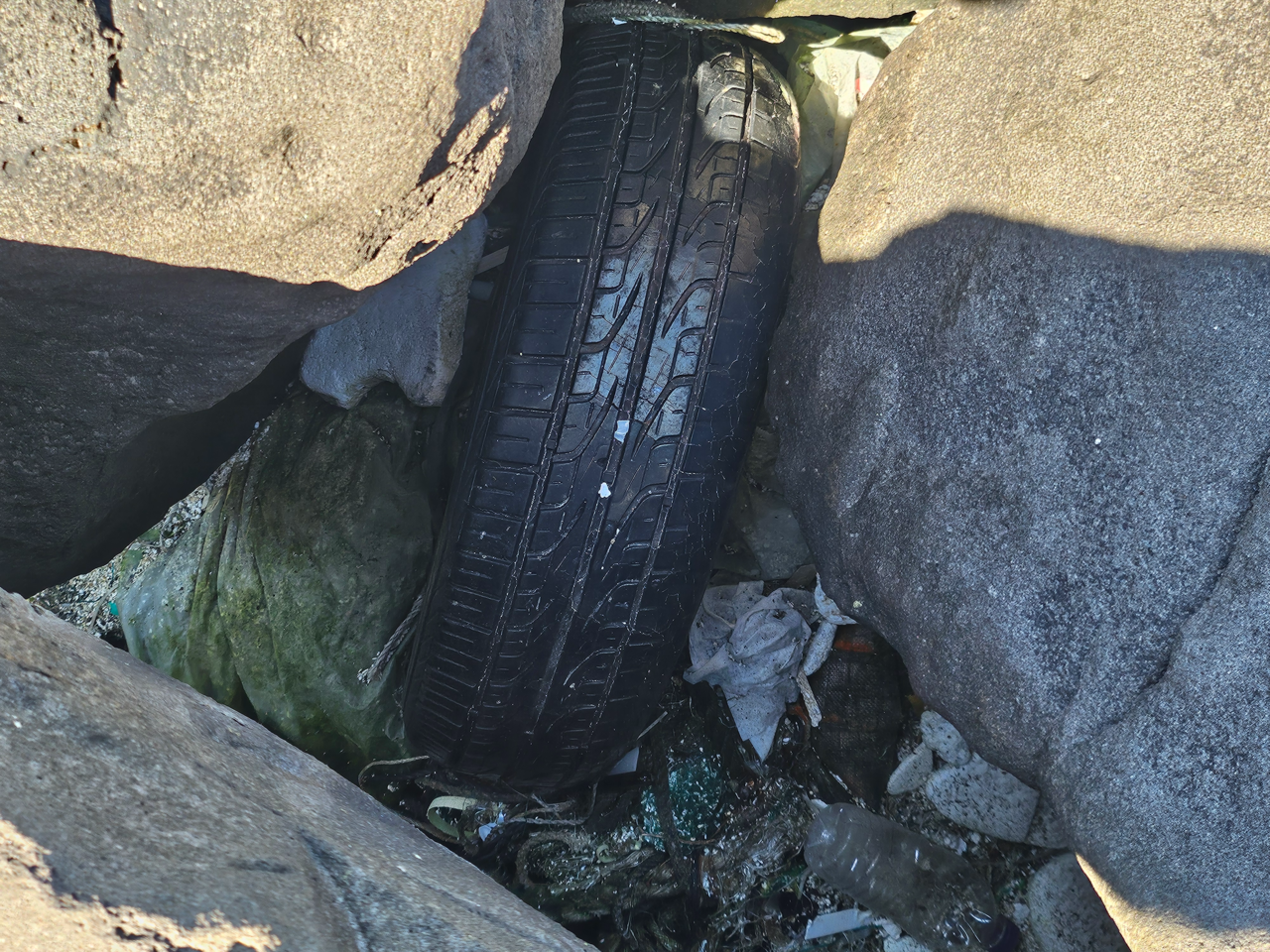
In reality, the ramyun pot is among the more benign finds. Rusted kitchen knives, discarded tires, batteries — trash that defies any reasonable explanation for how it ended up underwater.
From the shore, the sea looks merely beautiful. Most people marvel at the blue expanse and give little thought to what lies in the dark depths below.
But some people deliberately plunge into those murky waters. They come face to face with uncomfortable sights every time, and they pick up the trash — a task with no clear reward and no end in sight.
Jo Vivian, a 10-year-old Jeju Island resident, is one of them. She has spent the past two years collecting underwater trash with hands barely half the size of an adult's palm. She is now a seasoned veteran.
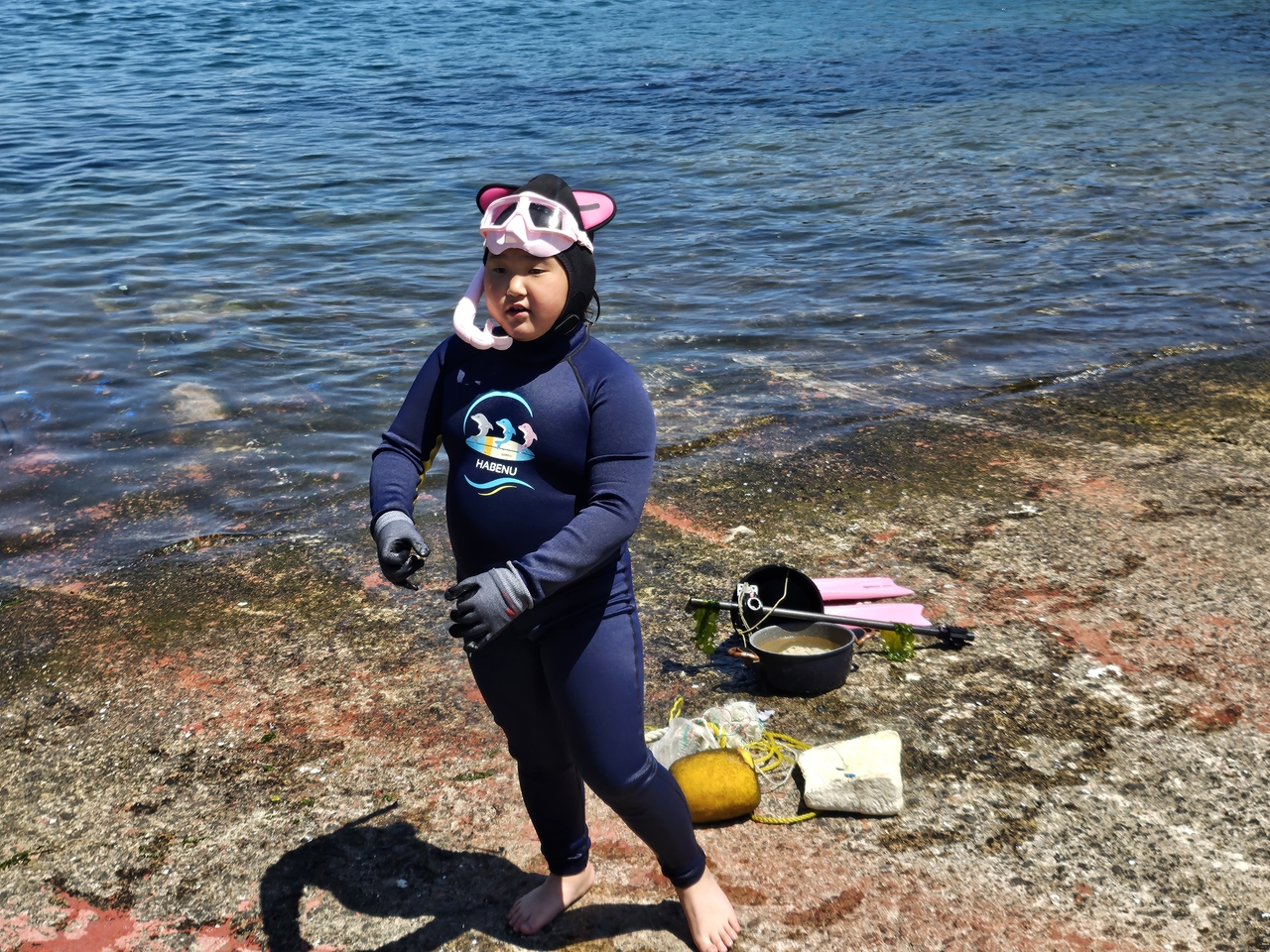
After spending a long stretch in the water under the blazing Jeju sun — temperatures topping 30 degrees Celsius — Jo emerged onto the shore. Asked why she bothers picking up trash from the sea, her flushed face broke into a shy smile.
"The dolphins... are hurting."
An unexpected answer. But the pure sincerity behind it drew laughter from every adult within earshot — laughter tinged, unmistakably, with a quiet shame.
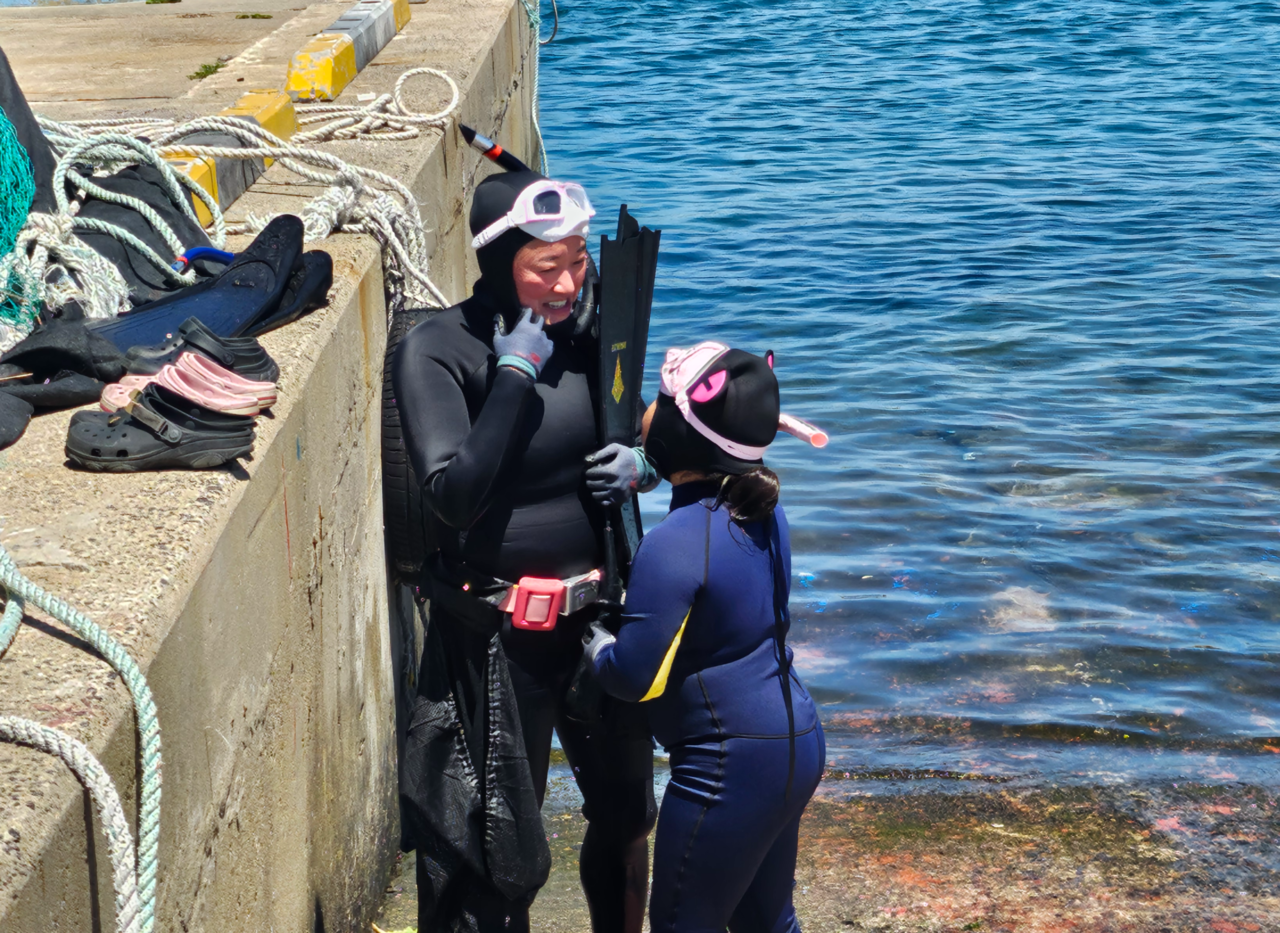
On May 30, this reporter visited Gimnyeong Port in Jeju Island for the "Hamkke Sseudam" campaign run by the Environment Foundation, a public-interest organization focused on environmental issues. The campaign, part of the broader "Jigusseudam" initiative, identifies and strengthens grassroots cleanup groups across the country. That day, roughly 30 people gathered — members of the Jeju-based civic group Hondi and the Jeju Marine Rescue Unit — to clean up the surrounding waters.
While Jo and others dove for underwater debris, Heo Min-hyeok, 18, stood nearby on the shore, rake in hand. His task that day: clearing vast mats of sea lettuce that had bloomed along the coastline as a result of climate change.
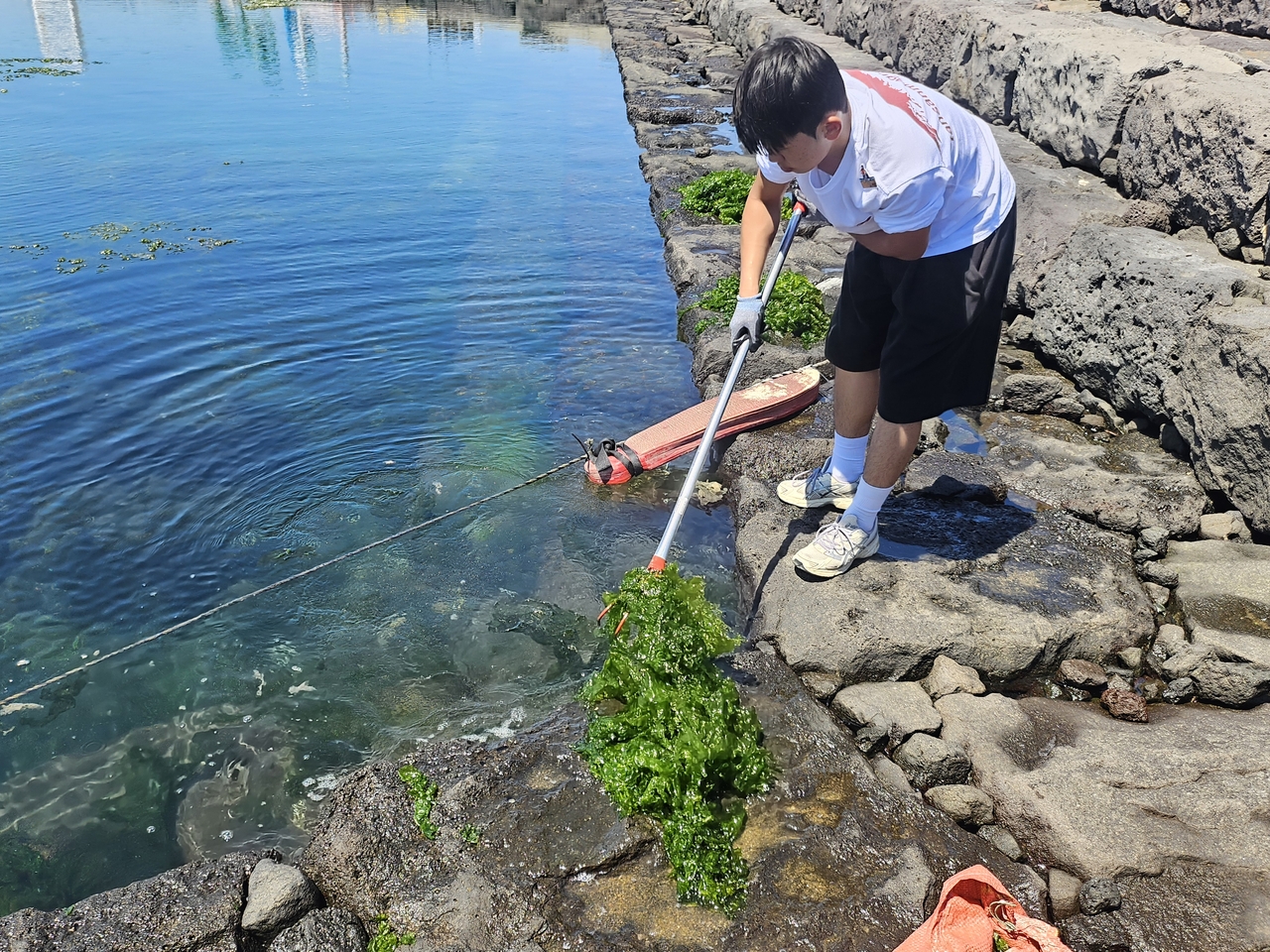
Left unchecked, the sea lettuce rots into a foul stench and draws insects, making it a persistent nuisance along Jeju's coastline. But it is not a purely natural phenomenon. It is a side effect of human activity — reduced water circulation caused by breakwater construction, elevated sea-surface temperatures and other man-made pressures.
With no shade in sight, Heo spent more than two hours silently raking algae off the water's surface. A marine studies student at Jeju Seongsan High School, he plans to graduate next year and ship out as a third mate on a voyage lasting a year and a half.
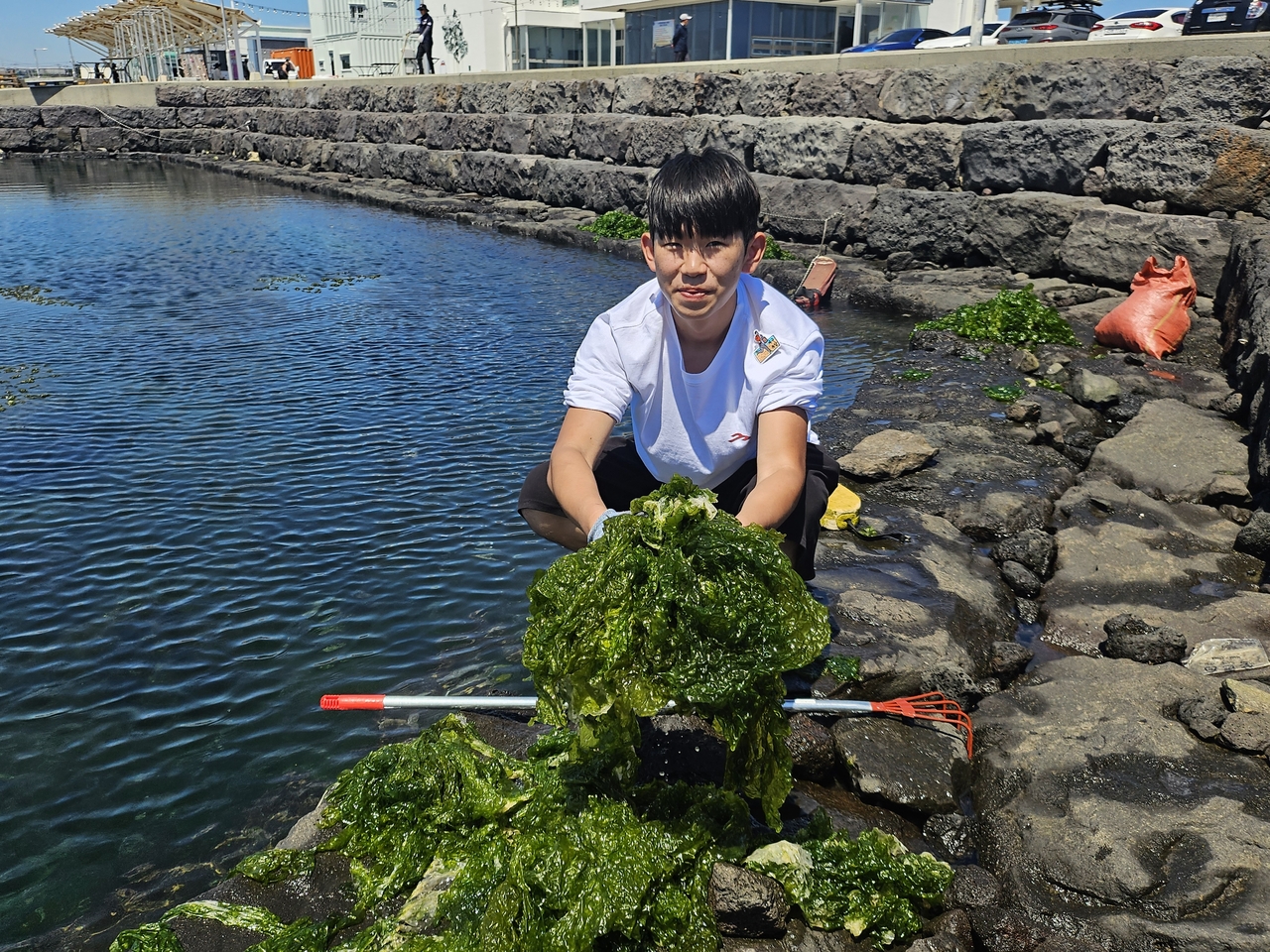
"Swimming in summer, sometimes going out on a boat with family and relatives to fish — that's just everyday life by the sea for me," Heo said. "The ocean can be scary sometimes, but it's a precious place I can't imagine being without."
Soon Heo will leave the Jeju waters that have shaped him and set out for open seas far beyond. He joined the cleanup alone, with no résumé-building motive in mind. His only wish is that the Jeju sea he carries in his memory will still be there when he returns.
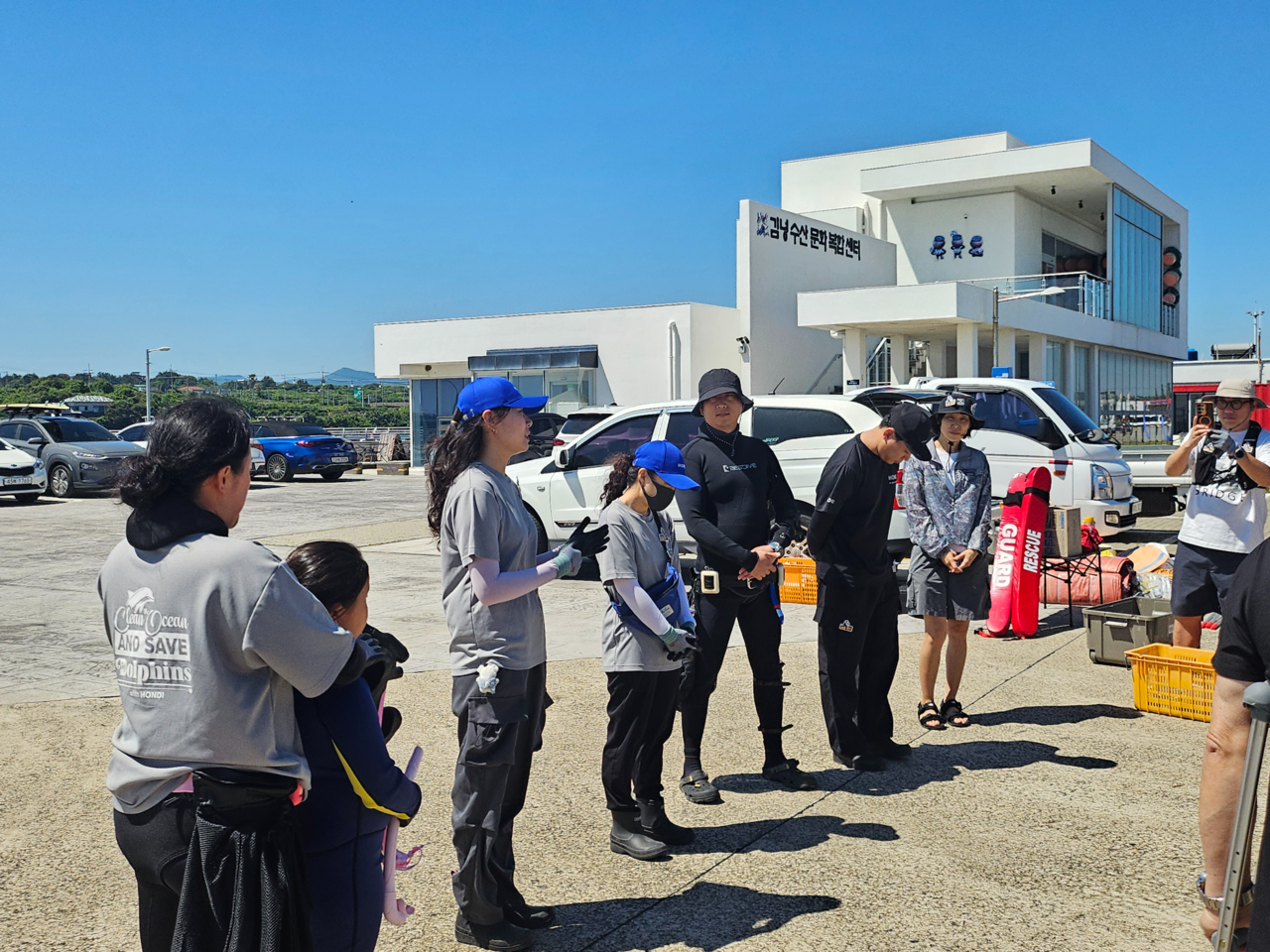
The members of Hondi who came to Gimnyeong Port that day share the same feeling. Each arrived in Jeju for different reasons, but all carry a deep affection for its sea. They watch with growing unease as the waters they love change alongside a rapidly shifting world.
Hondi — the Jeju dialect word for "together" — is a civic group that cleans up beaches and coastal areas across Jeju Island with broad community participation. Beyond collecting marine debris, the group logs the volume of each haul to build a database of Jeju's ocean waste. About 170 volunteers are active in the group, and they collect trash using bags made from discarded banners.
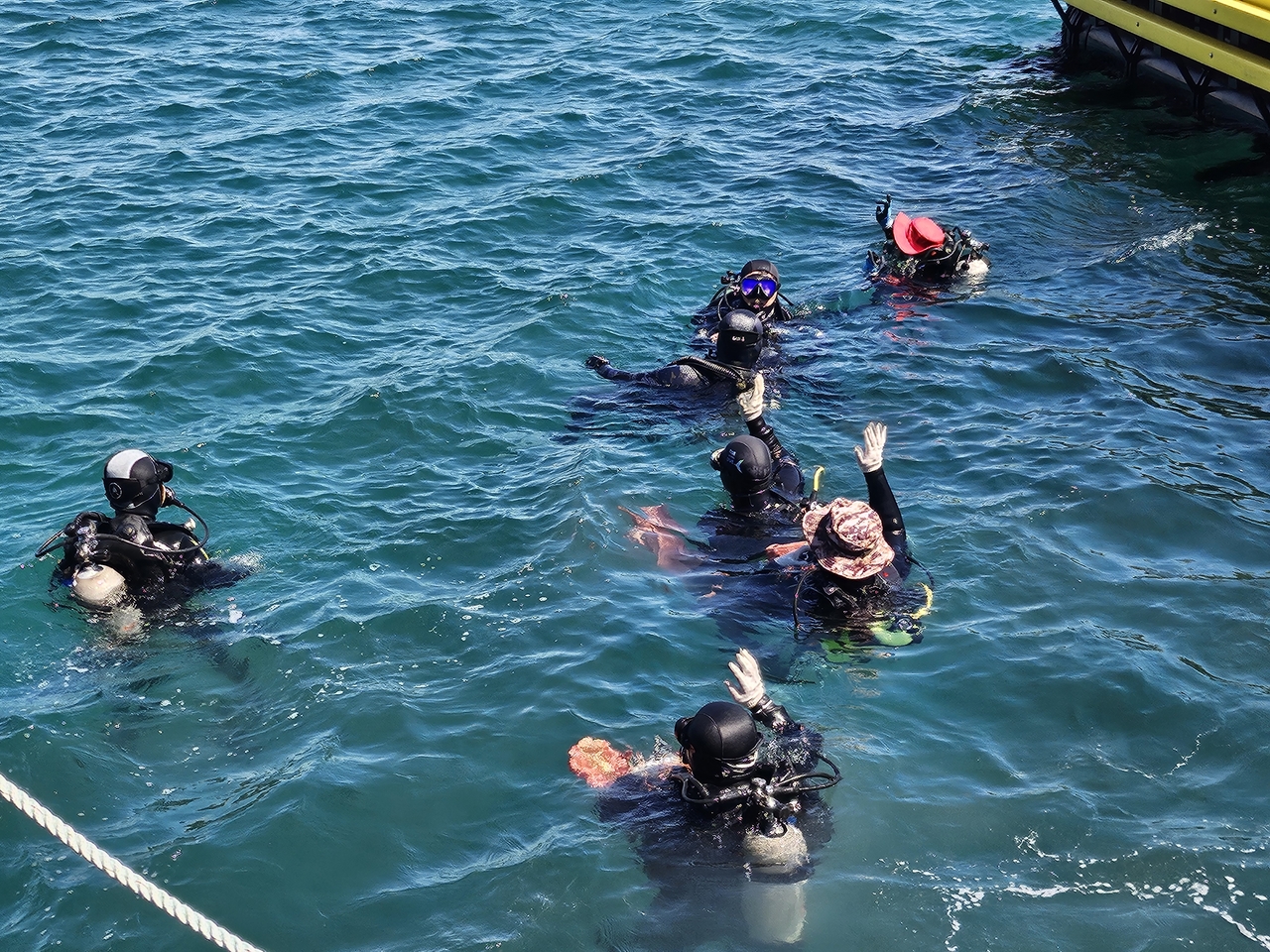
The Jeju Marine Rescue Unit, working alongside Hondi that day, put on an equally striking display. Divers entered the waters off Gimnyeong without hesitation and surfaced with a haul that included discarded tires, batteries, a rusted kitchen knife and rope. They even located the wreckage of a derelict fishing vessel and hauled it to the surface.
The unit's members normally respond to maritime search-and-rescue operations and work to prevent accidents at sea. Carrying heavy equipment into deep water, they also conduct regular operations to retrieve abandoned fishing nets and ropes.
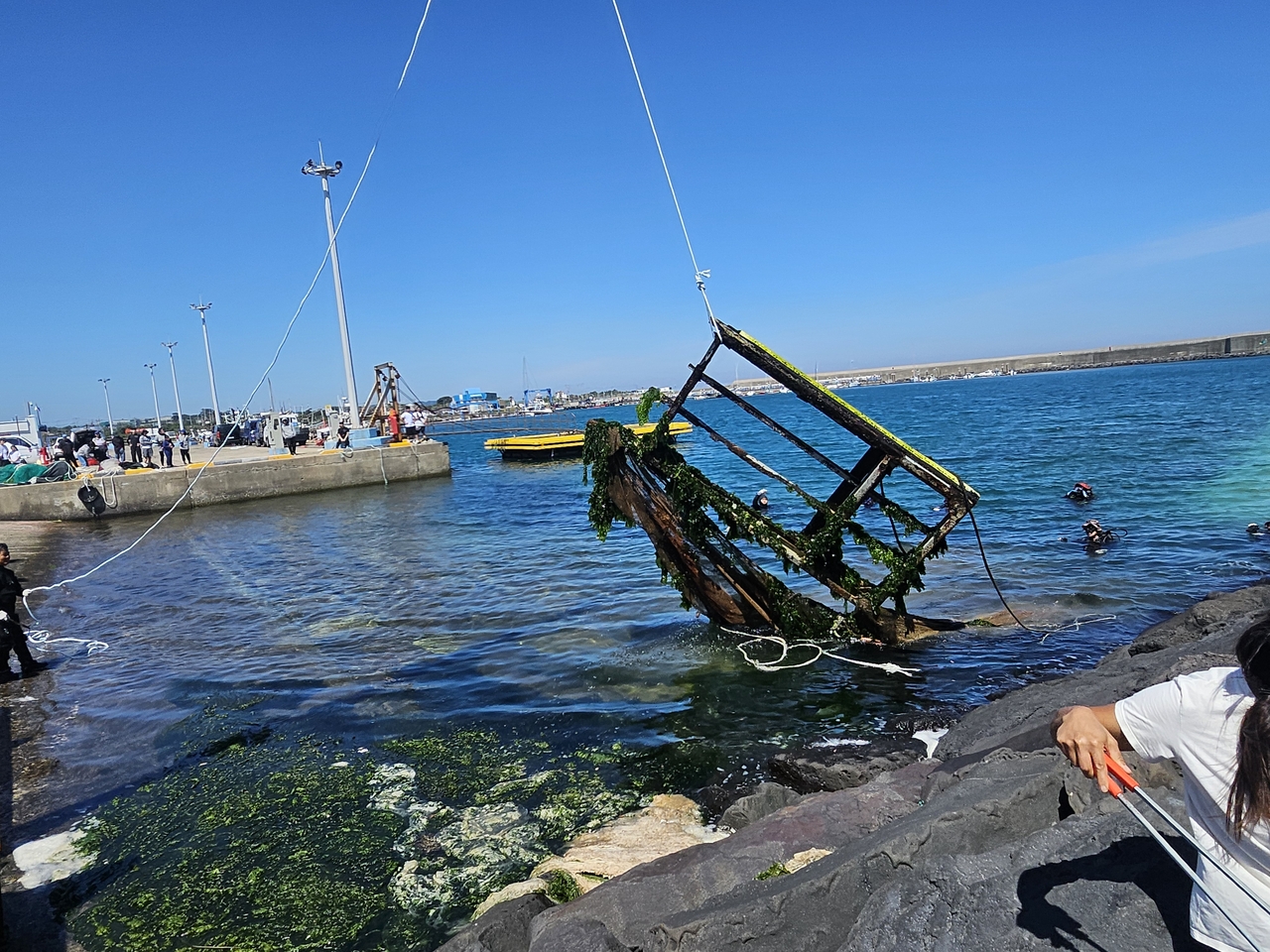
None of them are paid. Equipment, transportation and even meals come largely out of their own pockets. They wade into the sea and pick up trash the way a neighbor shovels snow from the front walk — driven by nothing more than a sense of responsibility to protect the ocean.
Marine debris does not merely foul the water; it threatens the safety of those who make their living from it. Haenyeo divers becoming entangled in abandoned fishing nets is a real and recurring hazard. "We do this work so everyone can use the sea safely," said Son Gyeong-guk, secretary-general of the Jeju Marine Rescue Unit.
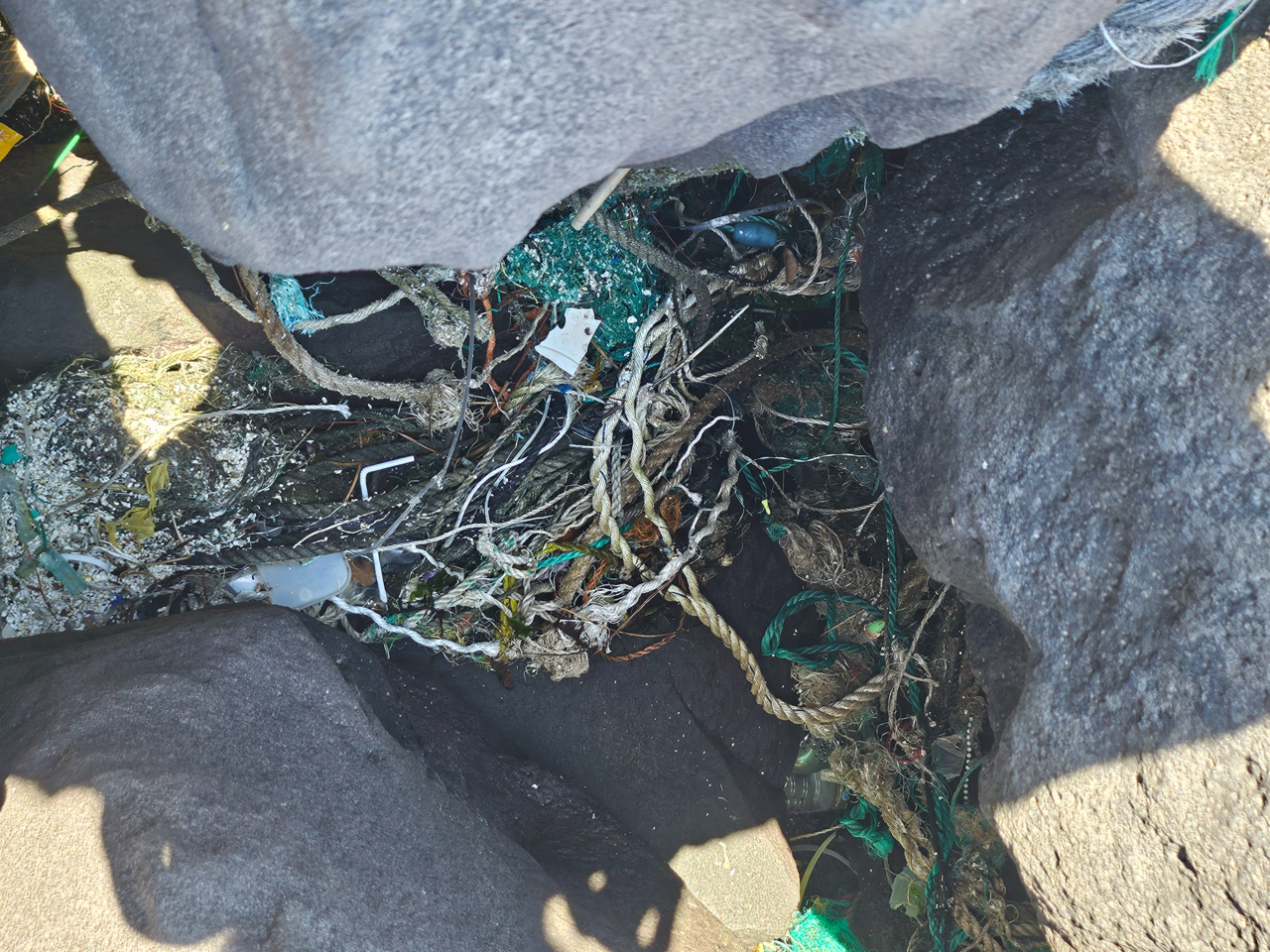
The problem extends well beyond Jeju Island. South Korea generates roughly 100,000 tons of marine waste every year. And the trash accumulating in its waters threatens not only marine ecosystems but also fishing, tourism and the safety of coastal communities — all at once.
In response, the Environment Foundation is running the "Hamkke Sseudam" citizen-participation campaign through July, expanding cleanup activities across coastal, urban and mountain environments in partnership with environmental groups nationwide. The foundation has operated its Jigusseudam campaign since 2020 to raise awareness of marine debris and support cleanup organizations.
Participating groups were selected on the basis of conducting at least five independent cleanup sessions, joining at least one inter-regional plogging event and holding regular activities at least twice a month. This year, 14 groups were chosen. Together, the campaign's participants have collected more than 222 tons of waste to date.
woo@heraldcorp.com