Sapsi Island, reachable only by ferry, retains a quiet charm all its own
Cyclists can take in sweeping coastal views along the island's trail
Nearby Godae Island marks the site of Korea's first Protestant mission
The tidal rock flat 'Baengburyeo' evokes Bolivia's Uyuni Salt Flats
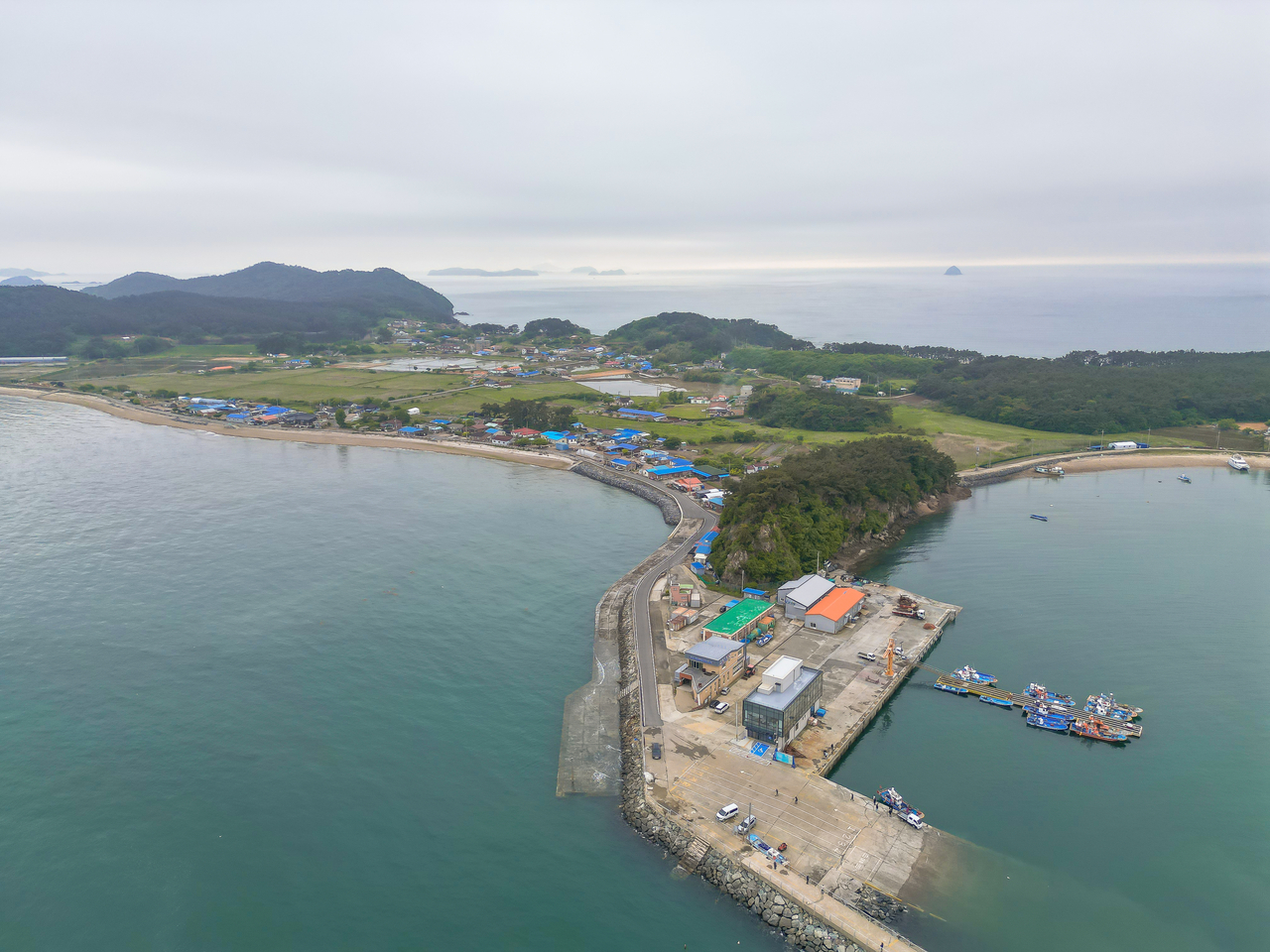
Two islands floating side by side off the coast of Boryeong, South Chungcheong Province, each tell a different kind of story. Sapsi Island offers a space to recharge — a place to work and rest at the same time — while neighboring Godae Island invites quiet reflection along a trail of historical and religious significance. The journey to either island begins the moment you step onto the ferry, and the healing starts there.
**A secluded treasure in the West Sea: Sapsi Island**
Sapsi Island lies a 50-minute ferry ride from Daecheon Port. Since the Boryeong Undersea Tunnel connecting Daecheon Port and Wonsando opened in December 2021, many nearby islands have grown more accessible — almost indistinguishable from the mainland. Sapsi Island, however, has held onto its old tranquility. The island's name, locals say, comes from its geography: the dramatically curved coastline resembles a bow with an arrow nocked and ready to fly.
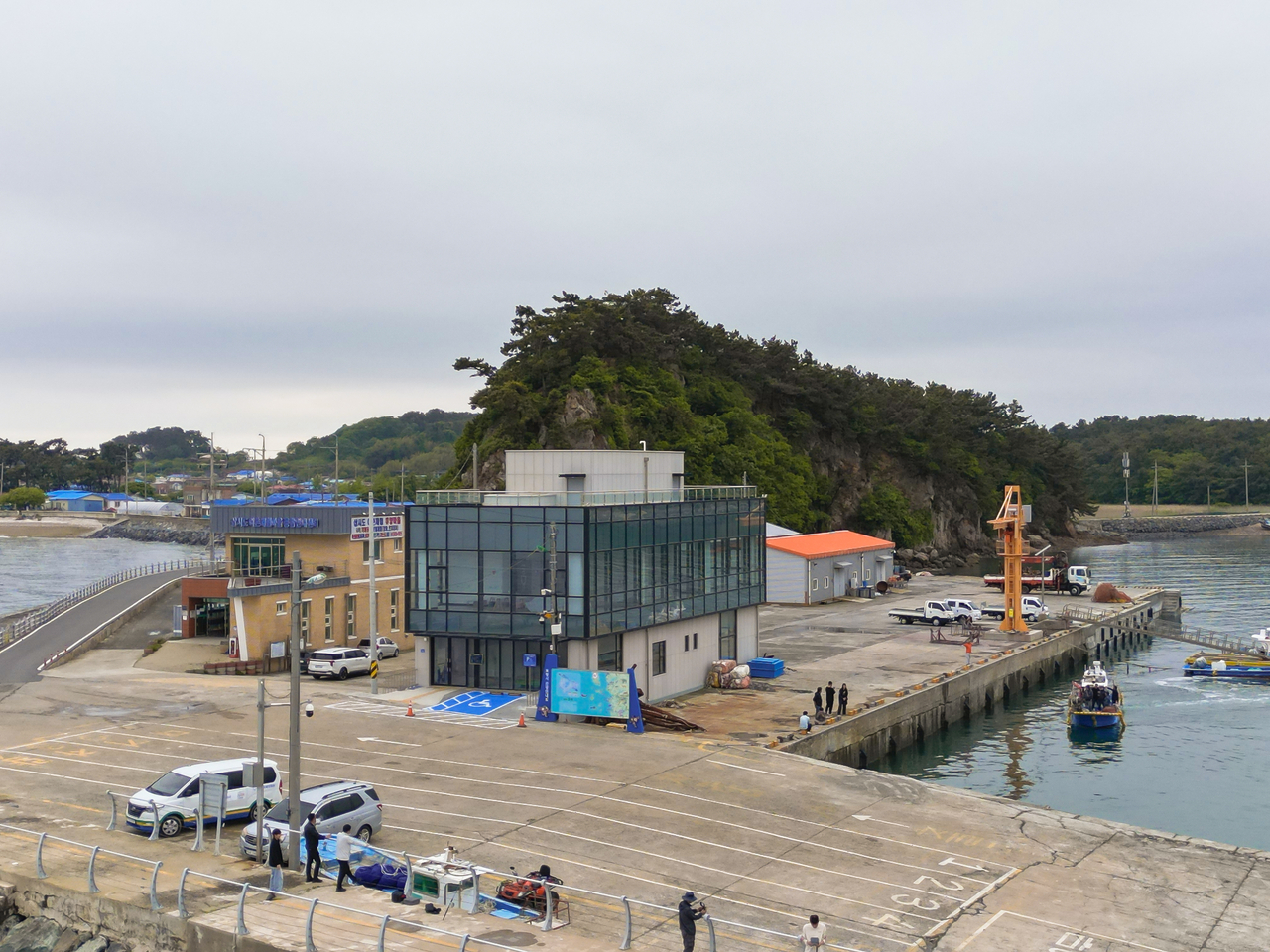
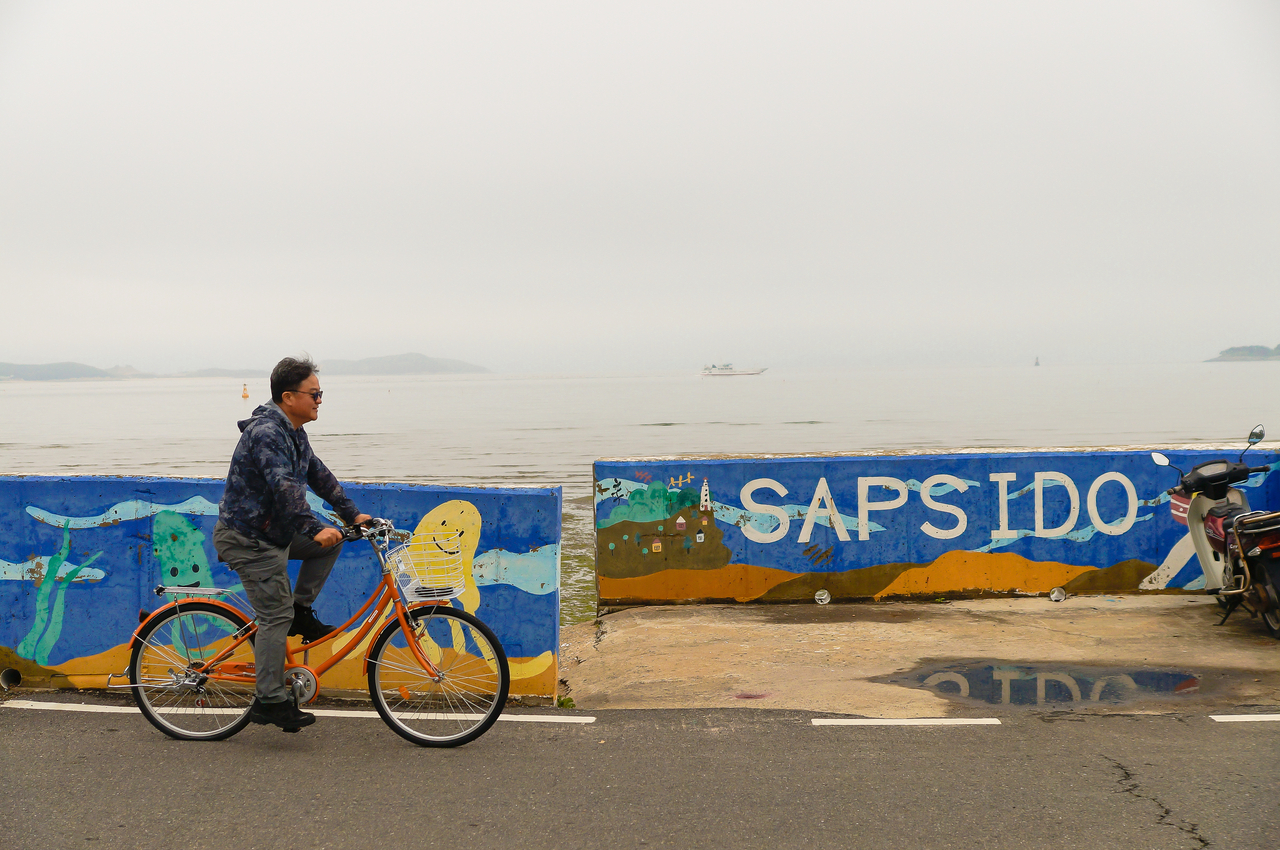
The best way to explore Sapsi Island is along the Sapsi Island Trail, which hugs the coastline. The fishing village experience center near the port — a natural starting point for any island visit — keeps about 20 bicycles available for anyone to borrow, free of charge. Im Mi-ja, the center's manager, laughed and said the bikes see so little use they are "practically brand new."
The trail stretches about 6 kilometers — not a short distance — but on a bicycle, riders can race along breathing in the sea air. Every push of the pedals brings a fresh breeze across the cheeks and opens up the wide West Sea ahead.
Pedaling slowly through the village, a black dog came bounding out from a seaside restaurant. Plump and panting, it kept pace for a surprisingly long stretch, its energetic gallop feeling like a personal cheer for the passing stranger. Asked the dog's name, a local replied: "Deuksil." The owner's name means "to score a point," the local explained, so the dog was named for losing one — a flash of wordplay that draws an involuntary smile. All along the ride, the blue sea and sky opened wide to the left, and cheerful murals covered the village walls one after another. The trail links the island's highlights like stepping stones: Myeonsapji, a tidal flat cut off at high tide and reconnected at low; Mulmangter, a spring that wells up with clear fresh water when the tide recedes; a grove of golden Japanese black pine — a rare golden mutation found almost nowhere else in the world; and a beach with fine sand and crystal-clear water, all in a single loop.
**Work and rest at an almost unbelievable price**
A full circuit of Sapsi Island fills a day with ease, and it is only natural to want to stay longer. That is where the island's trump card comes in: a workcation program that bundles accommodation, activities and shared office access for just 30,000 won ($22) for a one-night, two-day stay. The subsidy grows with the length of the visit — a four-night, five-day stay costs just 50,000 won ($33) in total. In today's high-price environment, the figure seems almost implausible. The low rates are made possible by subsidies from the South Chungcheong Culture and Tourism Foundation and the Korea Fisheries Infrastructure Public Agency.
Stepping into Sapsi Island's workcation center, the West Sea fills the view through floor-to-ceiling windows. Wi-Fi covers the space, and every table has a power outlet. For city dwellers, the greatest draw may simply be this: when the workday ends, the ocean is just a few steps away.
When eyes grow tired from the screen, a glance at the horizon through the window offers instant relief. When fingers stiffen over the keyboard, a short walk to the rocky shore is all it takes. The island's sense of gentle isolation sharpens focus, and the ability to step straight onto the beach after work restores both body and mind. On Sapsi Island, the boundary between work and life dissolves on its own.
After work, guests can join a range of hands-on programs — fishing, digging for clams on the tidal flat, catching shore crabs, and napkin crafts, among others. Visitors who collect glass shards and other debris from the beach receive a 20 percent discount on activity fees, weaving environmental stewardship into the fun.
The owner of Geumsolpension, where this reporter spent the night, called Sapsi Island "a good island that hasn't been spoiled compared to other places." Originally from Ilsan in Gyeonggi Province, he said he followed his wife on a visit more than 12 years ago, fell for the island's charm and never left. He was enthusiastic in recommending the workcation program.
"There's even a foreign IT company employee staying here — because of the time difference, he starts work early, finishes early, and the rest of the day is entirely his own. Just bring yourself and whatever work you need to do. I can show you everything — fishing, activities, all of it."
Word has spread among those in the know. Last year, 70 workcation visitors came to Sapsi Island, and local income from the program grew 53-fold compared to 2023, when it first launched. "We've put a lot of effort into visitor convenience — preparing bicycles for easy getting around, installing coffee machines in every room, and replacing worn bedding with hotel-quality linens," Im said.
The Sapsi Island workcation suits those who want to settle in for a longer stay and find their own rhythm between work and rest. Prices may change once the subsidy pool runs out, so early booking is advisable. The program is open to anyone who works — from freelancers to salaried employees — with a limit of two applications per person per year. Because the program is designed to bring visitors to the island during the off-season, peak summer months (July and August) and weekends are excluded from the subsidy. Applications can be made through "The Hyuil," a workcation booking platform.
**Godae Island: the island God loves**
Pairing a visit to Sapsi Island with a trip to its neighbor makes for a richer itinerary. A 20-minute ferry ride from Sapsi Island brings you to Godae Island, known as the site of Korea's first Protestant mission. Pastor Jeong Sun-mok, who greeted the visiting group, said the island also goes by the nickname "God-ae-do" — a Korean-English pun meaning "the island God loves."
The name fits. Godae Island carries the full weight of that religious history. On July 25, 1832, the merchant vessel Lord Amherst, chartered by the British East India Company, dropped anchor in the island's inner harbor. On board was Karl Gützlaff, a Protestant missionary from Prussia.
Gützlaff stayed on the island for about 20 days and accomplished a great deal in that short time. He distributed Chinese-language Bibles and evangelism pamphlets, and — moved by the food shortages he witnessed in Joseon — shared methods for growing potatoes and making wine. He also attempted, with the help of a village schoolteacher, to translate the Lord's Prayer into Korean. His visit preceded other missionaries who shaped Korean Protestant history by more than half a century, and the footprints he left became the foundation for a new chapter in that history.
Godae Island has since grown from a small island into a pilgrimage site. The official information board near the harbor carries the phrase "the island God loves," a testament to how seriously the island takes its religious story. The life and legacy of Gützlaff are documented at the Godae Island Mission Center, also near the harbor.
The Karl Gützlaff Memorial Park is considered a must-visit on the island. The road leading to it is narrow — budget constraints meant it was built just wide enough for a single cultivator tractor to pass.
During the truck ride to the park, the vehicle scraped against the wall, but the driver carried on without a second thought, as if it were the most ordinary thing in the world.
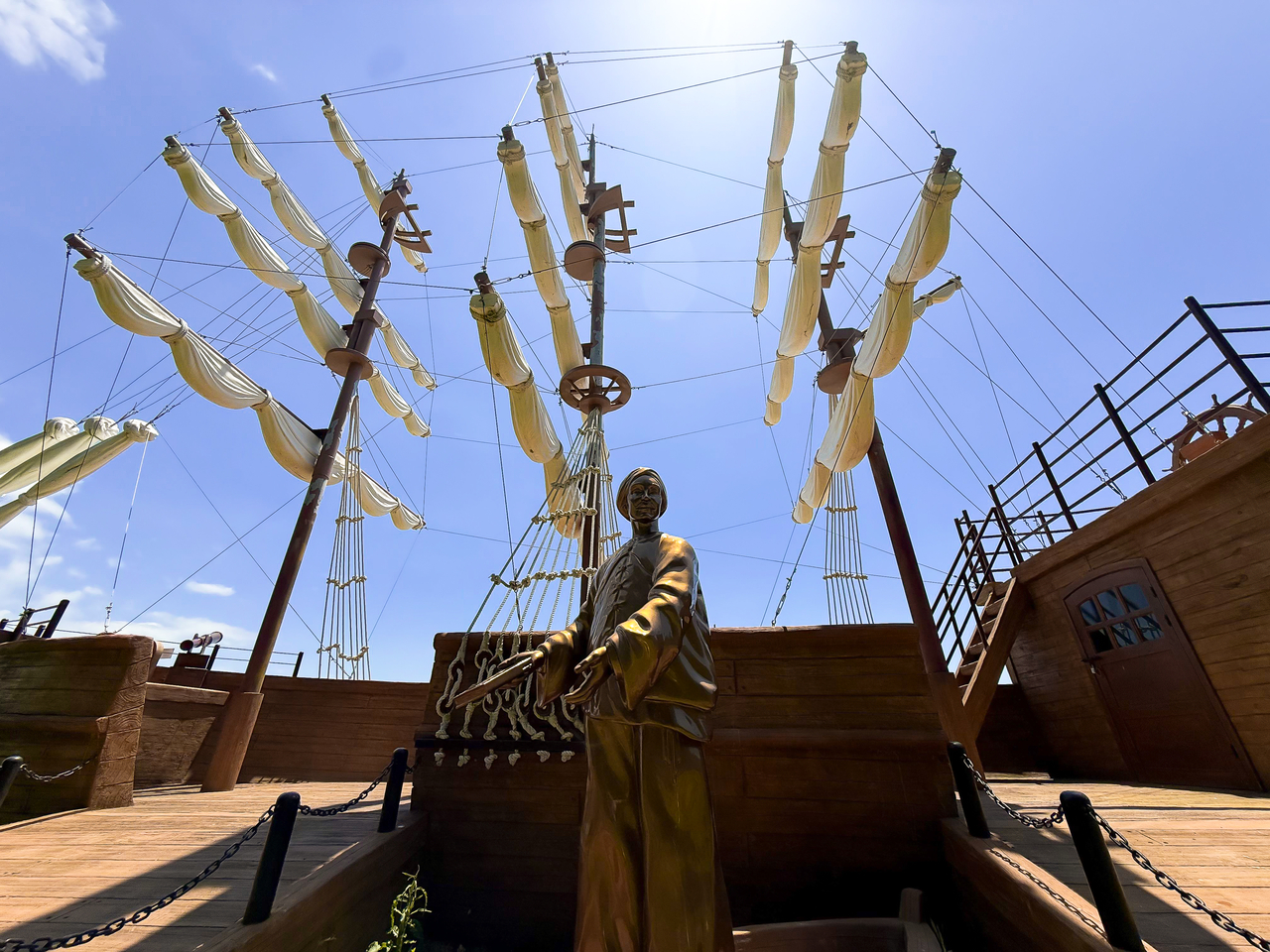
At the memorial park stands a large black stone monument bearing the inscription: "He woke us, and now we wake him." Surrounding it are an iron art structure modeled on the church where Gützlaff studied, and a large sailing ship sculpture inspired by the vessel that brought him to Korea. Standing before the near-life-size replica, it is easy to imagine the moment the ship first dropped anchor off this shore.
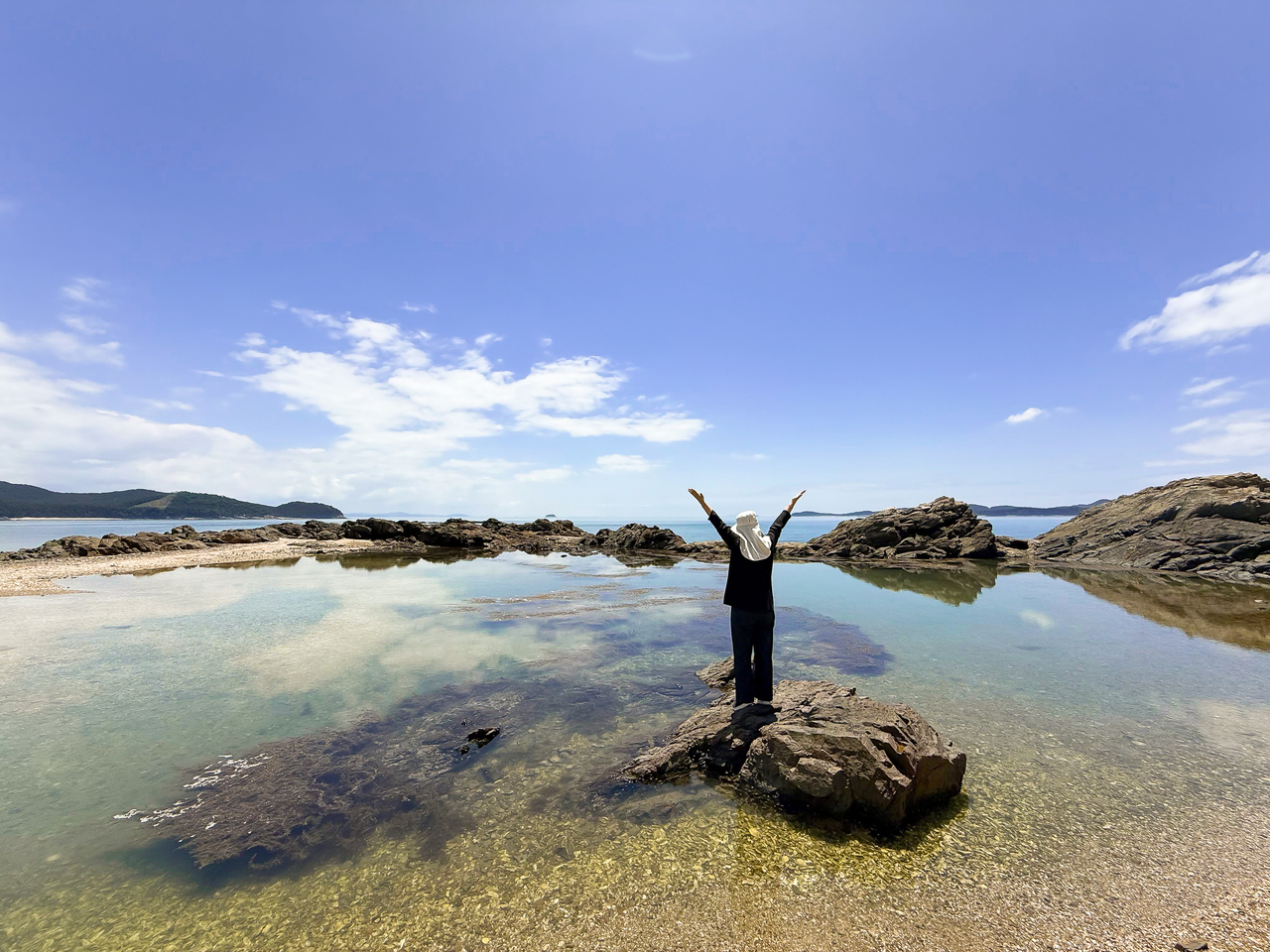
Near the Gützlaff Memorial Park lies a popular photo spot known as Baengburyeo — a distinctive submerged rock flat that emerges as the tide pulls back. The scene, in which the sky is reflected across the shallow water like a mirror, evokes Bolivia's Uyuni Salt Flats, and many visitors stop in their tracks to raise a camera.
As the light shifts, so does the color of the water's surface. When clouds drift overhead, their shadows drift across the water below. In that still and unhurried scene, visitors slow their steps like pilgrims and find themselves reassessing the pace of their own lives. A brief disconnection from the fast-moving, always-connected world — that is what makes these islands a destination unlike any other.
By Kim Myung-sang, from Boryeong
terry@heraldcorp.com