Parties outside Democratic Party secure 8 seats, raising prospect of joint floor group
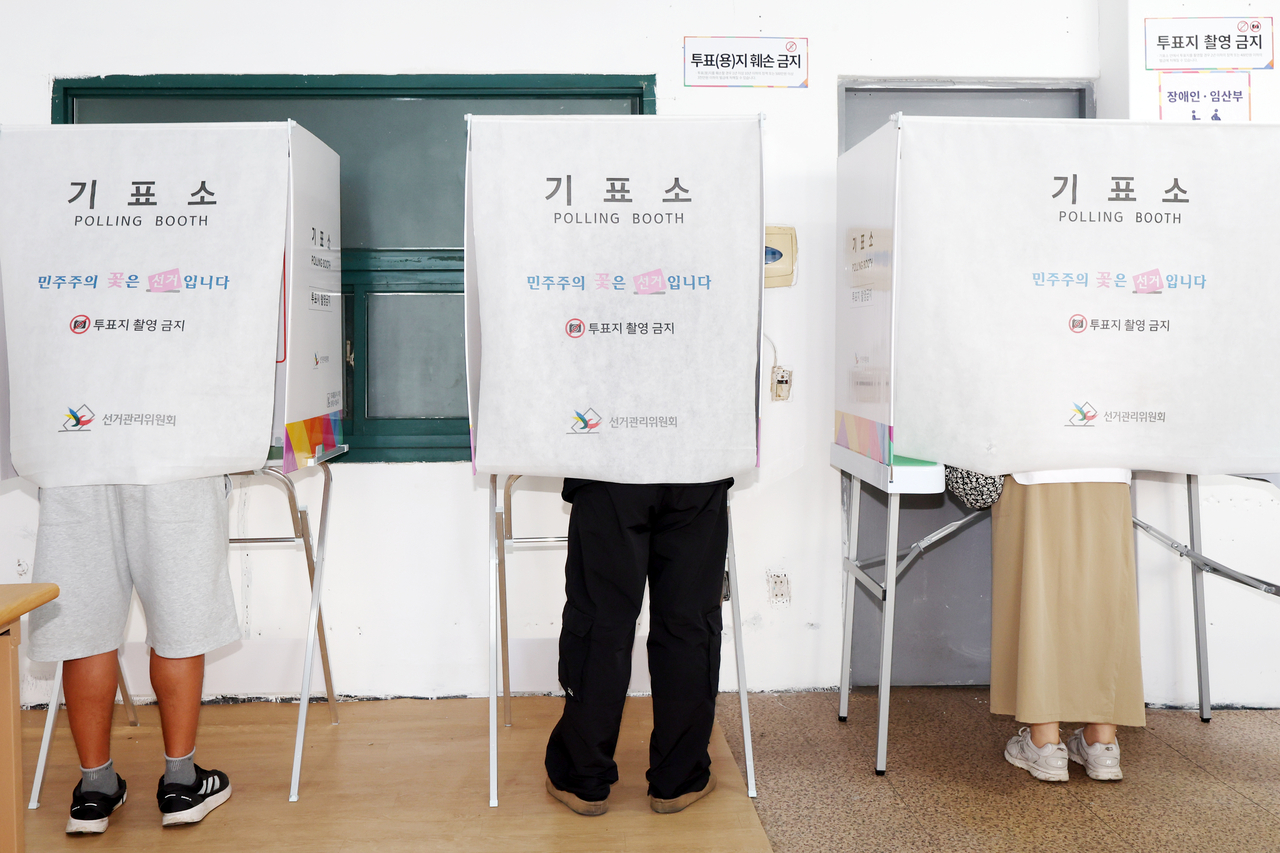
The Democratic Party of Korea won 83 of the 91 seats in the South Jeolla-Gwangju Special Unified City Council, capturing 91.2 percent of the chamber.
Parties outside the Democratic Party secured the remaining 8 seats, raising the possibility of a joint floor negotiating group.
Although the Democratic Party dominated Wednesday's local elections, smaller opposition parties — the Progressive Party, the Rebuilding Korea Party and the People Power Party — together claimed 8 seats across constituency and proportional representation slots, drawing attention to whether they can provide a meaningful check on the council majority.
Of those 8 seats, the Progressive Party took 5, the Rebuilding Korea Party 2 and the People Power Party 1.
In the 79 constituency seats, the Democratic Party won 75. All four non-Democratic constituency winners belong to the Progressive Party: Yun Min-ho in Buk-gu 2 and Choe Gyeong-mi in Gwangsan-gu 3 in Gwangju, and Park Hyeong-dae in Jangheung 1 and Gang Gwang-seok in Gangjin 1 in South Jeolla Province. The Progressive Party added proportional representative Sin Yeon-sun to reach a total of five seats.
The Rebuilding Korea Party failed to win any constituency seats but secured two proportional seats — Seo Yeong-mi and Jang Seong-hae. The People Power Party won one proportional seat through Yi O-suk.
Under the current Gwangju City Council basic ordinance, any party holding four or more council seats may form a floor negotiating group, and four or more lawmakers not belonging to any existing group may also organize a separate one.
If a joint floor group is formed, the opposition bloc would gain an institutional voice in scheduling deliberations, committee assignments, floor speaking rights, and the review of budget bills and ordinances.
The Democratic Party secured both the unified special city mayorship and a commanding council majority, meaning a joint opposition floor group could serve as a check on the executive branch and the Democratic Party-led council in the merger's early stages.
The inaugural unified special city council is set to take up reorganization plans, staffing adjustments, the allocation of main offices and council facilities, the use of integration incentive funds, and regional balanced-development strategies shortly after it launches in July. Competing local interests over the location of the main administrative headquarters, council workspace, the redistribution of public institutions and committee composition are expected to fuel controversy in the months ahead.
sij@heraldcorp.com