Seoul's district mayor power map is now the exact reverse of the 2022 local elections, with the Democratic Party adding nine districts including Jongno and Dongdaemun to its existing eight.
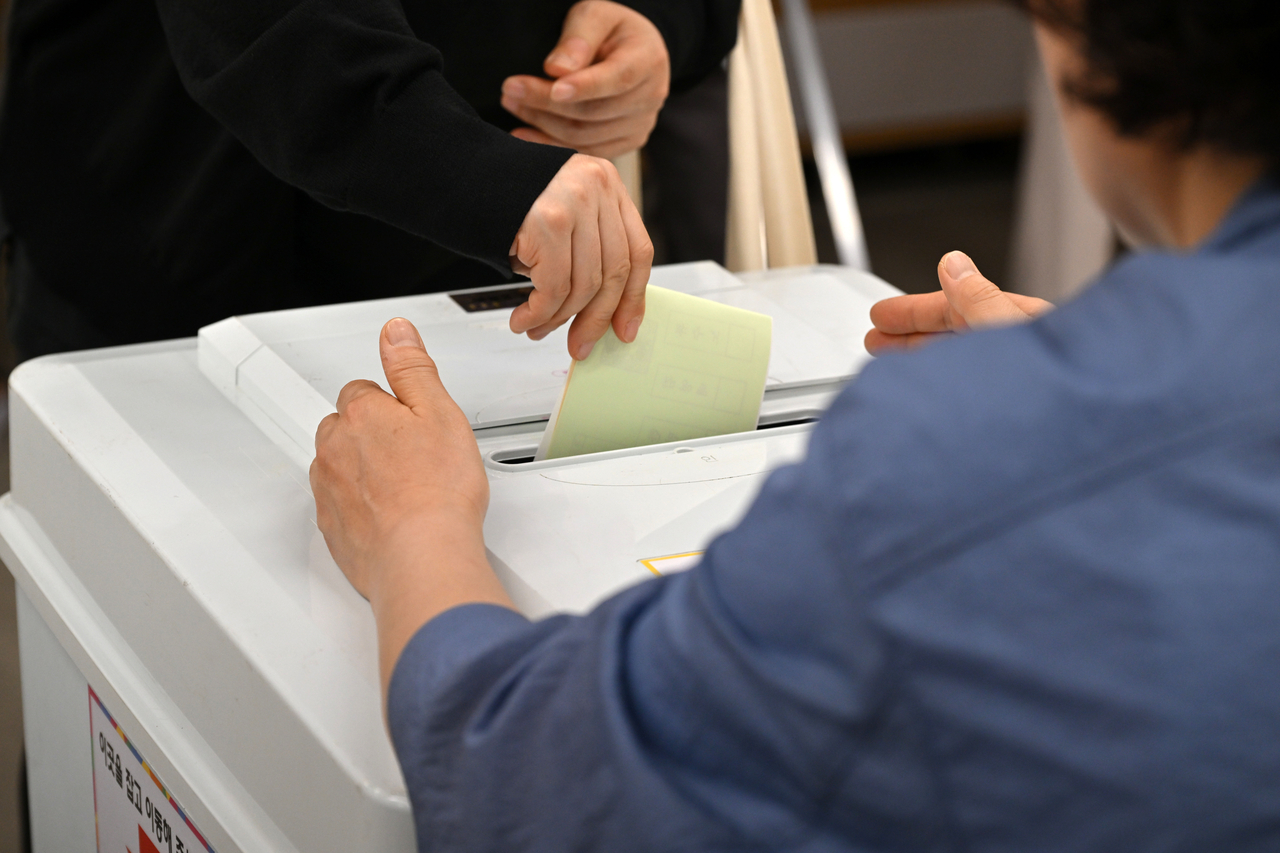
The Democratic Party of Korea swept Seoul's district mayor races, flipping the city's political map from 17 People Power Party seats and 8 Democratic Party seats to the exact reverse — 17 for the Democrats and 8 for the PPP.
According to the National Election Commission on Thursday, the Democratic Party held its existing eight districts — Seongdong, Jungnang, Seongbuk, Gangbuk-gu, Nowon, Eunpyeong, Gangseo and Guro — and added nine more, including Jongno, Dongdaemun, Dobong, Seodaemun, Mapo, Yeongdeungpo and Dongjak. The PPP secured wins in eight districts: Gangnam, Seocho, Songpa, Gangdong, Yongsan, Jung-gu, Yangcheon and Gwangjin-gu. As late as 2 a.m. Thursday, the Democratic Party had been leading in 21 of the 25 districts and appeared on the verge of a clean sweep, but the PPP staged comebacks in Yongsan, Yangcheon, Gwangjin-gu and Gangdong as counting continued.
The Democratic Party won across its traditional strongholds in southwestern and northern Seoul. In Guro, Democratic candidate Jang In-hong was elected with 51.97 percent of the vote, while Choi Gi-chan secured victory in Geumcheon. In Gwanak, Democratic candidate Park Jun-hee defeated PPP rival Lee Nam-hyeong to win a third term. In Gangseo, Jin Kyo-hoon won re-election over PPP candidate Kim Jin-seon. In Yeongdeungpo, Cho Yu-jin defeated PPP candidate Choi Ung-sik. In Eunpyeong, Kim Mi-gyeong became the first woman elected to a third term as district mayor. In Jungnang, incumbent district mayor Ryu Gyeong-gi secured re-election. In Gangbuk-gu, Jeong Chang-su won the seat — a district that had drawn attention after the PPP withdrew its initial candidate over controversy surrounding his past legal defense of a child sex offender and scrambled to field a replacement.
The Democratic Party extended its reach into the Han River belt by winning Dongjak and Mapo. The PPP had campaigned in those development-sensitive riverside districts on a platform of deregulating urban renewal projects and accelerating redevelopment, but Democratic candidates countered with their own pledges of fast-tracked redevelopment. Ultimately, public sentiment favoring support for President Lee Jae Myung and the ruling party carried the day. In Mapo — a rematch between the district's seventh- and eighth-term mayors that drew wide attention — Democratic candidate Yoo Dong-gyun won with 53.97 percent. In Dongjak, which became a three-way race after PPP incumbent Park Il-ha ran as an independent following his party's deselection, Democratic candidate Ryu Sam-yeong won the seat.
The PPP successfully defended its traditional strongholds in the four Gangnam districts and Yongsan. In Seocho, PPP candidate Jeon Seong-su won re-election with 66.40 percent, defeating Democratic rival Hwang In-sik, who received 33.60 percent. In Gangnam — where incumbent district mayor Jo Seong-myeong had been cut from the PPP ticket — Kim Hyeon-gi won with 65.89 percent, clinching victory early in the count. In Songpa, PPP candidate Seo Gang-seok defeated Democratic candidate Jo Jae-hee, and in Gangdong, incumbent district mayor Lee Su-hee won re-election.
In Yongsan, PPP candidate Kim Gyeong-dae won with 52.31 percent, defeating Democratic rival Kang Tae-ung. The race drew attention as a contest between Kang, who stepped down from a higher-profile candidacy to run in the district, and Kim, making his second bid for the post. In Gwangjin-gu, incumbent district mayor Kim Gyeong-ho of the PPP won re-election with 52.44 percent.
Seongdong was another closely watched district, as voters chose a successor to Democratic Seoul mayoral candidate Jeong Won-o. Yoo Bo-hwa, the Democratic candidate who fought through a competitive primary to reach the general election, defeated PPP rival Ko Jae-hyeon. Seongdong was the first district where PPP leader Jang Dong-hyeok had campaigned in person at the start of the election season, and former President Lee Myung-bak had also lent his support by walking through Seoul Forest alongside Ko.
cook@heraldcorp.com