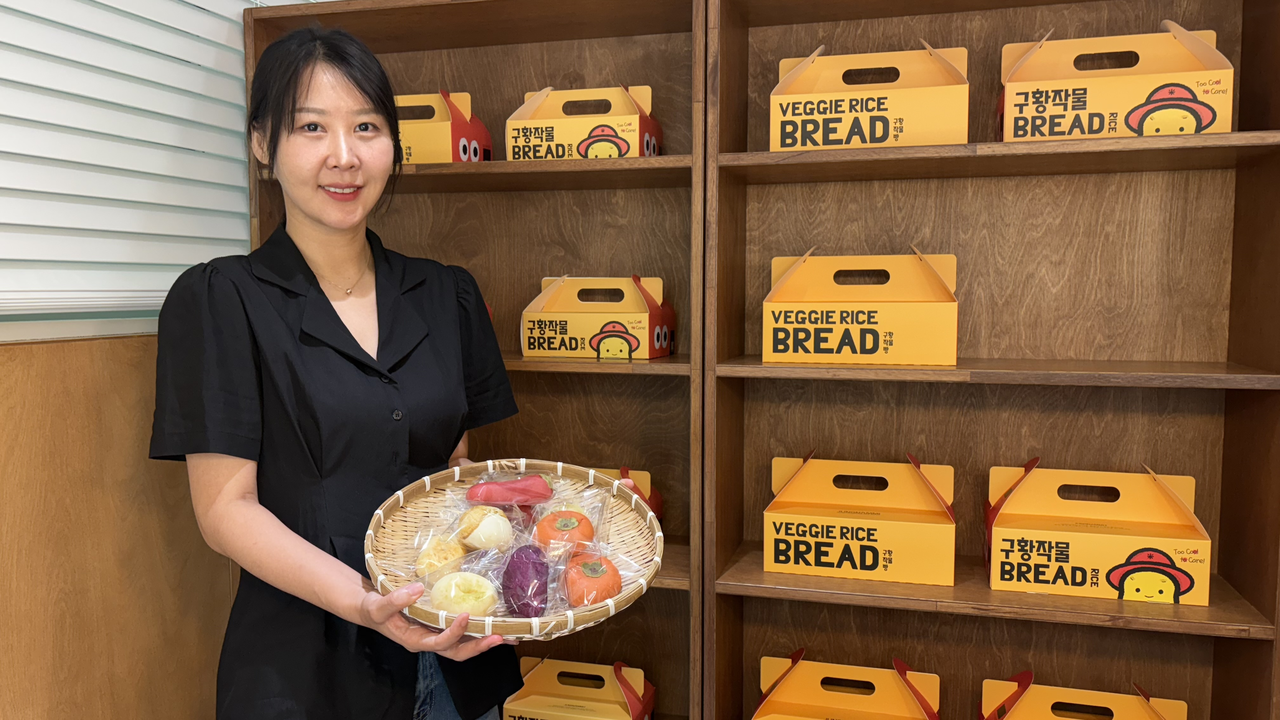
Kim Bo-yeon, founder of crop-bread brand Jeongnamimyeonggwa, carries on her family's mill legacy through desserts filled with locally grown Gangneung produce. Daily sales have grown from 80,000 won to as much as 30 million won, and a permanent store in Japan opens in July.
"When my father passed away, the mill he had run for 35 years closed with him. That broke my heart. From that moment, I decided to build a brand that would never disappear."
Dongnam Mill had operated in Gangneung, Gangwon Province since 1986, but 35 years of history came to an abrupt halt when its founder died. His daughter and wife refused to let it end there. They turned to baking desserts to keep the legacy alive — and Jeongnamimyeonggwa, a brand built around breads shaped like traditional staple crops, was born. Today, the mother, Jeong Nam-mi, works as the head baker while her daughter, Kim Bo-yeon, handles marketing.
"It felt so hollow that 35 years of a brand could vanish just because one person was gone," Kim said at the brand's Seoul office in Jung-gu on May 26. "That was when I realized I needed to build something that would last — not just run a shop."
The brand's name carries that resolve. "Jeongnammi" in the name is the mother's given name — a pledge to make products worthy of the trust that name commands. The family's original mill had followed the same tradition: "Dongnam" combined the first syllables of the father's name, "Dong," and the mother's name, "Nam."
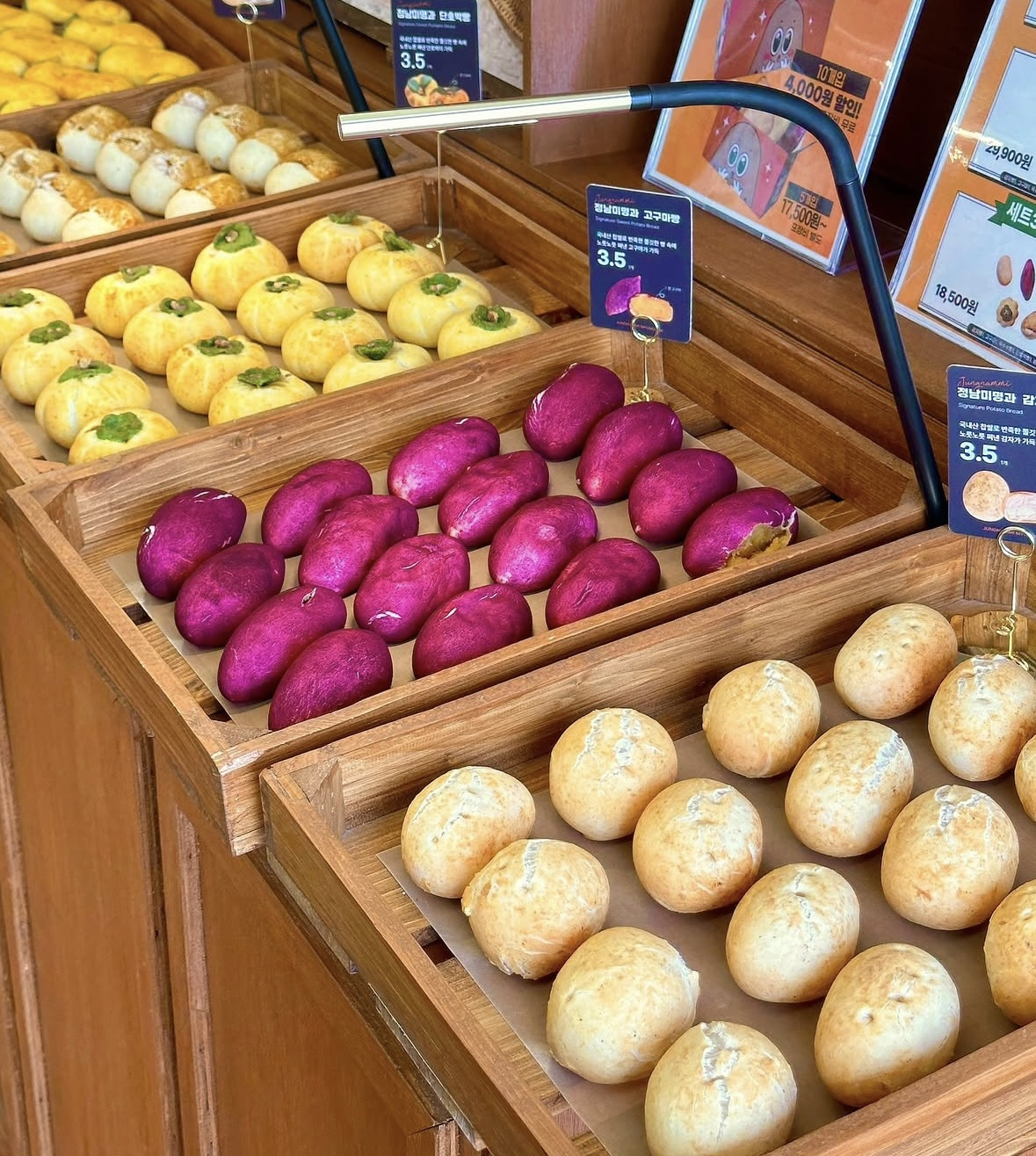
The products themselves are steeped in the mill's identity. Jeongnamimyeonggwa's breads are molded into the shapes of the crops inside them — potatoes, sweet potatoes and corn. The potato bread is filled with steamed potato; the corn bread, with real corn. The outer dough uses freshly ground rice flour, and each piece is steamed like a rice cake before being baked like bread, a method unlike anything else on the market.
The ingredients are equally distinctive. The brand sources its produce directly from farms in the Gangneung area. Potatoes and sweet potatoes arrive by the truckload — roughly one ton, twice a month — while green onions and chili peppers come from fields the family tends itself.
The manufacturing process, too, carries the warmth of Gangneung. At a small factory in Jumonjin, local grandmothers hand-shape every loaf. "The women who joined us when we started in 2020 are still with us today," Kim said.
Jeongnamimyeonggwa's beginnings were modest. The brand launched online in 2020, and its first physical store did not open until 2023, when daily sales hovered around 80,000 won (about $58). Now, a single day can bring in as much as 30 million won. Daily output stands at 6,000 pieces, with sales sometimes topping 10,000. The two-woman operation has grown into a company of roughly 30 employees, with an annual sales target of 10 billion won.
"We held firm on our standards for ingredients and kept going," Kim said. "Customers recognized that sincerity, and that recognition is what drove our growth."
Overseas demand is also building. Pop-up stores at Japanese department stores, which the brand launched last year, have expanded to Tokyo and Osaka. In November last year, Jeongnamimyeonggwa signed a $3 million (about 4 billion won) deal with a Japanese importer, and a permanent store in Japan is set to open in July.
The brand's ambition is clear: to become the definitive voice for Korean dessert in a market long dominated by Western sweets. "I want to use bread rooted in the Korean mill tradition to properly introduce Korean dessert to the world," Kim said. "Not something consumed and forgotten like fast food — I want to create a Korean taste that stays with people."
siuu@heraldcorp.com