
(108) Bangkok, Thailand — 2026 UN Vesak Day
Thailand, a Buddhist nation — Part 1
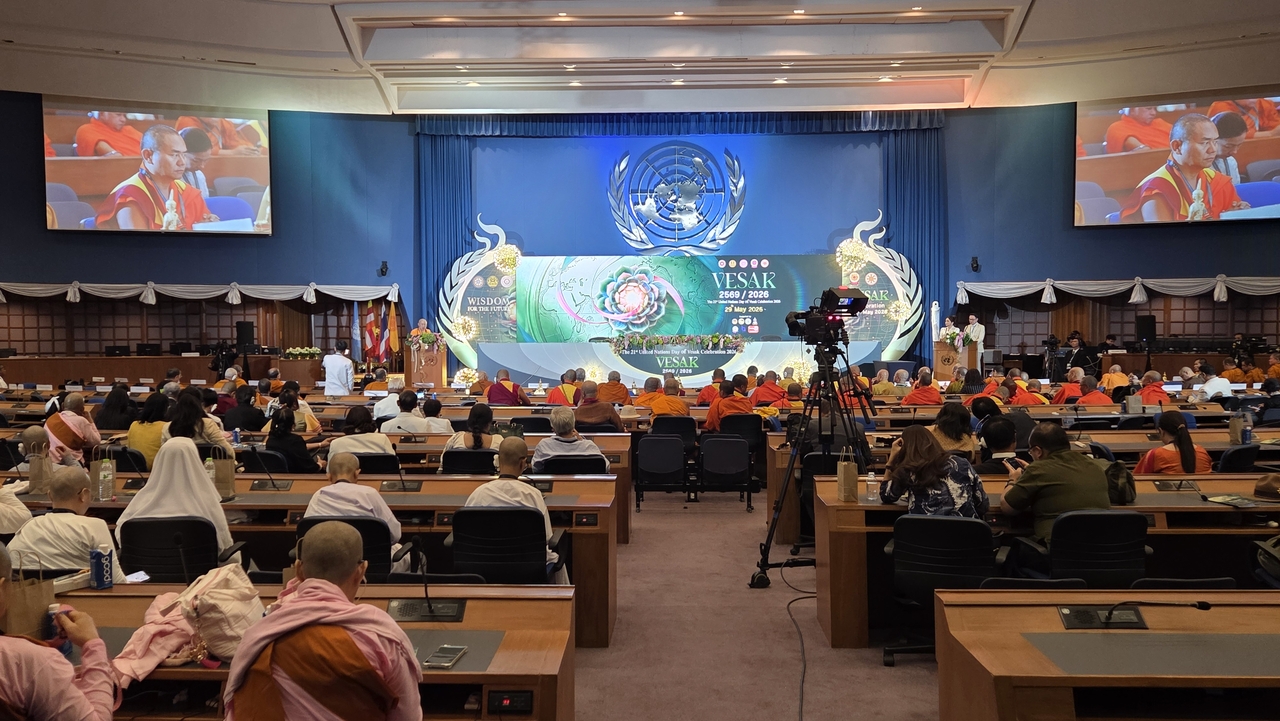
Eminent monks from around the world gather in Bangkok for the UN Vesak Day International Conference.
It was pure curiosity about an international Buddhist event — one bearing the unfamiliar name "UN Vesak Day," commemorating the Buddha's birth, enlightenment and passing all at once — that put me on a plane to Thailand.
I had passed through Bangkok's Suvarnabhumi Airport once before, during a stopover on a trip to Bhutan in mid-January, spending six or seven hours there in the middle of the night.
On that visit the terminal was packed, every bit the busiest hub in Southeast Asia. Arriving on a late-May morning this time, I found the airport remarkably quiet.
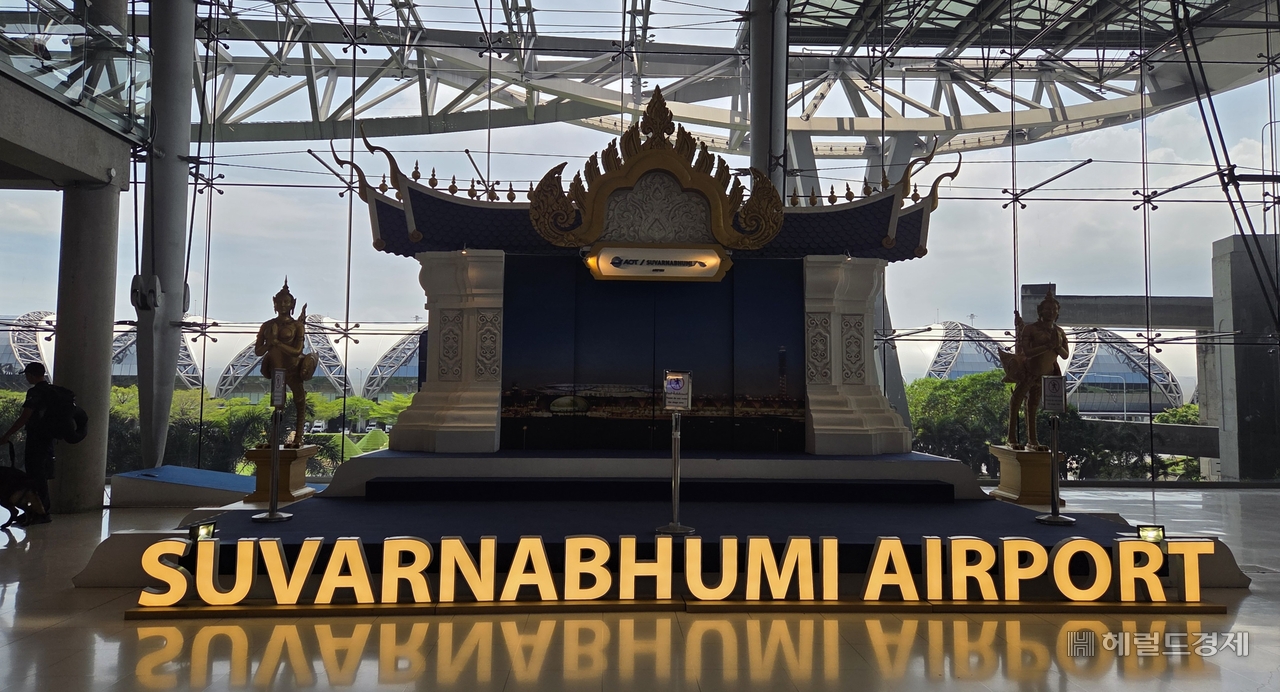
The lull was easy to explain: Thailand was heading into the rainy season, with temperatures climbing to 40 degrees Celsius, and tourist numbers tend to drop sharply in the summer heat.
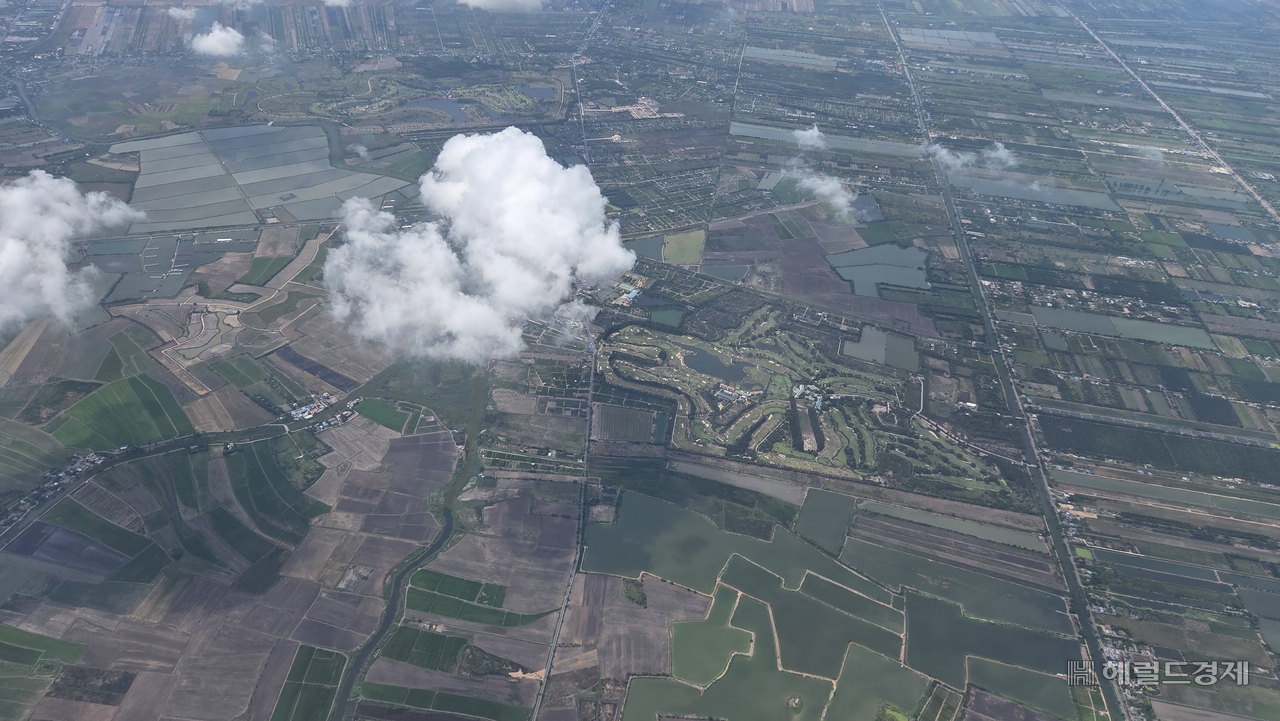
Five and a half hours out of Incheon, the view from the aircraft window revealed a vast, flat expanse — no mountains in sight, just the broad grain plains that help make Thailand one of the world's largest rice producers.
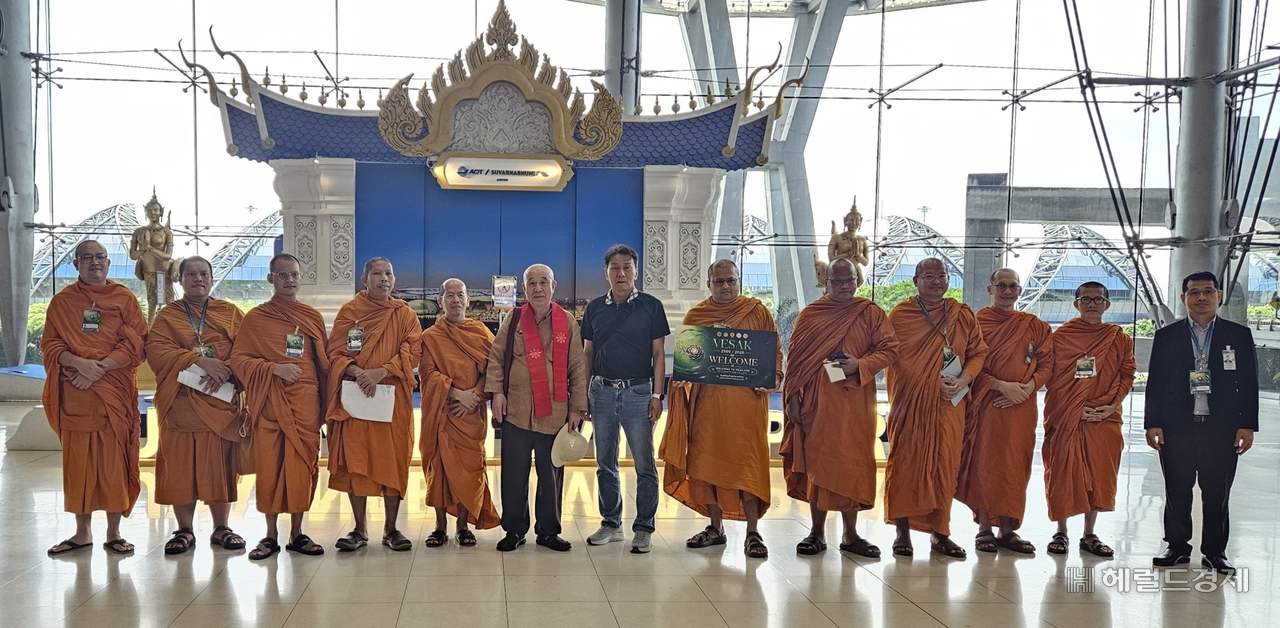
At the airport, monks in saffron robes checked in arriving participants and welcomed them to the event. The designated accommodation — an older hotel called the Royal Princess in the historic city center — was bustling with monastics from many countries. Traveling through Myanmar, Laos, Cambodia and other parts of mainland Southeast Asia, one quickly senses how thoroughly Buddhist culture permeates society, and Thailand, where 95 percent of the population are Buddhists, was no different. Magnificent, ornate temples and towering golden stupas illuminate the cityscape, and monks occupy a central place in the social fabric.
Thailand is also the heartland of Theravada Buddhism — formerly called Hinayana Buddhism — and home to the headquarters of two of the world's most prominent international Buddhist bodies: the UN Vesak Day conference, which has grown into a leading global Buddhist gathering, and the World Fellowship of Buddhists (WFB), the largest lay Buddhist international organization in the world.
UN-designated Buddha's Birthday: the International Vesak Day Conference
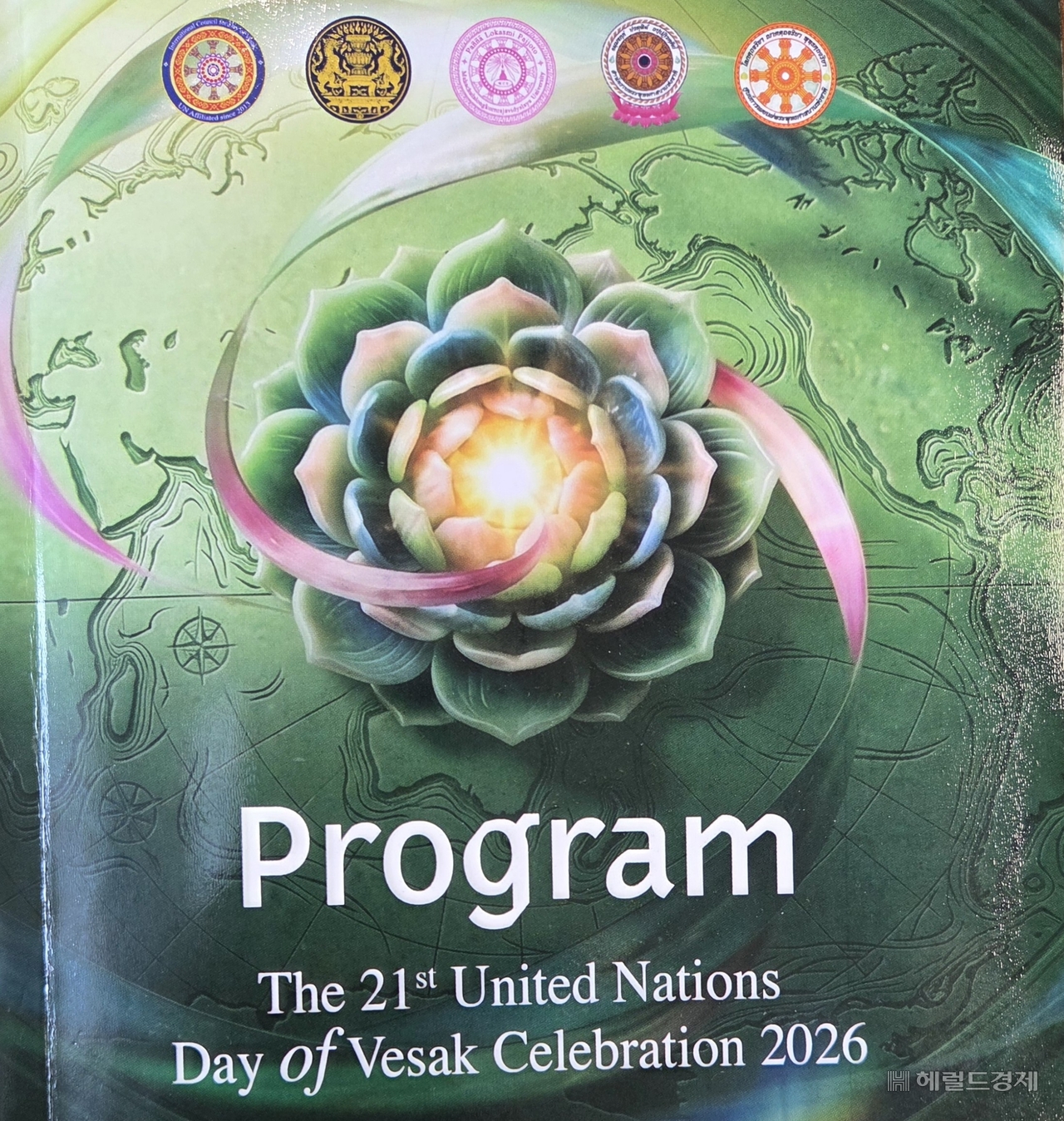
In South Korea, the Buddha's birthday is observed on the eighth day of the fourth lunar month as "Bucheonim Osin Nal." In the Theravada Buddhist countries of Thailand, Sri Lanka, Myanmar and Laos, however, the fifteenth day of the fourth lunar month is the occasion for Vesak Day, which marks the Buddha's birth, enlightenment and passing together.
The UN General Assembly adopted Vesak Day as an international Buddhist observance in 1999, and the organization has since held annual UN Vesak Day international conferences and peace events. The word "Vesak" derives from "Vesakha," the Pali name for the fourth month, and the day commemorates the full moon of that lunar month — when the most sacred events in the Buddha's life are said to have occurred. The UN has linked Vesak Day to its own principles of "peace, compassion, human dignity, non-violence and interfaith harmony."
The 2026 International Vesak Day was held May 26-27 in Wuxi, Jiangsu Province, China — the first time the event had been hosted in the Mahayana Buddhist sphere of Northeast Asia — drawing more than 1,000 monks and lay practitioners from over 70 countries. South Korea sent a delegation of about 30, including senior monks representing the Buddhist Council of Korea, which encompasses the Jogye Order, the Taego Order, the Cheontae Order and the Jingak Order.
The China gathering featured keynote addresses, panel presentations and cultural performances under the theme "Promoting Global Sustainable Development through Buddhist Wisdom and Building a Shared Future for Humanity," though I was not able to attend that portion of the event.
The UN Vesak Day International Conference, launched by a UN General Assembly resolution in 1999, held its inaugural event at UN Headquarters in New York in 2001. Since then, Vietnam has hosted it four times, including the 2025 edition, while Thailand has hosted most of the remaining conferences — with the event steadily expanding its roster of participating countries and cementing its role as a global forum for Buddhist exchange.
The 20th Vesak Day conference, held in 2025 in Ho Chi Minh City, Vietnam, under the theme "Solidarity and Inclusion for Human Dignity: Buddhist Wisdom for World Peace and Sustainable Development," drew more than 1,300 participants from 85 countries. Senior monks, Buddhist scholars and government representatives gathered for academic sessions, peace prayer services, lantern processions, cultural performances, meditation events and relic veneration. Discussions focused on world peace and ending war, human dignity and inclusion, the environmental crisis and sustainability, meditation and mental healing, and the alleviation of poverty and social conflict. The conference concluded with the adoption of the Ho Chi Minh Declaration for World Peace.
Although the 2026 International Vesak Day conference was held in China, the closing ceremony took place in Thailand, home to the headquarters of the International Council for the Day of Vesak (ICDV), which holds consultative status with the UN Economic and Social Council. The Thailand event on May 29 — wrapping up the 21st Vesak Day conference — was held at the United Nations Conference Centre in Bangkok, which also serves as the headquarters of the UN Economic and Social Commission for Asia and the Pacific (ESCAP), a permanent body of the UN Economic and Social Council.
UN Vesak Day in Thailand
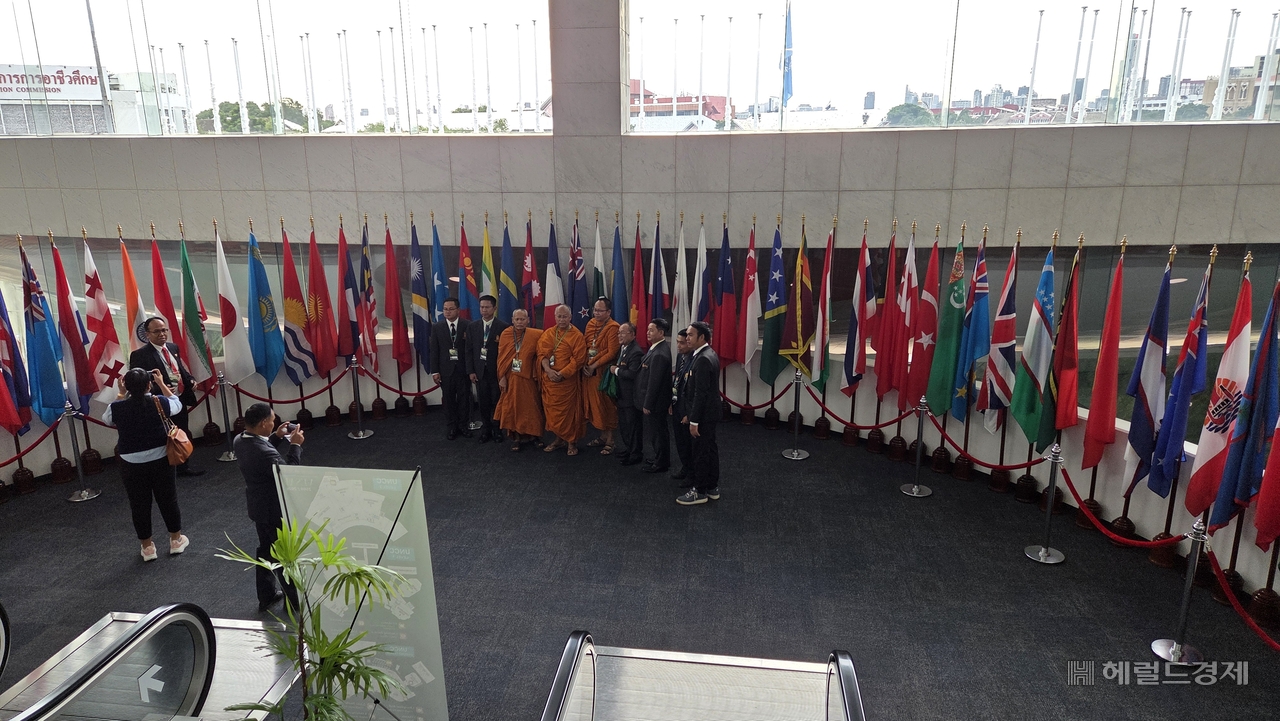
The Vesak Day event at the UN Conference Centre in Bangkok was co-organized under the blessing of Thailand's Supreme Sangha Council and the Thai royal family by the ICDV, the Thai Ministry of Culture and two Thai Buddhist universities, including Mahamakut Buddhist University (MBU).
The gathering brought together monks and lay practitioners from many countries, including those who had joined after attending the China conference. Presentations were delivered by monks and Buddhist studies professors from Bangladesh, Bhutan, Germany, Australia, Vietnam, China (Hong Kong), the United States, Japan, Canada and other nations.
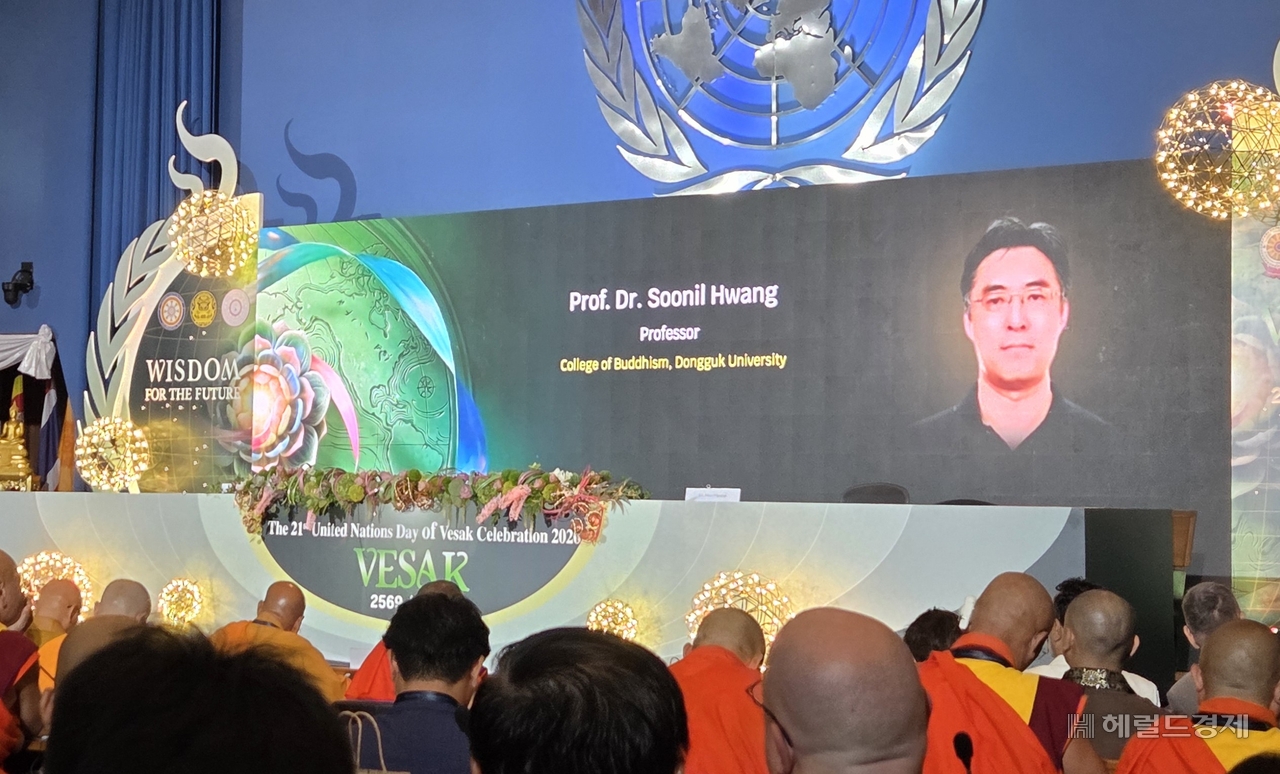
From South Korea, Hwang Sun-il, a professor of Buddhist Studies at Dongguk University and a member of the conference's executive committee, joined the Bangkok event after attending the China conference and delivered a presentation.
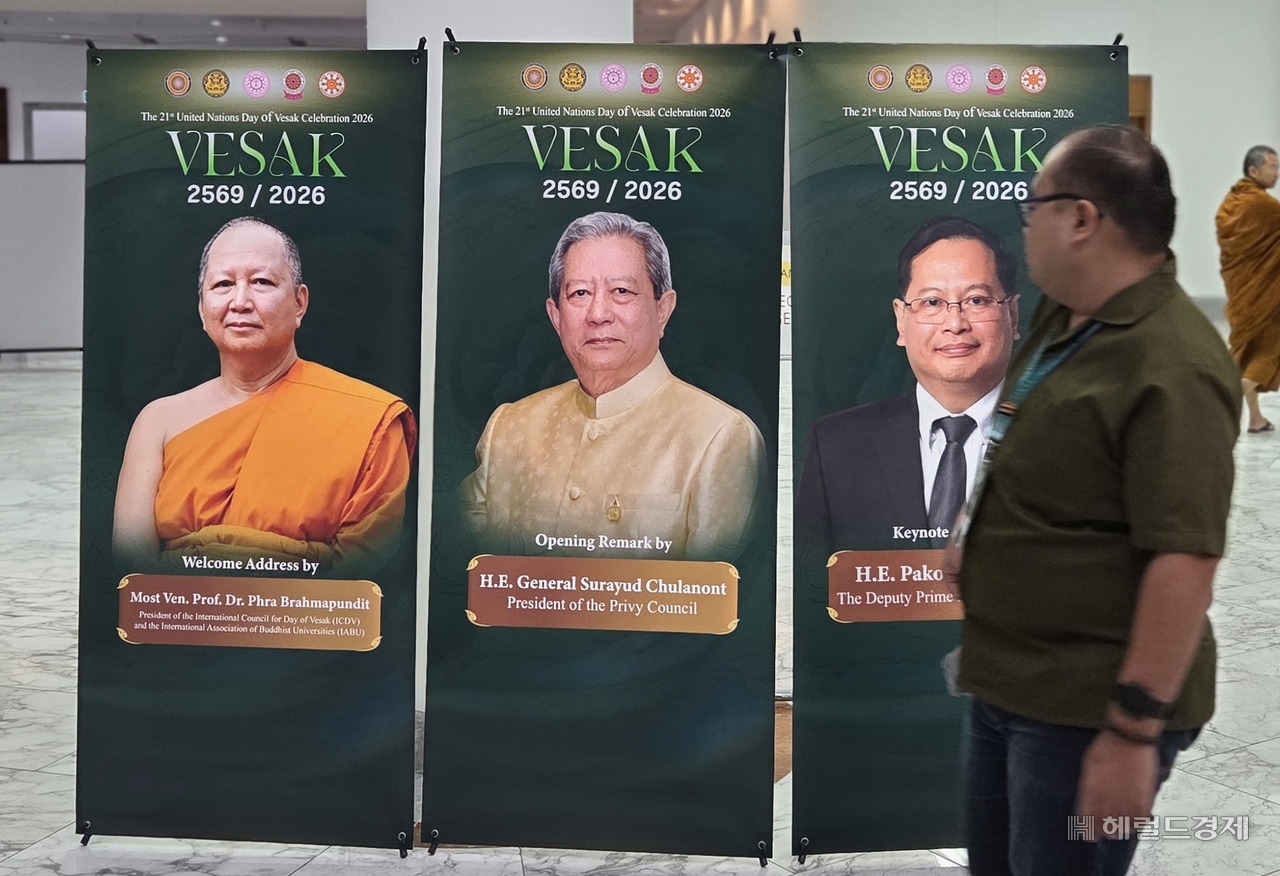
At the UN Conference Centre in Bangkok, the day's program ran from 8:30 a.m. to 4 p.m. It opened with a welcome address by Venerable Phra Brahmagunabhorn, president of the ICDV and the International Association of Buddhist Universities, followed by messages from the executive secretary of UN ESCAP and the Thai deputy prime minister. More than 20 presenters from around the world then delivered talks on "Buddhist Wisdom and World Peace for Sustainable Development," with AI-powered simultaneous interpretation provided throughout.
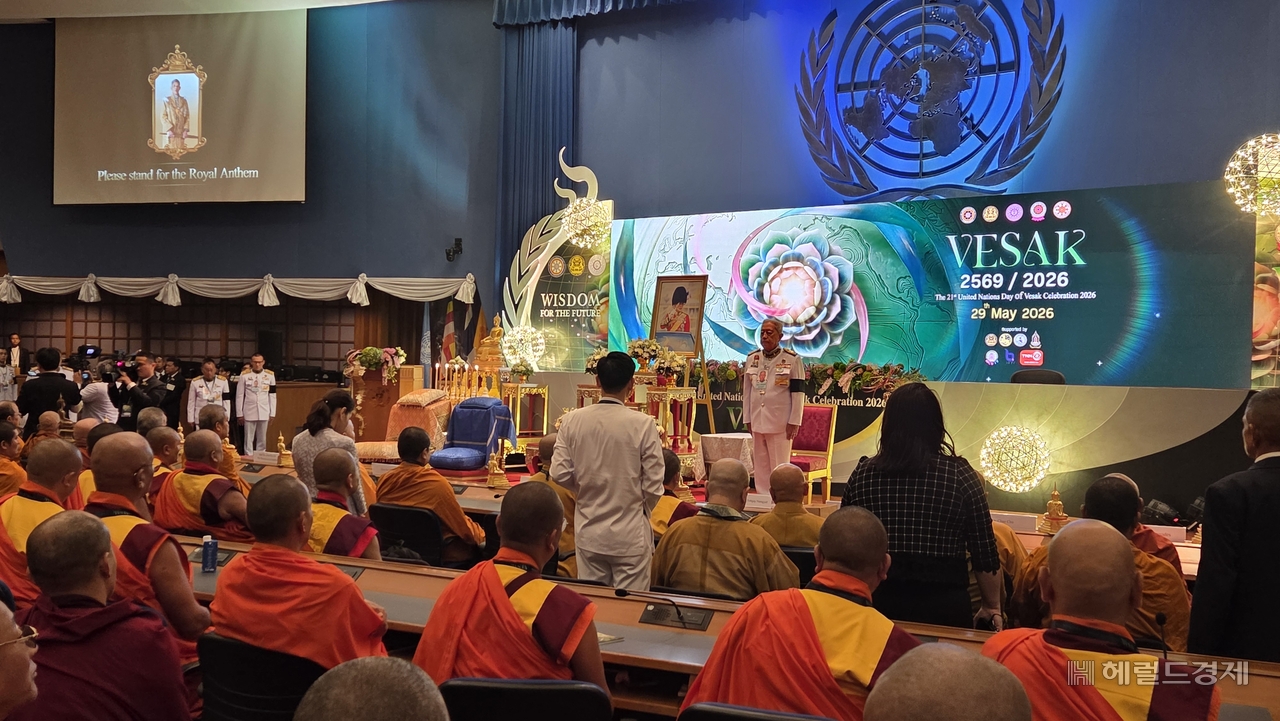
The afternoon opening ceremony was presided over by the president of the Privy Council — the most senior royal adviser — standing in for Thai King Rama X (Maha Vajiralongkorn). Because the king serves as the protector of Thai Theravada Buddhism, all participants except monks rose from their seats in a gesture of reverence as the ceremony unfolded on an elaborately decorated stage.
The Thai king serves as a symbol of national unity and a central pillar of the bond between Buddhism and national identity. Rama X, however, is said to have seen his public standing diminish considerably compared with his predecessor, owing in part to controversies surrounding his personal life.
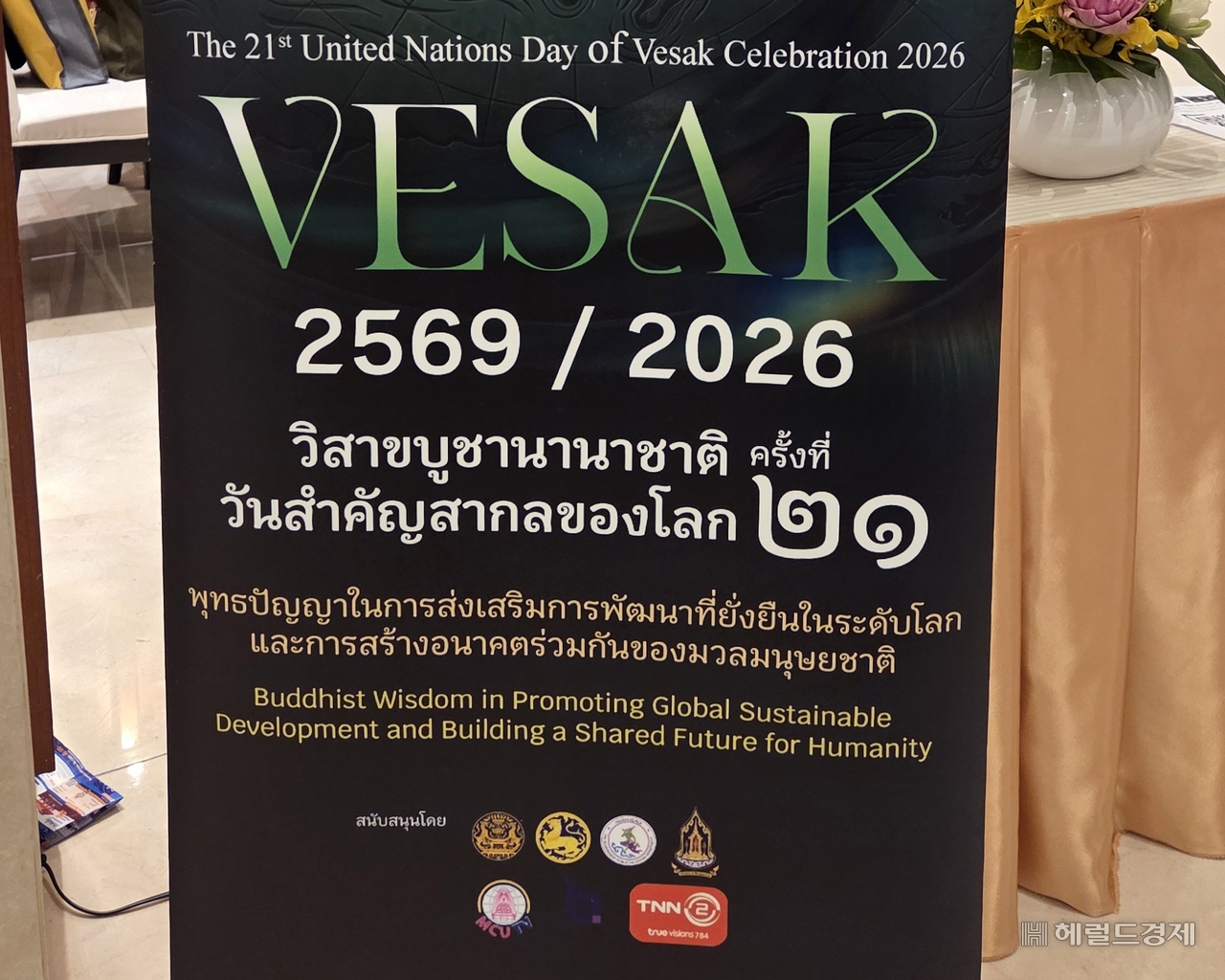
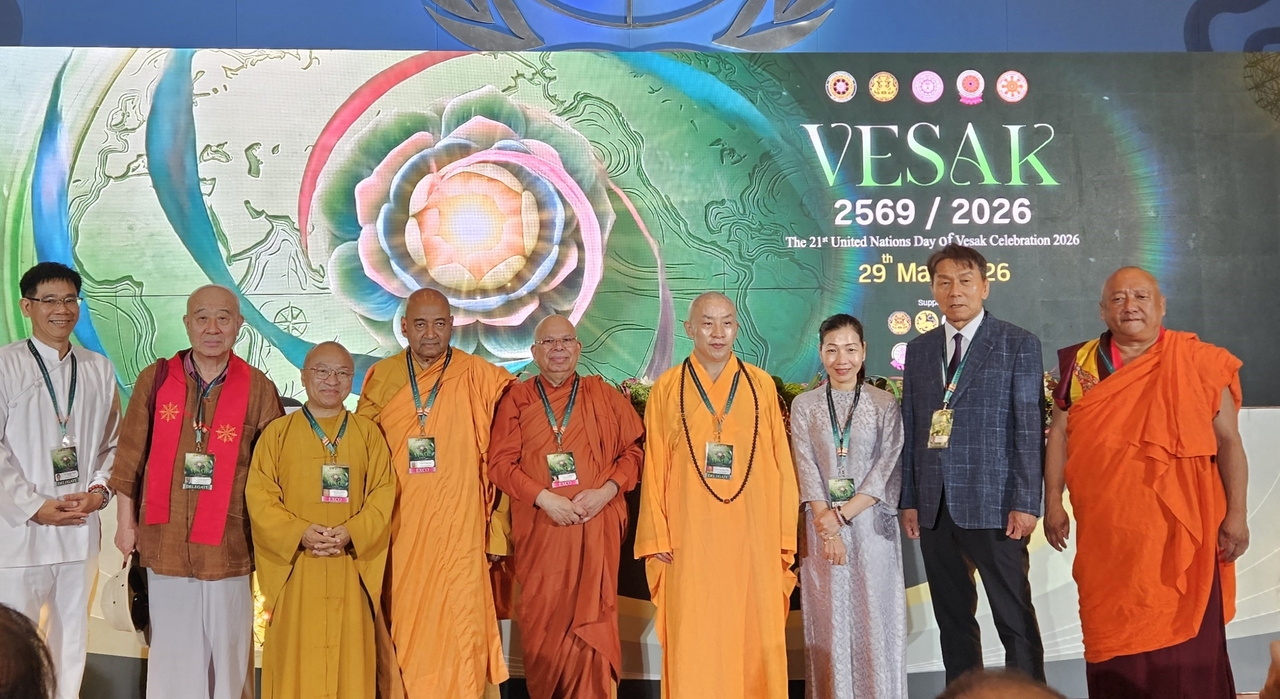
One curiosity arose during the event. South Korea observes this year as Buddhist Era year 2570, yet the event's posters listed it as Buddhist Era year 2569 — a one-year gap. The Buddhist Era calendar counts from the year of the Buddha's parinirvana, but uncertainty over the exact year of that event has produced the discrepancy.
At the World Buddhist Conference held in 1956, the year 544 BCE was adopted as the parinirvana year, and South Korea has followed that reckoning ever since. Thailand, Sri Lanka and other Theravada countries, however, use 543 BCE as the parinirvana year, which is why their Buddhist Era count differs by one year.
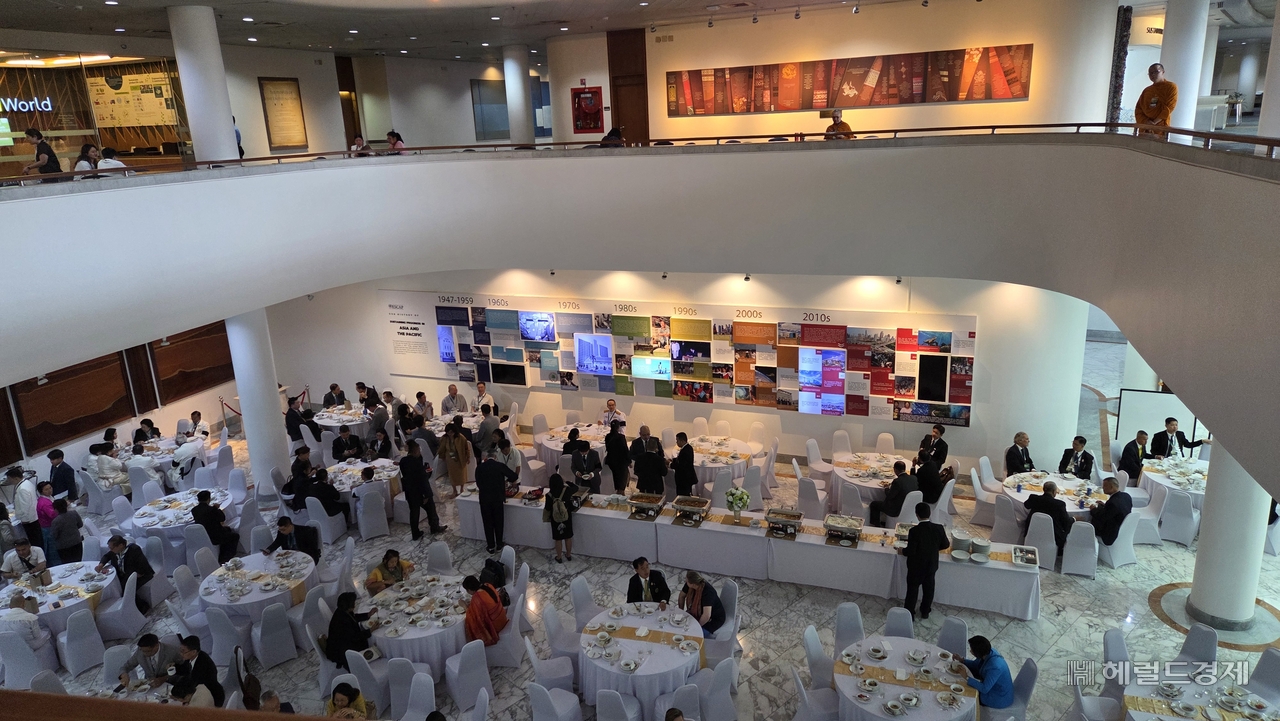
With no country having come forward to host the 22nd International Vesak Day in 2027, Thailand is set to hold the event once again.
After a closing report on the China conference and the conference chair's closing remarks, participants boarded buses for Buddhamonthon in Nakhon Pathom Province — about an hour's drive from Bangkok — the second official venue of the day.
Buddhamonthon in Nakhon Pathom: the heart of Thai Buddhism
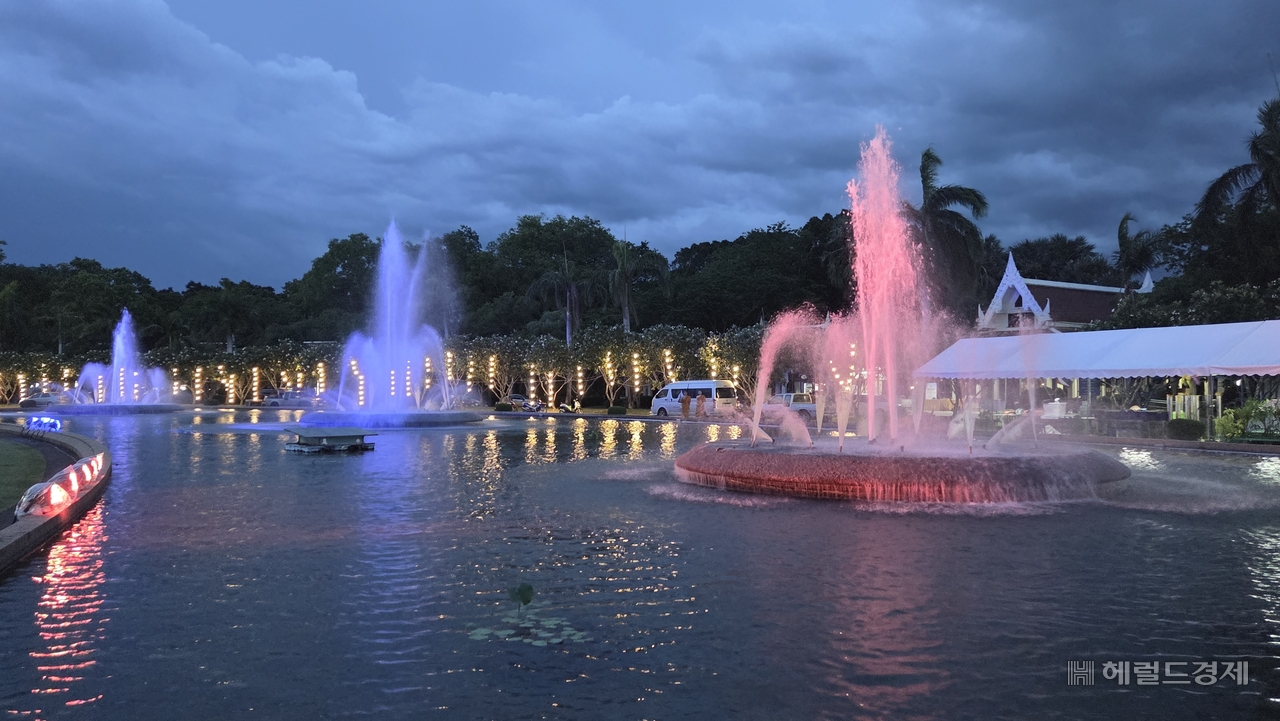
Nakhon Pathom Province, a city of one million people about 60 kilometers west of Bangkok, is the oldest Buddhist site in Thailand — the place where Buddhism first took root in the country — and home to the Phra Pathom Chedi, a stupa standing 127 meters tall and among the highest in the world. In 1957, to mark the 2,500th anniversary of Buddhism, the Thai government established a vast Buddhist park here as a symbol of modern Thai Buddhism, covering 4.3 million square meters — about 1.4 times the size of Yeouido.
The park encompasses a large artificial pond, forested walking paths, expansive meditation and practice spaces, sculptures of the Dharmachakra and other Buddhist symbols, a path representing the Eightfold Path, a memorial hall and a Bodhi tree. It has become the primary venue for Vesak Day (Visakha Bucha) and other Buddhist and international events.
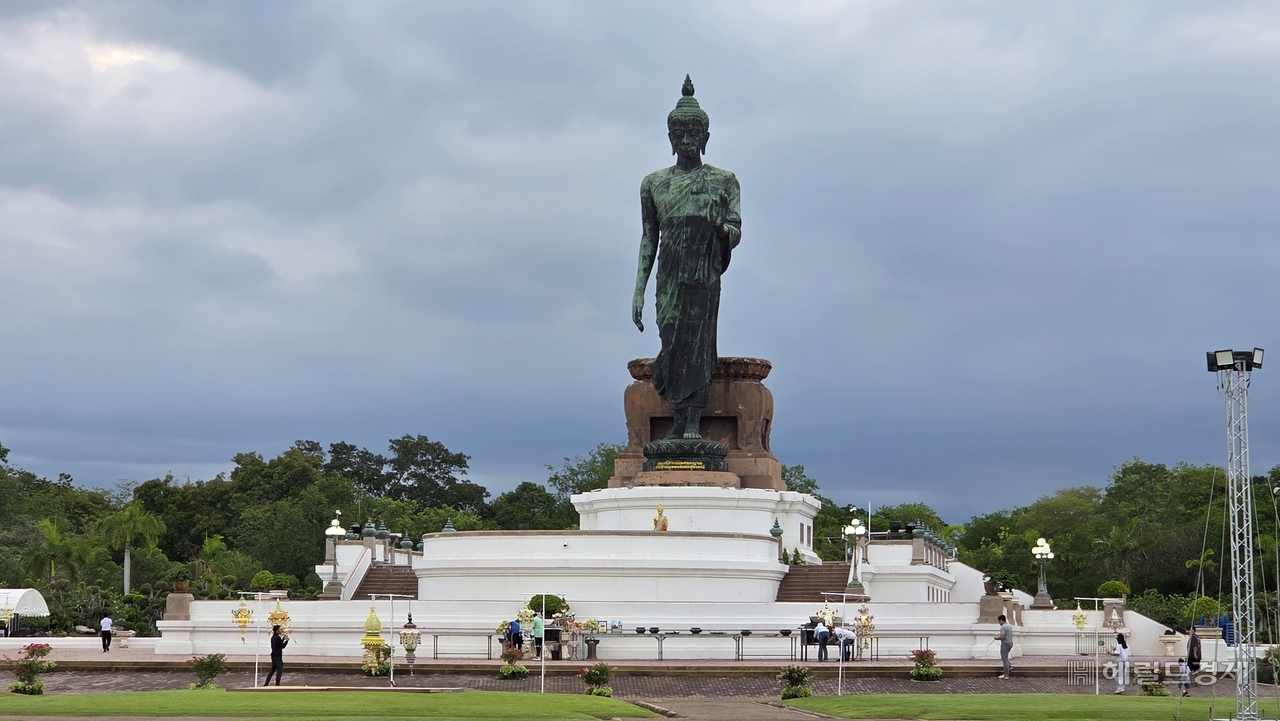
At the center of the park stands a rare and towering 15.87-meter Walking Buddha statue — one of the few of its kind in the world. Mahachulalongkornrajavidyalaya University, one of Thailand's leading Buddhist universities, sits on the park's perimeter.
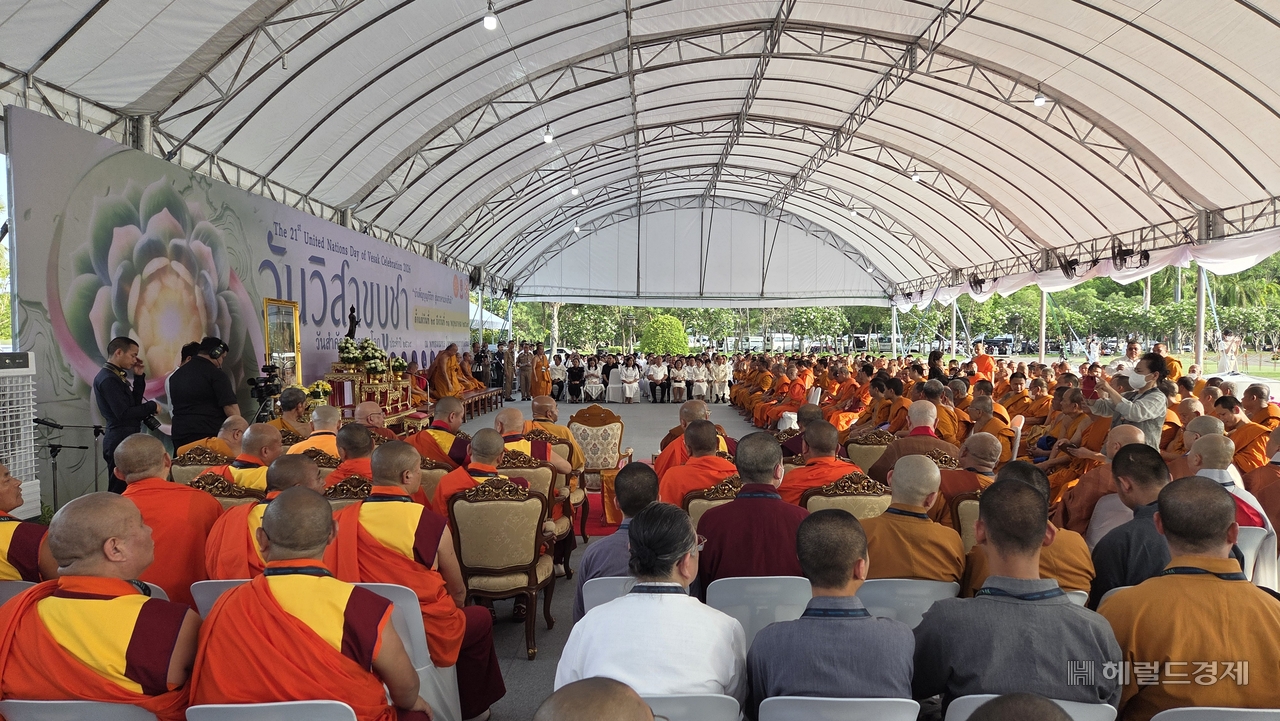
Inside a dome-shaped dharma hall on one side of the park — at the spiritual center of modern Thai Buddhism — some 500 monks and 800 lay practitioners gathered for a chanting ceremony lasting about an hour and a half, with participants observing the devotional traditions of their respective countries.
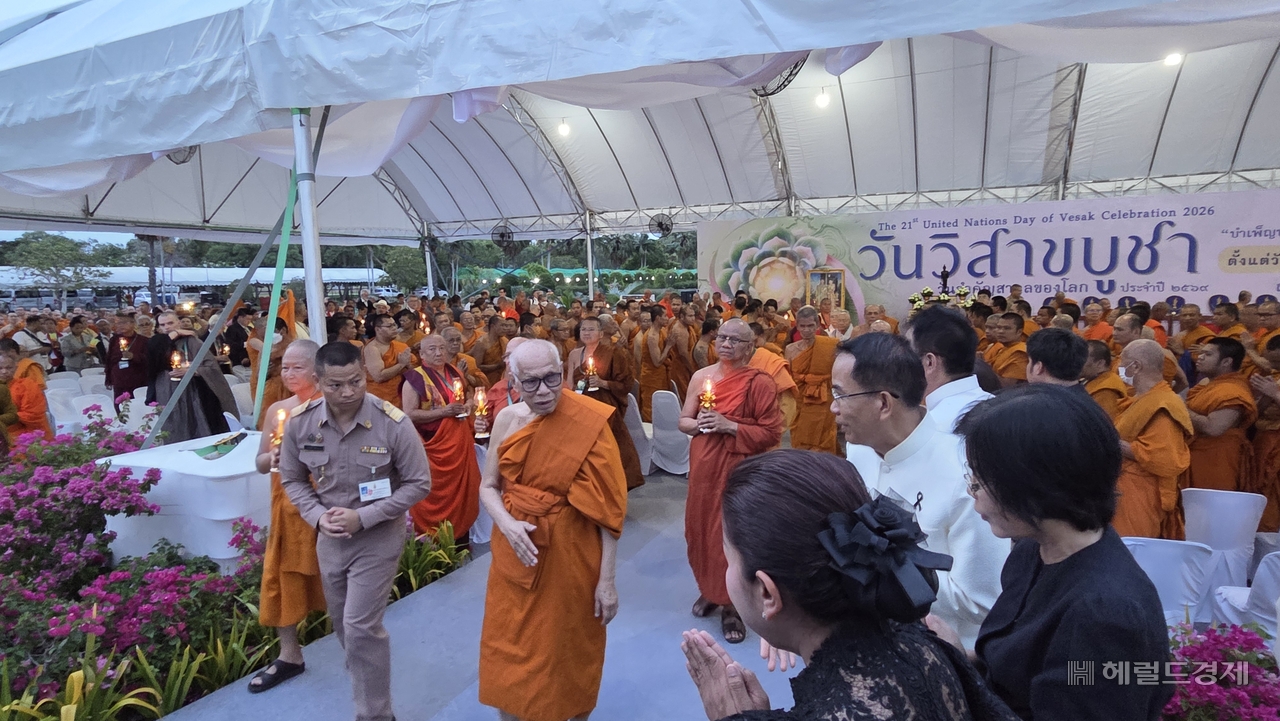
Thailand's Supreme Patriarch — the spiritual leader of the entire Thai sangha, a role equivalent to that of the head of the Jogye Order in South Korea — attended and delivered a dharma address.
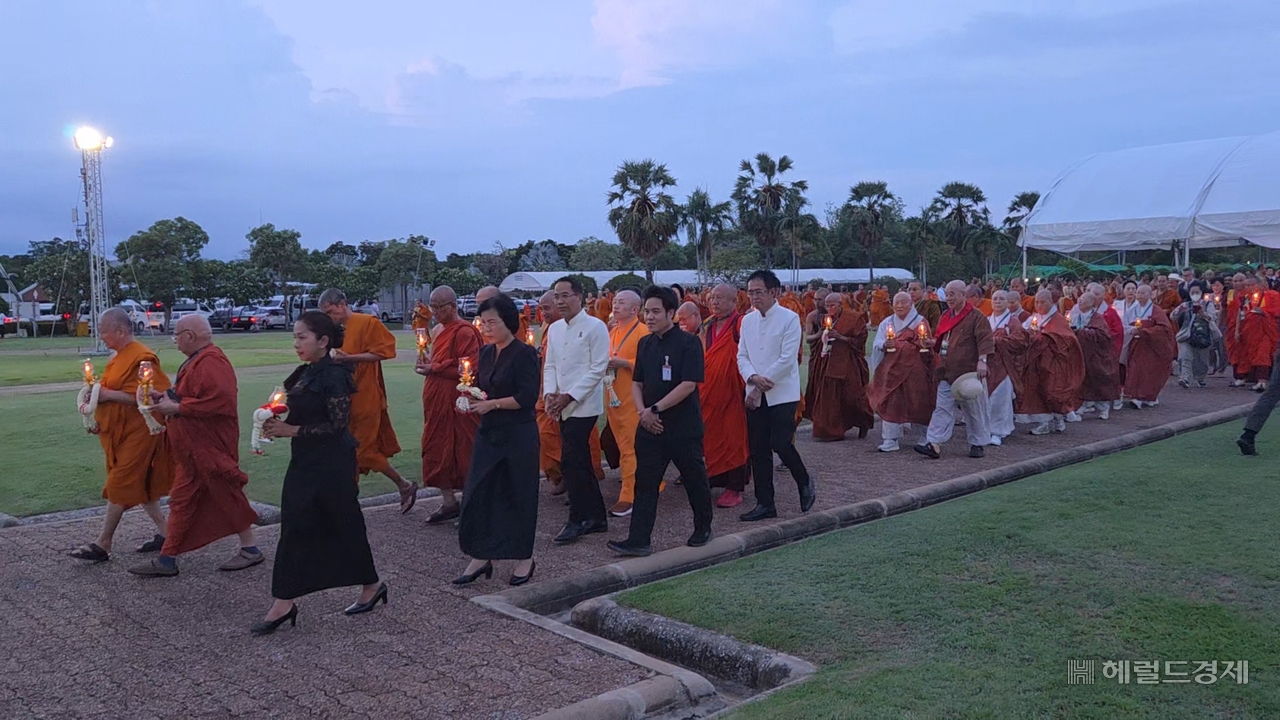
As dusk fell and the ceremony drew to a close, hundreds of monks led the way holding candles, with lay practitioners following behind, as the assembly circumambulated the Walking Buddha statue in a traditional pradakshina procession.
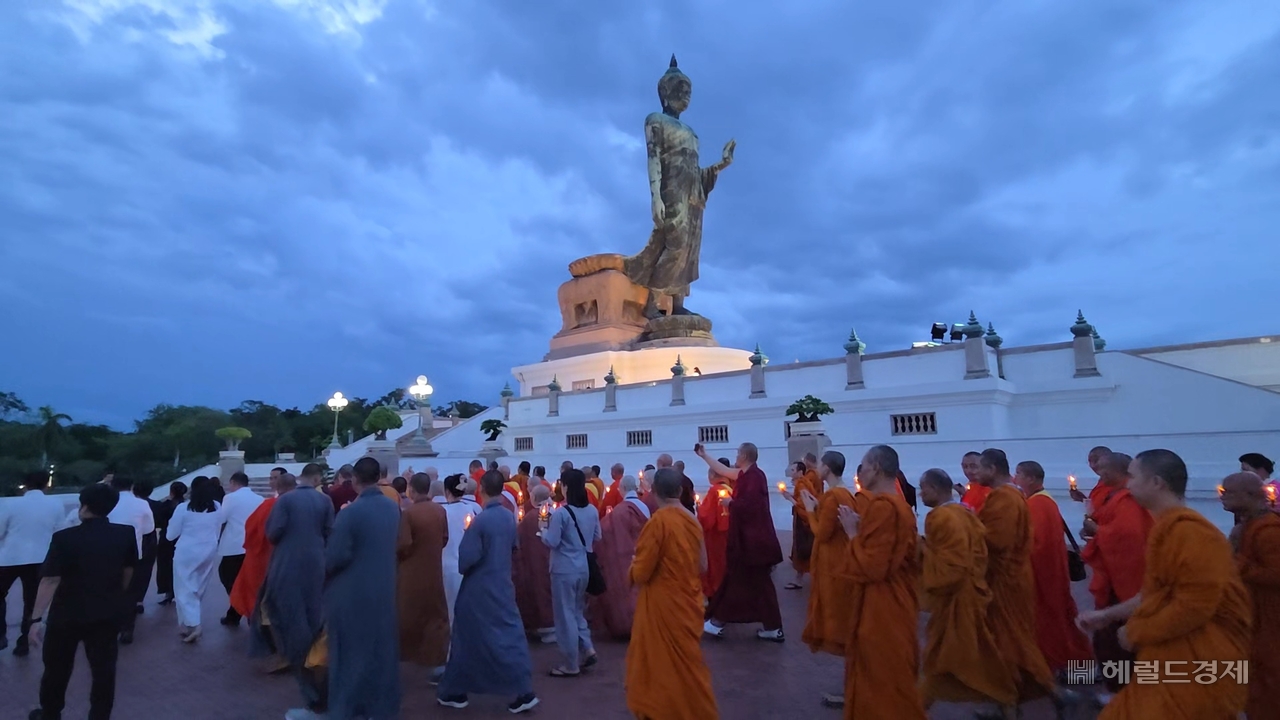
The candles flickered out frequently in the breeze, requiring repeated relighting amid some gentle confusion, but the sight of hundreds of people circling the towering standing Buddha was magnificent. The 21st UN Vesak Day concluded officially with the Buddhamonthon circumambulation, following the two-day conference in China.
Traveling with the group by bus, I could not make a side trip to the Phra Pathom Chedi — the 127-meter stupa at a sacred Buddhist site just 20 to 30 minutes from Buddhamonthon — and that remains a lingering regret.
A global Buddhist network
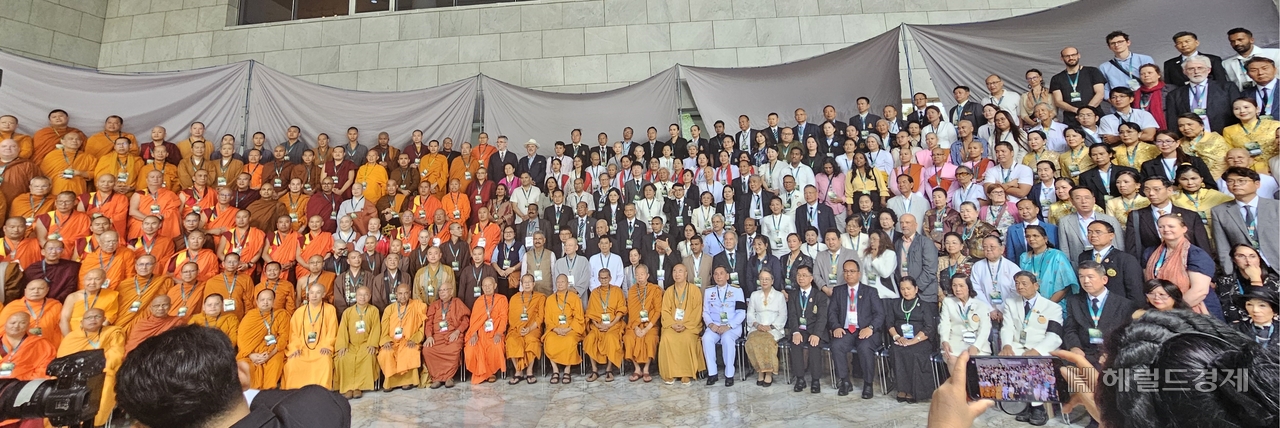
With strong backing from the royal family, Thailand regularly hosts major international Buddhist events and builds global monastic networks by welcoming foreign monks and students into its Buddhist universities. The UN Vesak Day is more than a religious gathering for Thailand — it is a vehicle for national branding, positioning the country as the "center of global Buddhist diplomacy" while actively leveraging its identity as a Buddhist nation across tourism, meditation, culture and diplomacy.
Observing the many dimensions of Thai Buddhism — where the royal family, the sangha, education and tourism are all intertwined — it is clear that competition in the Buddhist cultural sphere is intensifying. South Korean Buddhism seeks to fuse its tradition with the global wave of Korean culture; India asserts its pride as the religion's birthplace; and China and Japan are working to link their Buddhist heritage with tourism. All are converging on the same stage.
India, as the birthplace of Buddhism, is working to place itself at the center of world Buddhism through the International Buddhist Confederation (IBC), founded in 2011 and headquartered in New Delhi, which aims to organize a unified global Buddhist voice through an international network. Working alongside the Indian government, the IBC launched the Global Buddhist Summit in January 2025 and plans to hold it annually, convening sangha leaders and Buddhist scholars from around the world to build a broad Buddhist network.
In April, the IBC secretary-general visited the International Buddhist Expo at COEX in Seoul and met with Jeong Won-ju, head of the Jogye Order's Central Lay Buddhist Council, to seek cooperation on international conference participation. The outreach reflects the IBC's motto — "Collective Wisdom, One Voice" — and its ambition to establish itself as the hub of a global Buddhist cooperative network.
World Buddhism is broadly divided into three traditions. The first is Theravada Buddhism — also called Southern Buddhism or, by an older term, Hinayana Buddhism — practiced in Thailand, Sri Lanka, Myanmar, Cambodia, Laos and other parts of Southeast Asia. It emphasizes early Buddhist scriptures and a monk-centered tradition, with a strong focus on individual practice and liberation, expressed through the culture of alms rounds and meditation.
The second is Mahayana Buddhism, found in South Korea, China, Japan and Vietnam. It stresses the salvation of all sentient beings, emphasizes compassion and the bodhisattva path for lay practitioners, and is also known as Seon (or Zen) Buddhism. The third is Vajrayana Buddhism, or Tibetan Buddhism, which emphasizes swift enlightenment and esoteric practice and places great importance on the role of the teacher — most notably the Dalai Lama. It is practiced in Tibet, Bhutan, Mongolia and surrounding regions.
The efforts of many countries to build a global network across these three distinct Buddhist traditions are finding expression through a growing array of international Buddhist events.
Next in the series: a visit to Theravada Buddhist temples — exploring the temples of Bangkok and the UNESCO World Heritage site of Ayutthaya, a city marked by both glory and devastation.
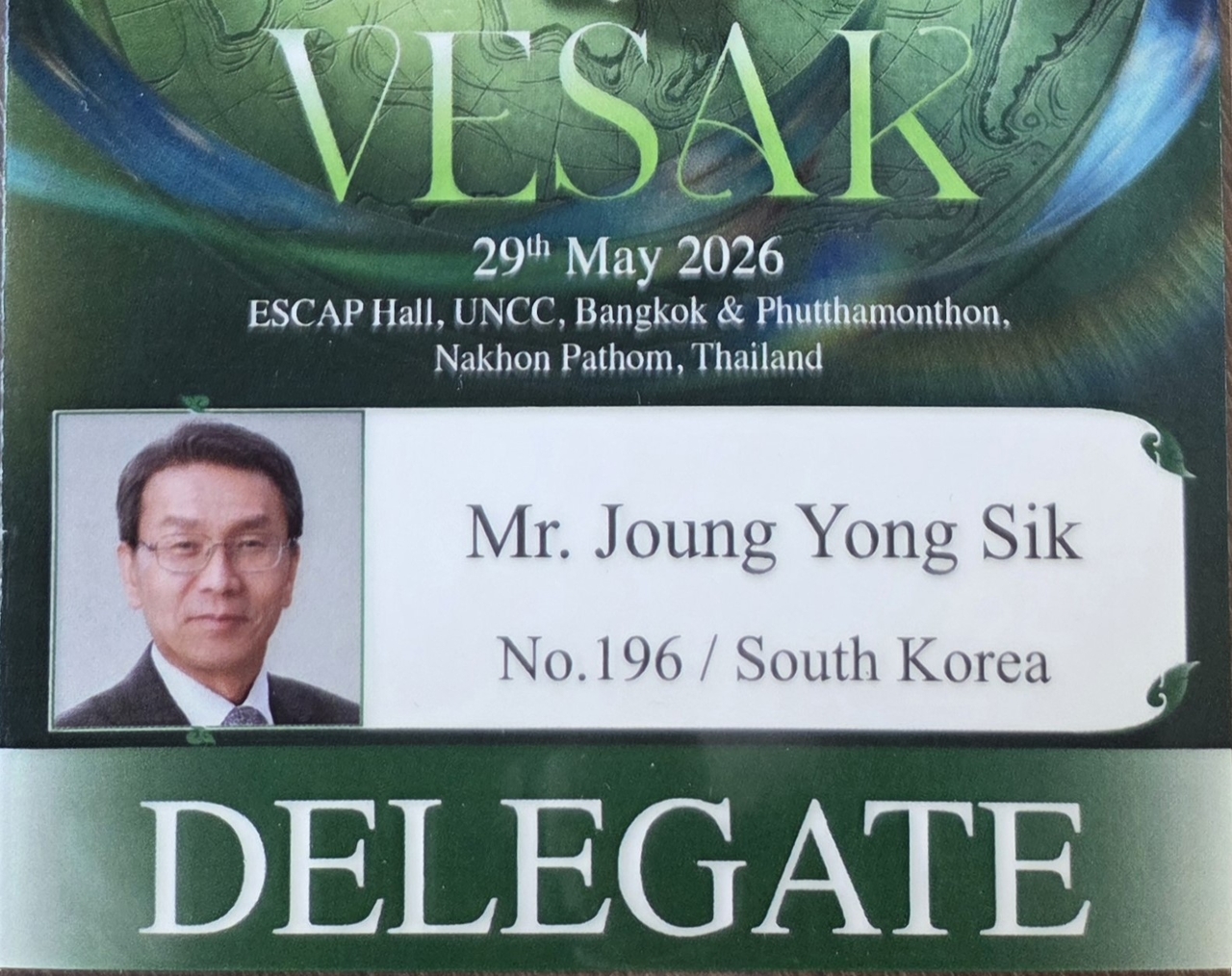
Text and photos by Jung Yong-sik, executive director of Herald Corp.
Edited by Min Sang-sik
mss@heraldcorp.com





