
Inside LG Uplus's Paju AI data center construction site
Company targets 15–20% annual sales growth, hybrid cooling system
'One LG' strategy taps group affiliates for key components
"We will secure 5 trillion won (approximately $3.27 billion) in project orders centered on the Paju AI data center by 2030," said Ahn Hyeong-gyun, head of LG Uplus's Enterprise AI Business Group.
LG Uplus is throwing its full weight behind next-generation AI infrastructure, using the Paju AI data center as its launchpad. With corporate demand for AI infrastructure surging, the company has laid out a concrete roadmap to hit 5 trillion won in orders within five years. The first computing building at the Paju AI data center is already fully contracted — every customer deal signed — even though completion is not scheduled until June next year.
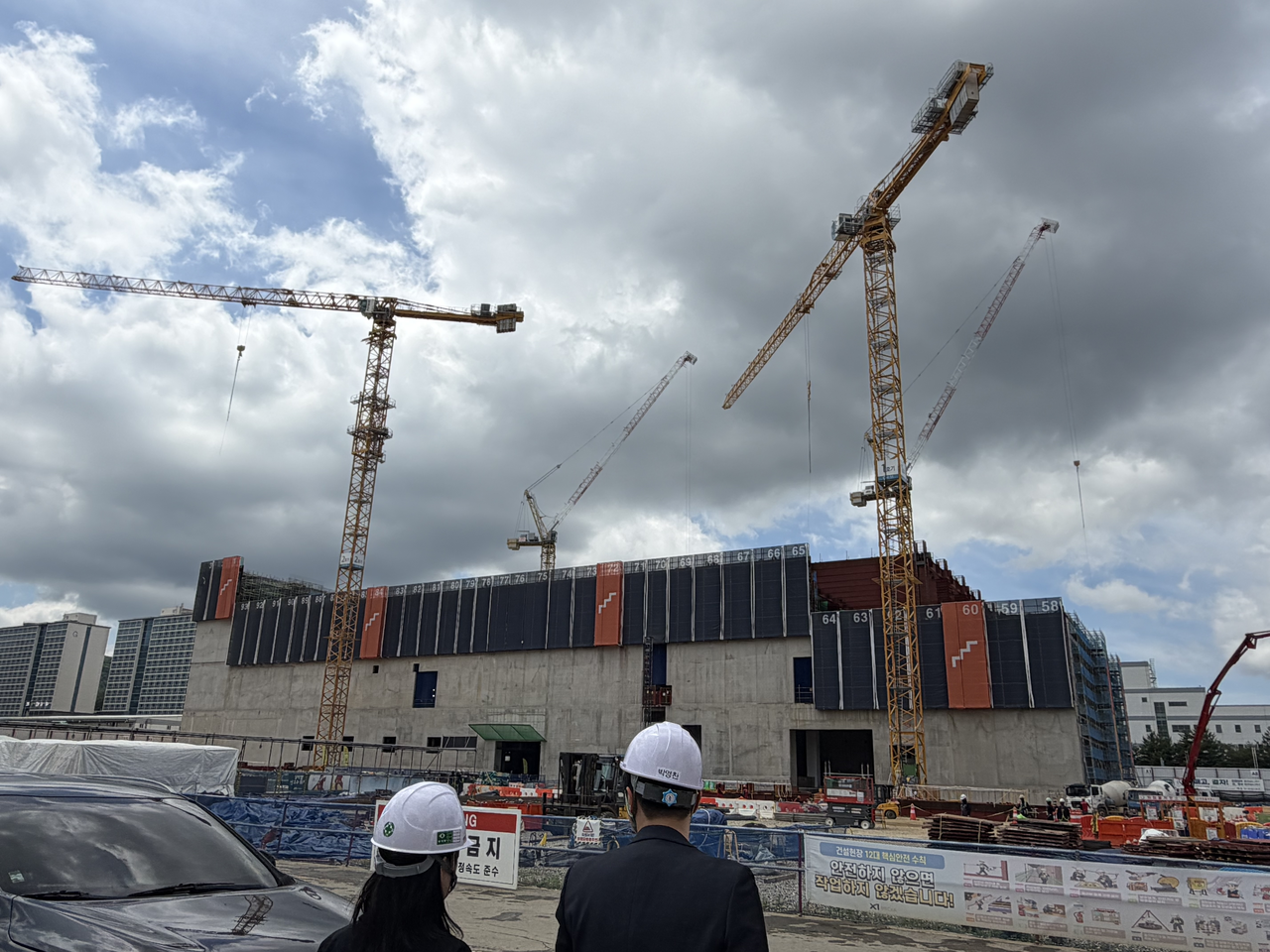
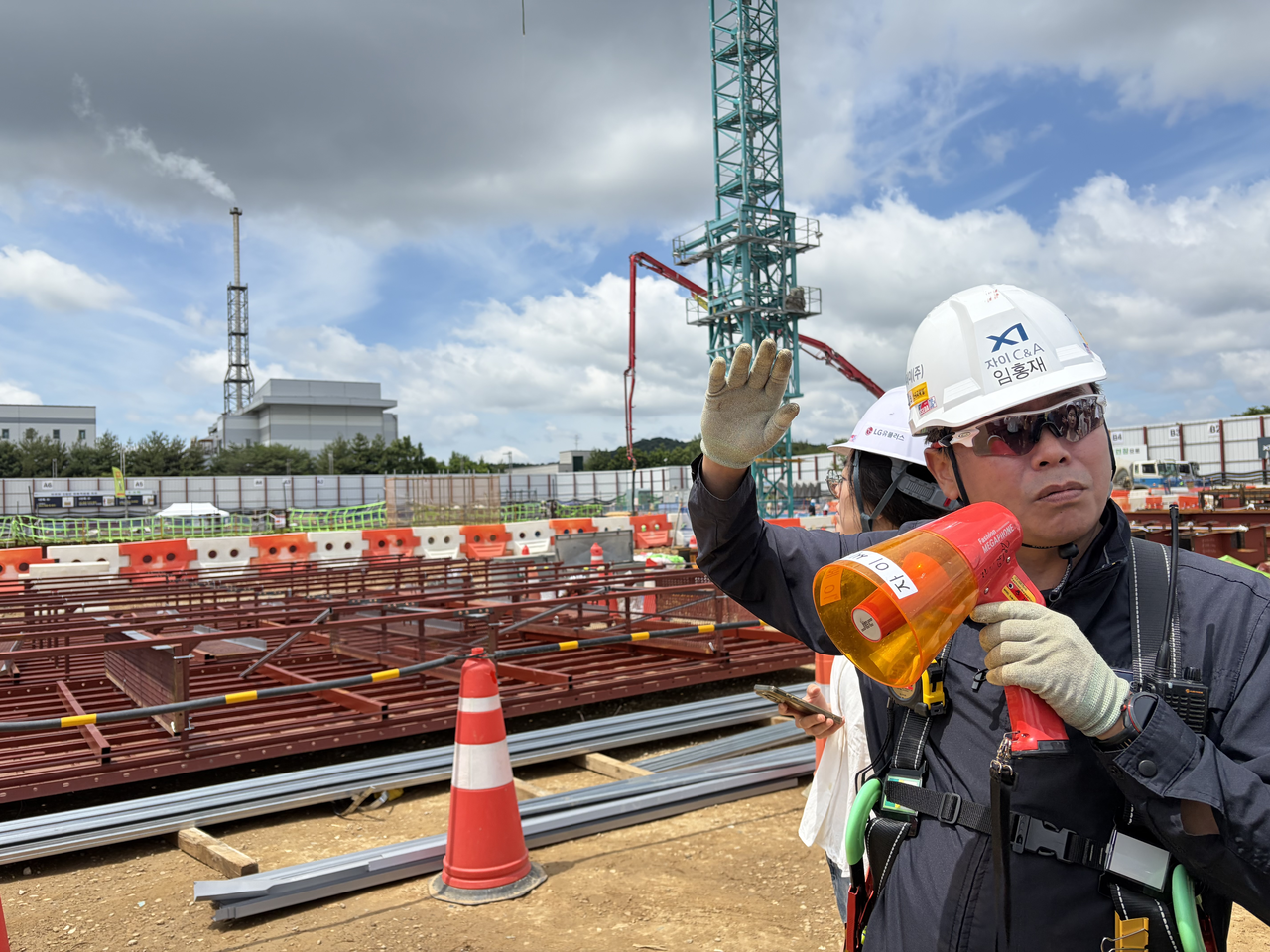
On Friday, this reporter visited the LG Uplus Paju AI data center construction site in Wollong-myeon, Paju, Gyeonggi Province. The site sprawls across a total floor area of roughly 150,000 square meters — about 21.3 times the size of a soccer field. Five large cranes moved materials across the grounds while some 20 site workers in hard hats moved briskly from one section to another.
The Paju AI data center is the only facility in the Greater Seoul area being built with a capacity of 200 megawatts. Construction is currently 20 percent complete. LG Uplus plans to finish the structural framework in October and file for a usage approval in May next year.
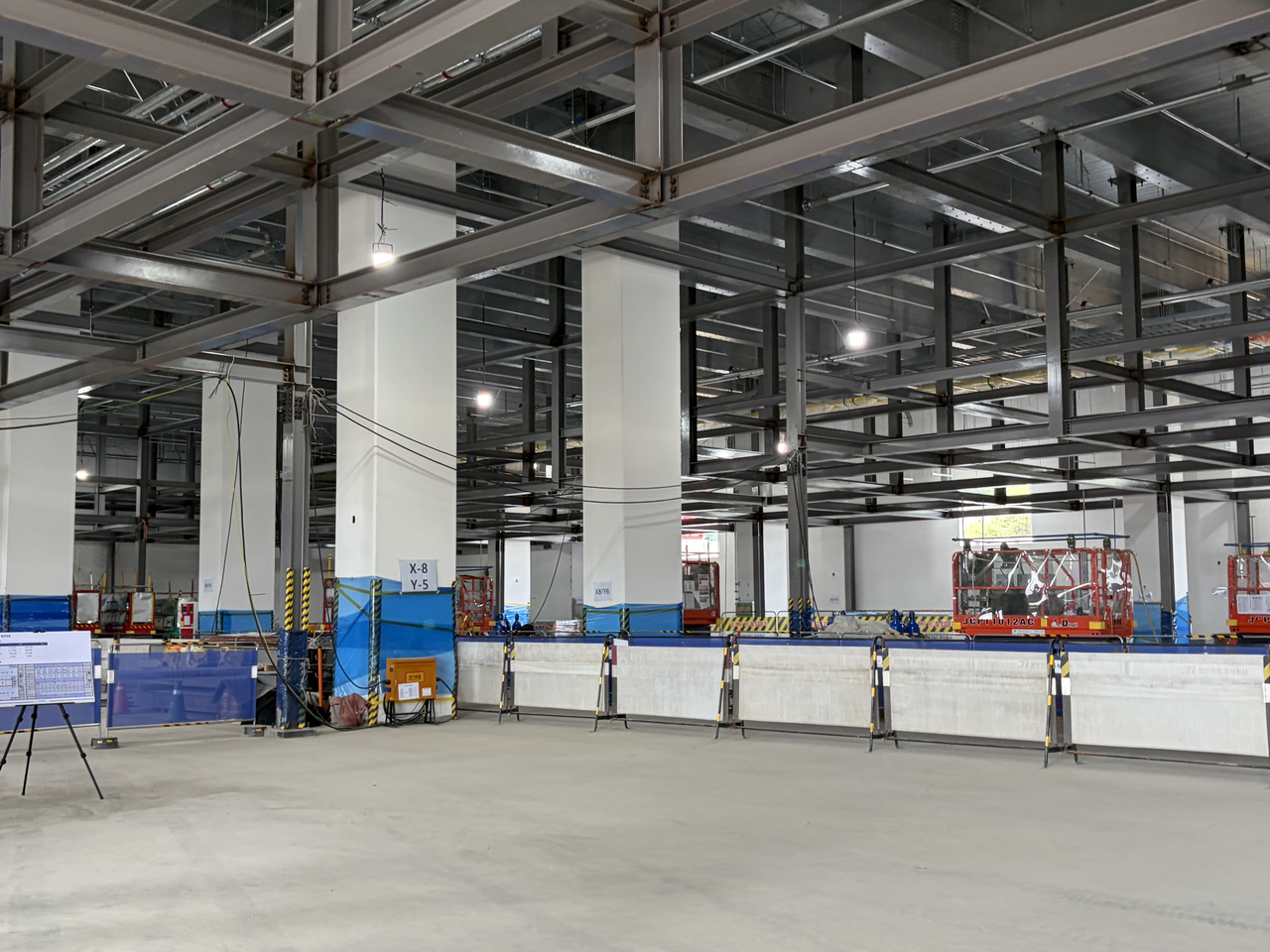
Walking through the safety corridor into the first computing building, the thermal management design was immediately apparent. Three spaces designated for precision air-conditioning units are arranged between two expansive server rooms. LG Uplus plans to run both air cooling and liquid cooling simultaneously, allowing the facility to respond efficiently to AI infrastructure demand. The building's structural design — from load-bearing capacity and waterproofing to piping — has been optimized for liquid cooling from the ground up.
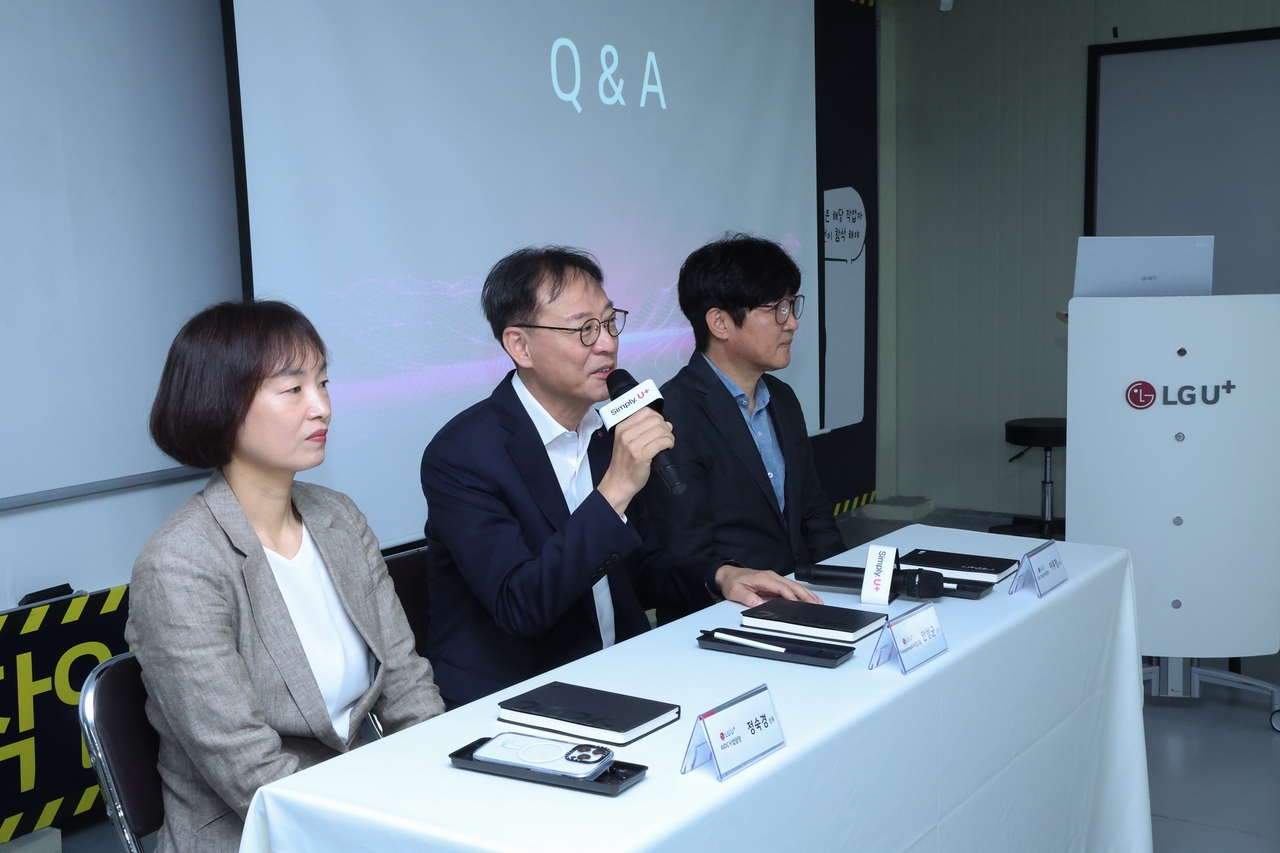
Ahn, who attended the site briefing, outlined the company's ambitions as AI infrastructure demand accelerates. "As AI workloads shift from training to inference, demand from businesses and customers is exploding," he said. "Over the next five years, we are targeting not only project orders but also annual average sales growth of 15 to 20 percent, and we plan to expand AI data center capacity to at least 600 megawatts."
The company also unveiled its infrastructure strategy focused on AI data centers. The strategy centers on four pillars: construction speed, power capacity and scale, cooling efficiency, and operational stability.
On construction speed, LG Uplus plans to adopt a prefabricated modular data center, or PMDC, approach — standardizing key equipment for factory production and assembling it on site. "Building a data center takes three to four years, but server models change almost every year," said Jung Suk-kyung, LG Uplus's head of AI data center business. "AI token usage is doubling every quarter, so we concluded it was critical to close that time gap — that's what led us to consider PMDC."
LG Uplus said the facility is also competitive on power and scale. "200 megawatts is enough to accommodate roughly 70,000 units of Nvidia's GB200 GPU Blackwell," Jung said. "In terms of generative AI services, that is enough capacity to serve the entire population of the Greater Seoul metropolitan area."
For cooling efficiency, the company chose a hybrid structure supporting both air cooling and liquid cooling simultaneously. The building was designed from the construction phase with liquid cooling in mind to handle the heat generated by inference-focused GPU servers. "The hybrid structure lets us efficiently cool every type of AI chip — from GPUs to CPUs and NPUs," said Lee Woo-jung, LG Uplus's head of AI data center technology and operations.
LG Uplus is also reinforcing its "One LG" strategy, built on technology collaboration with LG Group affiliates. The liquid cooling system at the Paju AI data center was developed in partnership with LG Electronics. The system attaches a dedicated metal plate to GPU chips and circulates coolant through a distribution unit to remove heat directly — a method known as direct-to-chip, or D2C, cooling. Internal testing confirmed an energy efficiency improvement of roughly 24 percent compared with conventional air cooling, LG Uplus said. LG Electronics also produces the dry-cooler-type free-cooling chillers used to generate the coolant.
High-performance uninterruptible power supply batteries from LG Energy Solution are also installed in the facility. The system instantly corrects power supply during outages or voltage fluctuations, and a multi-layered safety architecture — designed in-house from battery cell to pack — minimizes the risk of fire and thermal runaway. LG Uplus is also co-developing a DC 800-volt power distribution system with LS Electric to handle the facility's high power consumption.
LG Uplus aims to combine these capabilities with 27 years of data center operating experience to reinvent itself as an "AI factory operator" — moving beyond simply leasing data center space to become an integrated operator managing GPU resources, power and cooling as a unified whole. "AI infrastructure is becoming the core foundation that determines national competitiveness," Ahn said. "Building on the capabilities we have accumulated as the country's first internet data center operator, we will continue to expand the foundation of Korea's AI industry."
chami@heraldcorp.com





