
Biotech cracks 'impregnable' GPCR targets, achieves logic-gating with single antibody arm
Co-CEO structure separates research and operations to maximize agility
Pure AI-designed drugs still 5–10 years from market, atomic-level control remains unsolved
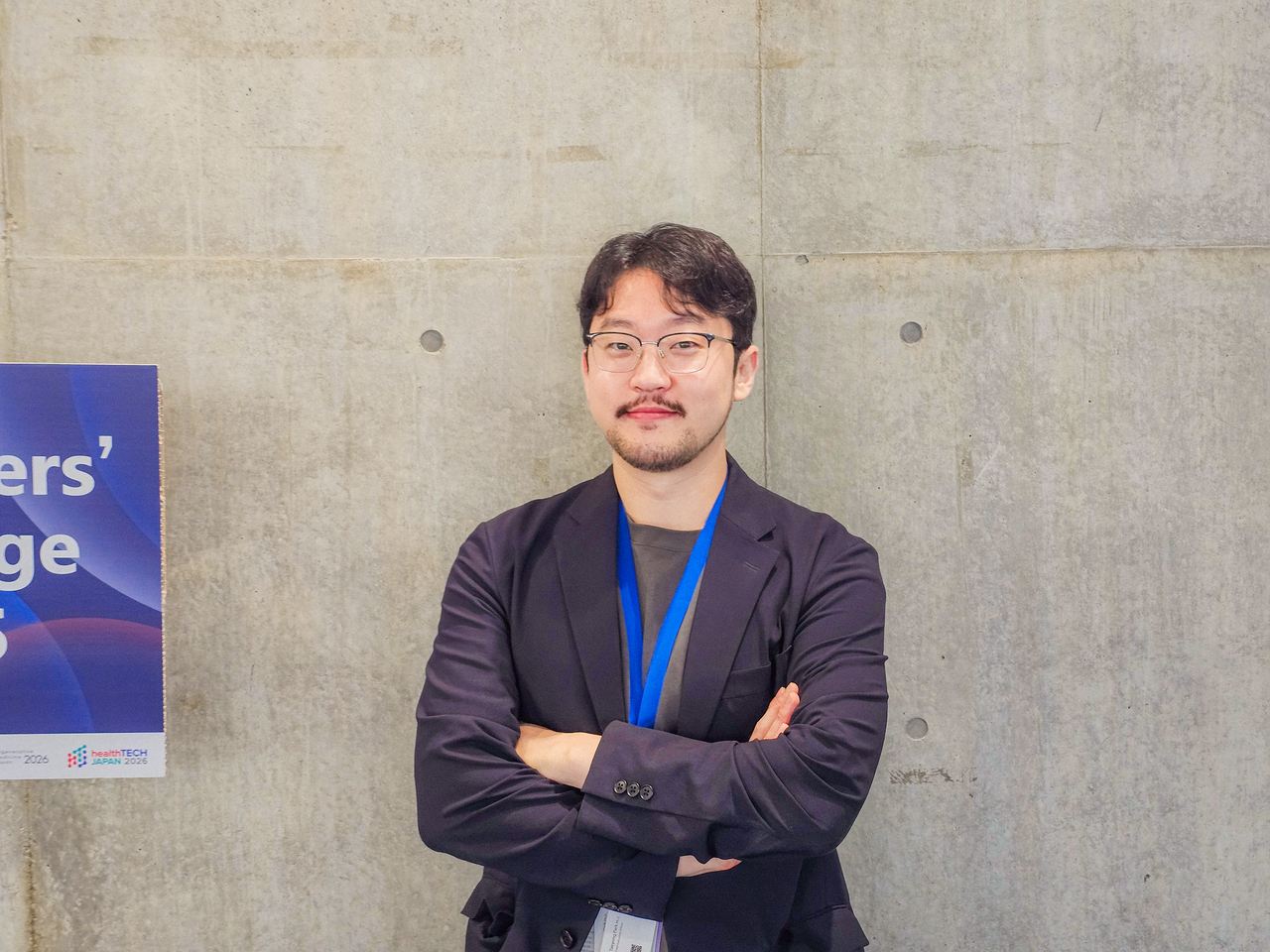
"AI drug development is not the all-solving technology that some corners of the market make it out to be. If you compare it to fighting a disease, today's antibodies are no more than the 'claws and teeth' nature gave us — primitive weapons at best. To build the kind of precision molecular weapons — the drones and missiles — that can strike only cancer cells, we still have a long way to go in advancing AI to the point where it can control matter at the atomic level."
Park Tae-yong, co-CEO of Galaxia, offered a sober assessment of the AI drug development market — pushing back against both bubble talk and runaway optimism — when he sat down for an interview at Bio Japan 2026, Asia's largest biotech fair, held Friday (local time) at the Pacifico Convention Center in Yokohama, Japan.
Galaxia, South Korea's leading AI protein-structure design biotech, has been drawing a steady stream of partnership deals with global pharmaceutical giants — including Boehringer Ingelheim and AstraZeneca — as well as major domestic players such as LG Chem, Celltrion, GC Biopharma and Dong-A ST, cementing its reputation as one of the industry's most promising companies.
Park attributed the parade of suitors to two factors: irreplaceable technology and proactive network-building. "In the early days, we had to go out and convince partners how this technology could be applied to drug development and show them what it could do," he said. "Now they come to us with specific, well-defined drug targets in hand. That shift is the result of solving problems that were either impossible or prohibitively time-consuming through conventional experimental methods — and earning clear recognition and trust in global markets on the strength of our technology."
The technical progress is translating into tangible results. Galaxia recently secured early-stage data showing it had successfully used AI to discover and design antibodies that precisely target G protein-coupled receptors, or GPCRs — long considered one of the most impregnable classes of drug targets in the industry.
The company has also achieved what it calls logic-gating: designing a molecule in which a single antibody arm conditionally controls two targets at once. The mechanism is engineered so that the antibody binds to target B only when disease target A is absent, and withholds binding when A is present — blocking side effects in healthy tissue while acting selectively at the site of disease.
"GPCR antibodies and logic-gating molecules are areas where discovery through conventional wet-lab methods is extremely difficult," Park said. "The true value of AI lies not simply in cutting the time and cost of drug development, but in creating entirely new modalities that were previously impossible to attempt — opening new treatment opportunities for patients with hard-to-treat diseases."
On the nature of the company's current collaborations, Park described them as proof-of-concept work. "Right now we are in a technology-validation stage, evolving together with the global market to understand how this technology can be realized as actual business," he said. "Our internal R&D milestones have been solidly validated this year, so the tangible business results and payoffs should start to materialize next year."
To keep pace with the company's rapid growth in research and business, Galaxia recently moved away from a single-CEO structure, transitioning to a co-CEO arrangement in which founder Seok Cha-ok, a chemistry professor at Seoul National University, and Park share leadership responsibilities. The restructuring came as the company crossed 70 billion won ($52.3 million) in cumulative investment raised and surpassed 50 employees — a deliberate move to sustain R&D continuity while accelerating commercialization.
Park explained the rationale behind the reorganization. "After our Series B funding, we entered a critical inflection point where AI algorithm advancement, drug development and global business expansion all began converging simultaneously," he said. "We divided authority and accountability clearly so we could tackle the challenges ahead with maximum agility." Under the new structure, Seok oversees the company's macro vision, overall strategic direction and foundational R&D, while Park leads business decisions, organizational operations and R&D execution.
Galaxia has also significantly strengthened its executive lineup. Last month the company brought in Lee Jin-geun, former CEO of Gradiant, as executive vice president and chief business officer. In May, Kim Sung-hyun, formerly of Astrogen, a neurological disease treatment developer, was appointed chief financial officer. In July, co-founders Won Jong-hun and Yang Jin-sol were promoted to executive vice president, taking on the roles of chief technology officer and chief AI officer, respectively — completing a C-suite structure spanning technology, finance and business development.
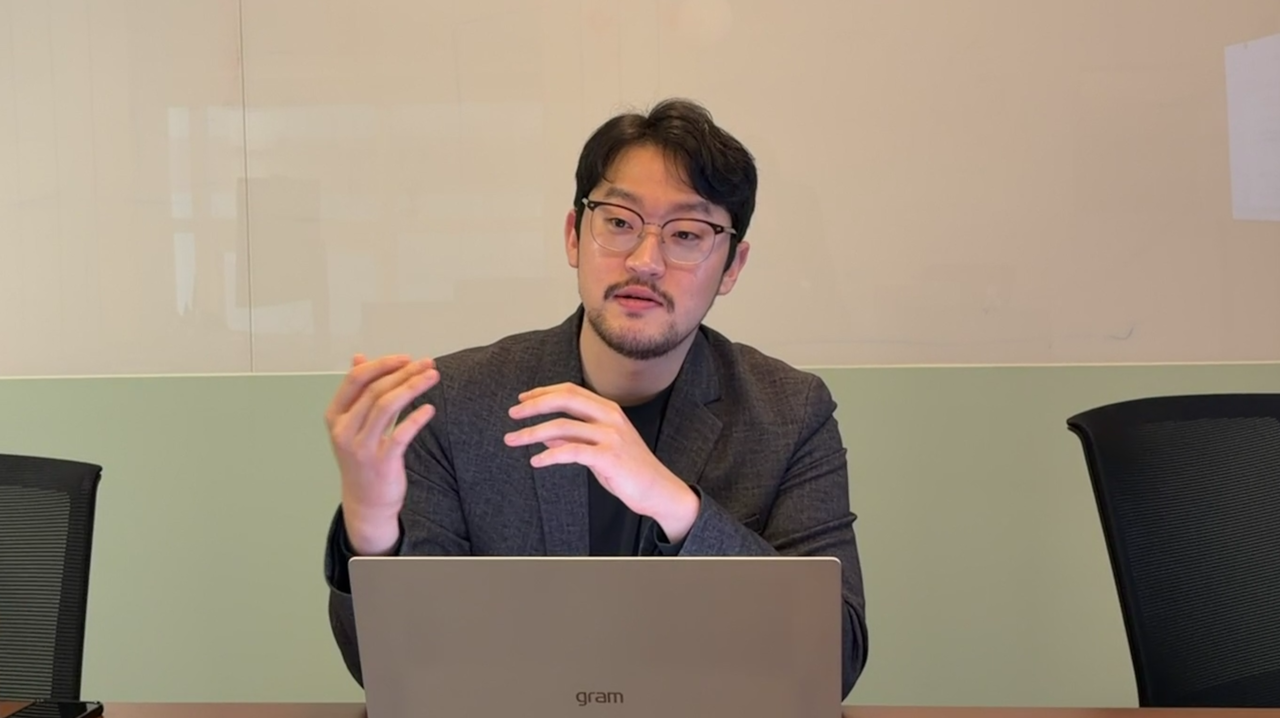
With its leadership structure now firmly in place, Galaxia is moving ahead with plans for a Kosdaq technology-exception IPO targeting late 2027. "We are aiming for a listing in late 2027, when the external conditions will be in place," Park said, adding a note of measured perspective: "The listing itself is not the ultimate goal — it is one important milestone that will allow us to pursue our foundational research and clinical development through the capital markets in a stable and bold way."
AI has already dramatically shortened the candidate-screening phase of drug development, establishing itself as a key platform in the field. But how far away is the day when an AI-designed drug clears clinical trials and reaches the market? "For a drug based on an antibody completely designed from scratch — de novo — by AI on a computer, not a modified version of an existing antibody, it will typically take somewhere between five and ten years to reach official market launch," Park said. "Within ten years, the era of purely AI-based medicines becoming global blockbusters will arrive."
Park repeatedly stressed the need for continued technological advancement. "Antibody design has reached a certain level of maturity, but to freely manipulate the molecules we want, we need AI capable of ultra-precise control at the atomic level," he said. "The degree to which AI advances will determine the scale of value a biotech company can create, so we will put everything we have into building differentiated algorithms and pushing the technology forward."
Park Tae-yong was born in Gumi, North Gyeongsang Province, in 1993. He graduated from North Gyeongsang Science High School in 2011, earned a bachelor's degree in chemistry from KAIST in 2015, and completed his doctorate in chemistry at Seoul National University in 2021. He joined Galaxia as executive vice president that same year and was named co-CEO in 2026.
silverpaper@heraldcorp.com





