
Sixteen years apart, Oh Se-hoon pulled off near-identical predawn reversals against two prominent Democratic Party candidates — cementing his place as Seoul's first five-term mayor and the only politician to have twice overturned an election deficit in the early hours of vote-counting.
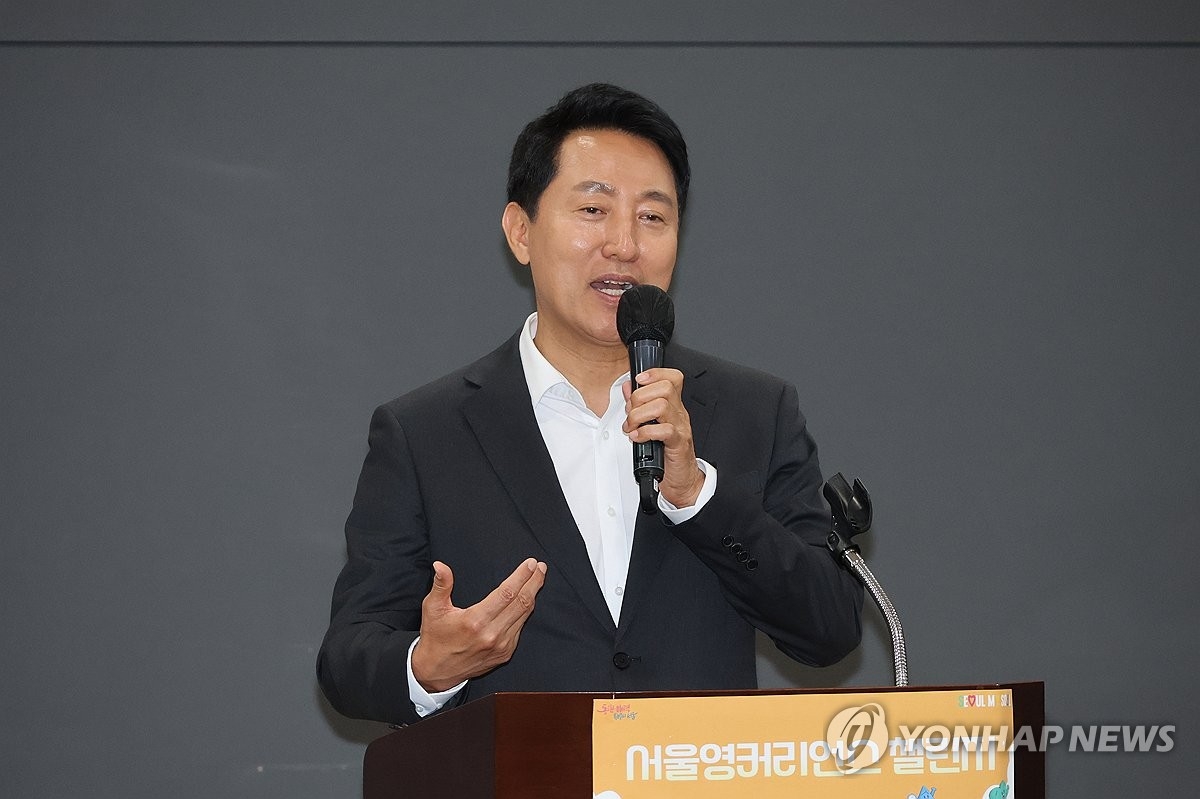
No politician in recent Seoul history has illustrated the maxim that an election is never over until it is over quite as dramatically as Mayor Oh Se-hoon.
In both the 2010 and 2026 Seoul mayoral races, Oh trailed in the early vote count only to surge past his opponent in the predawn hours — delivering two of the most memorable comeback victories the city has seen.
The two elections, separated by 16 years, are strikingly similar in how they unfolded.
In the June 2, 2010 local elections, Oh faced a razor-thin contest against the Democratic Party's Han Myeong-sook, a former prime minister. Exit polls and early returns pointed to a Han lead, but the tide turned once votes from the Gangnam area began flowing in. Oh secured re-election with 2,086,127 votes, or 47.43 percent, edging out Han's 2,059,715 votes, or 46.83 percent, by a margin of roughly 26,000 votes — just 0.6 percentage points.
The 2026 Seoul mayoral race followed a nearly identical script.
Some exit polls and early returns after polls closed showed Democratic Party candidate Jeong Won-oh ahead, and he maintained that lead through 80 to 90 percent of ballots counted. But as votes from the Gangnam belt — Songpa, Gangnam and Seocho — came in during the final stretch, the gap closed rapidly. Around 7:44 a.m. Sunday, Oh overtook Jeong for the first time. By the time 95 percent of ballots had been counted, Oh had moved decisively ahead and went on to confirm his final victory.
The parallels between the two races are unmistakable.
First, both opponents were prominent Democratic Party figures. Han had served as prime minister, while Jeong was a three-term Seongdong-gu district chief and the candidate personally backed by President Lee Jae Myung.
Second, in both contests the Democratic candidate built an early lead as votes from northern Seoul were counted first, only to see the advantage evaporate once ballots from the conservative-leaning Gangnam districts were tallied in the latter stages.
Third, analysts say the decisive factor in both races was Seoul's moderate, pragmatic voters. Rather than casting ballots as a verdict on the ruling administration, these voters weighed Oh's record managing the city, Seoul's urban competitiveness, and his real estate and transportation policies.
The result has prompted a widely shared observation in political circles: "Oh Se-hoon's strength shows up at dawn."
His two predawn reversals — against Han in 2010 and against Jeong in 2026 — are expected to stand as landmark contests in Seoul's political history.
Particularly notable is that Gangnam-area votes proved decisive in both races, a pattern analysts say illustrates that Seoul's political landscape still moves along a Gangnam-versus-Gangbuk fault line.
Yoon Hee-sook, a former 21st National Assembly member and People Power Party district chair for Jung and Seongdong-gap in Seoul who served as Oh's campaign committee chair, had said that "Oh Se-hoon is the candidate who defeated former Prime Minister Han Myeong-sook, former Minister Park Young-sun and former Democratic Party leader Song Young-gil," adding that a candidate with Jeong Won-oh's background was simply no match for him.
That prediction, it turned out, was correct.
seouldream01@heraldcorp.com





