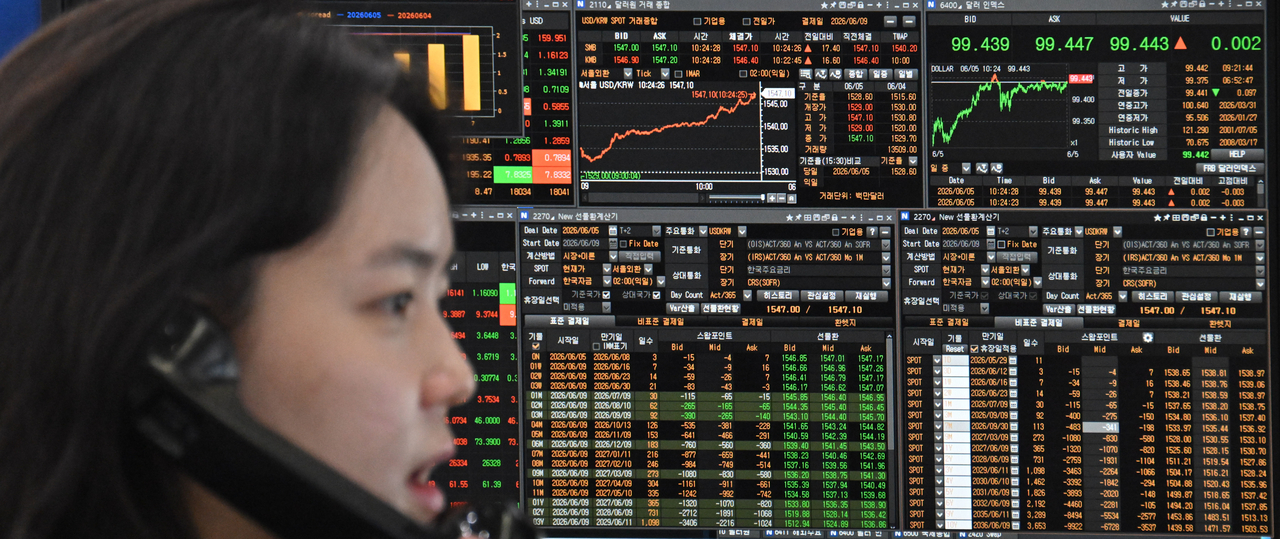
The Kospi, which had appeared poised to break through the 9,000-point mark, is now testing critical downside support. After an extended sell-off, a breach of the 8,000 level has come into view.
Analysts say Broadcom's earnings release and the imminent initial public offering of SpaceX weighed on investor sentiment, while a sharply rising won-dollar exchange rate accelerated foreign selling.
The Kospi closed last week at 8,160.59, down 315.56 points, or 3.72 percent, from the previous week. Early in the week, the index had climbed as high as 8,930 during trading, putting the 9,000 threshold within reach.
Expectations had built further on news that Nvidia CEO Jensen Huang planned to visit South Korea and meet with the heads of major conglomerates including LG Corp, Samsung Electronics, SK Group and Hyundai Motor Group.
Semiconductor stocks began to crack on Wall Street first. During Broadcom's fiscal second-quarter earnings call — held Wednesday morning Korean Standard Time — the company reported sales of $22.19 billion for the February-to-April period, up 48 percent from a year earlier but short of the consensus estimate of $22.27 billion. The disappointment deepened when Broadcom CEO Hock Tan declined to raise the company's AI semiconductor sales guidance for the fiscal year.
Tan said power infrastructure and ancillary facilities needed to run AI data centers were not being built as quickly as the market had expected, and that this was limiting the pace of sales growth.
The remarks ultimately fanned fears of an AI bubble, feeding directly into the sell-off.
Compounding the pressure were expectations that the US Federal Reserve could move to raise its benchmark interest rate, along with concerns that funds could rotate out of overheated semiconductor stocks ahead of SpaceX's Nasdaq listing as investors sought to free up capital.
The Kospi tumbled, with Samsung Electronics and SK Hynix falling 6.40 percent and 9.92 percent, respectively.
US markets also closed lower across the board amid a broad tech sell-off. The Philadelphia Semiconductor Index bore the brunt, dropping 10.26 percent, as AI-related stocks and chipmakers led losses.
Investors should remain alert to heightened volatility this week. Experts broadly expect the upward trend to resume over time, however. Wednesday is a key date to watch: Oracle's earnings, due in the morning, are seen as an important gauge of whether fears about peak AI investment are warranted, and the day also marks the simultaneous expiration of Korean futures and options contracts.
dlcw@heraldcorp.com