Selected for the Ministry of Interior and Safety and NIA's National Priority Data Opening Project, the initiative will expand access to urban rail data — including real-time car-by-car congestion levels and station 3D floor plans
Seoul Metro (President Kim Tae-gyun) announced that its "Subway Congestion and Safety Facility Data Opening Project" has been selected for the government's 2026 National Priority Data Opening Project, jointly run by the Ministry of Interior and Safety and the Korea Intelligence Information Society Agency (NIA). The agency said it will open urban rail data closely tied to citizens' daily lives to the private sector.
The National Priority Data Opening Project is a joint initiative by the Ministry of Interior and Safety and NIA aimed at identifying and releasing public data with high social and economic impact, supporting private-sector use, and building a digital innovation ecosystem grounded in open public data.
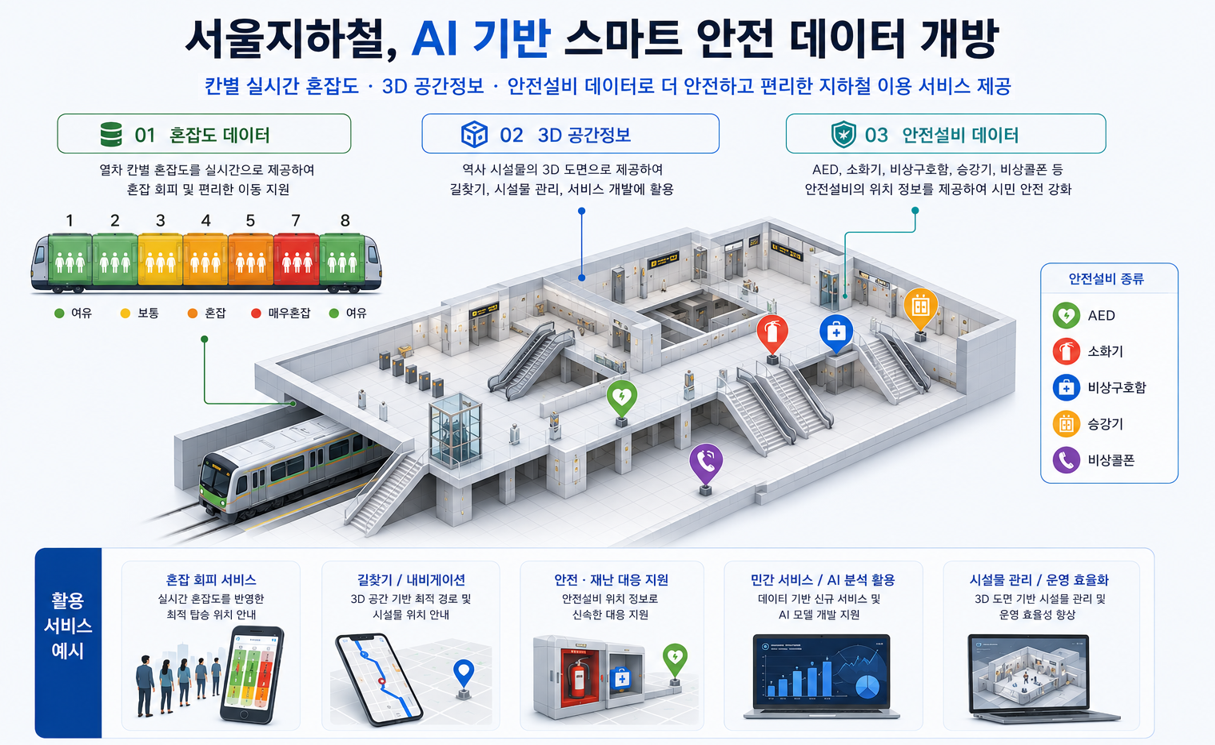
Through the project, Seoul Metro plans to release urban rail data in phases, covering real-time congestion levels by train car, station 3D floor plans, and the locations of safety equipment.
Real-time car-by-car congestion data can be linked with private-sector platforms to support the development of a range of transportation services. Station 3D floor plan data is expected to broaden the use of subway station spatial information for facility management and disaster response simulations. Safety equipment location data, meanwhile, is expected to support rapid response in emergency situations, helping protect public safety.
To that end, Seoul Metro is focusing on enhancing data usability by linking the newly released datasets with real-time Seoul subway usage information already available through the public data portal. The agency plans to collaborate with private companies, universities and research institutions to expand the public data ecosystem — going beyond simple data release to drive innovation in urban rail services and lay the groundwork for a wider range of services that improve citizen safety and mobility.
"We expect the release of subway congestion and safety facility data to generate a variety of urban rail services that citizens can directly experience," said Jeong Jong-yeop, head of Seoul Metro's management support division. "We will continue to pursue data-driven public service innovation by expanding open public data and encouraging its use in the private sector."
seouldream01@heraldcorp.com