Seoul Metropolitan Government's 'Loneliness Annyeong 120'
Eases social isolation through everyday conversation
40,000 calls logged in first year of service
Callers range from reclusive youth in their 20s to elderly in their 70s
'Rewarding to change lives through comfort and encouragement'
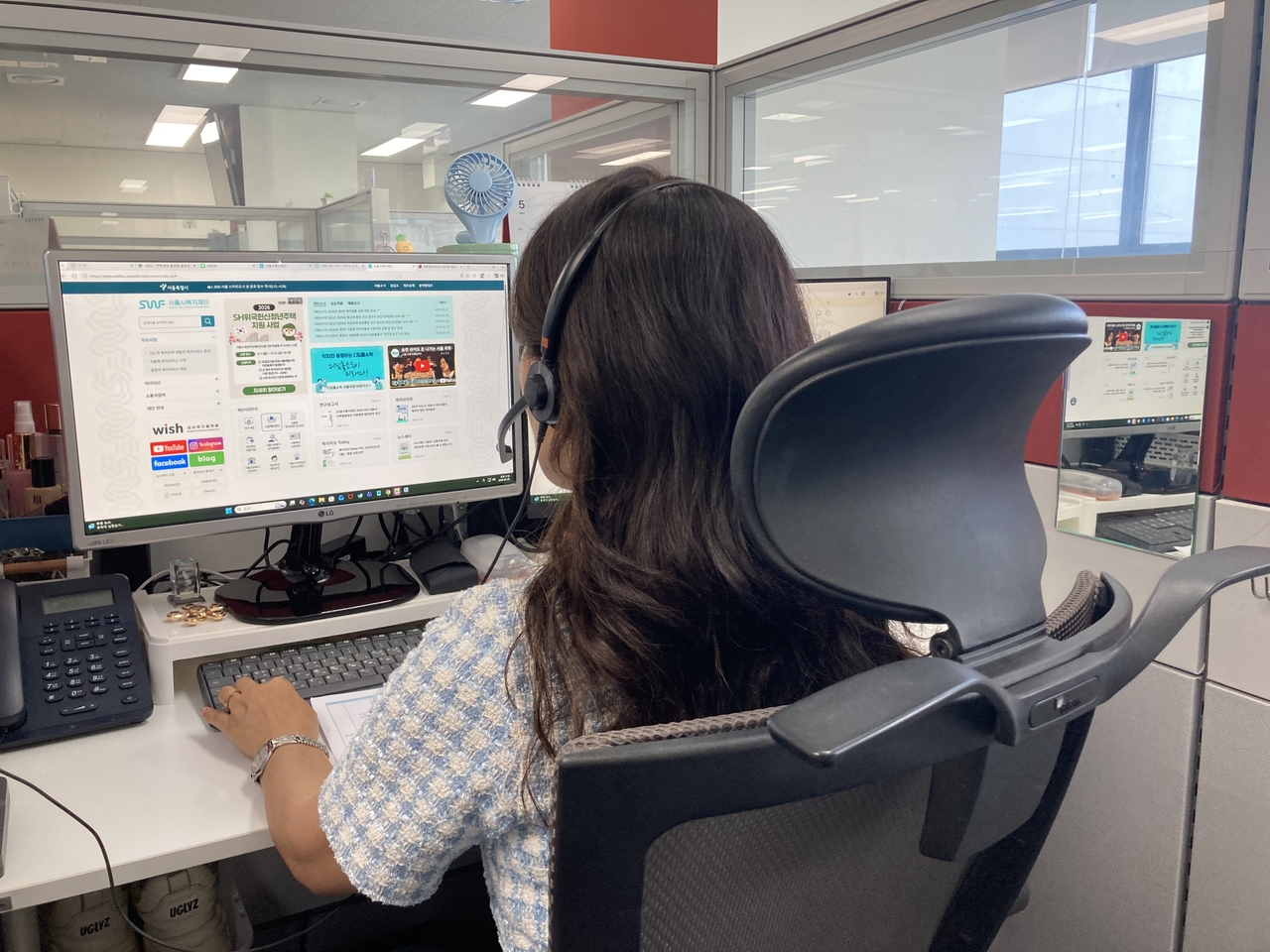
"Hello. This is Loneliness Annyeong 120. What brought you to call us today?"
" … ."
"Have you had anything to eat?"
"No, not yet … ."
"Please have a little something and step outside for a moment. The weather is beautiful today."
It is an utterly ordinary exchange — yet for some people, even this kind of small talk is out of reach. Whether by choice or circumstance, they simply have no one to call.
For those who lack a family member or friend to dial up on a lonely day, the Seoul Metropolitan Government launched Loneliness Annyeong 120 last year. The service is part of "Loneliness-Free Seoul," the city's comprehensive policy to address loneliness and social isolation. Anyone feeling lonely or in need of support can call the Dasan Call Center and be connected to a counselor for conversation and assistance.
To mark the service's first anniversary, the city published a counselor casebook in March titled "Stories of Loneliness Annyeong 120 Companion Counselors," featuring accounts from 16 counselors who have worked with residents.
Kim Seung-mi (54, pseudonym), a Loneliness Annyeong 120 counselor, recently sat down to share what callers confide in her — and what the work means to her. At her request, a pseudonym was used in place of her real name.
Kim spent many years in the financial sector handling credit operations. Long interested in social welfare, she took a contract position at a local dementia care center after retiring several years ago and found deep satisfaction in helping others. Early last year, she came across a job posting recruiting counselors for Loneliness Annyeong 120. "When I saw the posting, I thought, 'This was made for me,' and applied right away," she said. "After an interview and 10 days of training, I started on April 1 last year."
The Loneliness Annyeong 120 call center currently employs 17 counselors, who work in three shifts — morning (8 a.m. to 5 p.m.), afternoon (1 p.m. to 10 p.m.) and overnight (10 p.m. to 8 a.m.) — to keep the line staffed around the clock. Kim works the morning shift.
She handles 13 to 14 calls a day. The callers span a wide range: reclusive youth in their 20s, middle-aged breadwinners who have lost their jobs, and people in their 70s whose children have grown and moved away.
"Loneliness Annyeong 120 is not simply an information service — it is a place to empathize with people's feelings and offer comfort," Kim said. "Every caller has a different story depending on their age, occupation, circumstances and worries." She added that the service cannot be delivered by memorizing a script, but that one thing all callers share is a sense of not being recognized — whether at home or at work — and feeling diminished as a result.
"When someone's confidence has fallen that low, the first words matter most," she said. "Rather than forcing them to open up about their problems, I start with something anyone can relate to — the weather, whether they've eaten — and try to gently open the door."
Among her many calls, one involving a middle-aged man stands out. "A divorced man in his 50s called and said he wanted to die — he had injured his leg in a traffic accident and everything had piled up," she recalled. "He said he was too tired even to cook and ordered delivery food every day, so I told him: 'Please don't keep relying on delivery. Seaweed soup or bean sprout soup are very easy — try making one yourself.'" The man began cooking, gradually found a reason to keep going, and slowly started re-engaging with the world. He eventually found a job. Kim said it was the moment she felt most clearly that a word of comfort and encouragement can truly change a life.
Kim recalled another call that stayed with her. "A young person who had cut off contact with their parents and friends because they couldn't find work called in," she said. "I didn't try to offer solutions — I just encouraged them the way an older sister in the neighborhood might. Then one day they called back to say they had finally landed a job and wanted to say thank you."
"We've never seen each other's faces, but it seems like a few words of comfort helped someone keep going. That's what makes this work meaningful."
Still, fielding calls from strangers means occasionally receiving difficult ones. "Some people call Loneliness Annyeong 120 to vent about something unfair that happened to them elsewhere," Kim said. "They're not directing insults at us directly, but listening to harsh language for an extended period takes a mental toll."
When a call like that comes in, Kim presses the "away" button and removes her headset. "I step out of the office for a moment, take a walk in a nearby park or have a warm cup of tea to settle my mind," she said. "At first my heart would pound and I dreaded picking up the next call, but callers like that are a very small minority. Most people just want to talk about their loneliness, and my role is to listen and offer comfort."
That comfort is clearly something many callers crave. "One person called in the morning on the way to a welfare center to ask for some encouraging words, then called again in the afternoon saying they were feeling down and wanted to hear something cheerful," Kim said. "Some people call 20 or 30 times in a single day."
Each Loneliness Annyeong 120 session is capped at 30 minutes, but there is no limit on the number of calls. To ensure more residents can access the service equitably, the city plans to cap calls at five per phone number per day.
Kim said loneliness is not confined to people who live alone, such as single-person households or elderly residents without family. "Through counseling, I've come to see that people living perfectly ordinary lives also feel lonely — at home, at work," she said. "Loneliness is an emotion that can come for anyone, like a common cold. If you feel even a little lonely, or if something is weighing on you and you have no one to ask, please don't hesitate to call Loneliness Annyeong 120. Sharing that feeling with someone will leave you feeling much more at ease."
Loneliness Annyeong 120 launched in April last year and logged a cumulative 40,000 counseling sessions by the end of March this year, its first anniversary, averaging 125 calls a day, according to the Seoul Metropolitan Government. By age group, the heaviest users were people in their 40s through 60s, who accounted for 77.6 percent of calls. Youth callers made up 18.8 percent and have been consistently growing.
The vast majority of users — 81 percent — said they turned to the service because they needed someone to talk to about their loneliness, and most said they felt comforted after their session. User satisfaction rated 4.6 out of 5. The city is considering expanding the service in the second half of this year by relocating it to a dedicated space called "Seoul Itda Place" (working title), a hub for residents experiencing loneliness and social isolation, where in-person counseling would also be available.
ikson@heraldcorp.com