A field report from Hsinchu Science Park, Taiwan's Silicon Valley
TSMC anchors a dense cluster of semiconductor materials and equipment firms
When problems arise, suppliers converge within 30 minutes to find solutions
No house brands — yet an indispensable link in the global supply chain
An entrepreneur's mindset, not a manufacturer's, drives the ecosystem
Horizontal competition and cooperation fuel a distinctive business culture
"When a problem arises, we can call together semiconductor design engineers, equipment makers and materials suppliers — all within 30 minutes."
Lin Hong-wen, an adviser at Taiwan's business weekly Jinzhoukan who has covered TSMC for more than 30 years, named "collaboration" as the secret behind TSMC's success.
On June 4, a visit to Hsinchu Science Park — about an hour's drive from Taipei — revealed more than 10 TSMC factories clustered together, including fabs running cutting-edge 2-nanometer processes as well as 6-, 8- and 12-inch fabs.
Spread across roughly 15 square kilometers — an area comparable to Seoul's Dongdaemun-gu, where 1 pyeong equals 3.3 square meters — the park is home to more than 600 companies spanning the semiconductor supply chain. They include fabless chipmaker MediaTek, foundry UMC and equipment maker Tokyo Electron (TEL), all orbiting TSMC at the center. The workforce alone numbers 170,000, earning the park its reputation as Taiwan's Silicon Valley.
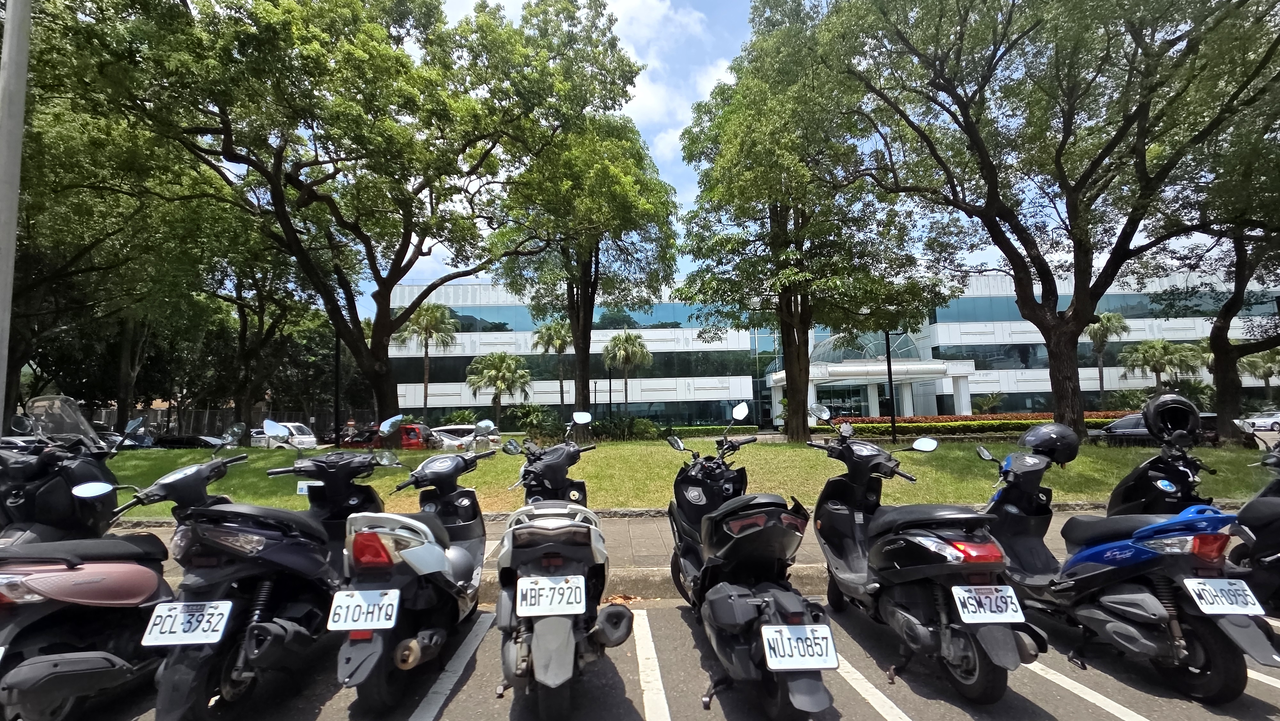
Throughout the park, engineers in color-coded lanyards zipped between buildings on scooters. Lin said geographic proximity is key. "If a problem occurs on a TSMC production line, we can quickly determine whether it is a design error, a materials defect or an equipment issue — and then rapidly bring everyone to the same table," he said.
He went on to say that Taiwan's semiconductor ecosystem is not driven by a single large conglomerate like TSMC but by a coalition of small and medium-sized enterprises. "Small companies have a distinctive entrepreneurial spirit. If the company doesn't grow, everything is on the line — so they fight for it with everything they have," he said. "TSMC and its partners all share the same founder's mindset. They serve as each other's suppliers, maintaining a horizontal supply chain."
Yang Shang-da, chair of the electrical engineering department at National Tsing Hua University in Taiwan, said the country's semiconductor industry has developed over many years on the foundation of small and medium-sized enterprises, taking on what he called a "modern European style" in which multiple mid-sized firms compete while also cooperating. "Ultimately, this kind of ecosystem promotes efficiency, collaboration and competition," he said.
He also said most Taiwanese engineers come from National Tsing Hua University, National Chiao Tung University or National Taiwan University, giving them strong personal networks even before entering the industry. "Even when working at different companies, they can communicate closely with one another, and knowledge and technology flow easily within the semiconductor ecosystem," he said.
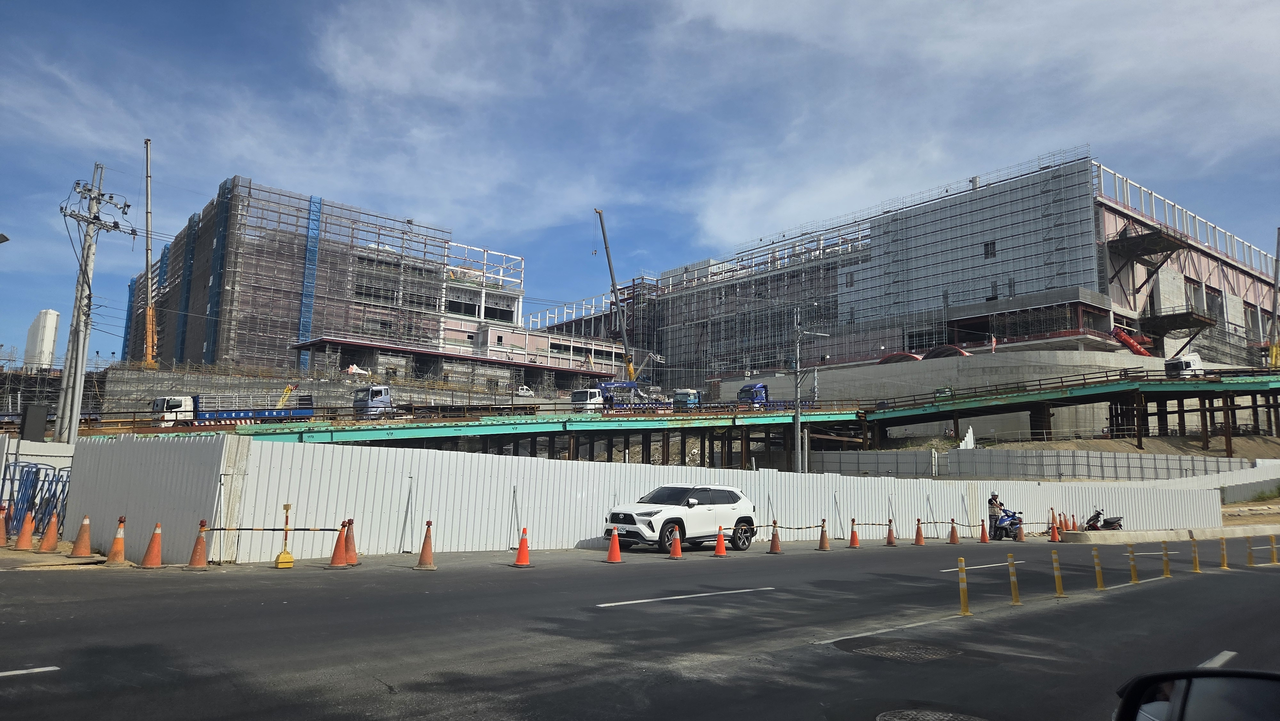
Full state backing has also been a powerful pillar of TSMC's strength. At the entrance to Hsinchu Science Park, construction was still underway on Fab 20 — the 2-nanometer-focused facility whose construction began in 2022 and which began partial operation in the second half of last year. Power transmission towers built specifically for TSMC were visible throughout the park.
To prevent production disruptions, the Taiwanese government exempts Hsinchu Science Park from rolling blackouts even during large-scale power outages. Given that TSMC alone consumes 8 to 9 percent of Taiwan's total electricity, the company sits at the top of the priority list when the government draws up plans to expand national power infrastructure.
According to the Korea Center for International Finance, Taiwan ranks first or second globally in all three major semiconductor processes — design, production and back-end processing. Its foundry market share stands at 71.2 percent, far ahead of South Korea's 9.8 percent.
Underpinned by this robust semiconductor ecosystem of small and medium-sized enterprises, Taiwan's per capita GDP is projected to reach $42,103 this year, making it the first to surpass the $40,000 threshold ahead of South Korea. South Korea's per capita GDP forecast for this year stands at $37,412. South Korea had led Taiwan for 22 consecutive years since 2003 but was overtaken for the first time last year, and the gap is expected to widen further. Taiwan's economic growth rate of 9.6 percent is also projected to far outpace South Korea's forecast of 2.6 percent.
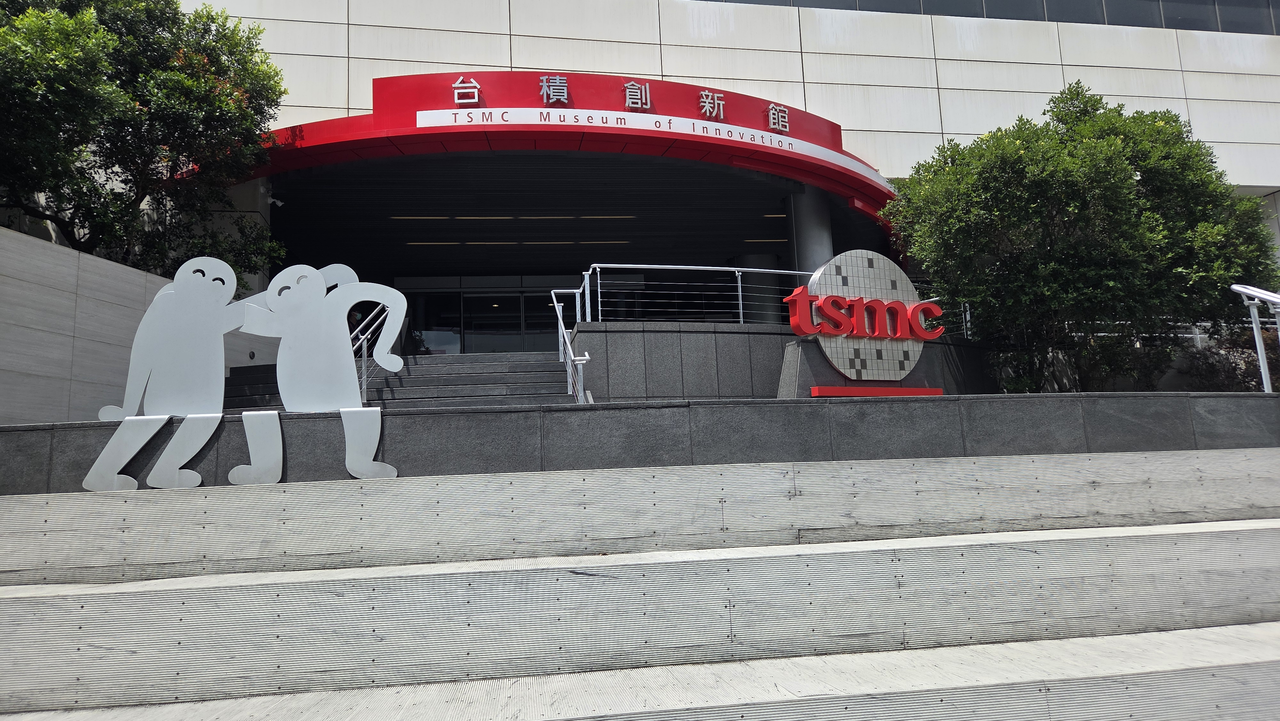
The spirit of collaboration was on full display at the TSMC Museum inside Hsinchu Science Park, visited on June 4, where the principle of "never competing with customers" was woven into every exhibit.
A museum official explained that before TSMC existed, IC innovation came from integrated device manufacturers, or IDMs, which handled everything in-house — IC design, technology development, global production and product sales. "But TSMC focused on technology development, building a design ecosystem and wafer production, and did not compete with its customers," the official said. "Once TSMC took over manufacturing, fabless design houses could emerge, triggering a massive wave of innovation."
The official added that TSMC's mission going forward is to remain a trusted provider of technology and manufacturing capabilities for the global logic IC industry.
R&D investment has grown steadily alongside that ambition. The R&D workforce, which started at 140 people in 1995, grew more than sevenfold to 9,994 by 2024. Spending followed the same trajectory: from $28 million (about 43.6 billion won) in 1995 to $6.361 billion (about 9 trillion won) in 2024 — a 227-fold increase in roughly 30 years.
On the strength of that investment, TSMC has declared it will formally usher in the so-called "angstrom era" of sub-1-nanometer technology next year. The company has confirmed a roadmap calling for a 1.6-nanometer (A16) process — a midpoint between 2nm and 1.4nm — next year, followed by 1.4-nanometer (A14), 1.3-nanometer (A13) and 1.2-nanometer (A12) processes in 2028.
The museum also highlighted TSMC's turnkey, one-stop solution, which covers four areas: design support, mask fabrication services for lithography processes, wafer manufacturing, and 3D packaging and testing across both front-end and back-end processes.
In a video interview, TSMC founder Morris Chang outlined four core values: integrity, commitment to customers, innovation and customer trust. "If a company wants to grow and succeed, it must innovate constantly," he said.
Lin, the adviser, said Morris Chang has long insisted that foundry is a "service industry," not a manufacturing one. "It is not enough to be ahead in technology alone — you must provide perfectly tailored service until the customer is genuinely impressed," Lin said.
He went on to explain that Taiwan's semiconductor ecosystem produces no house-brand products of its own. "That is precisely why it can earn the full trust of American big-tech companies without any conflict of interest," he said. "The more trust accumulates, the more customers are willing to place larger orders and entrust their most advanced technology to Taiwan."
From Hsinchu, Taiwan — Park Ji-young
go@heraldcorp.com