
CEO speaks to press at KES 2026 at COEX
Glass substrate supply seen possible in 2028
Robot sector still in global R&D stage, he says
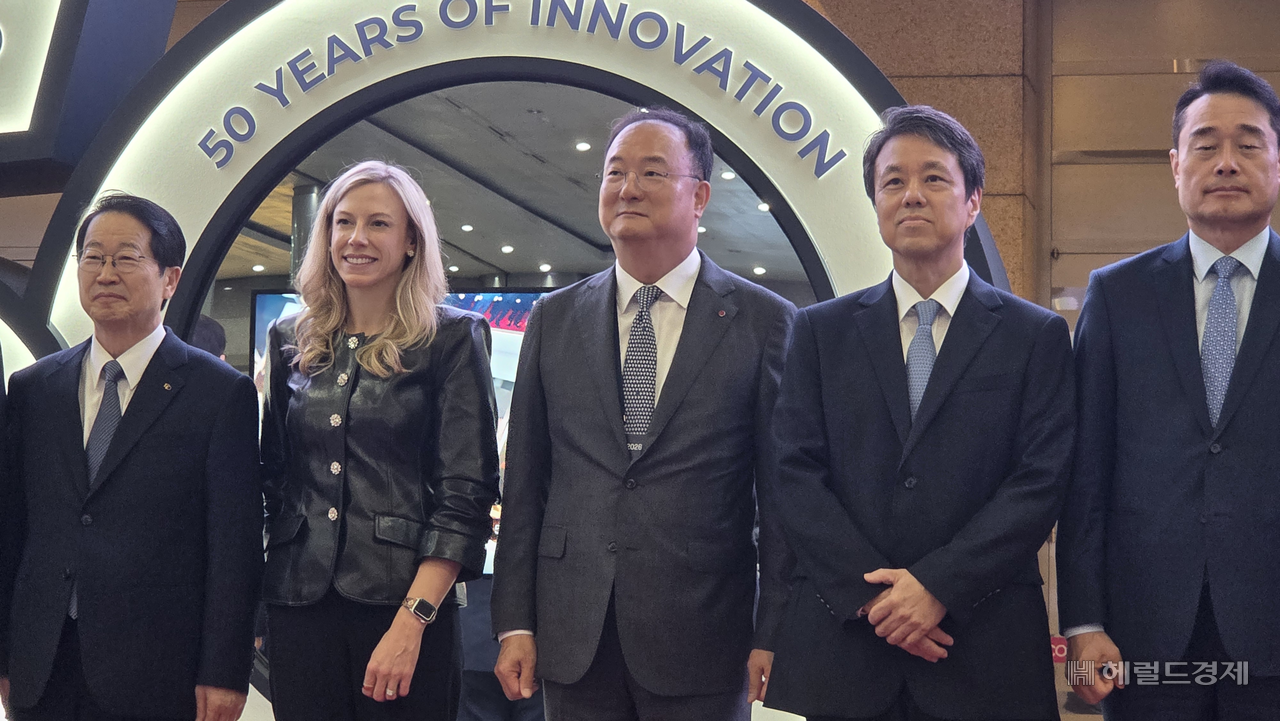
LG Innotek CEO Moon Hyuk-soo said the company's flip-chip ball grid array (FC-BGA) business will begin to improve next year, driven by growth in the AI semiconductor market. Moon made the remarks amid ongoing long-term supply agreement negotiations with major global customers, and said the company expects to supply glass substrates — a next-generation semiconductor packaging material — around 2028.
Moon told reporters on the sidelines of the Korea Electronics Show (KES 2026) at COEX in Gangnam-gu, Seoul, on Tuesday that long-term agreement talks were continuing. "LTA negotiations are ongoing, and things will get better starting next year," he said.
Asked about the customers involved, Moon said only that they were "companies everyone knows," declining to name them or give a timeline for when deals would be signed.
LG Innotek has been expanding its FC-BGA customer base, focusing on major global technology companies. In June, the company said it was in detailed discussions with two key customers on long-term supply agreements and additional investment plans. It is also pursuing a capacity expansion aligned with customers' long-term volume commitments.
FC-BGA is a high-density package substrate that connects semiconductor chips to main circuit boards, and is used in high-performance chips for AI servers, central processing units and GPUs. LG Innotek is shifting its focus from PC substrates toward higher-value products for servers and AI accelerators.
According to industry sources, a single data center uses roughly 170,000 FC-BGA substrates. With only a handful of companies capable of producing FC-BGA, LG Innotek is expected to benefit from the ongoing expansion of data centers. KB Securities projected that LG Innotek's FC-BGA sales would grow from 140 billion won ($105 million) in 2026 to 2 trillion won by 2030 — a 14-fold increase in four years.
Moon had earlier signaled his commitment to expanding investment in the semiconductor substrate business at CES 2026 in Las Vegas in January. At the time, he said the company intended to prioritize profitability over volume. "We have confidence in both the technology and mass production capabilities for substrates, and demand is holding up, so we plan to focus on expanding our customer base and scaling up production capacity in earnest," he said.
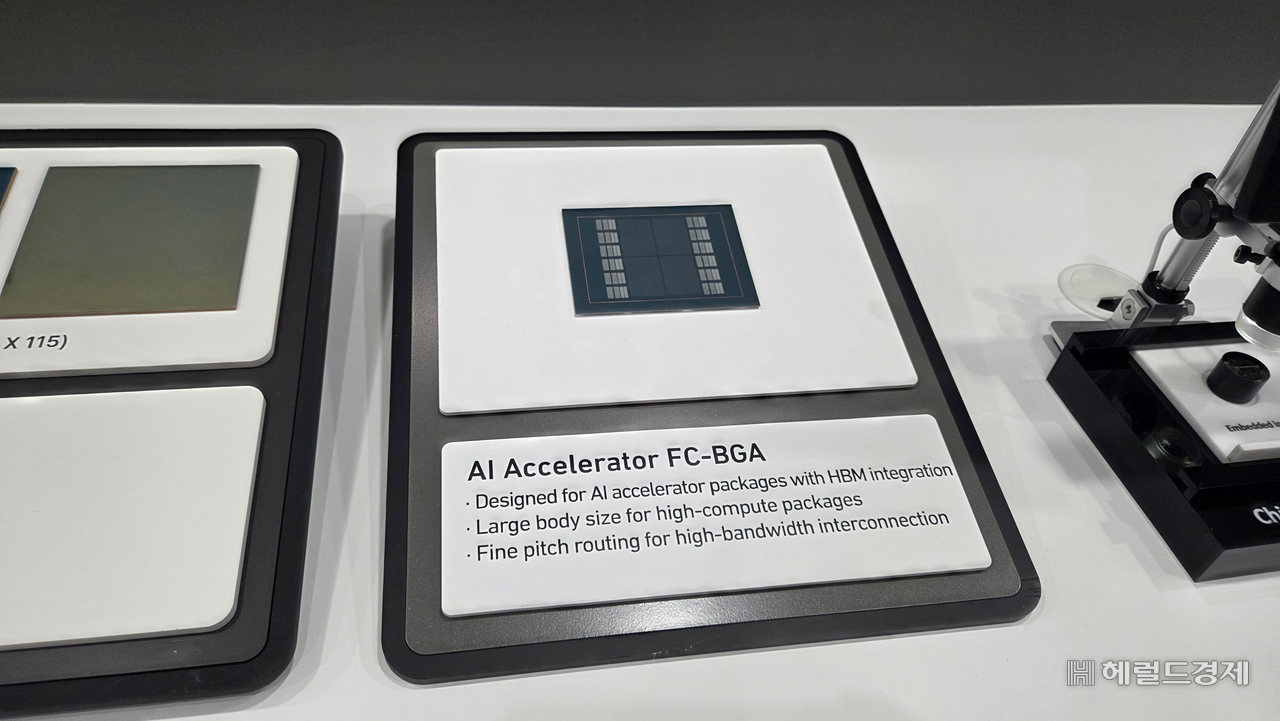
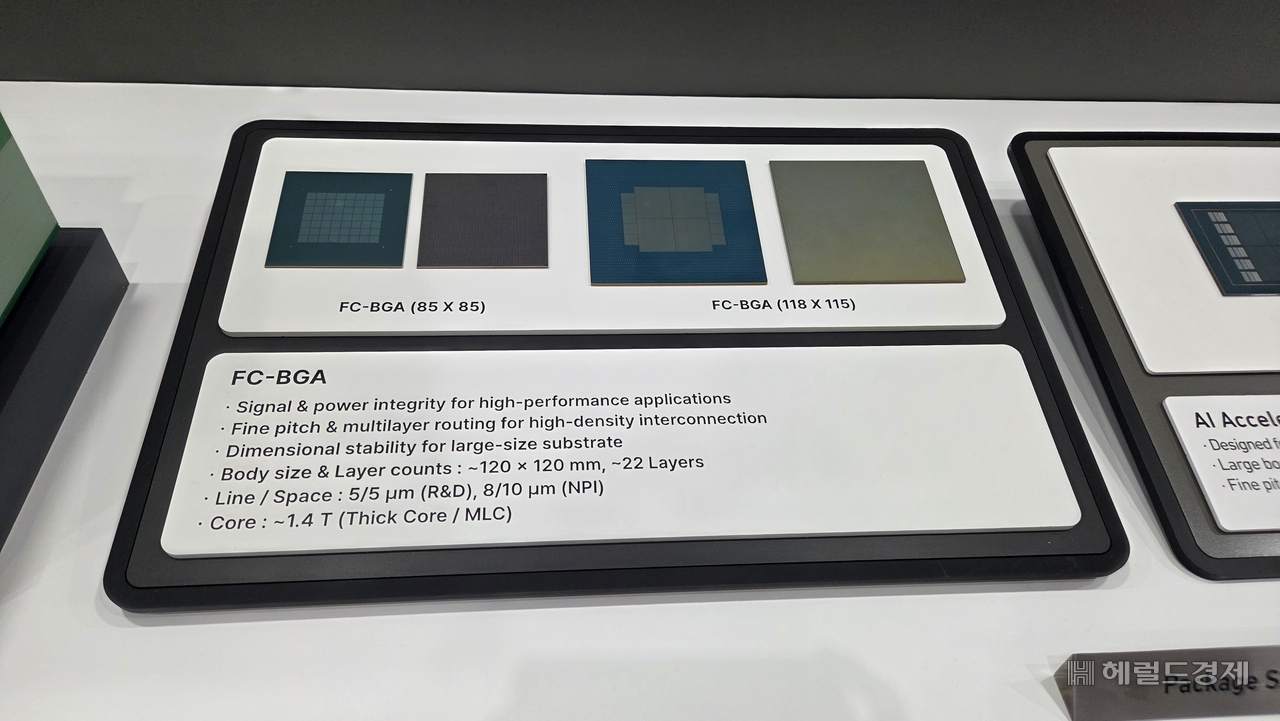
LG Innotek debuted a large-area FC-BGA for AI accelerators at an international semiconductor substrate and advanced packaging industry exhibition held in Songdo, Incheon, in September. The company aims to begin mass production of high-value FC-BGA substrates for AI training and inference from 2027.
Development of glass substrates — a business the company is cultivating as a future growth driver — is also continuing. Moon said Tuesday that a pilot production line had been set up and was operating in Gumi, and that supply would "likely be possible around 2028." He added that the technology was still in the development stage, not yet at the supply stage.
At CES 2026 in January, Moon outlined the glass substrate roadmap, saying product development was complete but that challenges remained in securing mass-production viability, including improving productivity and developing inspection technology.
He said small-volume supply could begin sooner, but that "meaningful numbers" would not materialize until after 2028, while cautioning that global demand had not yet reached a level that could absorb the full production capacity of a single manufacturer. He projected that full-scale demand growth, taking into account competing technologies and market conditions, could come around 2030.
On the robot business, Moon struck a cautious tone, saying the sector was "still in the R&D stage globally." LG Innotek has already begun mass-producing some components for robots, however, and Moon noted at CES in January that robot-related parts were generating sales of "a few tens of billions of won, though still small."
LG Innotek has been restructuring its business portfolio around high-value semiconductor substrates, and its earnings have improved as a result. Second-quarter consolidated sales reached 5.53 trillion won, up 40.5 percent from a year earlier. Operating profit for the same period jumped to 245.8 billion won, a 2,057.2 percent increase year on year.
The Package Solution division, which handles the semiconductor substrate business, posted second-quarter sales of 498.4 billion won, up 20 percent from a year earlier. For the first half of the year, cumulative sales reached 935.6 billion won and operating profit came in at 99.6 billion won, up 18 percent and 94 percent, respectively.
LG Innotek aims to grow its Package Solution business into a 1 trillion won operating profit operation by 2031 by expanding the supply of high-value substrates for AI semiconductors.
go@heraldcorp.com





