Welfare monitoring continuously strengthened — now covering households that cannot be reached or confirmed as residing at their address; monitoring up 28% and crisis household identification up 30% from last year
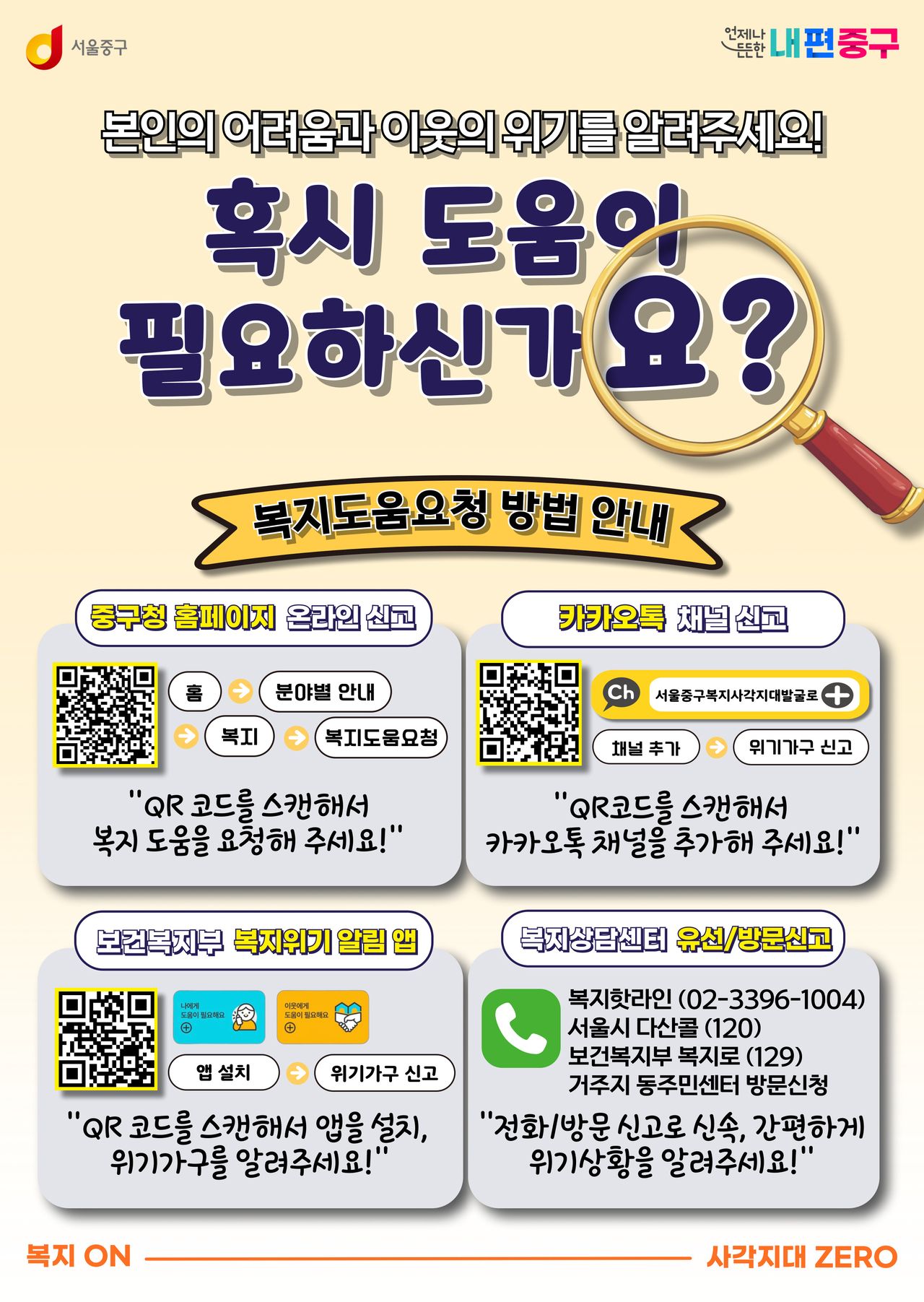
Seoul's Jung-gu district is stepping up efforts to close gaps in its welfare safety net amid growing concern for vulnerable residents as persistently high energy and consumer prices weigh on household finances.
The district has expanded its welfare monitoring pool and moved to deliver emergency welfare support more quickly as part of a drive to build a tighter social safety net. As of the end of May, the number of people under monitoring was up 28 percent from a year earlier, while the number of crisis households identified rose 30 percent.
Jung-gu has consistently strengthened welfare monitoring to catch households in crisis early. Since 2023, the district has applied its own criteria to include people whose basic livelihood support was suspended or terminated, as well as those who had completed emergency welfare assistance. This year, it extended that scope further to cover households that are difficult to reach or whose current residence cannot be confirmed.
Those efforts have produced results. In the first half of last year, the district monitored 82 households and identified 31 in crisis. This year it has moved faster, reviewing 105 households through the end of May and identifying 40 in crisis. Households identified as being in crisis receive tailored support through a combination of public welfare programs and private resources. For residents who do not qualify for statutory welfare benefits or who face a sudden emergency, the district's "support first, investigate later" emergency welfare system has proven particularly effective.
A 76-year-old resident surnamed A, who lives alone in Dasan-dong, applied for basic livelihood support in January but was not selected as a recipient. She needed cardiovascular surgery but had no way to cover the medical costs. During a monitoring visit in February, Jung-gu confirmed her situation and provided 3 million won (approximately $1,980) in emergency medical assistance.
Alongside this, the district connected her with private resources — including donations from the Community Chest of Korea and contributions of daily necessities — to help stabilize her finances. "I felt helpless after not being selected as a recipient, but the quick support made a huge difference," she said.
The emergency welfare system is designed to provide rapid support to households that can no longer sustain their livelihoods due to unforeseen crises such as job loss, business closure or suspension, or illness and injury. Through the end of May, Jung-gu delivered emergency welfare support in 367 cases totaling 385 million won to help residents through such crises.
Jung-gu said it will continue to expand welfare monitoring while actively linking public and private resources to strengthen support for households in crisis.
"As more residents may face financial hardship from high energy and consumer prices, we will build a tight welfare net so that no one falls through the cracks," district mayor Kim Gil-sung said.
seouldream01@heraldcorp.com