"Taste Discovery" is a column that reveals your cultural preferences — even the ones you didn't know you had. It offers cultural insights that are easy to skip but surprisingly useful once you know them.
This article was published in HeraldDeep, a members-only content service of The Herald Business. Subscribers can also access the latest cultural trend coverage.
!["The Ring" [Toho]](https://wimg.heraldcorp.com/news/cms/2026/06/11/news-p.v1.20260611.f26a1353952e4181bba1597e93a57c04_P1.jpg)
The protagonist ventures alone into an empty space in search of a missing friend. Soon, an unsettling sound begins to burrow into the ears. Even the vast, dark silence offers no comfort. The only remaining question is when, where, how, and what will leap out. Sensing the moment is near, you slowly raise a hand to cover your eyes. No matter how many times it has happened before, the only defense still available is to shield a heart that flutters as fragile as ever.
"I nearly died of fright."
There is a world where "fear" and "death" meet in a single sentence and become the highest praise — where screams become cheers and breathtaking terror stands in for applause. That world is the horror film. The definition is simple: a film made with the purpose of frightening its audience. Whether it raises goosebumps, turns the stomach, stops the heart, or delivers a shock that leaves viewers speechless, horror has long been one of the most beloved genres among moviegoers.
Fear is not, in fact, a positive stimulus. It usually comes with discomfort. Instinctively, people avoid dark alleys and flinch at suspicious sounds — avoiding fear is the natural impulse. Inside a theater, however, the calculus changes entirely. People pay to hope a ghost will jump out, to want a killer lurking in the shadows, to count down to the moment they will be startled. Philosophers have long called this the "Paradox of Horror." It is the starting point of a question: how can an emotion we are supposed to flee become a source of pleasure?
!["The Shining" [Warner Bros.]](https://wimg.heraldcorp.com/news/cms/2026/06/11/news-p.v1.20260611.0957c0cb645348219266a382969560be_P1.jpg)
Some might ask: why voluntarily subject yourself to psychological distress? That may well be the more natural reaction to horror. But what is undeniable is that every era has had audiences who sought out horror films — and so horror films have always existed. A well-made horror film startles its audience, earns their admiration, and ultimately delivers genuine pleasure. This column begins precisely at that strange, contradictory point. Why do we watch horror films at all? If comedy gives us laughter and romance gives us excitement, what does horror leave behind?
From 'Whispering Corridors' to 'The Wailing' and beyond
Korean cinema reached two landmark moments this year before the first half had even ended. One was "The King's Warden" crossing 16.8 million admissions; the other was "Salmokji: Whispering Water" claiming the all-time box office record for a Korean horror film.
"Salmokji: Whispering Water," inspired by a reservoir ghost legend, drew a final total of 3.23 million admissions — surpassing the record held for more than two decades by the previous champion, "A Tale of Two Sisters." The film's success was more than a box office milestone: it confirmed that horror is no longer a niche genre in Korea.
!["Salmokji: Whispering Water" [Showbox]](https://wimg.heraldcorp.com/news/cms/2026/06/11/news-p.v1.20260611.a3f9f4a7aa264d278d4cd38153f77ec5_P1.jpg)
Horror's grip on Korean theaters remains strong as of June 2026. Director Yeon Sang-ho's zombie film "Colony" is closing in on 5 million admissions, while "Backrooms," an A24 horror film that opened late last month, has held a top position at the box office ever since. Also waiting in the wings for the summer season are "Gentleman: Whisper of the Demon," led by actor Kim Jae-joong, and "Eyes," starring Shin Min-a — both generating anticipation on the strength of their leads alone. The season of fear has only just begun.
As with much of cinema, the history of modern horror is largely the history of Hollywood horror. The genre took shape as a distinct category when monster films such as "Dracula" (1931) and "Frankenstein" (1931) succeeded in the 1930s, and it grew into a full-fledged era of horror through Alfred Hitchcock's "Psycho" (1960), "The Exorcist" (1973), "Scream" (1996), and beyond.
As the 1990s gave way to the 2000s, Japanese horror carved out its own distinct current — J-horror — with "Ring" (1998) at its center. Just as Sadako was rising to become an icon of world horror cinema, another character stepped in to claim that mantle: Toshio, from "Ju-On" (2002).
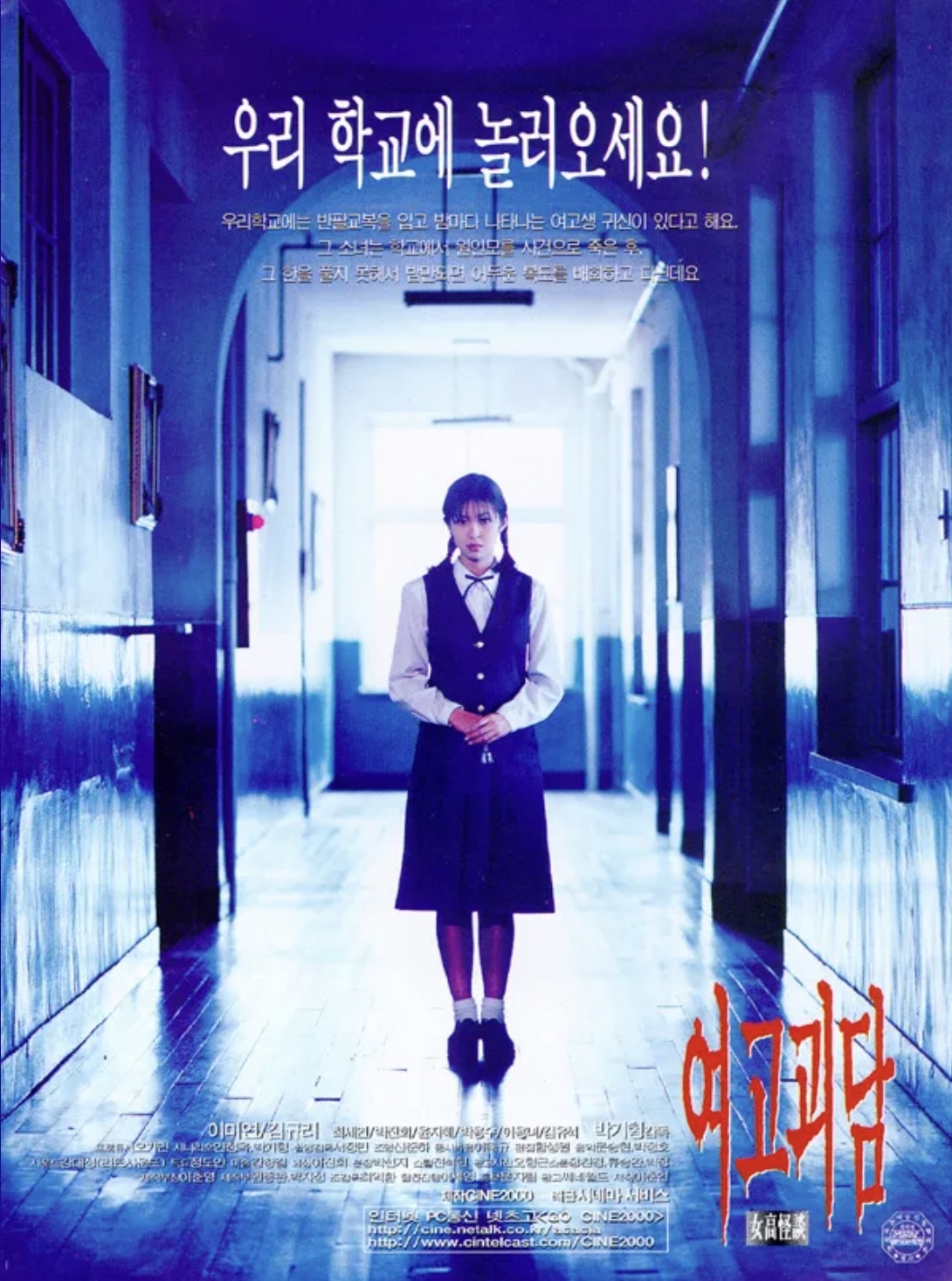
The arrival of "Ring" coincided almost exactly with the start of a Korean horror renaissance. After decades in which Korean horror had barely advanced beyond the level of summer TV specials — following "Graveyard Under the Moon" (1961) — "Whispering Corridors" appeared in 1998 and changed everything. Its enormous success in opening up the unexplored territory of school ghost stories completely transformed horror's standing in Korean cinema. It was also the moment horror became the defining product of summer at the box office.
Over the following decade, a string of Korean horror classics emerged that are still discussed today — "Phone" (2002), "A Tale of Two Sisters" (2003), "The Red Shoes" (2005) and "Ghost House" (2007), among others. Horror lost much of its momentum entering the 2010s, but found a turning point in 2016 when Na Hong-jin's "The Wailing" drew 6.8 million admissions. The expansion that film triggered — horror reaching into the occult, mystery and drama — has continued through "The Medium" (2021) and "Exhuma" (2024). "Exhuma" in particular shattered what had been considered the ceiling for horror at the box office by crossing the 10-million-admission threshold.
It was "Gonjiam: Haunted Asylum" (2018) that opened the door to experiential horror — a mode focused on fear itself rather than narrative. The film drew aggressively on the new media environment of YouTube livestreams and internet broadcasting, turning horror into something consumed like real-time, on-the-ground content. "Salmokji: Whispering Water," which follows a camera crew chasing a reservoir ghost legend, is widely seen as a smarter and more refined extension of the path "Gonjiam" laid down.
'What exactly are you?' — the pleasures of horror

What drives the evolution of horror films? Stephen King — widely known as the "King of Horror," and yes, the same person who called Donald Trump's very existence a form of horror — addresses this in his book "Danse Macabre."
"The horror movie doesn't want to just wander around. It wants to get you. There are films that have the power to reduce us to a quivering, jelly-like state — like Tod Browning's 'Freaks' (1932) — and make us mutter to ourselves, 'Please, just let the movie stop.'"
King's words capture the essence of horror films better than most definitions. A horror film is both a threat and a challenge — it declares its intention to startle you, make you shrink, and freeze you in place. And yet audiences willingly accept that challenge, and find pleasure in it. This is where film theorist Noël Carroll's "Paradox of Horror" enters the picture.
Carroll argues that the emotions generated by horror films are primarily responses to monsters — a category that includes demons, aliens, dinosaurs, evil spirits, and any being that defies scientific explanation. What matters, he says, is that these creatures do not simply provoke fear; they simultaneously trigger a powerful curiosity about what they are. That is where Carroll finds his answer to why people seek out horror. Films present something that cannot be rationally explained, and audiences derive pleasure from pursuing that mystery until it is finally resolved.
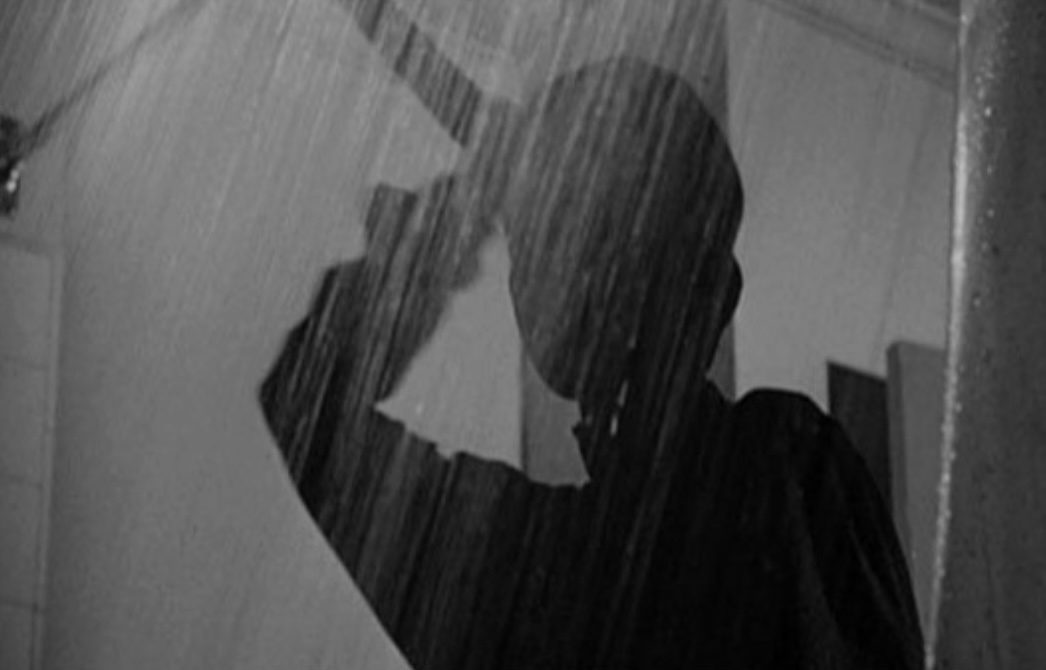
Many films have made full use of this structure — aroused curiosity followed by the revelation of identity. In "Scream" (1996), the defining slasher horror film, the killer's existence is established early, but identity and motive are withheld until the final act. "A Nightmare on Elm Street" (1984) introduces Freddy early as well, yet the full revelation of his nature is saved for the latter half.
Carroll's theory, however, does not account for every reason people enjoy horror. We also find excitement and fun in fear that contains no mystery at all — bungee jumping and roller coasters, for instance. Austrian clinical psychologists Linda Gilmore and Marilyn Campbell produced research showing that children broadly tend to enjoy the fear generated by horror films, games and thrill rides, suggesting that being drawn to fear may be just as instinctive as avoiding it.
Kazuhisa Todayama, a professor in the Graduate School of Informatics at Nagoya University in Japan, explores why we enjoy fear in his book "Horror Sapiens," building on the theory that fear is fundamentally a physical response. When fear strikes, adrenaline surges, the sympathetic nervous system activates intensely, and the body enters a heightened state of arousal. Todayama argues that what audiences seek from horror films is precisely this kind of arousal — a jolt that cuts through the numbness of everyday life. Horror films, in his view, are devices for waking us from the anesthesia of routine.
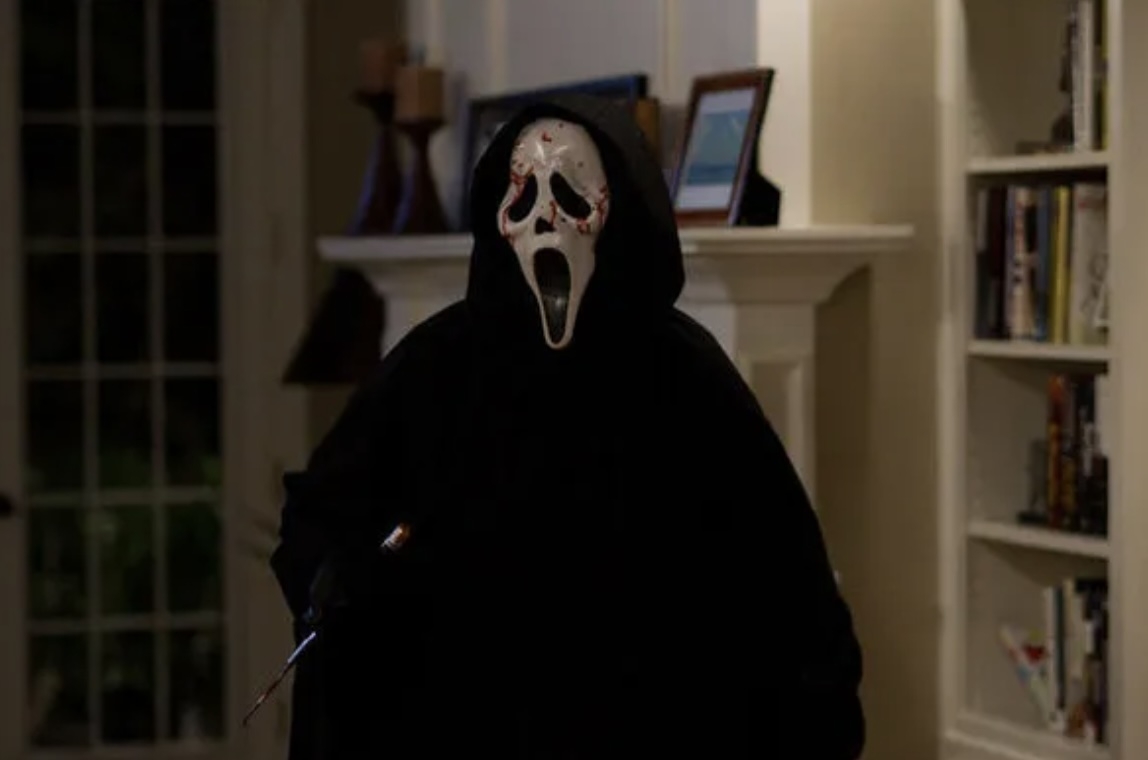
"Modern life offers too few opportunities to feel genuine fear," Professor Todayama said. "We sometimes need to enter this state of arousal." He supplements the point with a remark from Hitchcock, the master of suspense.
"We have already lost our instinctive ability to get goosebumps. Our goal is to give people a shock that is actually good for them." — Hitchcock
There is also a view that the pleasure felt after watching a horror film resembles the relief of waking from a nightmare. The idea is that we walk into the darkness of a theater hoping for a bad dream — because when that bad dream ends, ordinary life looks far better by comparison. The fact that so many horror films connect to death, the most primal of human fears, raises a reasonable suspicion that the genre carries some sustaining force for people who must go on living regardless.
King addressed this directly. "Horror movies don't love death," he wrote. "Horror movies love life. They sing of healthy vitality by emphasizing deformity. By showing us the damned and the miserable, they help us rediscover the small joys in our own lives."
From monsters to reality — what makes a 'good' horror film?

Just as not every film delivers entertainment and emotional resonance, not every horror film guarantees a frightening, thrilling, or cathartic experience. Making fear work effectively is far from simple. Expensive computer graphics and elaborate makeup are not enough on their own. Something beyond them — some special, harder-to-define quality — is required.
King explains it this way in "Danse Macabre":
"Good horror is a story that uses fictional events to help us understand the true fears lurking deepest in our minds. The reason horror appeals to us is that it says directly what we are afraid to say, and keeps on barking."
Horror films function not merely as stimulation but as a mechanism for surfacing the anxieties buried deep within the human psyche. Theorists argue that horror reflects real-world fears — that just as creative works tend to mirror the conditions and mood of their era, horror films project the anxieties and dread that a given society carries within itself.
This tendency is clearly visible in recent horror. Today's horror films no longer confine themselves to ghost stories. Films such as "Get Out" (2017), which translates racial discrimination into horror, and "Hereditary" (2018), which works through inherited trauma and guilt within a horror framework, actively embrace social themes — family breakdown, race and communal anxiety.
This shift shows that horror is expanding beyond the purely fantastical into a genre that reflects real psychology and social structures. Increasingly, the recognition is taking hold that the most frightening thing is not a monster arriving from outside, but the reality we already inhabit.
!["Exhuma" [Showbox]](https://wimg.heraldcorp.com/news/cms/2026/06/11/news-p.v1.20260611.a912c73cb5d24e7486d8584ddb89c733_P1.jpg)
Yeon Sang-ho, director of "Colony," has said his work began with the question of what constitutes fear today. His concern — that the social structure itself, one in which individuality has been erased, is the true source of horror — aligns precisely with the direction modern horror has taken.
The texture of fear and pleasure a horror film delivers also shifts depending on how and where it is watched. Seeing a film in a theater with other audience members provides a sense of security in shared company, while the powerful sound design and darkened environment simultaneously intensify the fear.
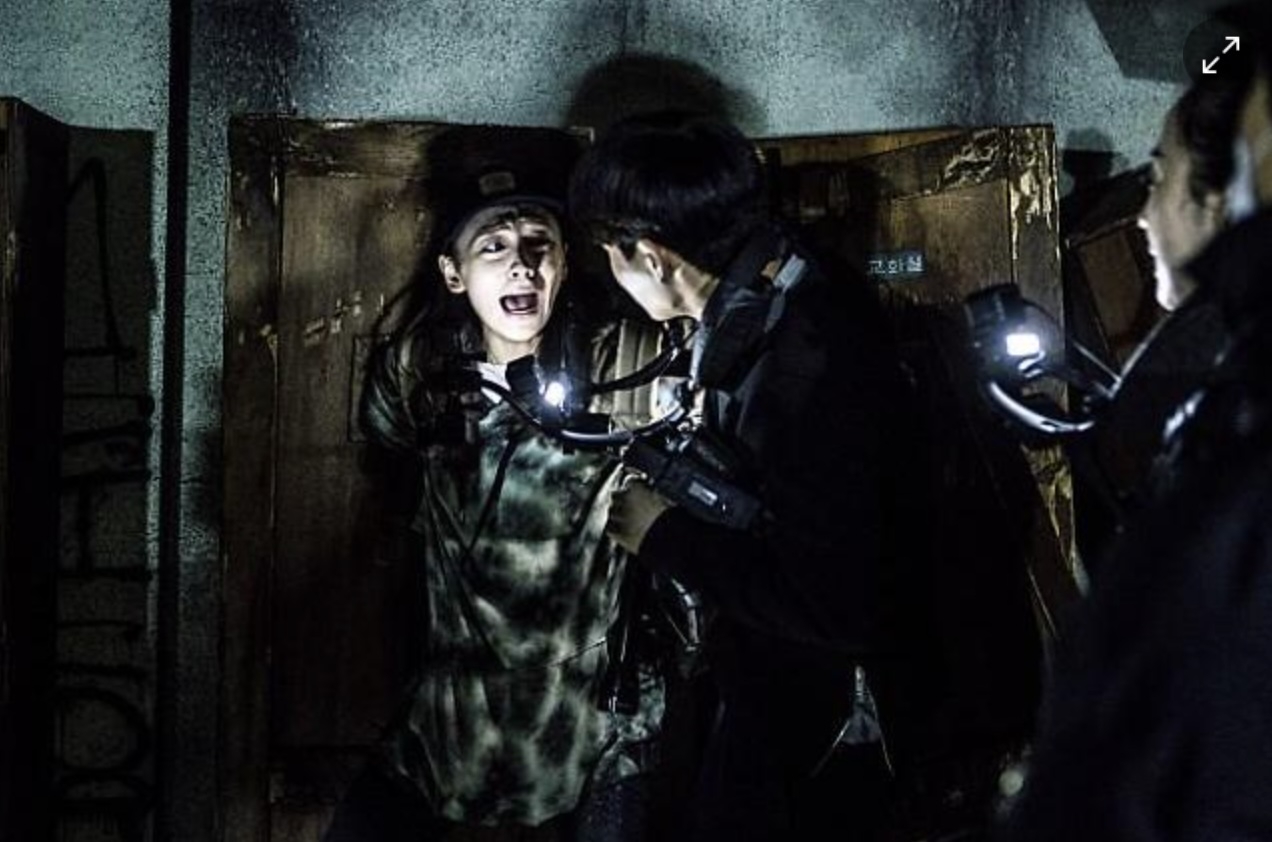
Watching alone on a smartphone in a dark room is the opposite experience. The visual and audio stimulation may be weaker than in a theater, but the absence of anyone nearby often means the dread lingers long after the film ends. It is why you sometimes find yourself glancing involuntarily at the balcony window after the credits roll.
So what is the best way to watch a horror film? Is it screaming alongside strangers in a theater, or is the true experience found alone in a dark room with earphones in? There is interesting research on the relationship between horror films and viewing environment.
A 2021 study by Pung Won and Na Eun-kyung — "A Study on Differences in Audience Responses to the Pleasure and Distress of Watching Horror Films," based on a survey of roughly 480 participants — found that horror film viewers derived greater pleasure from watching alone than from watching with others. The distress felt while watching, however, showed little difference between solo and group viewing.
The same study found that viewers experienced more pleasure watching horror films at home than in other locations. A similar pattern emerged when comparing personal devices such as smartphones with shared media such as theater screens: a large share of respondents said the pleasure of watching on a personal device was considerably higher than on a shared one. At the same time, they also reported feeling more distress on personal devices than in a communal setting.
!["Backrooms" [Bypoem Studio]](https://wimg.heraldcorp.com/news/cms/2026/06/11/news-p.v1.20260611.02a1984003a54d55a7affa8b480381f3_P1.jpg)
The study noted that "the fear felt while watching a horror film shows a positive correlation with both pleasurable enjoyment and negative distress," and that "watching horror films through personal media also showed a statistically significant positive correlation with both the pleasure and distress of the horror film experience."
In short, watching a horror film alone in a room with headphones on — through a smartphone or tablet — may be one of the most effective ways to maximize the cinematic experience that only horror can provide.
References
Stephen King, "Danse Macabre," Golden Branch, 2010
Kazuhisa Todayama, "Horror Sapiens," Danchu, 2021
Pung Won and Na Eun-kyung, "A Study on Differences in Audience Responses to the Pleasure and Distress of Watching Horror Films," Journal of Communication Science, Vol. 21, No. 2
balme@heraldcorp.com