
Hanwha Aerospace launches export impact assessment after Daejeon factory explosion; concerns mount over Chunmoo delivery delays; Hanwha says it is reviewing all options to meet deadlines
By Park Hye-won, The Herald Business
Some countries that import the Chunmoo multiple-launch rocket system — Hanwha Aerospace's flagship export weapon — are considering their own investigations into potential delivery delays following the explosion at the company's Daejeon factory that left seven people dead or injured.
Hanwha Aerospace has begun preparing an impact assessment for each importing country to determine whether the blast at its Daejeon plant will disrupt exports. Some importers plan to conduct their own follow-up investigations after receiving the results.
An official from one importing country, responding to written questions, said the government was waiting for <style ref="s0">Hanwha's impact assessment on how the accident will affect weapons procurement — and in what way, if at all</style>, adding that it would <style ref="s1">draw up a plan for further investigation once the assessment is received</style>.
The Chunmoo system is the export item most at risk from the disruption. The Daejeon plant produces both the Chunmoo and the L-SAM long-range surface-to-air missile. Hanwha Aerospace has signed three successive export contracts with Poland for the Chunmoo since 2022, and concluded its first contracts with Estonia and Norway beginning last year. The L-SAM, by contrast, is supplied exclusively to the South Korean military and is not affected by export concerns.
Hanwha Aerospace halted all factory operations for two days — June 4 and June 5 — immediately after the accident before resuming production. Further production disruptions are likely as the company investigates the scene and carries out repairs. The blast occurred while workers were cleaning explosive residue from tools essential to the production process, a detail observers say makes the impact on output more severe.
After a 2019 explosion at the same facility that killed three workers, the Daejeon Regional Office of Labor issued a work-suspension order covering the entire plant for 181 days. The resulting delays in military equipment deliveries prompted the Defense Acquisition Program Administration, the contracting authority, to deduct about 9.9 billion won (about $6.5 million) from payment. An industry official said delivery disruptions could occur again, though likely not on the scale of 2019, adding that the stakes are higher with Chunmoo because the contracts involve foreign governments.
A Hanwha official said the company is "currently reviewing all aspects of the situation from multiple angles to ensure deadlines are met and projects proceed without disruption."
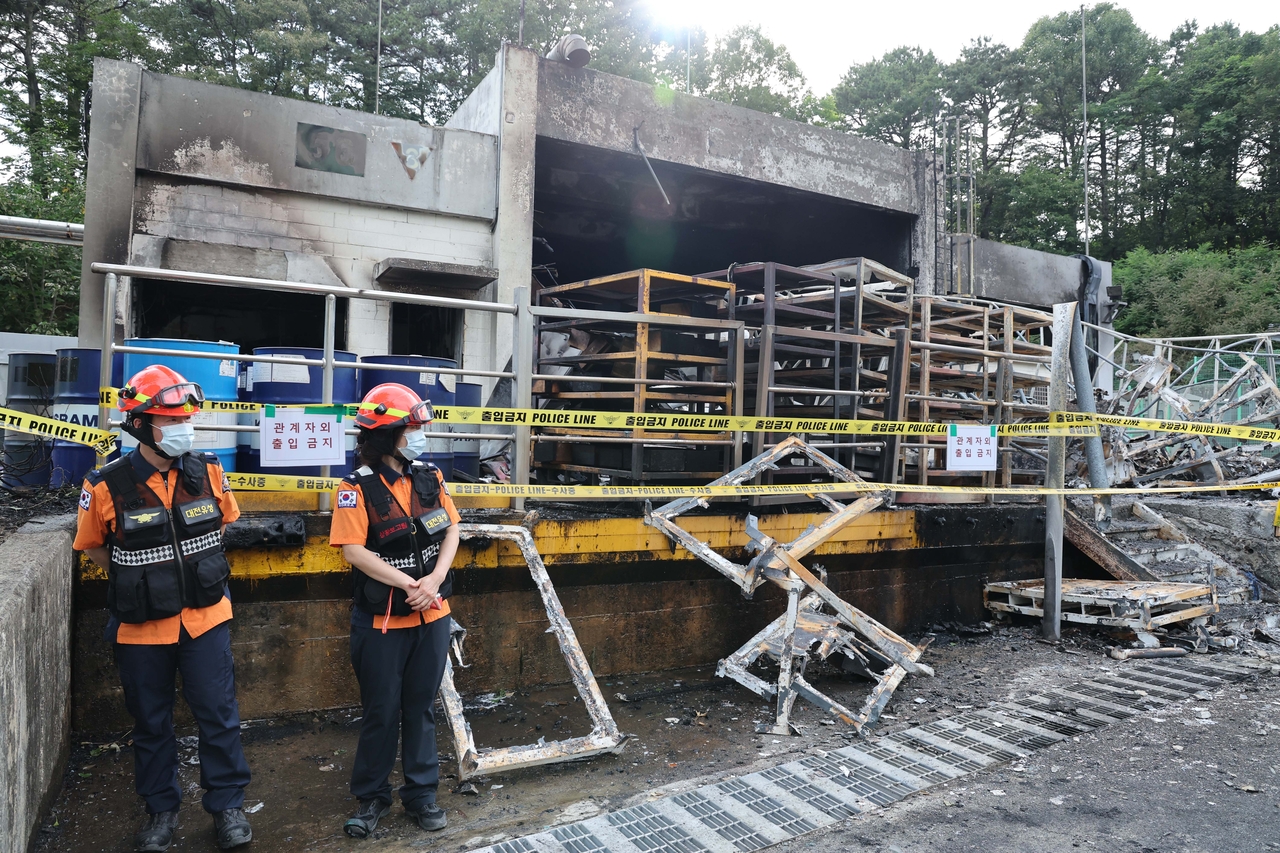
The explosion occurred around 11 a.m. on June 1 in a cleaning room in Building 56 of the Daejeon plant, killing five people and injuring two others — one seriously and one with minor injuries. On June 9, police and fire department investigators deployed about 20 personnel to the site for a joint forensic examination and submitted mechanical components collected that day to the National Forensic Service for detailed analysis.
CEO Son Jae-il and Daejeon plant manager Ga Jae-ung have been booked on charges including violations of the Serious Accidents Punishment Act, occupational negligence causing death and injury, and the Occupational Safety and Health Act.
klee@heraldcorp.com





