Forced investigation comes 8 days after ballot shortage crisis; seven locations targeted, including central and Seoul election commissions; joint prosecution-police task force expected to widen probe
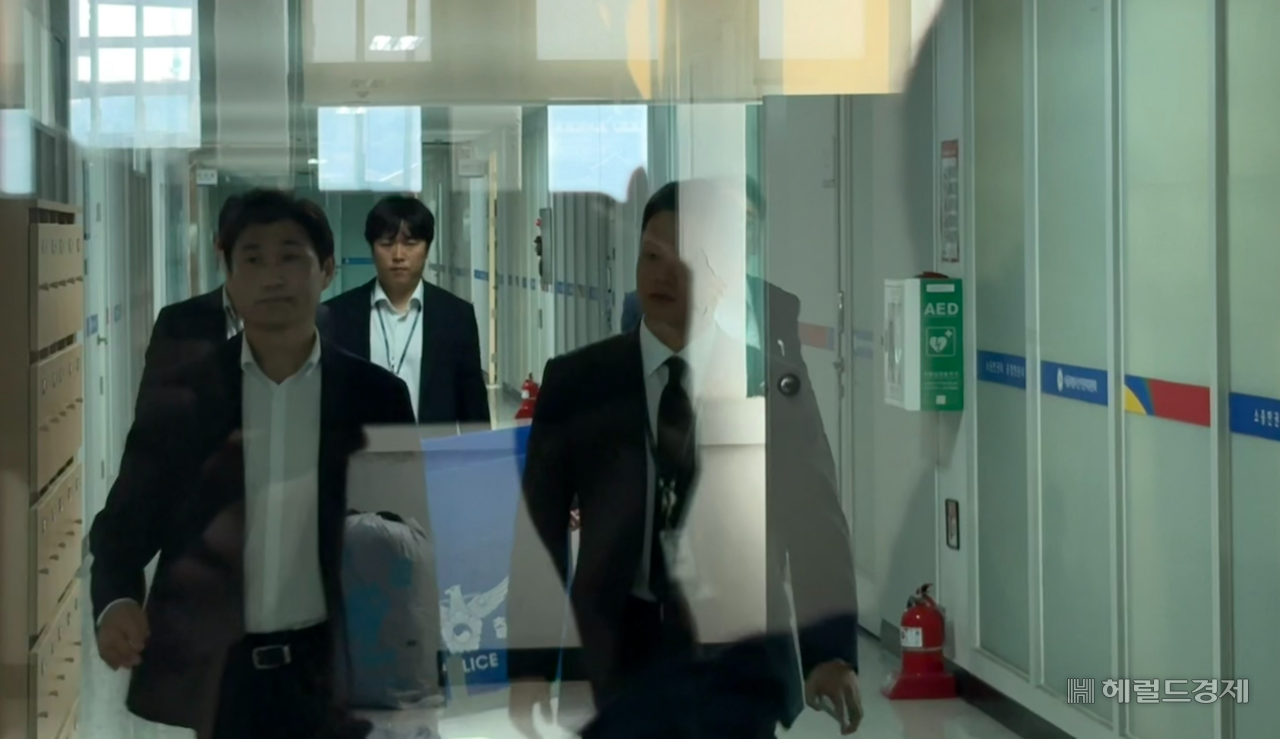
Police investigating a ballot shortage that disrupted voting during the June 3 local elections launched simultaneous search-and-seizure operations Thursday at seven National Election Commission offices, including the central commission and the Seoul Metropolitan Election Commission.
The Seoul Metropolitan Police Agency's wide-area investigation unit, which was assigned the case, dispatched investigators from 9 a.m. to the National Election Commission headquarters in Gwacheon, Gyeonggi Province, the Seoul Metropolitan Election Commission in Jongno-gu, and district election commission offices in Songpa-gu, Seocho-gu, Gangnam-gu, Gwangjin-gu and Dongjak-gu. The search warrants cite suspected violations of the Public Official Election Management Act and dereliction of duty.
About 100 investigators — drawn from the wide-area unit, the Korean National Police Agency's National Investigation Headquarters and the Seoul Metropolitan Police Agency's digital forensics team — divided into groups to execute the warrants. Three prosecutors and roughly 10 additional investigators from the joint prosecution-police task force also participated in searches at three locations: the central commission and the Seoul Metropolitan and Songpa-gu election commissions.
Investigators plan to seize documents recording how the election commission developed its ballot-printing guidelines ahead of the local elections, communications between the central and regional commissions on election day, and physical ballot boxes. The goal is to determine whether officials followed proper procedures at key decision-making stages.
"We are focused on securing evidence to uncover the truth of this case, including identifying the causes of the infringement on citizens' right to vote," a police official said.
According to the National Election Commission's own announcement, voting was suspended at 22 polling stations in Seoul alone because of the shortage — all of them in Songpa-gu, Gwangjin-gu and Gangnam-gu.
Earlier, civic groups filed complaints with police against the chairman of the National Election Commission and others, alleging that election management duties had not been properly carried out. Police have since completed interviews with the complainants and also heard from local government civil servants mobilized to assist with voting operations on election day, as well as citizens who were unable to cast ballots because of the shortage.
Police also plan to summon as witnesses staff from the Songpa-gu and Gwangjin-gu election commissions, where the ballot shortage caused the most disruption. Dates for those appearances are currently being arranged.
Thursday's searches were limited to election commission office spaces, but investigators may conduct additional searches targeting senior commission officials after reviewing the seized materials.
Materials seized Thursday will be reviewed by police before being handed over to the joint prosecution-police task force. Both agencies have finalized the personnel they will assign to the task force but are still completing logistical preparations. As a result, Thursday's searches were led in form by the police, who received the initial complaints, but were prepared in practice through coordination between prosecutors and police. Ko Tae-wan, a senior superintendent named as deputy head of the task force, has joined the Seoul Metropolitan Police Agency's wide-area investigation unit to assist with the probe. He currently serves as head of the situation team at the South Chungcheong Provincial Police Agency's 112 integrated operations center.
nyang@heraldcorp.com
newday@heraldcorp.com
jookapooka@heraldcorp.com