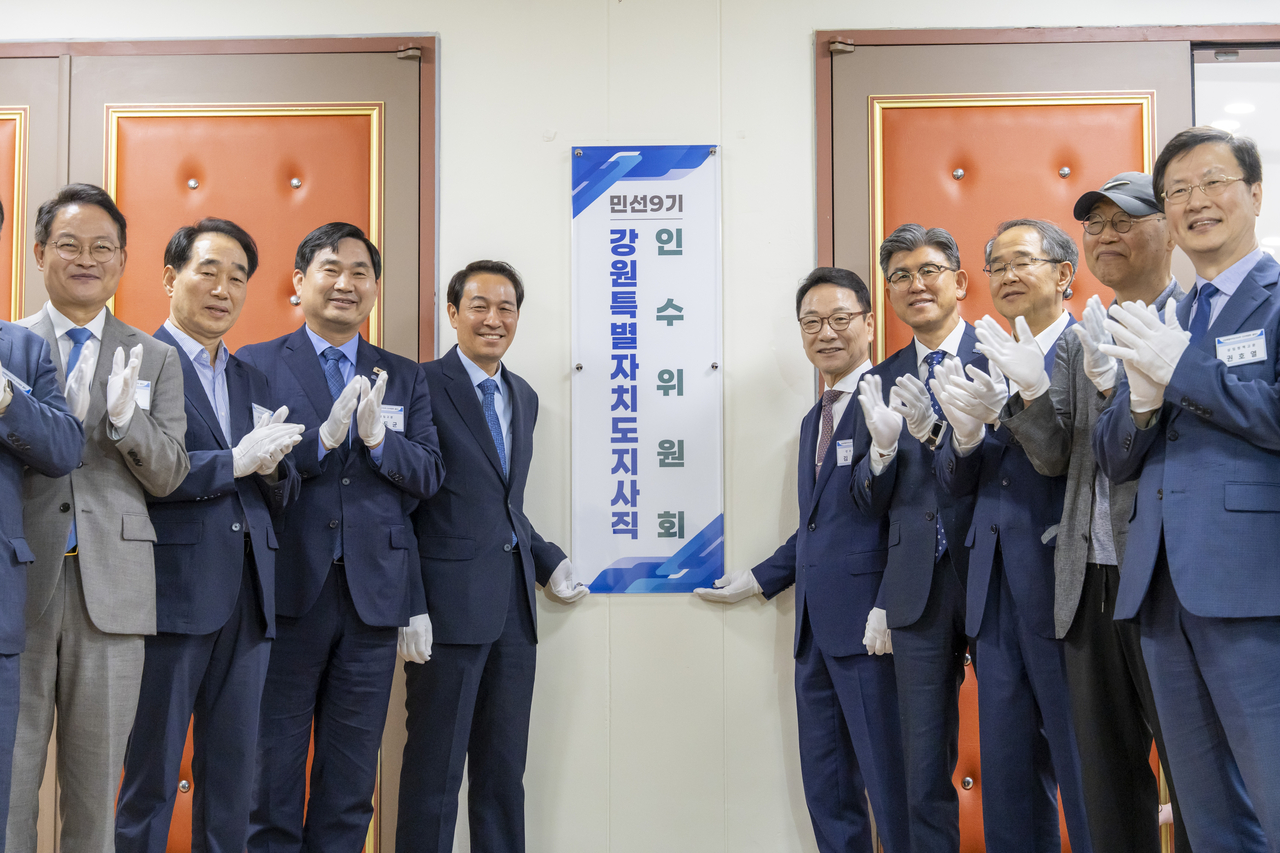
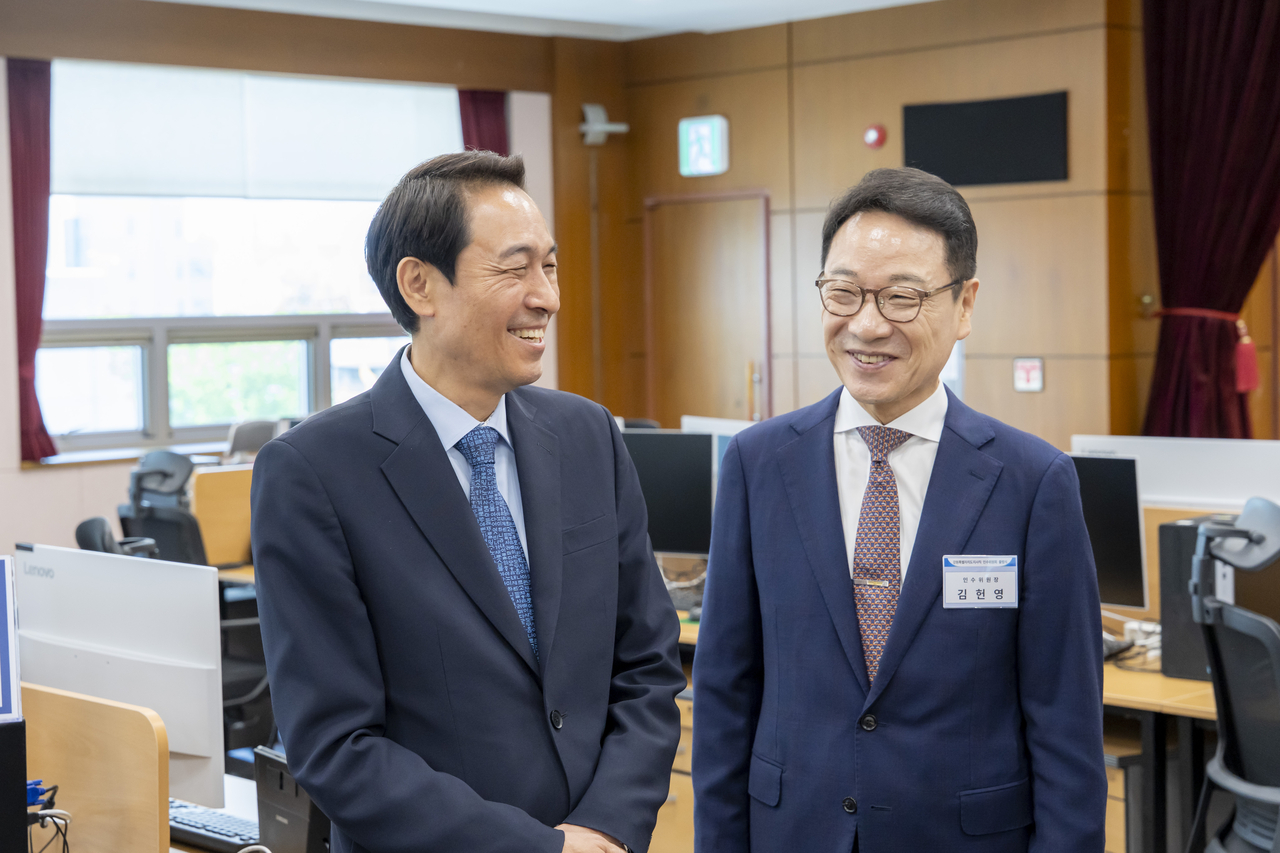
The transition committee for the Gangwon Special Self-Governing Province governorship held its inaugural ceremony Friday morning at a small conference room in the annex of the provincial government building in Chuncheon. The committee will operate under Governor-elect Woo Sang-ho until he takes office.
Chairman Kim Heon-young, former president of Kangwon National University, and Vice Chairman Yeo Jun-seong, regional chair of the Democratic Party of Korea's Wonju-A chapter, will lead the committee. Its structure includes a standing advisory council, a standing policy advisory council, five subcommittees, and a political affairs and policy coordination unit.
Appointed to the standing advisory council — which will serve as a compass for both the transition committee and provincial administration — are Kim Do-gyun, chair of the Democratic Party of Korea's Gangwon Special Self-Governing Province chapter; National Assembly members Song Gi-heon and Heo Yeong; former Assembly members Choi Uk-cheol, Yeom Dong-yeol and Sim Gi-jun; Choi Yun, chair of the Gangwon Democratic Foundation; Yoo Jeong-bae, regional chair of the Chuncheon-Cheorwon-Hwacheon-Yanggu (B) chapter; and Heo Pil-hong, regional chair of the Hongcheon-Hoengseong-Pyeongchang-Yeongwol chapter.
The standing policy advisory council, tasked with integration and consultation, includes Choi Heung-jip, former deputy governor of Gangwon Special Self-Governing Province, alongside honorary professors Kim Gi-seok of Kangwon National University, Lee Gi-won of Hallym University, and Kwon Ho-yeol of Kangwon National University's Department of Computer Engineering.
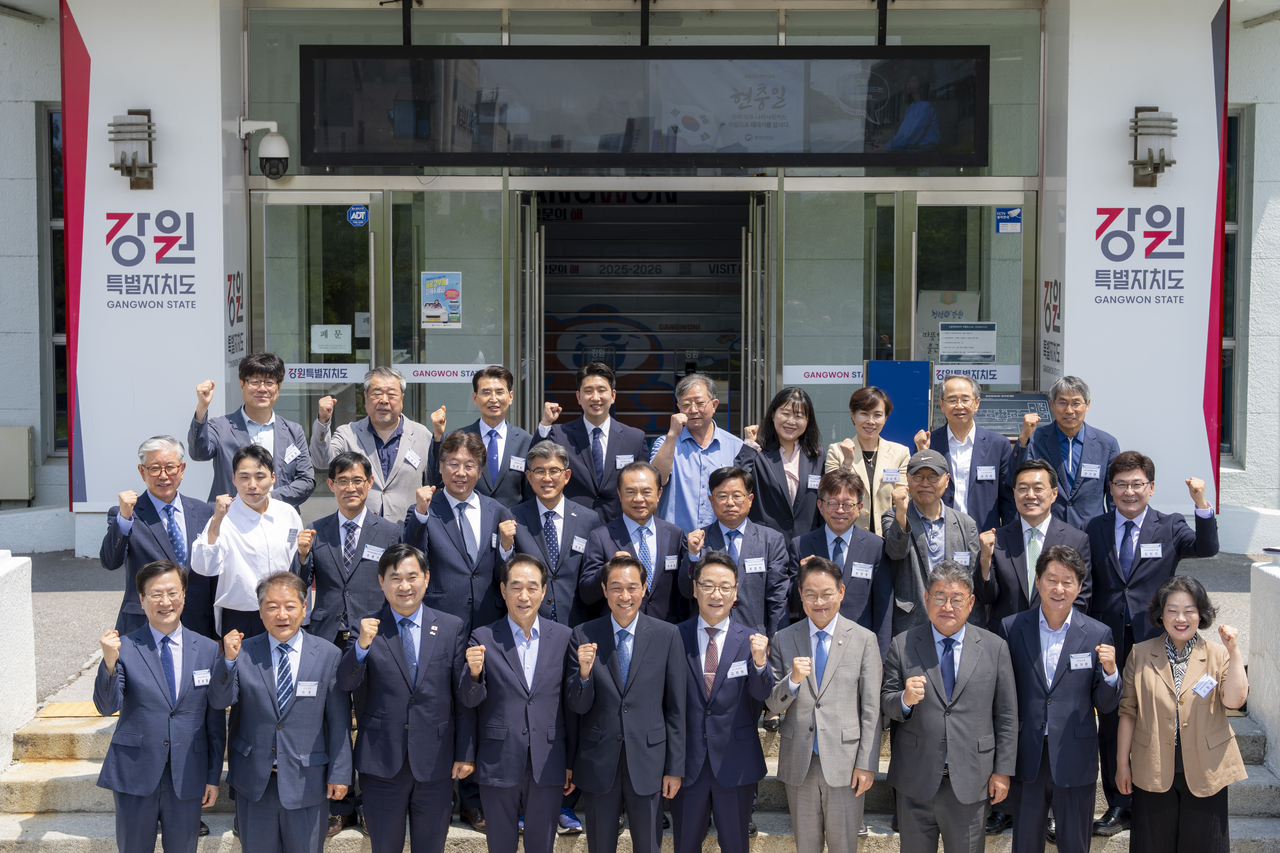
The committee's working-level operations are divided among five subcommittees, with 18 members — excluding the committee leadership — assigned across them.
The Planning and Strategy Subcommittee is headed by Song Yeong-hun, a professor of political science and diplomacy at Kangwon National University, and includes Kim Yang-uk, youth chair of the Democratic Party's Gangwon provincial chapter; Choi Jae-gyu, former speaker of the Gangwon Provincial Council; and An Gwon-yong, a former director at the Gangwon provincial government.
The Resident Safety and Autonomy Subcommittee is led by Ryu Jong-hyeon, a former research fellow at the Gangwon Research Institute, and includes Kim Jin-gi, former speaker of the Sokcho City Council; Ha Gwang-yun, standing director of the Gangwon Democratic Foundation; and Kim Gyeong-jun, chair of the steering committee of the Gangwon Civil Society Organizations Council.
The Future Growth Industries Subcommittee is headed by Kim Heung-seong, former head of the Gangwon Information and Culture Promotion Agency, and includes Kang Seung-ho, a professor at Gangneung-Wonju National University; Kim Seung-hui, a professor of real estate studies at Kangwon National University; and Jo Yong-gi, current speaker of the Wonju City Council.
The Culture, Welfare and Tourism Subcommittee is led by Yoo Man-hui, acting president of Sangji University, and includes Kim Seong-hun, CEO of Wassup Town in Hongcheon, and Ko Chang-yeong, former head of the Korea Women's Training Center.
The Agriculture, Fisheries and Rural Cooperation Subcommittee is headed by Shin Su-mi, CEO of Youth Shared Farm Co., and includes Choi Seon-gang, a professor in the Smart Farm Agribusiness Department at Kangwon National University, and Jeon Gi-hwan, head of the Gangwon Food Solidarity network.
In addition, 34 expert advisers have been appointed to provide working-level support to the committee. They include university professors and civic organization representatives from across Gangwon Province, as well as campaign directors and team leaders who served in Governor-elect Woo's election campaign.
The transition committee plans to hold a signboard unveiling ceremony at the provincial government annex, present appointment certificates to advisers and committee members, and then convene its first formal meeting to begin full operations.
The committee plans to receive sequential briefings on key areas of provincial administration, including the economy and industry, tourism, culture and sports, livelihoods and welfare, and agriculture, forestry and fisheries. Through this process, it will review regional issues and assess the feasibility of policy tasks for the incoming administration.
Priority areas under review are expected to include attracting businesses to create quality jobs, improving conditions for young people to settle in the region, and revitalizing the local economy. The committee will also discuss the implementation schedule and funding plans for major campaign pledges made during the election.
The transition committee will operate for approximately one month, compiling a provincial governance plan before presenting a policy roadmap to coincide with the launch of the 9th directly elected administration.
Woo is set to be inaugurated as governor of Gangwon Special Self-Governing Province on July 1.
abc@heraldcorp.com