Seoul and Washington push back against China's tacit acceptance of North Korea's nuclear status
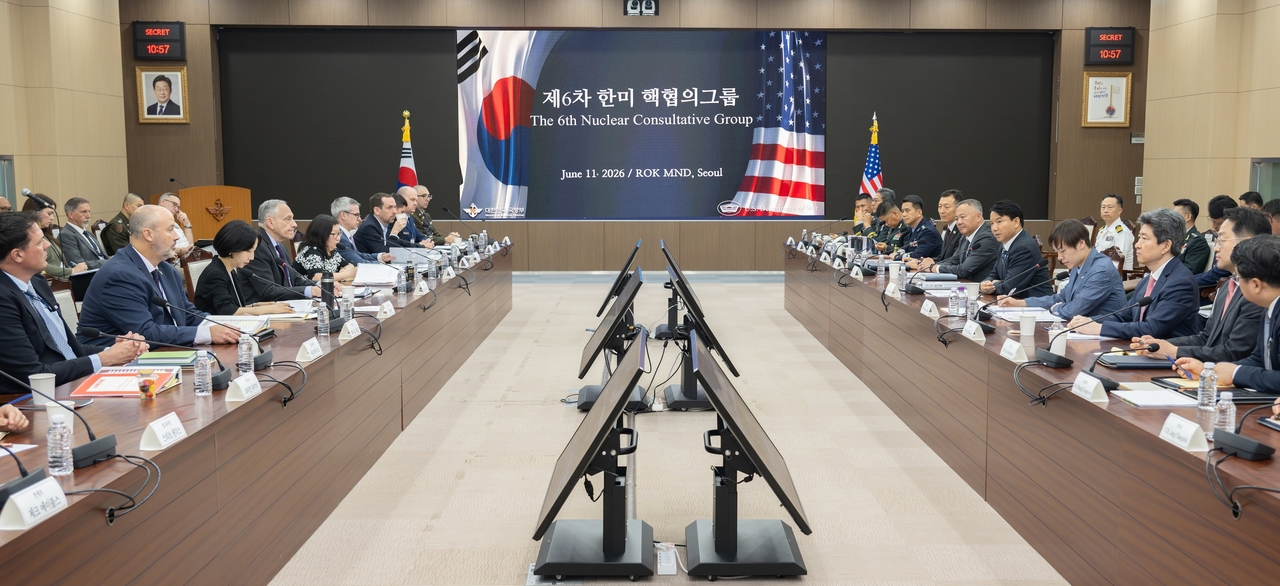
South Korea and the United States confirmed their shared goal of North Korea's denuclearization following the sixth meeting of the Nuclear Consultative Group — the first time the NCG has explicitly named that goal in a joint statement since the group's inaugural session in 2023. Language on the North Korean nuclear threat, which had been dropped from last year's NCG statement, was also restored.
Thursday's meeting was co-chaired by Kim Hong-cheol, director general for defense policy at South Korea's Ministry of National Defense, and Robert Soofer, US deputy assistant secretary of defense for nuclear deterrence and CWMD policy. The two sides issued a joint press statement after the session.
According to the statement, the delegations agreed to continue developing NCG activities to strengthen the alliance and extended deterrence amid the advancement of North Korea's nuclear and missile capabilities and a shifting security environment.
The two sides specifically stated: "The ROK and the United States reaffirmed their shared goal of the denuclearization of North Korea," adding that "the United States reaffirmed its commitment to provide extended deterrence to the Republic of Korea, drawing on the full range of US capabilities, including nuclear."
The explicit reaffirmation of denuclearization as a shared goal drew particular attention given that the international community's commitment to that objective has been eroding. At a recent North Korea-China summit, Beijing made no mention of North Korean denuclearization, signaling a degree of tolerance for Pyongyang's nuclear status.
The joint press statement from the fifth NCG meeting, held in Washington in December, contained no reference to North Korean denuclearization — or to North Korea at all.
Just before this week's NCG session, the United States also included a pledge to "reaffirm commitment to the complete denuclearization of North Korea" in a statement from its Extended Deterrence Dialogue with Japan, held June 8-9.
A Defense Ministry official elaborated on the denuclearization discussions, saying: "Both sides reaffirmed their commitment to the complete denuclearization of North Korea and to peace and stability on the Korean Peninsula."
The statement said the two sides reviewed a range of tasks — including security and intelligence sharing, nuclear crisis consultation procedures, conventional-nuclear integration, exercises and training, and strategic messaging and risk reduction — and discussed various measures to strengthen the alliance's nuclear deterrence and readiness posture.
The delegations assessed progress by military authorities in developing the alliance's conventional-nuclear integration framework to deter and respond to North Korean nuclear threats, and agreed to continue advancing it.
Under the CNI concept, South Korea provides conventional support to US-led nuclear operations. The NCG delegations also visited related units to assess South Korea's advanced conventional capabilities, according to sources.
Defense Minister Ahn Gyu-baek said on X, formerly Twitter, that he visited the site of "the second NCG plenary meeting under the Lee Jae Myung administration" to encourage the delegations from both countries.
Referring to the working-level officials of both sides, he said their "dedication has further solidified the credibility and operational effectiveness of the ROK-US conventional-nuclear integration."
Analysts noted that fleshing out how to integrate US nuclear forces with South Korea's conventional capabilities will also be essential to maintaining the credibility of the US nuclear umbrella commitment after the transfer of wartime operational control.
The delegations also signed the "ROK-US NCG Security Guidelines," which establish procedures for protecting information shared through NCG activities and consultations. The guidelines lay an institutional foundation for deepening intelligence sharing between the two allies.
"With Russia providing military technology support to North Korea and the North Korean nuclear issue going unmentioned at the North Korea-China summit, it was absolutely necessary for a denuclearization message to be included this time," said Shin Jong-woo, secretary general of the Korea Defense and Security Forum.
He added: "A response strategy for North Korea's nuclear weapons is essential for the OPCON transfer. Considering that the United States also wants its allies to build their own defense capabilities, South Korea could be a model country from the US perspective."
youknow@heraldcorp.com
rimsclub@heraldcorp.com