Foreign Ministry urges Japan to apply entry restrictions fairly and predictably; both sides agree to keep communicating on border issues
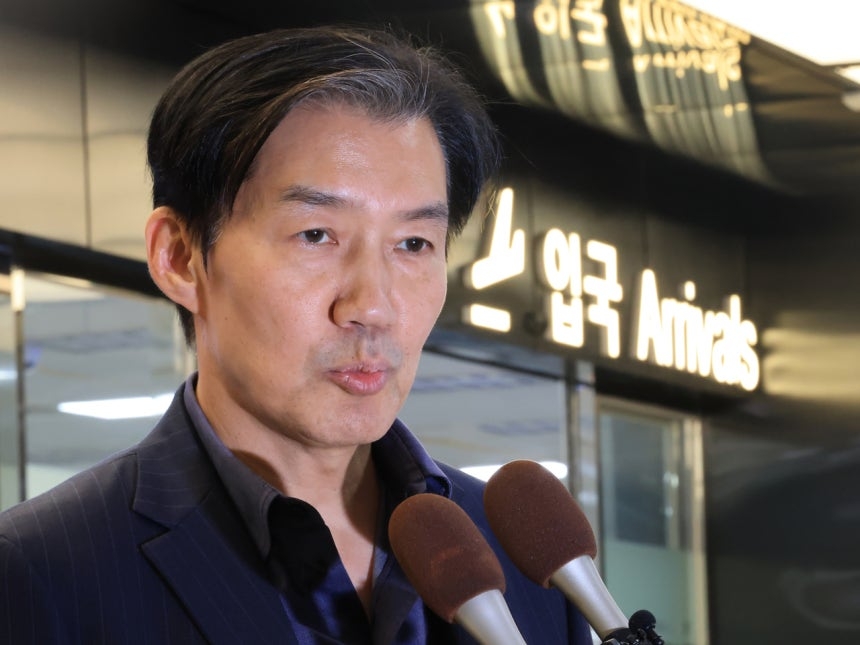
Japan's government said Cho Kuk's criminal record — not his history of visiting Dokdo — was the reason Japanese authorities turned him away at the airport.
South Korea's Ministry of Foreign Affairs said in a statement Wednesday night that when Seoul asked Tokyo for the precise grounds for the entry refusal, Japan said the measure was taken under its Immigration Control and Refugee Recognition Act.
Article 5, Paragraph 1 of Japan's immigration law sets out the grounds for denying entry. Item 4 of that provision stipulates that foreign nationals sentenced to one year or more of imprisonment — or an equivalent penalty — for violating Japanese or foreign law are in principle subject to entry denial.
Under Article 5-2 of the same law and its implementing regulations, however, exceptions may be granted even when the grounds for denial under Article 5, Paragraph 1 apply, provided certain conditions are met in advance, such as obtaining a visa.
At a briefing for reporters, Japan's Immigration Services Agency said the entry refusal was based on Item 4 of Article 5, Paragraph 1, directly addressing questions about whether Cho's visits to Dokdo had been a factor.
The Foreign Ministry said it conveyed to Japan that entry restrictions on South Korean nationals must be applied fairly and predictably, based on objective and consistent standards. It also said it explained that questions have been raised domestically about the criteria Japan used to apply the relevant provision in this case, and asked that similar incidents not recur.
The two countries' diplomatic authorities agreed to continue communicating on entry and immigration issues, including this case.
youknow@heraldcorp.com