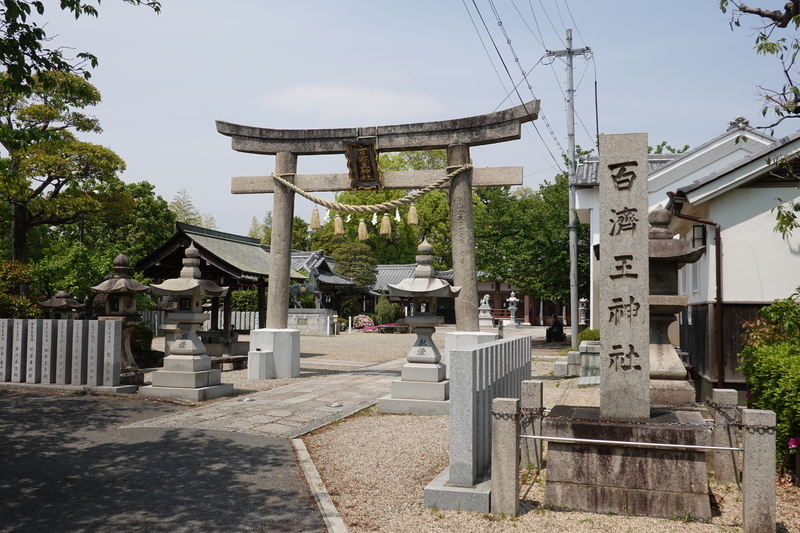

"When will we ever set foot on our homeland again?"
In August 660, Silla's King Muyeol — Kim Chun-chu — allied with Tang China and brought Tang forces under General Su Dingfang to destroy the kingdom of Baekje. King Uija of Baekje had two sons stationed in Japan at the time: Pung and Seonggwang. When Baekje fell and Uija along with his eldest son Yung were taken to Tang as hostages, Pung returned home to lead a revival movement while his younger brother Seonggwang remained in Japan. Meanwhile, Japan's Empress Saimei and Crown Prince Naka no Ōe — later Emperor Tenji — dispatched a large military force to support Pung's restoration effort, mindful of the close ties between the two royal houses. When Japanese forces were routed by the Silla-Tang allied army at the mouth of the Geum River, Pung fled to Goguryeo. That engagement, fought in 663, is known as the Battle of Baekgang.
The defeated Japanese army withdrew to Japan, and the Japanese chronicle "Nihon Shoki" records the anguish of the Baekje ruling-class elites who chose collective exile and accompanied them: "The name of Baekje has vanished as of today. When will we ever set foot on the land where our ancestors are buried?"
The Baekje elite who crossed to Japan numbered an estimated 3,000. The Japanese court settled roughly 1,000 of them in the southeastern part of Omi Province — present-day Shiga Prefecture — and dispersed the remaining 2,000 or so across the northeastern regions. There they served as scholars and regional administrators, playing a central role in establishing Japan's ritsuryo state system across fields ranging from education and culture to architecture and national defense.
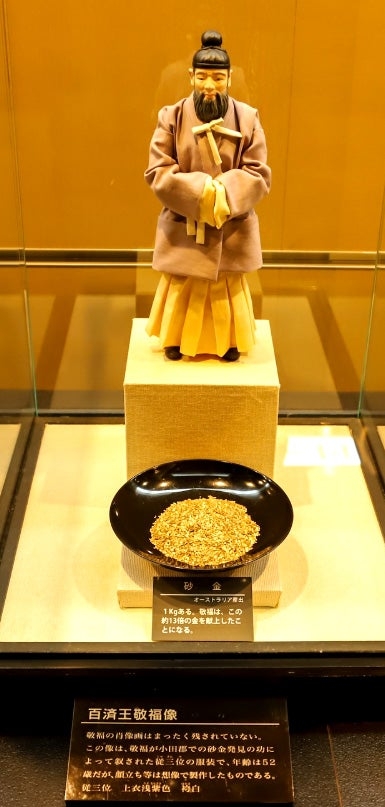
The descendant who brought gold to Japan: Gyeongbok
The Japanese court provided Prince Seonggwang and other Baekje royals with residential quarters in Katano District, Kawachi Province — present-day Hirakata, Osaka Prefecture — a settlement already home to a large community of Baekje-descended immigrants. Among the clans of Baekje origin in Japan at the time, several bore names evoking Baekje — Kudara no Ason, Kudara no Muraji, Kudara no Sukune — but the court granted the surname "Kudara no Konikishi," meaning "Baekje royal clan," exclusively to Seonggwang's lineage. In Japanese, "kudara" means Baekje, "konikishi" means king, and "uji" means clan. Seonggwang became the founding ancestor of this Kudara no Konikishi line.
Seonggwang's grandson Nagu served as Daigaku no Kami — head of the highest educational institution of the day — overseeing scholarship and contributing to the cultivation of talent and the advancement of learning. Nagu's third son, Gyeongbok, a great-grandson of Seonggwang, distinguished himself even further. Appointed administrator of the northeastern region of Mutsu — covering parts of present-day Fukushima, Miyagi, Iwate and Aomori prefectures — he discovered Japan's first gold deposit in Oda District, Mutsu Province (present-day Toda District, Miyagi Prefecture) and presented Emperor Shomu with 900 ryo of mined gold.
The emperor had been considering imports of gold from Tang to gild the great Buddha statue at Todaiji temple, as domestic supplies were running short. Overjoyed at the discovery, he promoted Gyeongbok seven ranks at once and appointed him to the senior third-rank post of Kunaikyo, head of the imperial household administration.
The actual discoverer of the deposit was a mining engineer of Baekje descent serving under Gyeongbok. Over the following decade, Gyeongbok is said to have extracted 900 to 1,000 ryo of gold each year, for a total of 10,400 ryo.
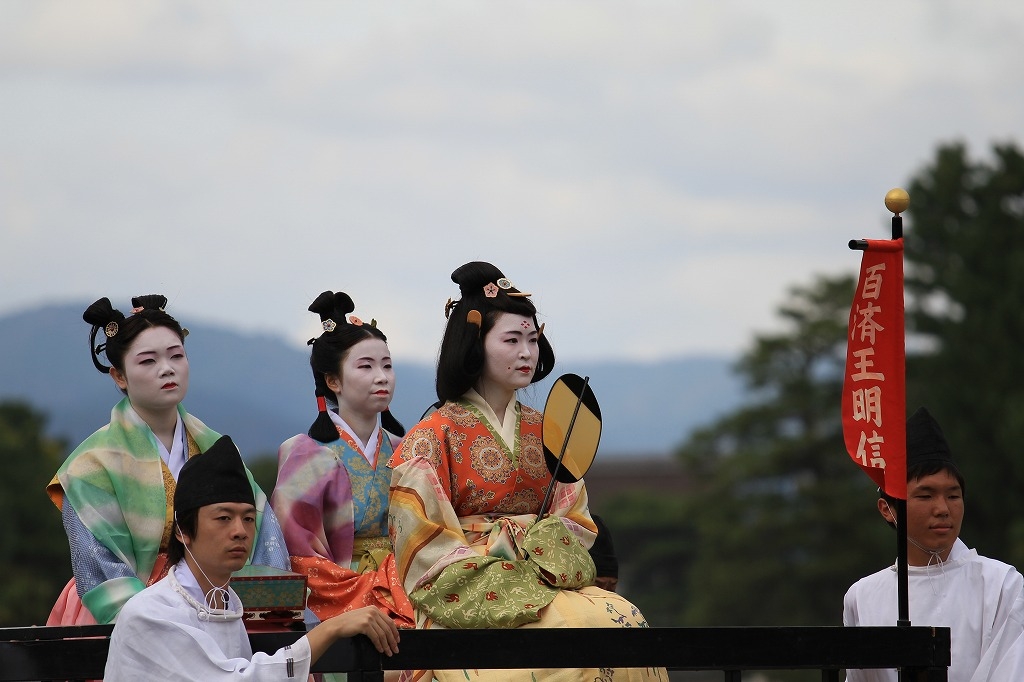
The Kudara no Konikishi clan's ties to today's imperial family
Emperor Kanmu, who reigned from 781 to 806, is recorded as having said, "My mother's family is the royal house of Baekje." The Japanese chronicle "Shoku Nihongi" describes his mother, Takano no Niigasa, as "a descendant of Prince Sunta, son of Baekje's King Muryeong." Because his mother was of Baekje royal lineage, Kanmu in particular favored the Baekje-descended community in Japan. He appointed Myeongsin — a granddaughter of Gyeongbok — to the senior second-rank post of Naishi no Kami, the highest position among court ladies, and held her in great esteem. Myeongsin used that imperial favor to considerable political effect: she arranged for her younger sisters Myeongbon and Hyesin to enter Kanmu's inner court as consorts, and secured a place for her niece Gwimyeong as a consort of Emperor Saga, Kanmu's successor.
Myeongsin's husband, Fujiwara no Tsugutada, was a great-great-grandson of Fujiwara no Kamatari, the founding ancestor of the Fujiwara clan. Kamatari had been a trusted confidant of Emperor Tenji — who led the Battle of Baekgang in 663 — and a key figure in the pro-Baekje faction. Myeongsin is said to have been a powerful force behind her husband's advancement as well; Tsugutada is credited with rising to the post of Daijo-kan — equivalent to prime minister — largely through his wife's influence. In this way, Myeongsin played a central role in bringing the Kudara no Konikishi clan to the height of its influence during Emperor Kanmu's reign.
The entry of the Kudara no Konikishi line into the imperial family, begun with Myeongsin, continued through the Heian period — through the consort of Emperor Shirakawa and the lineage of Emperor Horikawa — and the descendants of King Uija are said to retain a connection to today's Japanese imperial family.
Japan opened its doors to the Baekje elite who arrived en masse after their kingdom's fall, allowing them to bring with them advanced technology and sophisticated culture. As a result, Japanese society grew richer and achieved a remarkable leap in development. This stands as proof of history's iron law: nations that drive out talent decline, while those that welcome it flourish. Much of the Western world today is moving in precisely the opposite direction — erecting barriers at borders, expelling immigrants, turning away from openness. That path leads to decline. We would do well to recognize that following their example out of habit could bring us the same fate.
greg@heraldcorp.com