
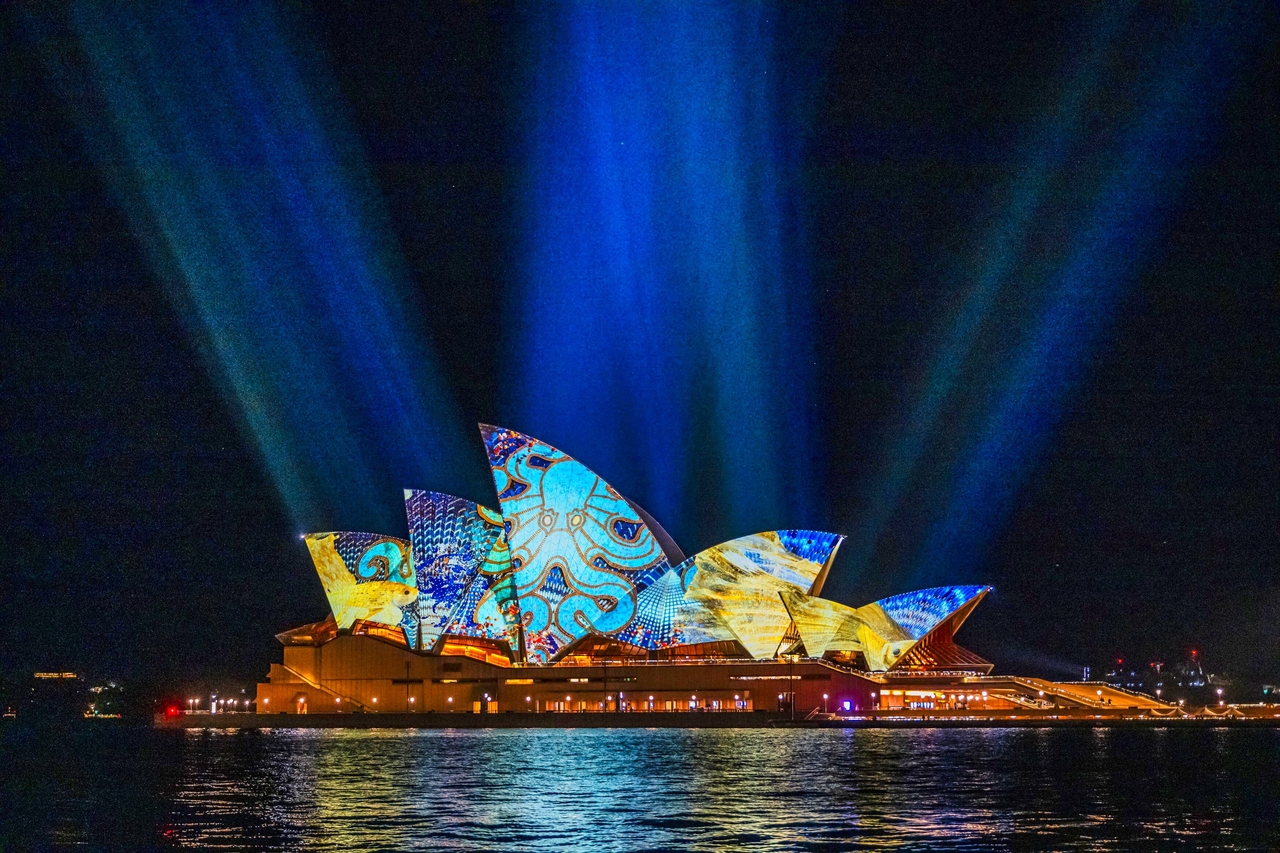

Vivid Sydney, one of New South Wales' largest festivals and a showcase for light art, music and ideas, closed at midnight Saturday with Samsung and Kia — two of South Korea's flagship companies — serving as main sponsors.
This year's Vivid Light Walk, a 6.5-kilometer route connecting Circular Quay, The Rocks, Barangaroo and Darling Harbour into a single luminous trail, brought together media art from around the world.
Events centered on light, culture, food and community also took place across Sydney's central business district and at Carriageworks.
Australia and South Korea shared a common drive to advance culture and push the boundaries of technology — a spirit that animated both the festival's content and Korea's sponsorship of this hybrid arts-and-technology event. The deepening friendship between the two countries is expected to grow stronger through Vivid Sydney, with tourism between them also set to increase.
Light was the festival's defining element, with events beginning each evening at dusk.
The Opera House as an epic screen
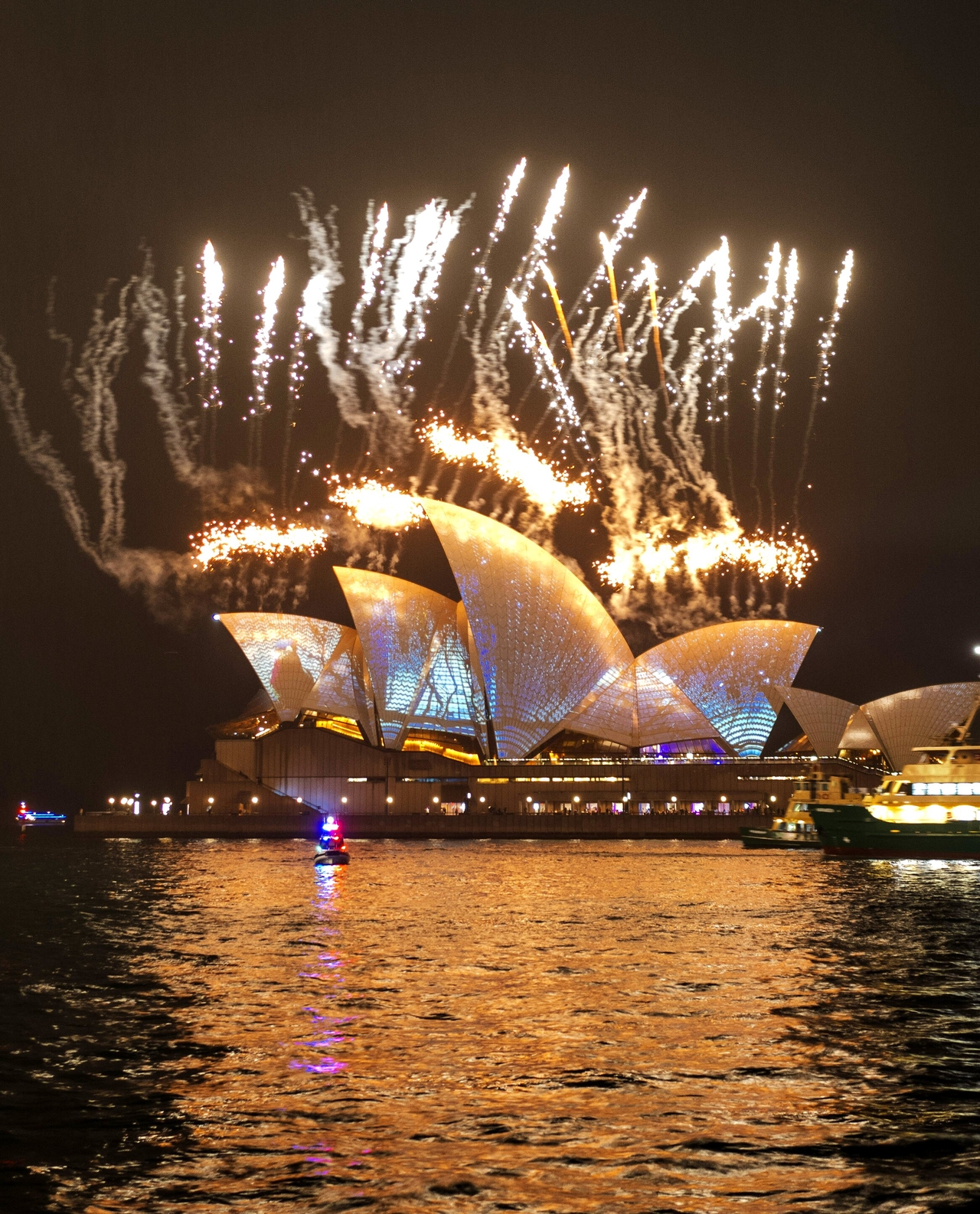
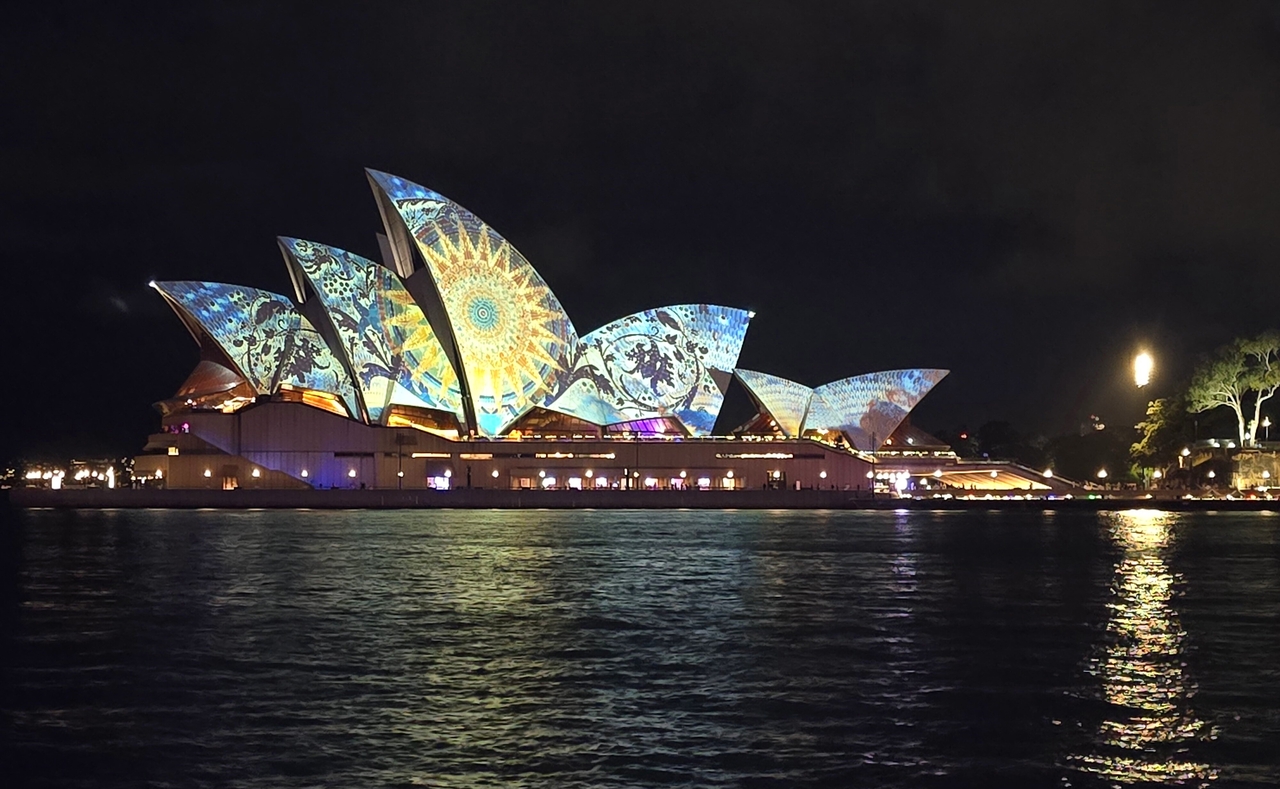
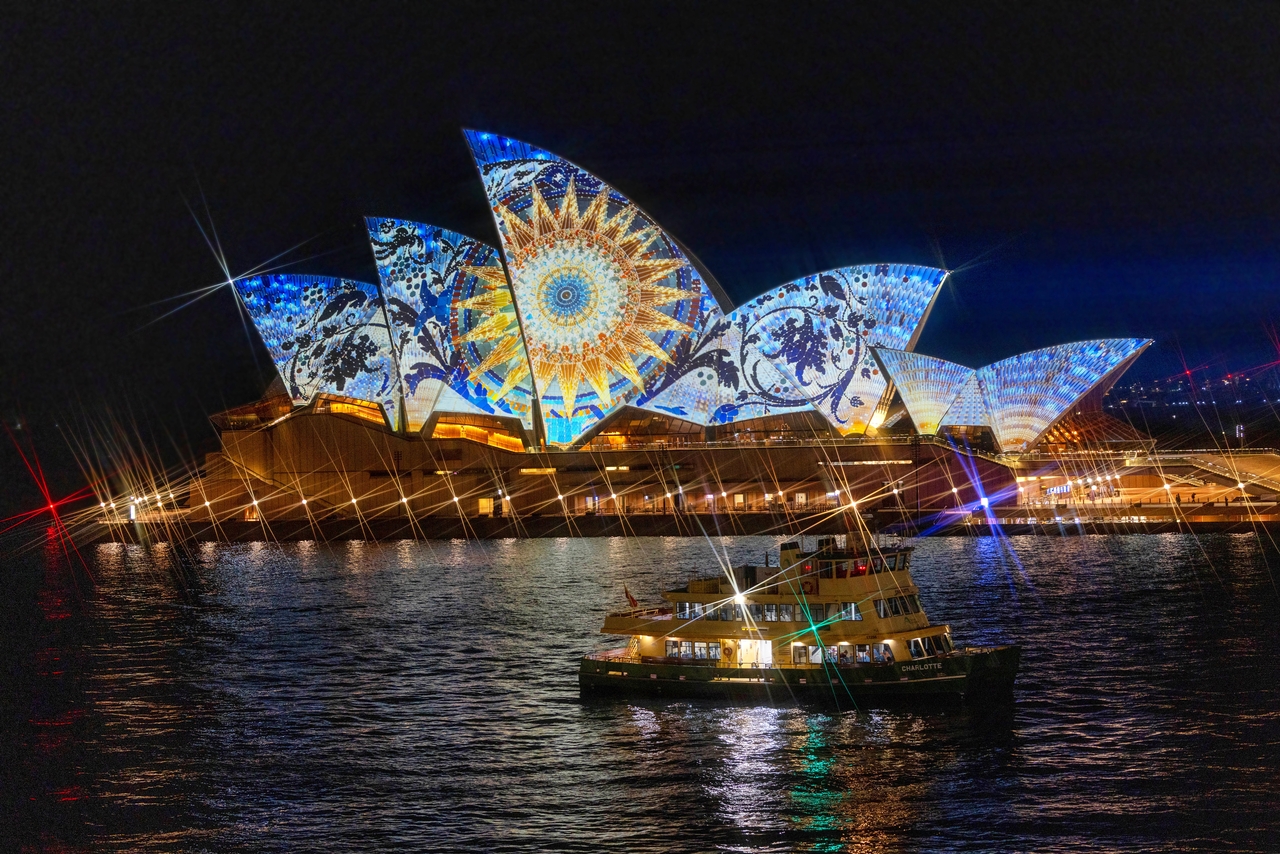
The most captivating sight of the festival was the nightly transformation of the Opera House. From the moment darkness fell, the building's iconic white shells became a canvas for a sweeping visual epic — tracing the birth of the Australian continent and the dynamic forces of ocean and land that shaped it over hundreds of millions of years.
"Opera Mundi" was a large-scale projection work that used the sails of the Sydney Opera House as a vast canvas. Directed by Vietnamese-French multimedia artist Yann Nguema, the piece drew inspiration from the beauty, complexity and ever-changing nature of the natural world, expressing the design philosophy of Jørn Utzon — the architect who conceived the Opera House more than 60 years ago — through light and movement. Under Nguema's direction, the building — often described as resembling a peeled orange — revealed layer after layer of new character, much like peeling an onion, embodying Sydney's restless creativity.
Music by Romanian composer Mischa Blanos wove together the light art emanating from the Opera House and surrounding buildings, the illuminated installations scattered across the city center, and laser beams fired from multiple points — binding all of Sydney into a single orchestra on late-autumn nights.
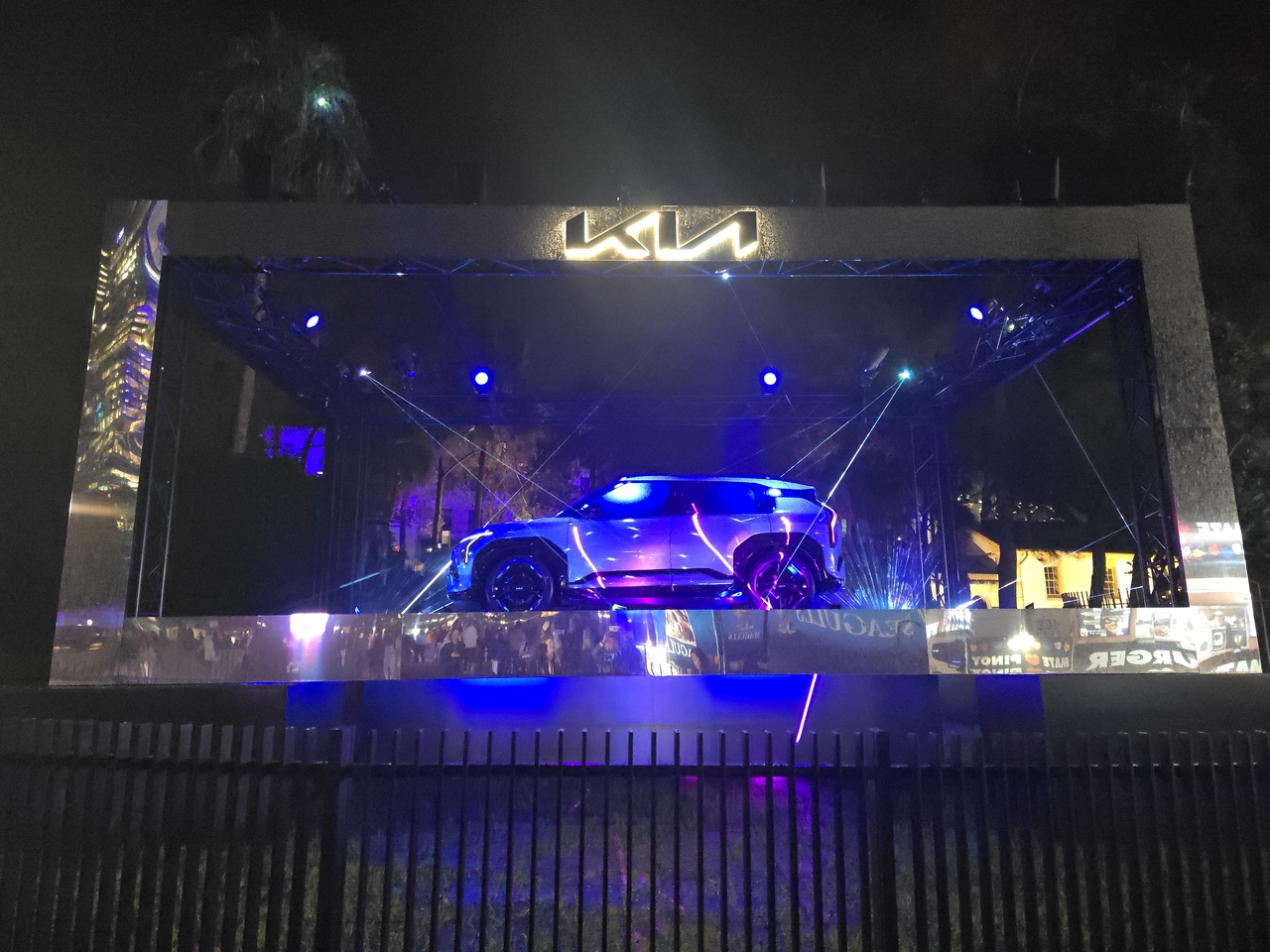
Product or artwork? Samsung and Kia's light art
Among the Korean main sponsors, Kia brought its design philosophy "Opposites United" to life through an art performance called "Kia Refraction." The Kia EV3, dynamic laser effects and reflective structures that reshaped the space after dark combined to create an immersive light art experience.
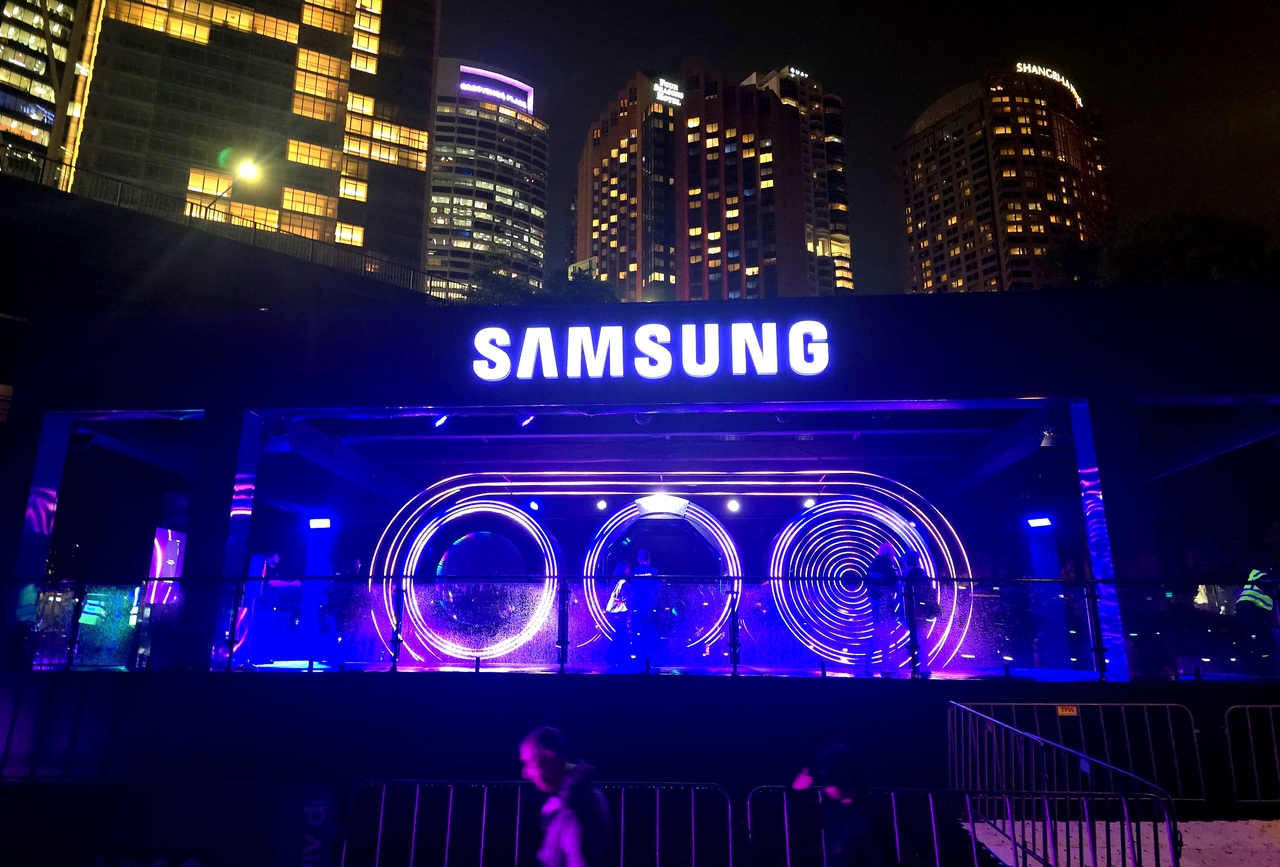
The Samsung Sky Portal Studio was an interactive installation set up in First Fleet Park, directly in front of the Four Seasons Sydney hotel — a popular choice among Korean visitors during the festival. Using the Galaxy S26 Ultra, visitors captured creative photos and videos through an immersive portal frame, reflective effects and motion-based experiences. The studio drew consistently long queues throughout the festival.
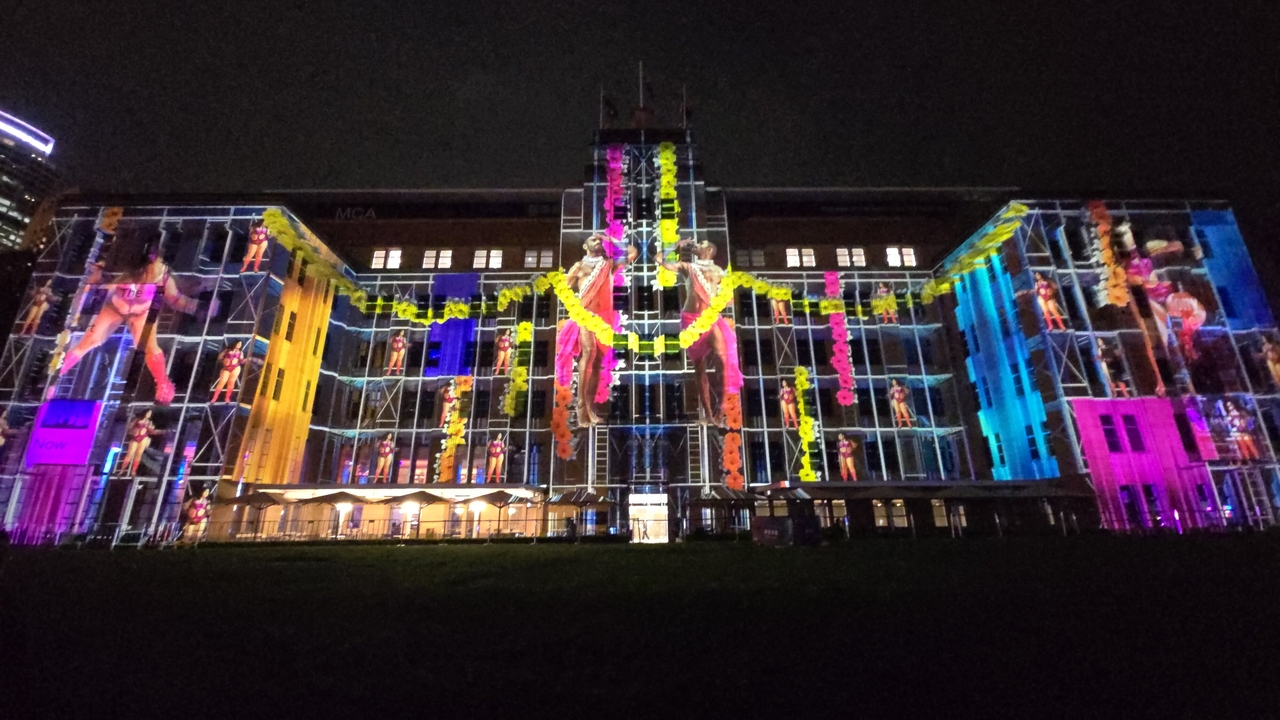
'We Are the World' — Vaiola, a symbol of melting-pot Australia
Vaiola, meaning "water of life," mapped vivid colors and light imagery across the exterior of the Museum of Contemporary Art Australia. Its rectangular facade, similar in shape to a theater screen, gave the projected messages unusual clarity. Its proximity to the Samsung Sky Portal Studio drew many Korean visitors.
The work traced the settlement of Indigenous peoples, successive waves of immigration from around the world and the traces they left behind — at times evoking longing — while carrying a message of hope for a future shaped by belonging to one Australia and the harmony of a "melting" nation. Water, as the source of life, was the catalyst for that melting.
The artist was Angela Tiatia, a Samoan-Australian whose ancestry stretches back thousands of years, yet who lives in harmony with European and Asian immigrants — a quintessential Australian. Her favored materials — water, fire, flowers and pearls — lit up the museum's nights in spectacular fashion. The work was accompanied by music from Corin Ileto, adding an emotional dimension.
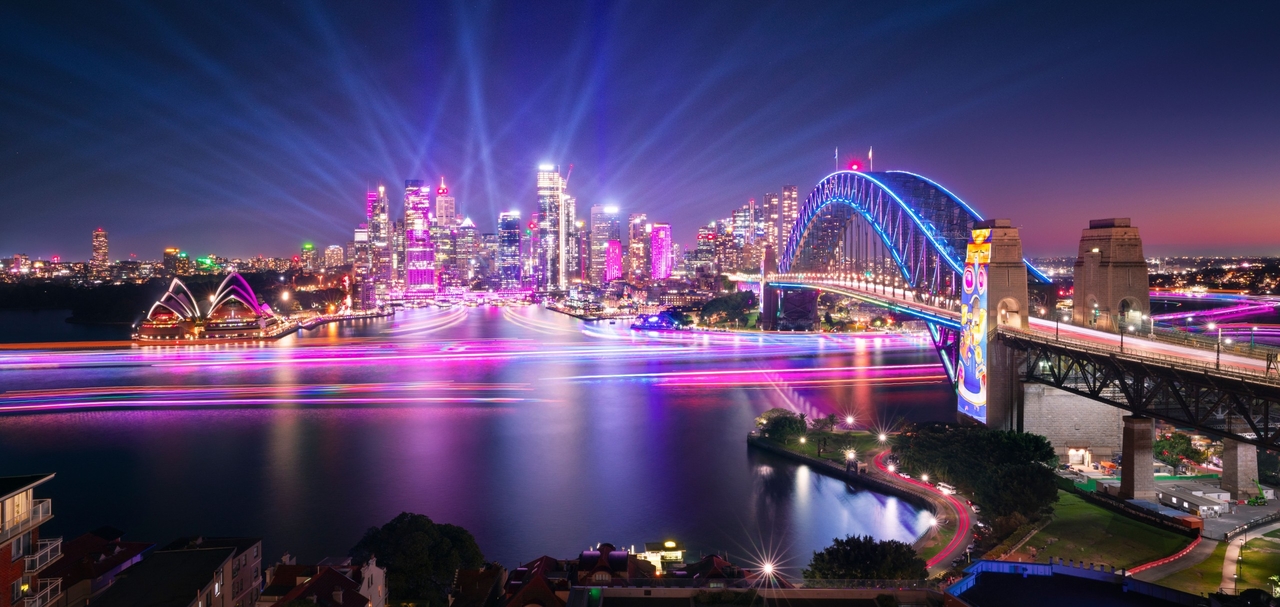
A city connected by light — interactive media art
"Our Connected City" transformed Sydney Harbour and the broader city center into one vast stage of light. From street level along the waterfront the effect was easy to miss, but from the Four Seasons Sydney or the Crown hotel — two of the city's landmark towers — visitors could take in the full orchestral sweep of the light show at a glance.
Our Connected City unfolded as an immersive show against the backdrop of major landmarks including the Overseas Passenger Terminal, Gateway Tower and the Cahill Expressway, with ferries and boats in the harbor adding to the spectacle as they moved through the water in a riot of color. Music by Australian composer Bailey Pickles coordinated the movement of light across each distinct element.
"Pendulum," an interactive light-and-sound work that responded to visitors' movements, drew large crowds at Hickson Road Reserve — the best vantage point for taking in the Opera Mundi projection on the Opera House.
Created by Sydney-based studio Amigo & Amigo, Pendulum drew its inspiration from Newton's Pendulum toys. Visitors rolled glowing spherical objects into the installation, triggering waves of light and sound that rippled through the structure above. The result was an edutainment piece that blended science and play.
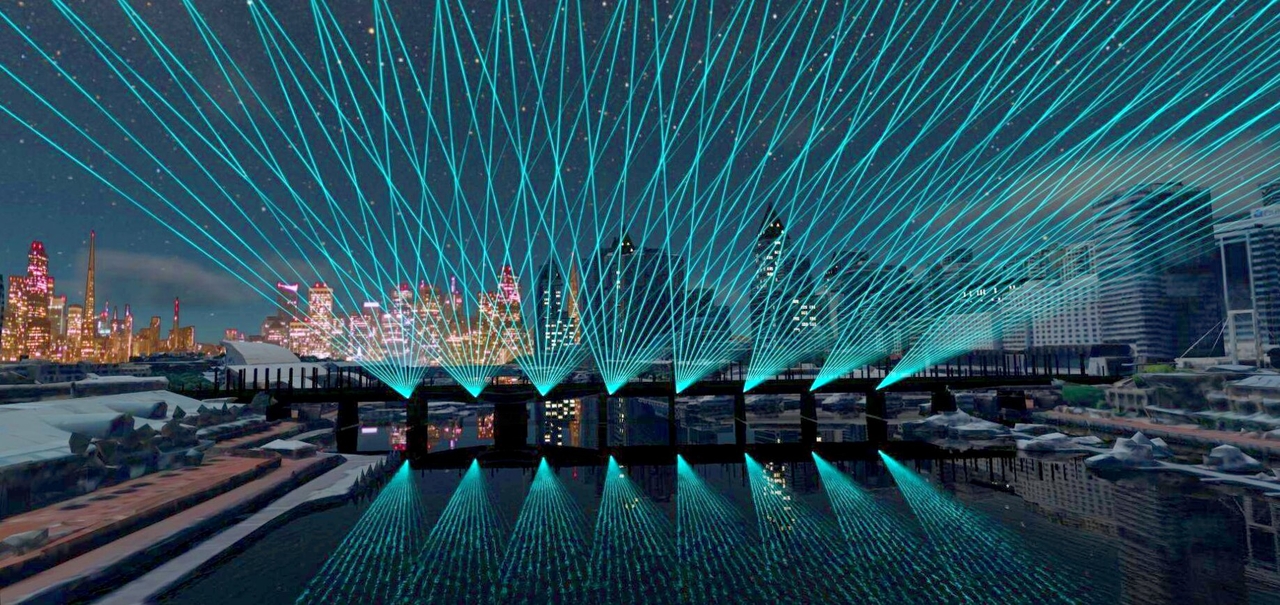
Laser show
Tucked behind The Rocks to the west of Circular Quay, Cockle Bay cradles Darling Harbour — and this year the bay's signature attraction was the Laser Lightfall show. Lasers fired upward and downward in a display that drew cheers from international tourists.
The beloved Darling Harbour became a canvas stitched with light. The laser show made its debut this year and is expected to return in an upgraded form next year. EDM-style background music heightened the festive atmosphere for tourists.
"Laser Lightfall" portrayed lasers as sparks of life, interconnecting and amplifying vitality. Staged on earth yet evoking the cosmos, the show stirred a sense of grandeur in all who watched.
ER Productions, the global laser specialist behind the work, described it as "a conversation of light played out across the sky, where multiple layers of light intertwine, intersect and amplify to form one vast, living, breathing celestial network." The finale, the company said, was an explosion of energy and euphoria. Electronic music by Sonar heightened the dazzling, universe-like atmosphere.
All the world's light and media art, gathered in one place
Vivid Sydney brought together virtually every form of light and media art technology in the world, and the festival was widely regarded as offering an abundance of experimental and creative shows unique to Australia.
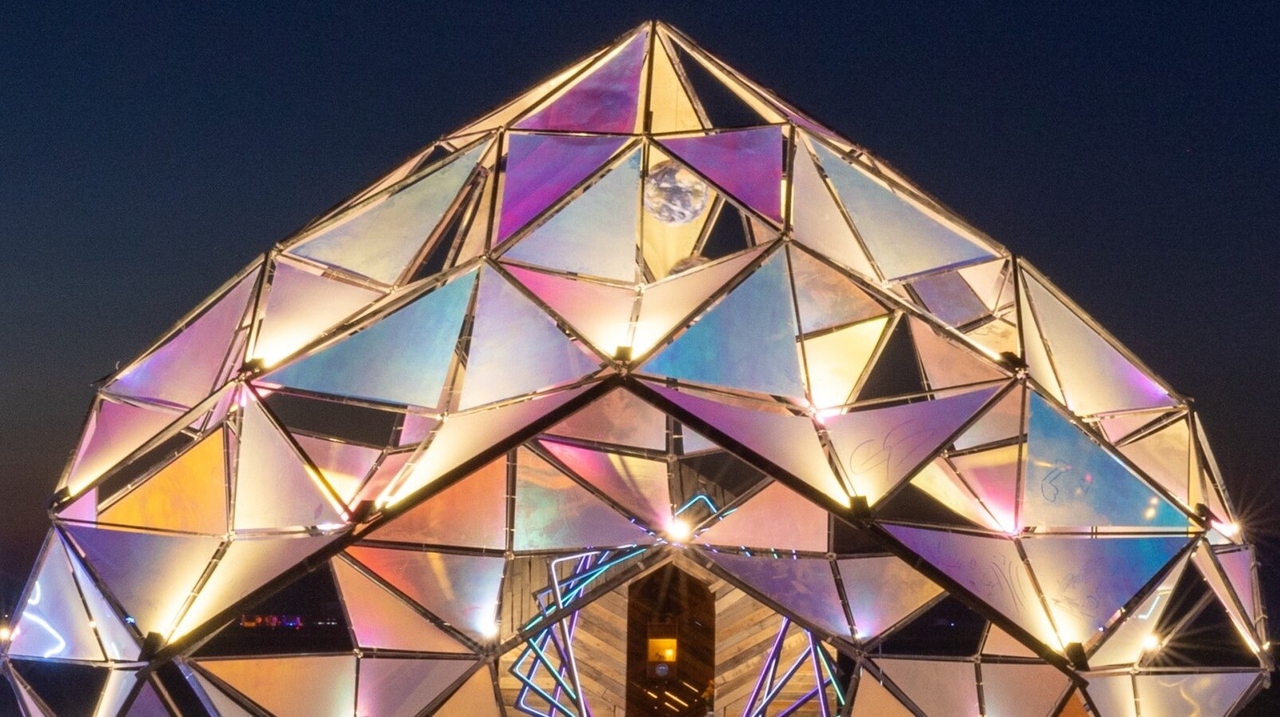
The Prism — an immersive light installation and rest space created by Utah-based Theory Art Studios and positioned along the Vivid Light Walk — was one standout work. A dome-shaped structure built from dichroic triangular panels with reflective properties, it was filled with soft rainbow hues and pulsing LED lighting that created a calm, meditative atmosphere. Originally created for the Burning Man arts festival, the work brought the spirit of the desert to Sydney Harbour as a tranquil oasis.
Piano Walk — a giant walkable piano keyboard installed in the forecourt of IMAX Sydney — turned the space into a playground for adults and children alike. The S-shaped keyboard was built long and large to maximize the simple joy of making music underfoot.
Particularly endearing were the moments when a child would step out a melody and a parent would add harmonies — a spontaneous duet that unfolded like a game.

"The Fringe of Infinity" was a large-scale projection work by Spanish artist Javier Riera that covered the exterior walls of the Customs House in geometric patterns drawn from nature. Inspired by forms such as spirals and honeycomb structures, the work was conceived to reveal the hidden patterns in mathematics, perception and the natural world. Combined with a soundscape by musician and sound designer Luminesco, the installation was both meditative and visually immersive.
"Point Of (No) Return," created by Norwegian artist Anastasia Isachsen, was an interactive lighting installation exploring the urgent realities of climate change. Projected onto a massive cylindrical LED screen, the work shifted from glacial ice landscapes to scenes of destructive storms as viewers drew closer, symbolizing humanity's impact on the environment. Music by Norwegian composer Nils Petter Molvær deepened the work's intense, reflective message about the future of the planet.
abc@heraldcorp.com





