
BTS holds two-night 13th-anniversary concert in Busan, June 12–13
110,000 ARMY join the birthday celebration
Korean-language version of 'NORMAL' unveiled for the first time
Group breaks K-pop convention with traditional Korean performance arts
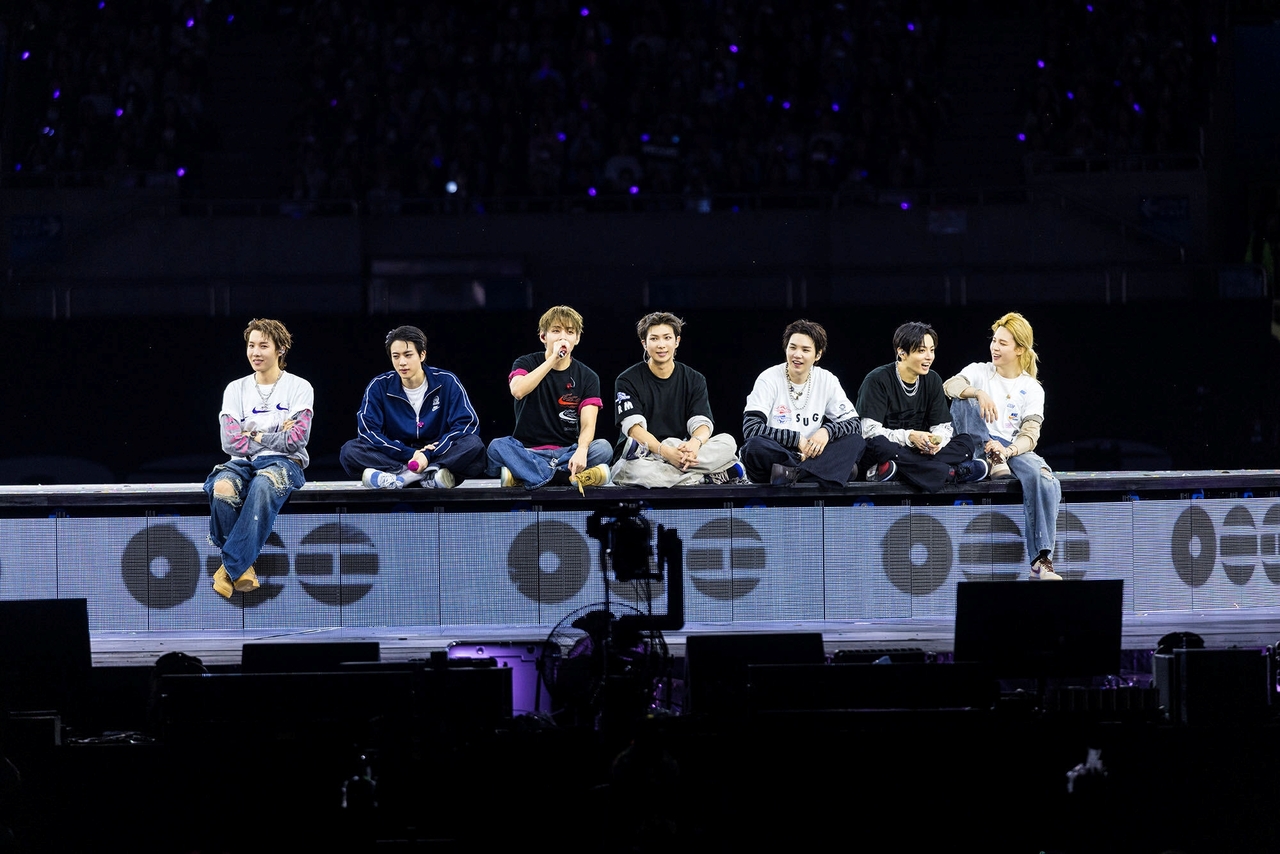
"Performing in my own country, on my own land, is the greatest joy." — j-hope
It was, in every sense, a homecoming. BTS marked their 13th debut anniversary with a two-night birthday celebration in Busan — their first visit to the city in three years and eight months — drawing 110,000 fans from around the world. The group is already deep into a world tour that began in Goyang and has since swept across the United States, South America and Japan, but the Busan concerts carried a distinct narrative: BTS coming home to Korea.
BTS staged the BTS WORLD TOUR "ARIRANG" IN BUSAN at Busan Asiad Main Stadium on June 12 and 13. It was the group's first Busan concert since October 2022, when all seven members performed together at the "Yet To Come" concert held in support of Busan's bid to host the 2030 World Expo — the last time the full lineup shared a stage before their military enlistments. Returning to Busan, the city that is both their roots and the site of that final pre-enlistment show, to mark their 13th anniversary gave the occasion an unmistakable weight.
Breaking the mold: a 360-degree virtual banquet woven from Korean tradition
The concert focused on bringing the tour's title, "Arirang," to life visually. The production had already been staged in Goyang and at venues across the United States, South America and Japan, but the open layout of Busan Asiad Main Stadium gave every seat an unobstructed sightline, letting the audience experience BTS's "virtual banquet" from a full 360 degrees.
The show was scheduled to begin at 7 p.m. but ran an hour late on the first night and 20 minutes late on the second. ARMY, well accustomed to waiting, filled the delay by chanting "BTS" and the names of each member without pause.

From the first moment to the last, the stage pointed squarely at Korea. The show opened with dancers carrying smoke bombs across the field before BTS launched into "Hooligan," unleashing raw, untamed energy across the crowd. The stage itself was a 360-degree pavilion reinterpreting traditional Korean architecture in a contemporary idiom — a towering gazebo modeled on Gyeonghoeru at its center, flanked by a rotating platform bearing the taeguk symbol and four thrust stages shaped after the four trigrams of the Korean flag, reaching out into the stands. With the 13th-anniversary birthday framing in place, the entire stadium read as one vast virtual banquet hall.
Throughout the concert, BTS made their case for who they are today in the most distinctly Korean language available to them.
Act 1, titled "BTS," showcased the group as they stand now. The opening run of "Hooligan," "Aliens" and "Run BTS" delivered the explosive energy only a full seven-member lineup can generate. Every member performed with a handheld microphone, and the live vocals were airtight. The group has long been known for its performance, but the combination of flawless singing and raw physical force felt like 13 years of blood, sweat and tears compressed into a single detonation.
The staging was dense with Korean aesthetic references. During "they don't know 'bout us," graphics reimagining traditional Korean masks rippled across the modern screens. For "Merry Go Round," enormous flowing silk panels traced the arc of traditional seungmu court dance, wrapping the stadium in a single fluid breath. The direction translated the movement of bodies and the rhythm of space into a concentrated Korean visual language.
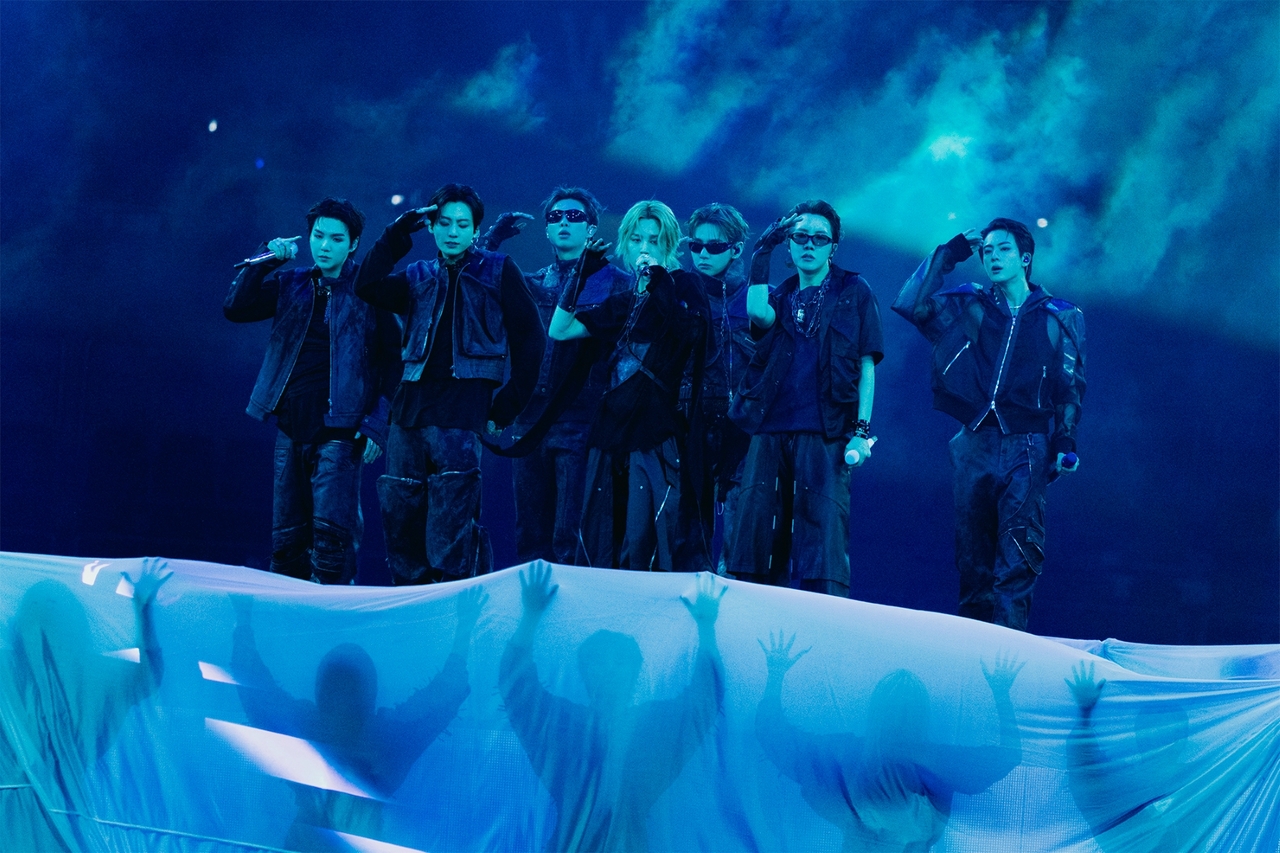
The concert's turning point came with Act 2, titled "KOREA." The name alone was a declaration — BTS standing before Busan and before fans who had traveled from every corner of the world, and announcing themselves as Korean.
The highlight of the Busan shows was a special setlist prepared exclusively for the local audience. "NORMAL," a B-side from the fifth studio album "Arirang" that confesses to the emptiness and fear lurking behind the glare of the spotlight, was performed not in its album version but in a Korean-language version — unveiled live for the very first time. Sung in their mother tongue, the song's emotional clarity and warmth finally felt complete.
Jungkook, the youngest member, said he had shared the lyrics during a live broadcast ahead of Sunday's show because he thought fans would want to know them. "I'm glad I did," he said. "When I was singing on Sunday, I could hear voices singing along, and it made me so happy."
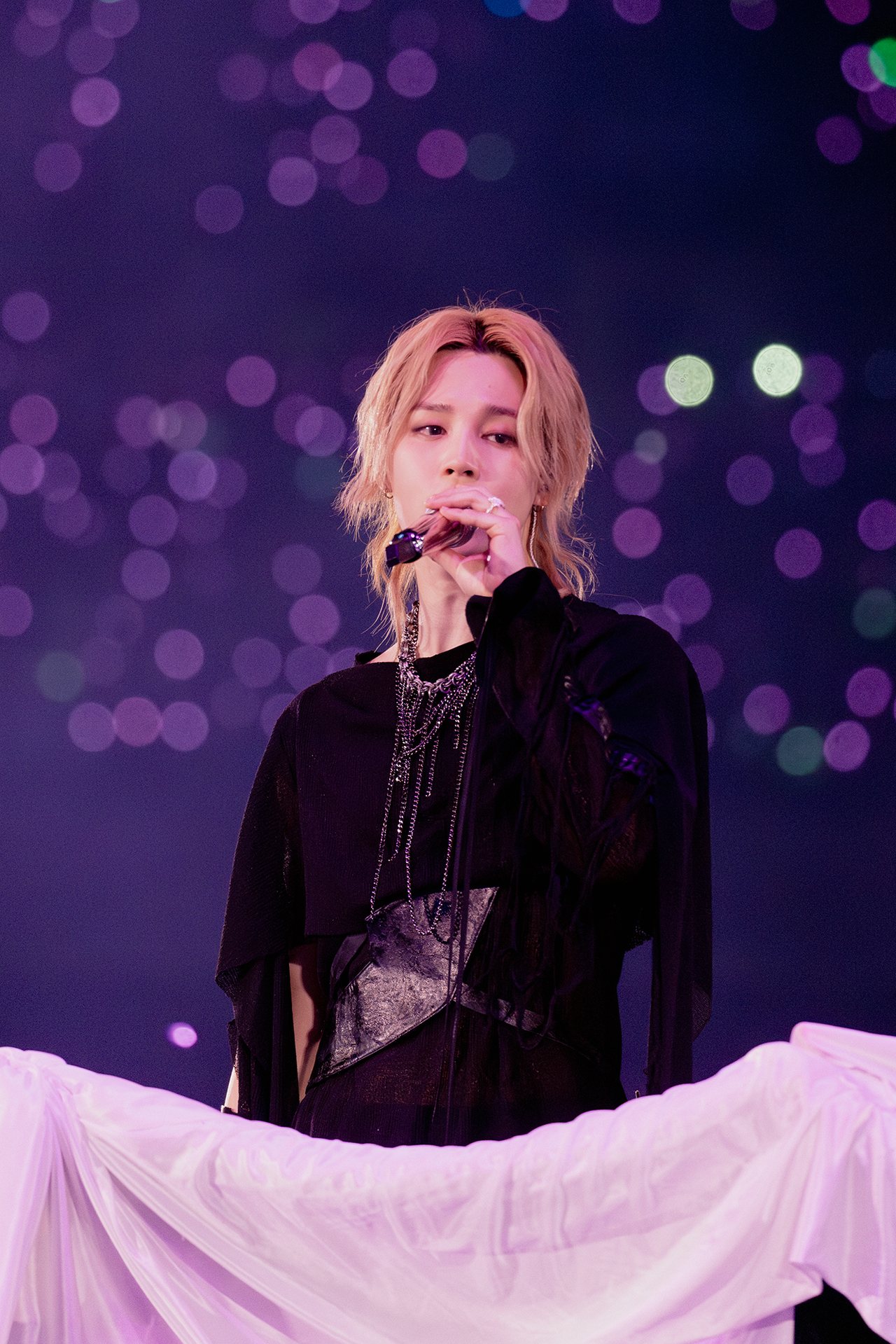
"Not Today," "MIC Drop" and "Fire" followed, flooding the stadium in the red and blue of the taeguk. Graphics inspired by traditional Korean fire-spinning games —줄불놀이 and 쥐불놀이 — filled the screens, and the roar of the crowd swelled into something closer to a festival than a concert. During the stretch from the EDM-driven "FYA" into the hit "Fire," animations drawn from those same fire-spinning traditions blazed across the giant displays, delivering a rush of pure visual pleasure.
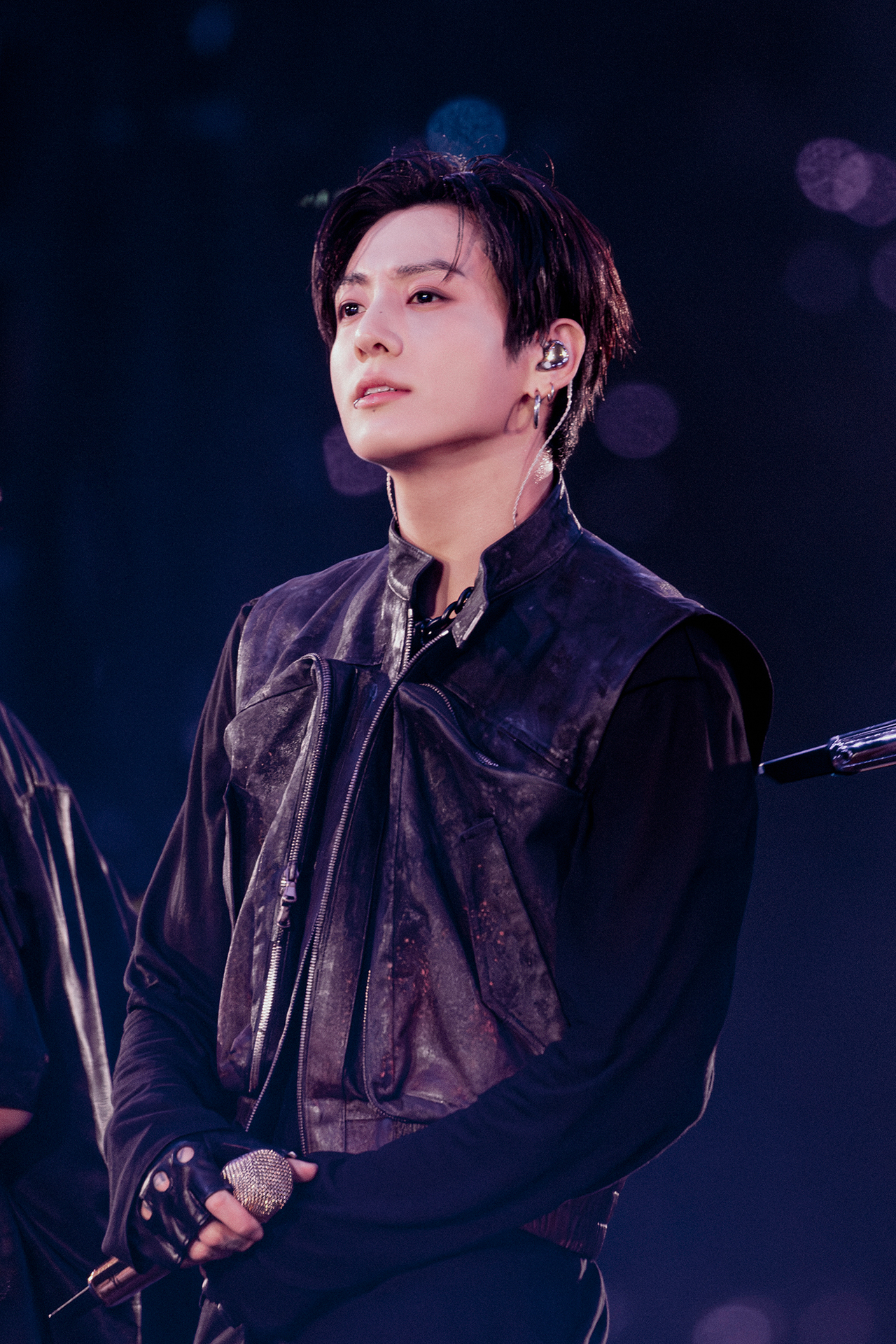
The undisputed highlight of the night was "Body to Body." As water cannons erupted and fireworks split the night sky, 55,000 fans sang "Arirang arirang arariyo" together. The volume may not have shaken the Busan sky, but international ARMY members who had worked hard to learn the words carried the melody with unmistakable sincerity, turning the moment into a night of solidarity and shared feeling.
"IDOL," which has drawn attention at every stop on the world tour, again reached its peak in Busan. With roughly 50 dancers, BTS turned the entire stadium track into a marching parade, while media art evoking Gyeongbokgung's Geunjeongjeon throne hall washed over the venue. K-pop convention, traditional Korean performance arts, street parade and stadium spectacle collided at once to produce something entirely new.
Thirteen years on, a journey toward tomorrow
The true climax of the Busan concert was not the water cannons or the mass singalong of "Arirang." It was the few words of genuine feeling the members offered near the end of the show.
Jin, the eldest, said he had been genuinely looking forward to performing in Busan. "Having you here gave me strength, and it's what kept me going through all this time," he said. "You are the greatest birthday gift we could ask for." His tone was measured, but the words carried the weight of years compressed inside them — the military service, the hiatus, the suspension of full-group activities, and the long road back to standing together as seven. BTS did not simply wait out that time. Each member endured his own stretch of it and found his way back to the others. When Jin said ARMY had kept him going, it was not a routine expression of gratitude. It was a confession of how BTS had made it through 13 years.
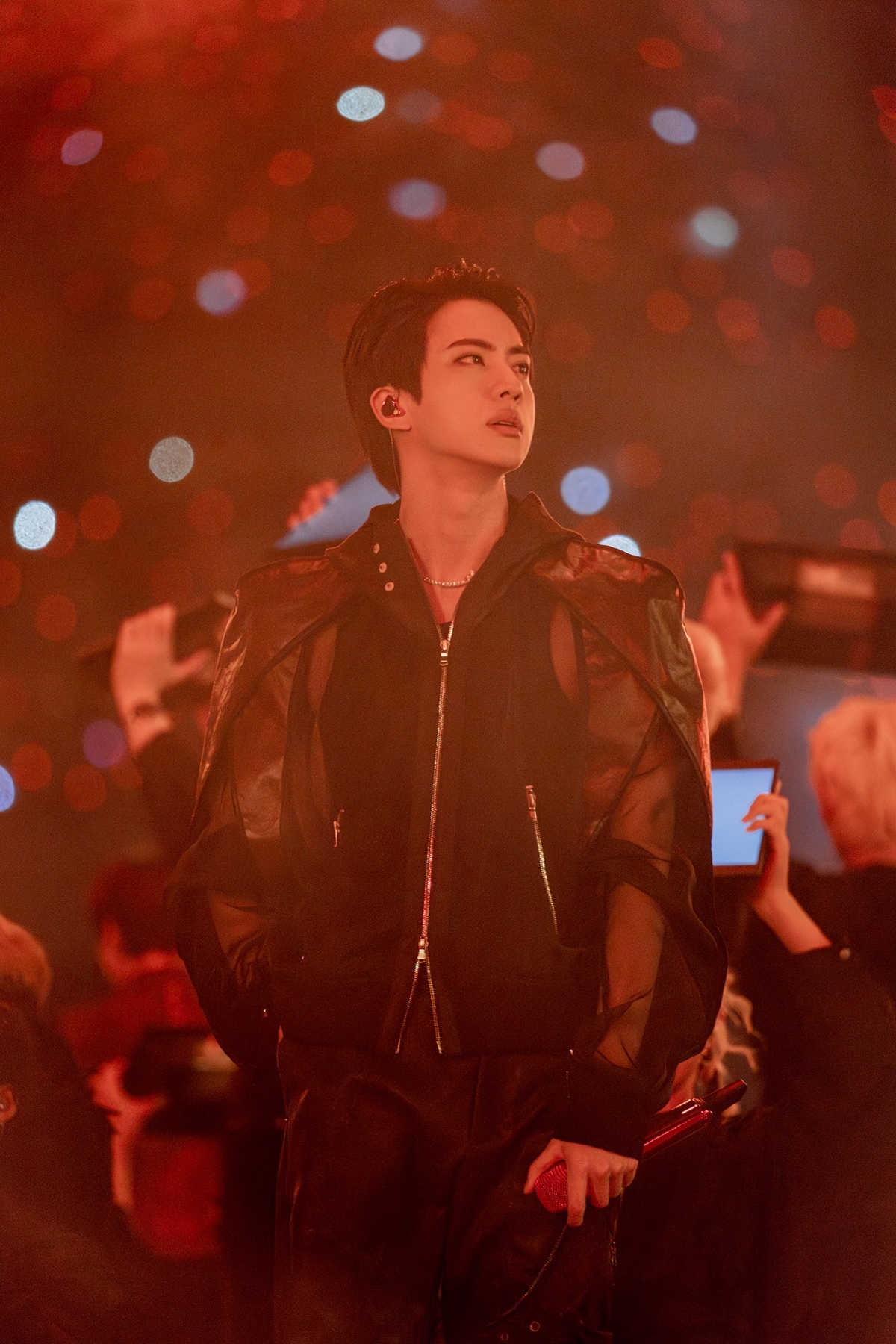
The "Arirang" tour has drawn Korean flags and mass singalongs of the folk song at venues around the world. Since achieving global success, BTS has spoken about Korea with growing conviction — as though experiencing the world made them hold their roots more tightly and define their identity more clearly. j-hope put it plainly: "All seven members of BTS are Korean. There is nothing better than performing in Korea. Performing in my own country, on my own land, in my own city — that is the greatest joy."
Leader RM reflected on the years behind them. "It feels like just yesterday we were rehearsing our debut song in the practice room, and now it's already our 13th anniversary — I have so many mixed feelings," he said. "A lot has changed. We spend more time abroad, there's more English in the lyrics — so many things are different." There was a time when seven years was considered the natural lifespan of a K-pop group, defined by the standard contract term. BTS renewed their contract with Big Hit Music, then renewed it again, and have now reached their 13th year. "Younger artists ask me how we've kept the team going for so long, and honestly, I'm not sure," RM said. "Being with the members has made me reflect on myself." He added: "I used to keep my real feelings to myself, but I'm saying things like this again after a long time. So much has happened, and 13 years flash by like a montage. I am honored and grateful that we can be here together like this. Wherever we are, whatever we look like, we will give our best and try to show you who we truly are."
Jimin took a moment to thank his elementary school teacher and the instructor who first taught him to dance, both of whom were in the audience. Jungkook, spotting his mother in the crowd, called out to her directly: "Mom, you came. Are you watching? Enjoy the show and get home safe" — a glimpse of the devoted son behind the global star.
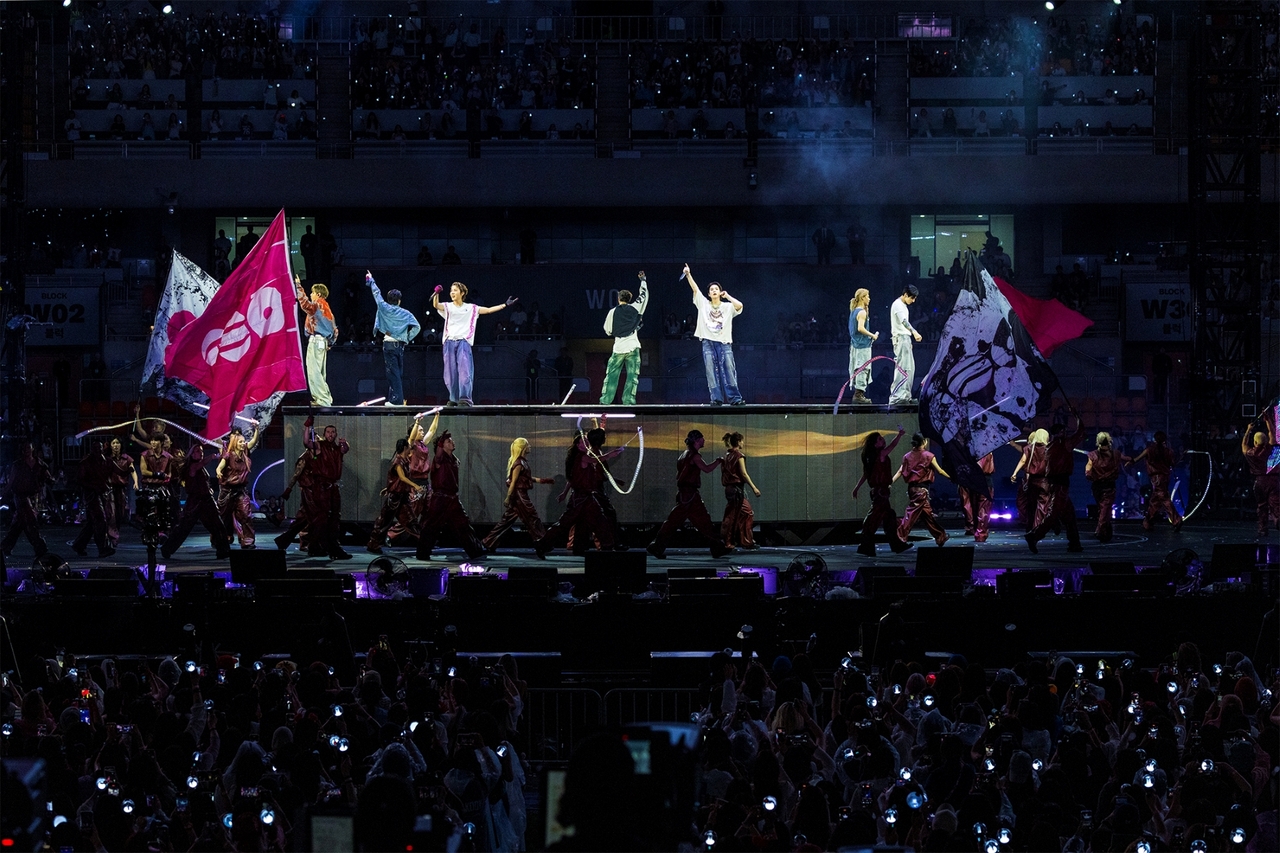
BTS have become sunbae — senior figures — in the K-pop world, and the concert reflected it. What radiated throughout the night was not hunger for success or the confidence of the world's biggest pop stars, but a relaxed ease passing among seven members and a quiet resolve pointed toward tomorrow.
Chloe Bernard, 27, a French ARMY who attended the Busan homecoming, said she could see BTS in France too, but felt BTS Festa had to be experienced in Korea. "I managed to get a ticket with great difficulty and came all the way to Busan," she said. "I've been a fan since 2016. Through BTS's music I learned to love myself, and I learned not to lose hope when things got hard." Fans who could not secure tickets gathered outside the stadium, watching the concert streamed live on Weverse on their phones and sharing in the energy from both sides of the gates. Erica Joy Mendoza, 25, who traveled from the Philippines, said she had not been able to get a ticket but wanted to be present outside the venue for the final night. "I can't see them directly, but being here in this moment together is what matters," she said with a smile. "Happy birthday, BTS."
BTS, whose ongoing world tour is the largest in K-pop history, will continue after the Busan dates across 34 cities for a total of 86 shows. Their next stop is Madrid, Spain, on June 26 local time.
shee@heraldcorp.com





