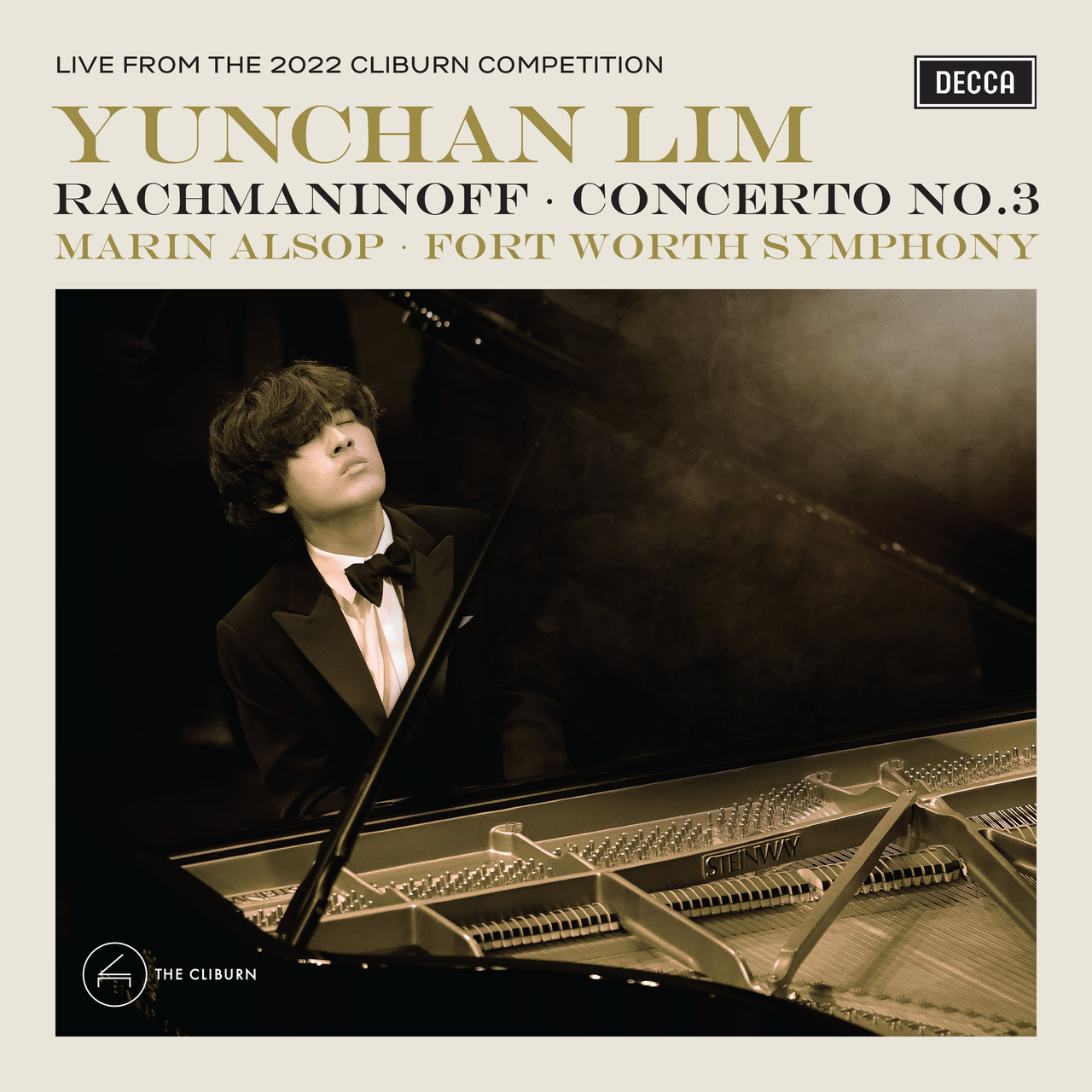
'Rach 3' — the piece that won him the Van Cliburn title
12 strikes per second — 8 performances forced into 12 days
A remarkable performance that proved his star power despite the concerns
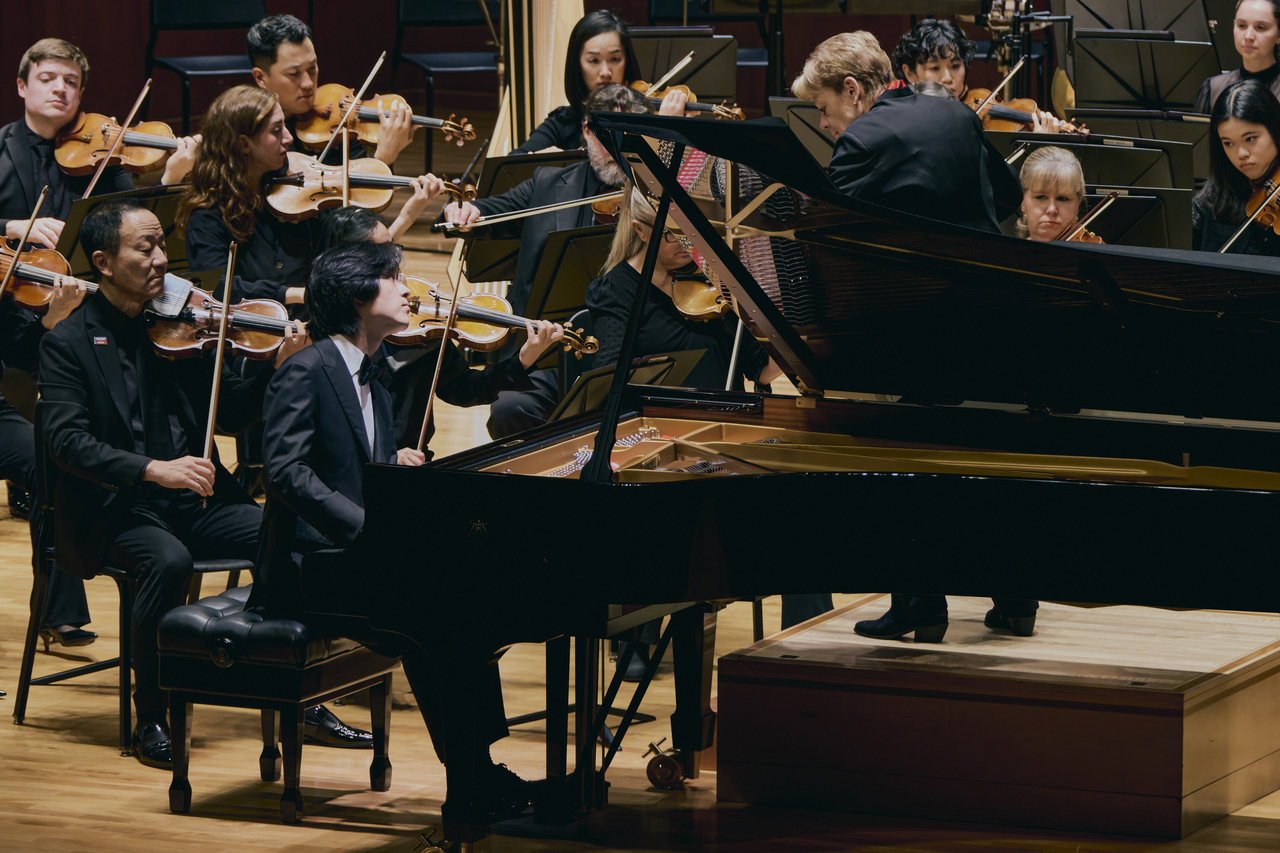
29,035. That is the number of notes a member of the American piano community Piano World counted, one by one, in the solo piano score of Rachmaninoff's Piano Concerto No. 3 in 2006. Play the first-movement cadenza in its heavier version and the count rises to 29,656. These are unofficial tallies — in South Korea the figure commonly cited is 35,000 — but by either count, a simple calculation across the concerto's roughly 40-minute running time means the pianist must strike an average of around 12 notes per second. The actual density varies by movement and tempo.
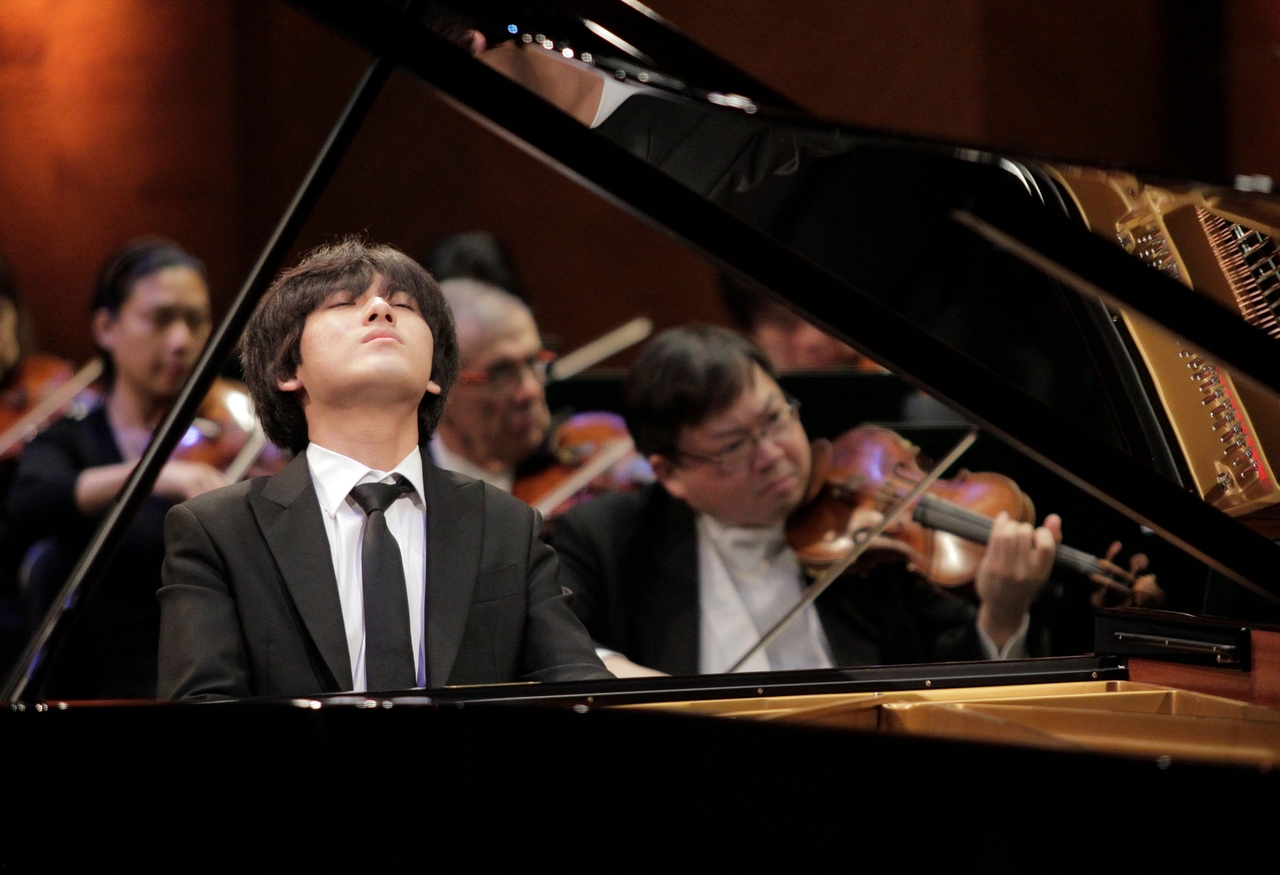
Pianist Im Yunchan, 22, is performing this monumental work eight times in just 12 days. After three performances with the Philadelphia Orchestra at the Kimmel Center from Oct. 29 to Oct. 31, Im launched a five-night Korean run: Thursday at Art Center Incheon, then Friday through Sunday at Seoul Arts Center, and Monday at Lotte Concert Hall. On the podium throughout is Marin Alsop, the Philadelphia Orchestra's principal guest conductor, who shared the stage with Im at the final round of the 2022 Van Cliburn International Piano Competition.
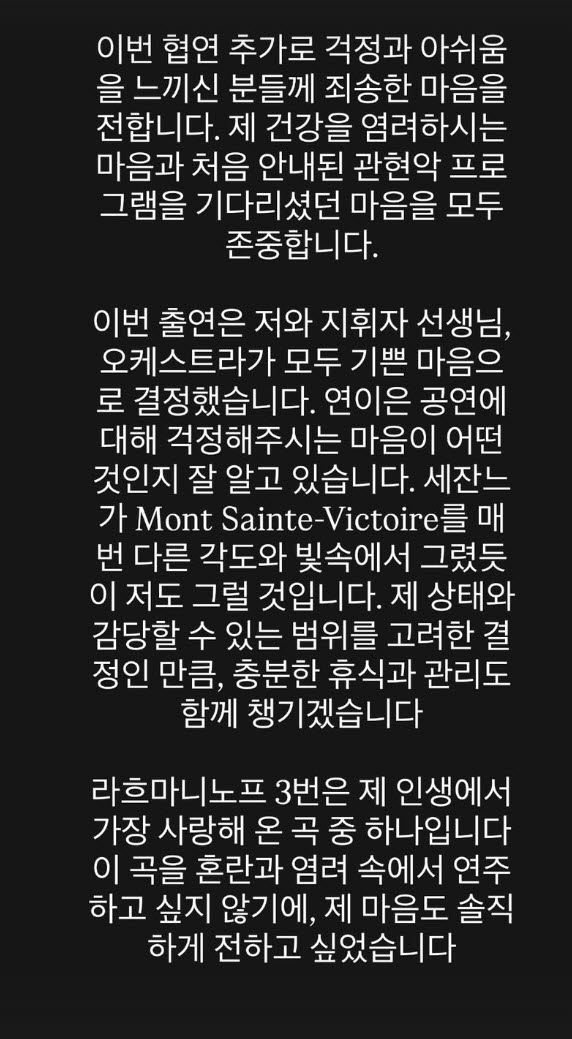
The five-night Korean stretch was confirmed only 17 days before the first performance. A concert originally scheduled as an orchestral-only program on Saturday was changed on Oct. 21 to include Im as soloist. Mok Production, Im's agency and the concert organizer, said the decision was made "in response to public support, driven by the will of Im and Alsop," but fans issued a public statement calling for an explanation. Im wrote on Instagram that the decision "took into account my condition and what I can handle," adding that he would "make sure to get enough rest and take care of myself."
Had the five consecutive nights featured different repertoire, the alarm might not have been so loud. Rachmaninoff's Piano Concerto No. 3 has carried the label of "a test of a pianist's limits" without interruption since its 1909 premiere — 117 years and counting.
Even the master it was dedicated to ultimately avoided it
Even for its composer, Sergei Rachmaninoff (1873–1943), the Third Concerto was no easy matter. In 1909, preparing for his first American tour, he had composed the work that summer at his estate in Ivanovka, Russia, finishing it after returning to Moscow — and he had almost no time to get it under his fingers before sailing across the Atlantic. He brought a silent practice keyboard aboard the ocean liner so he could keep working during the crossing.
He was not enthusiastic about the trip, but he had his hopes. In a letter to a friend, Rachmaninoff wrote that if the American tour went well, he might finally be able to buy that automobile he had long wanted — he was, by all accounts, a passionate car enthusiast.
On Nov. 28, 1909, Rachmaninoff sat at the piano himself for the historic world premiere at the New York Theatre, performing with the New York Symphony Society under Walter Damrosch, and played the same work again two days later. The following January, he took the stage at Carnegie Hall with the New York Philharmonic under Gustav Mahler.
The reception at the time was lukewarm. The New York Sun acknowledged the work's musical craftsmanship but stopped short of calling it great or memorable. In 1912, a 21-year-old Sergei Prokofiev wrote to a friend that the concerto was "dry, difficult and unattractive." Even Josef Hofmann, the virtuoso to whom the work was dedicated, declared "it is not for me" and never performed it in public for the rest of his life.
The pianist who changed the concerto's fate was Vladimir Horowitz. In January 1928, Horowitz — 25 years old and freshly debuted on the American stage — performed the work in the basement of Steinway Hall in New York, with Rachmaninoff himself playing the orchestral part on a second piano. Rachmaninoff marveled at his intensity and audacity, saying Horowitz had "swallowed it whole." Then, in 1958, at the height of the Cold War, American pianist Van Cliburn performed the concerto alongside Tchaikovsky's Piano Concerto No. 1 at the inaugural Tchaikovsky International Competition in Moscow and won — and Rachmaninoff's Third finally became the ultimate gateway to greatness.
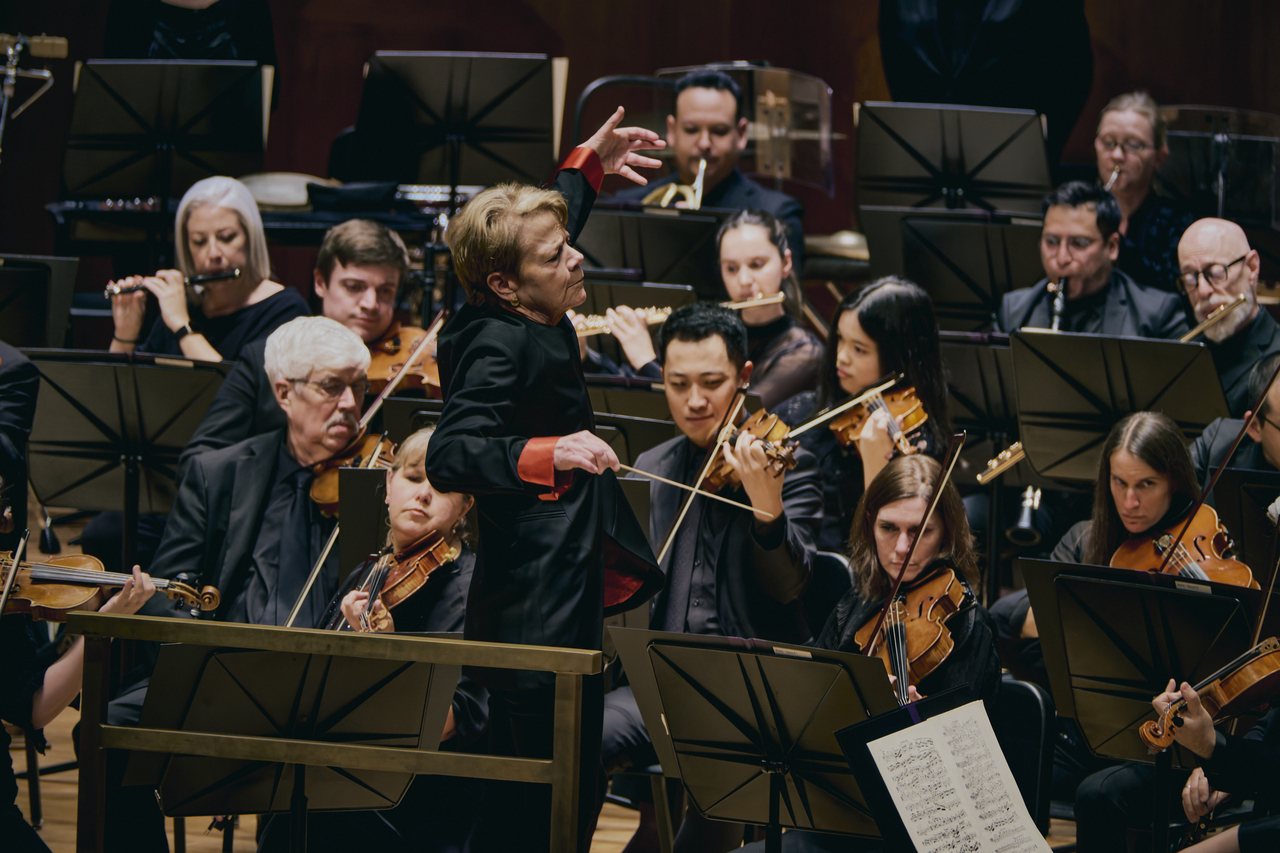
The Philadelphia Orchestra, Im's partner for this Korea tour, has its own deep history with the concerto. In December 1939 and February 1940, Rachmaninoff recorded the Third Concerto with the Philadelphia Orchestra under Eugene Ormandy — the only recording of the work the composer ever made as pianist. The orchestra first visited Seoul in 1978 with Ormandy; this tour marks its 10th visit to Korea.
Forty minutes without pause — and two cadenzas
Rachmaninoff's Piano Concerto No. 3 opens with quiet restraint. The orchestra offers two cautious bars, and the piano enters with a melody beginning on D, tracing it as if in contemplation. Rachmaninoff said of the theme that it was "not borrowed from folk song or church music — it simply wrote itself," and that he "wanted the piano to sing as a singer would." That spare, unassuming subject expands across all three movements, accumulating variations until it becomes a vast architectural structure.
The concerto's fearsome difficulty stems largely from the fact that the singing almost never stops. Program notes from the Boston Symphony Orchestra describe the soloist playing "for approximately 45 minutes with almost no rest." The lyrical second movement connects directly to the third via an attacca marking — no pause, no breath. At the final coda, the piano roars back the main motif of the first movement in thunderous chords. The pianist must summon one more explosive burst of energy at the very end of a 40-minute journey.
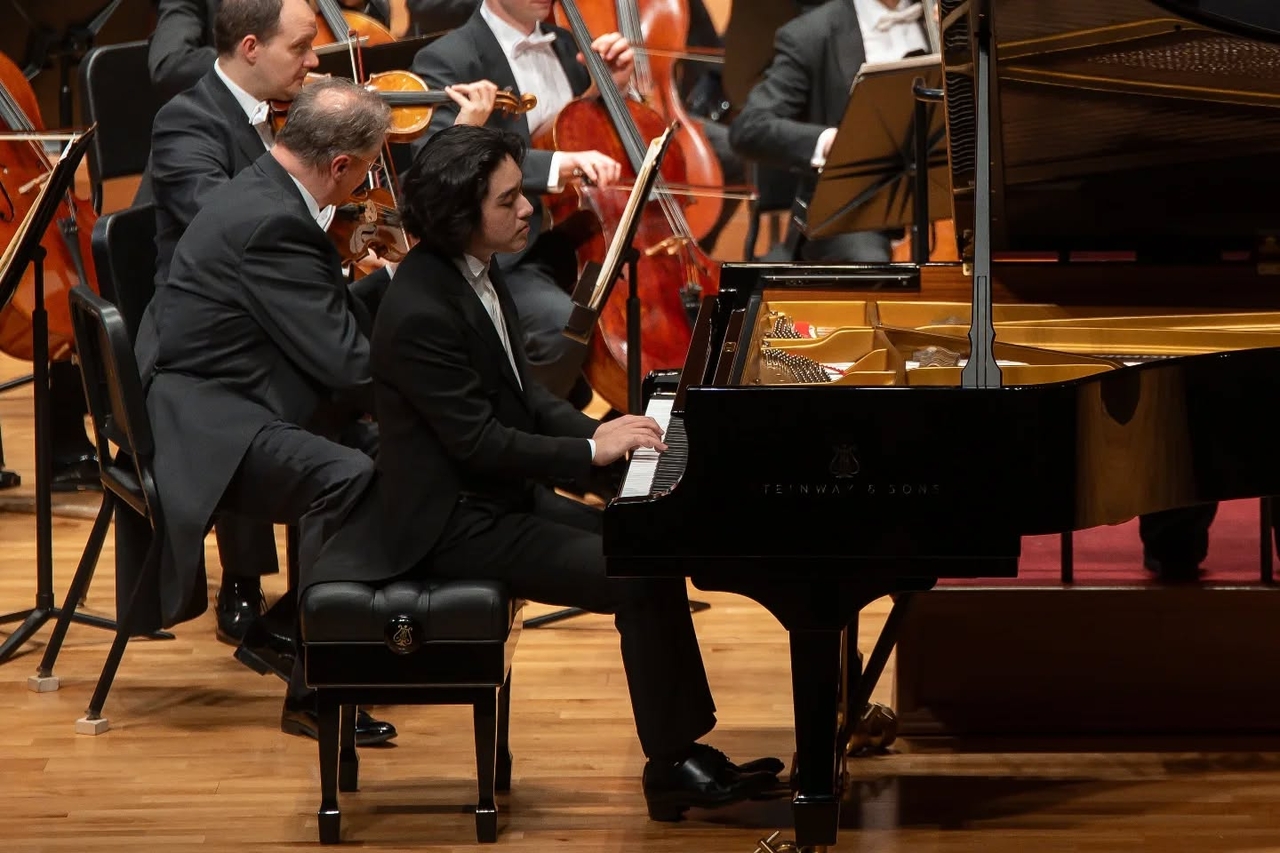
At the center of the first movement sits the cadenza — the passage where the orchestra falls silent and the soloist plays alone — which has become the concerto's defining symbol. Rachmaninoff left two versions. The first is a massive wall of sound, dense stacked chords driven with crushing weight, published in the score under the label "ossia" (an alternative passage). The second, added later, is lighter and more transparent, in a fleet toccata style.
In his own 1939–40 recording, Rachmaninoff chose the lighter version. Horowitz, too, is said to have felt the heavier cadenza could overwhelm the music's flow. It was Van Cliburn in 1958 who popularized the weighty ossia cadenza as a symbol of virtuosity, cementing its reputation as the choice that displays the concerto's dramatic difficulty. Im, in 2022, took a different path. The British classical music journal Gramophone noted that Im chose the lighter cadenza at the competition final and delivered it "eloquently and monumentally."
The concerto bears the imprint of its composer's unusual physical gifts. The Boston Symphony's program notes attribute the work's dazzling figurations to Rachmaninoff's "famously powerful hands and long fingers." A 1986 paper in the British Medical Journal raised the possibility that Rachmaninoff had Marfan syndrome, though a 2006 article in the Journal of the Royal Society of Medicine noted that beyond hand size, other clinical indicators were not clearly present and questioned the limits of such a diagnosis. Either way, it remains posthumous speculation.
The physical and mental demands of Rachmaninoff's piano concertos are in a class of their own. In January 2023, pianist Yuja Wang performed all four Rachmaninoff piano concertos plus the Rhapsody on a Theme of Paganini in a single evening at Carnegie Hall in New York, with the Philadelphia Orchestra under Yannick Nézet-Séguin. The program, including two intermissions, ran approximately four and a half hours — a concert that tested the limits of a pianist's stamina and concentration not merely through one concerto performed repeatedly, but through the full breadth of Rachmaninoff's output for piano and orchestra.
Eight Everests to climb in 12 days
Performing the same concerto on consecutive nights is not unusual in itself. The Philadelphia run was already three nights in a row, and Im played the same work on three consecutive nights for his New York Philharmonic debut in May 2023. Rachmaninoff himself repeated the concerto just two days after the world premiere.
But the arithmetic of this schedule is different. Immediately after three nights in the United States, Im crossed the Pacific and, with only four days between, stepped onto the stage for five more consecutive nights. The result: eight performances of one of the most physically demanding concertos ever written, spread across 12 days. The encore burden adds to the load. According to the Philadelphia Inquirer, Im performed the third movement again as an encore at the Thursday and Friday Philadelphia concerts. At the Thursday Incheon performance, when the audience rose to its feet, he gave the coda of the third movement as an encore as well. At Saturday's concert, he offered the second movement of Mozart's Piano Sonata No. 8 (K. 310).
The fans' concern is not mere anxiety. In October 2004, Canadian pianist Louis Lortie was scheduled to perform the concerto three times with the Oregon Symphony. Before the second performance, he was sidelined by pain in his right hand. The following day, Yakov Kasman — silver medalist at the 1997 Van Cliburn Competition — stepped in without a rehearsal. Whether the pain was caused by the consecutive performances was never established.
In Im's case, the worry is compounded by a precedent: in March 2024, Im suspended a European tour for two weeks due to a hand problem. The management said at the time only that the decision followed a doctor's recommendation, without disclosing the cause. Im later said at a press event for the album "Chopin: Études" that "after resting for a week or two, I was completely back to normal," but added, "if I push too hard, it could hurt again, so I try to pace myself in practice."
For a pianist, the hands are the body part on which an entire artistic career can turn. American pianist Leon Fleisher developed focal dystonia in his right hand in the 1960s and was forced to stop performing with both hands. He devoted himself to conducting and teaching before returning with a two-handed album, "Two Hands," in 2004. That said, no established medical causal link exists between a few nights of consecutive performance and neurological conditions of that kind.
Yet the concerto's difficulty alone does not fully explain the current controversy. The moment Im Yunchan's name is attached to a program, tickets vanish. Saturday's concert sold out rapidly once his participation was announced. The top ticket price for this Korea tour — R-class seats — reaches 480,000 won ($353). The video of Im's 2022 Van Cliburn final round accumulated 4.8 million views in roughly three weeks after it was posted, surpassing Horowitz's 1978 live recording to become the most-watched performance of Rachmaninoff's Piano Concerto No. 3 on YouTube. There is a certain irony in the fact that the work the world most wants to hear is also the one that weighs most heavily on the performer's body.
The international press took note of the schedule as well. Philadelphia Inquirer critic David Patrick Stearns, in an Oct. 31 review, wrote that Im's Asian tour appearances had grown from four to five and that "burnout" concerns had spread on SNS, asking whether "five consecutive Rachmaninoff performances is really healthy." Separate from the grueling schedule, his assessment of the performances themselves was mixed. Stearns praised the first movement of the Friday concert for sustaining long arcs of musical thought rather than leaping from one brilliant moment to the next, and described the piano's entry in the second movement as producing "remarkable intensity." But he noted that the third movement's constantly fluctuating tempo had become predictable, and that the playing leaned toward effect over expression.
Even amid widespread concern, Im's path to the keyboard echoes the wry recollection of the composer who carried this concerto across the Atlantic 117 years ago. "I like the Third much better," Rachmaninoff once said. "The Second is too uncomfortable to play."
shee@heraldcorp.com