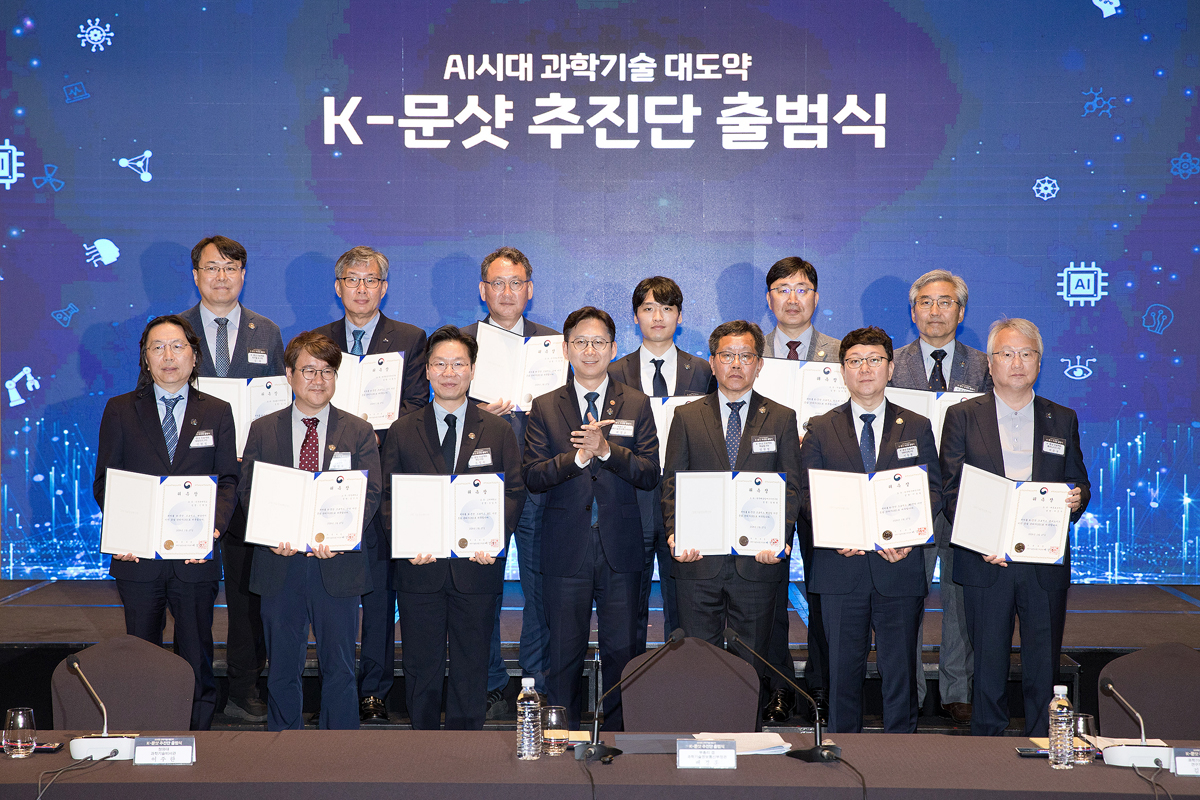
South Korea's K-Moonshot project has moved beyond selecting missions and tasks, with a new strategy paper outlining how the initiative can break through its most critical challenges.
The Science and Technology Policy Institute, known as STEPI, published the 66th issue of its "Science and Technology Policy Brief" series, titled "Recommendations for an Execution Strategy to Ensure the Success of the K-Moonshot Project."
K-Moonshot is a national initiative that aims to integrate AI into scientific research, doubling research productivity by 2030 and resolving 12 nationally designated challenges — deemed essential for a major leap in the country's competitiveness — by 2035.
The report compares K-Moonshot with the United States' Genesis Mission and argues that the project must go beyond selecting missions and tasks, advancing toward a mission-driven execution strategy focused on achieving breakthroughs.
To that end, the report offers three recommendations: establishing a phased mission execution model that leverages South Korea's strengths in implementation speed; developing AI application methods tailored to each mission and building a shared AI platform; and enacting special legislation to guarantee program directors' autonomous accountability and budget priority.
"The success or failure of K-Moonshot hinges not on 'what to do' but on 'how to break through,'" said Hong Seong-ju, a senior research fellow at STEPI. "Advancing a mission-driven execution strategy is the key."
nbgkoo@heraldcorp.com